
In a world where computing technologies have become ubiquitous and indispensable across nearly every domain of society, Sandia National Laboratories has stood at the forefront of pioneering research and fielding systems that have advanced the state-of-the-art and ensured its ability to execute on its national security mission. Building on a long history of leadership in the field of high-performance computing, Sandia staff have used the Labs’ scientific computing capabilities to fuel discovery, address national challenges, and push the boundaries of science and technology.
As a federally funded research and development center, Sandia is committed to sustaining and expanding this essential capability, which supports national security missions and contributes to the broader need for advanced computing. Sandia’s leadership in HPC is evident in the rapid progress of its systems, with six of its supercomputers earning spots on the November 2024 TOP500 list of the fastest systems in the world, including number 20. Yet, behind these achievements are the dedicated teams whose expertise and passion make it all possible.
This article shines a spotlight on the people who bring Sandia’s HPC and other large-scale computing capabilities to life, transforming cutting-edge technology into solutions that serve the nation.
HPC systems: The driving force of production computing
The HPC Systems team is the driving force behind Sandia’s HPC systems. This group of professionals designs, deploys, operates and decommissions HPC systems and infrastructure, supporting 15,000 computing nodes, 1,300,000 processing cores, and 145 petaflops of compute power across three data centers. Its expertise spans compute hardware, storage, networking, operating systems, systems software, file systems, computer security, scheduling systems, scale-out data center design and user support.
Partnership with Sandia’s Common Engineering Environment plays a vital role in the HPC Systems team’s ability to deliver seamless computing experiences. Many software developers leverage this team’s resources to write, compile and test their applications while also conveniently integrating their workflows with HPC systems. These resources include high-end graphical workstations that can be accessed remotely within Sandia and also from home or while on travel without the need for users to purchase expensive desktop systems. Common Engineering Environment also hosts critical file systems, including the /home and /projects areas for Sandia clusters, enabling efficient data access and minimizing file movement. This partnership ensures users can focus on their work without being hindered by operational complexities, making the HPC systems even more accessible and effective.
Beyond operations, the HPC Systems team researches next-generation technologies to meet evolving user needs and develops security plans to ensure HPC systems operate securely across Sandia environments. The team’s core culture is centered around their commitment to delivering reliable, mission-ready systems that power Sandia’s national mission efforts.
HPC Development: Advancing the future of computing
The HPC Development department drives innovation through applied research, operational excellence, and wide-ranging collaborations. The AppSysFusion team pioneers state-of-the-art HPC monitoring and operational analysis capabilities, including the award winning and widely used Lightweight Distributed Metric Service software, to optimize the efficiency and scientific throughput of NNSA supercomputers. The Advanced Architecture Testbeds team, part of the Vanguard program, collaborates with key vendors, explores emerging HPC technologies and operationalizes them for mission-critical applications.
In addition to technical achievements, the team invests in workforce development, improving the next generation of HPC professionals through university research collaborations, staff knowledge-sharing sessions and outreach. Their work embodies Sandia’s mission values by combining technical excellence with a dedication to advancing the nation’s computing capabilities.
OneStop Service Desk: Seamless support for innovation
The OneStop Service Desk team ensures researchers, engineers, and innovators have the tools they need to tackle complex challenges. They manage the OneStop Web Portal, providing notices, alerts, FAQs and training opportunities to empower the HPC user and capability provider community. Through an integrated ticketing system, they unify support efforts across HPC teams, resolving issues efficiently and effectively.
Whether troubleshooting hardware, guiding users through HPC issues, or supporting data management tools, the OneStop team is the backbone of Sandia’s mission success. Their dedication and problem-solving expertise ensure customer support is always priority number 1.
Sandia Mass Storage System team: Data management for large-scale computing
Data management is critically important to the scientific computing ecosystem. Without advanced, user-friendly approaches to data movement, short-term and long-term storage, and other data management tools, scientific computing users’ productivity and effectiveness is significantly diminished. This is where the Sandia Mass Storage System team steps in. These talented staff deploy, manage and develop new capabilities for Sandia’s long-term storage capabilities, as well as Sandia’s data transfer capabilities, including FrETT, StarFish and the DisCom transfer tools. With rapid growth in the data sets produced by Sandia’s scientific computing activities, the expertise of the mass storage team is only growing in its importance.
Data Center Facilities Infrastructure team: Building Sustainable HPC Data Centers
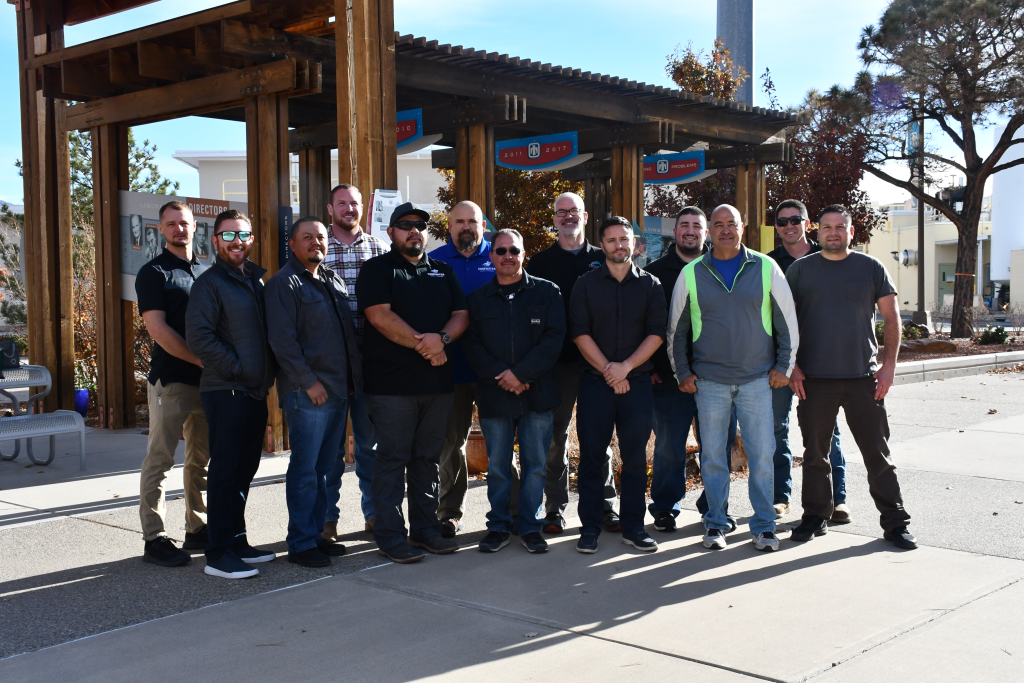
The Data Center Facilities Infrastructure team has established itself as one of the most innovative and forward-looking data center infrastructure teams in the DOE complex. It plays a central role in advancing Sandia’s HPC data center infrastructure, blending cutting-edge technologies and sustainable practices. The team’s work includes designing and maintaining facilities like the award-winning 725E computing facility, the first NNSA computing facility to earn LEED v4 Gold certification for energy efficiency and environmental stewardship. Innovative cooling solutions, such as thermosyphon technology, have saved millions of gallons of water over the life of the data center’s operations, demonstrating the team’s commitment to sustainability.
Data Center Facilities Infrastructure ensures functionality and scalability for future HPC platforms, coordinating complex construction and installation processes with precision and professionalism. Its efforts establish Sandia’s data centers as benchmarks of innovation and operational excellence.
Vanguard team: Advanced technologies exploration
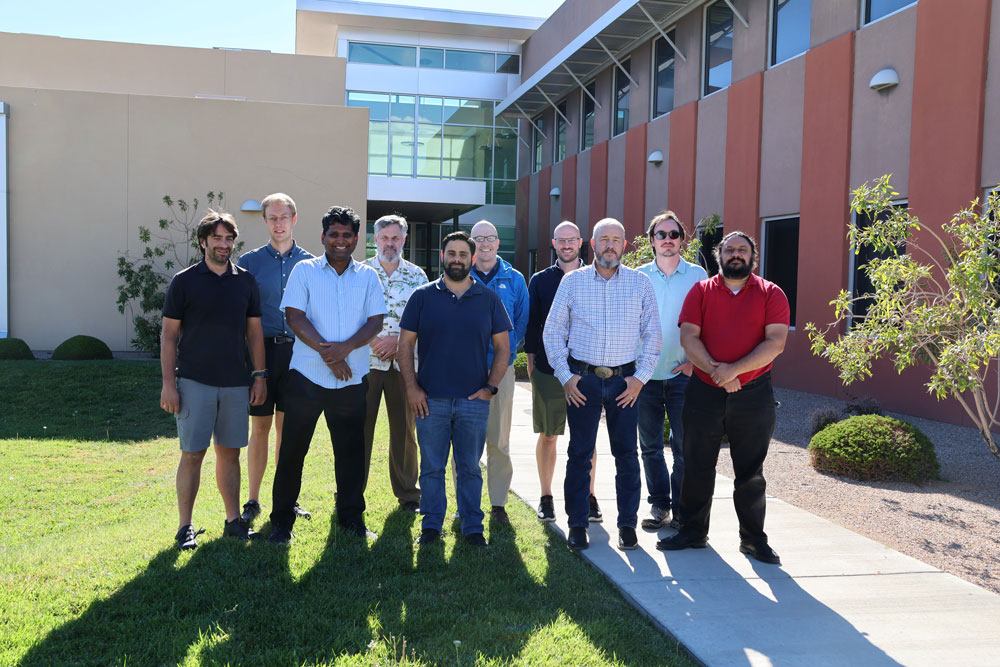
For over four decades, Sandia’s Computing Research Center, in collaboration with other Sandia centers, has explored and fielded novel emerging computing technologies with the goal of applying them to the NNSA mission. From the first large-scale massively parallel processing machines in the ’90s to the exploration and productization of commodity computing early this century, Sandia established itself as a preeminent computer engineering laboratory.
Sandia has continued this trend by dynamically adapting to the computing environment, first with the Advanced Architecture Testbed (now TAOS) program, followed by the establishment of the Vanguard Advanced Technologies Prototype program.
The Computing Research team conducts early research and development on a wide range of technologies applicable to traditional HPC while spearheading the adoption of cutting-edge technologies and how they can be leveraged to support future NNSA mission needs, such as the adoption of artificial intelligence and machine learning. These explorations are critical to the long-term success of the NNSA mission.