
Play Virtual SIWEED now.
How do you demonstrate wave energy without using water? You make a game. The virtual SIWEED game is based on The Sandia Interactive Wave Energy Education Display, which consists of a 60-gallon tank, a model town and control software to tune a model wave energy converter, or WEC. SIWEED was built to demonstrate how a WEC transforms the movement of ocean waves into electricity, but the SIWEED’s size and weight limited its portability and accessibility as a teaching tool.
To make a water-free version that demonstrates the same principles, technical experts from Sandia’s Hydrodynamic Energy Systems, Ryan Coe and Daniel Gaebele, along with software development engineer intern Tristan Pank and program communications specialist Spring Booth, used Sandia’s expertise in simulation software to develop a virtual version of the tank. The game introduces wave energy concepts for learners at all levels.
Players are asked to tune two parameters that define impedance — a measure of how the device resists and interacts with waves — to power the town of Sandia Point after a power outage.
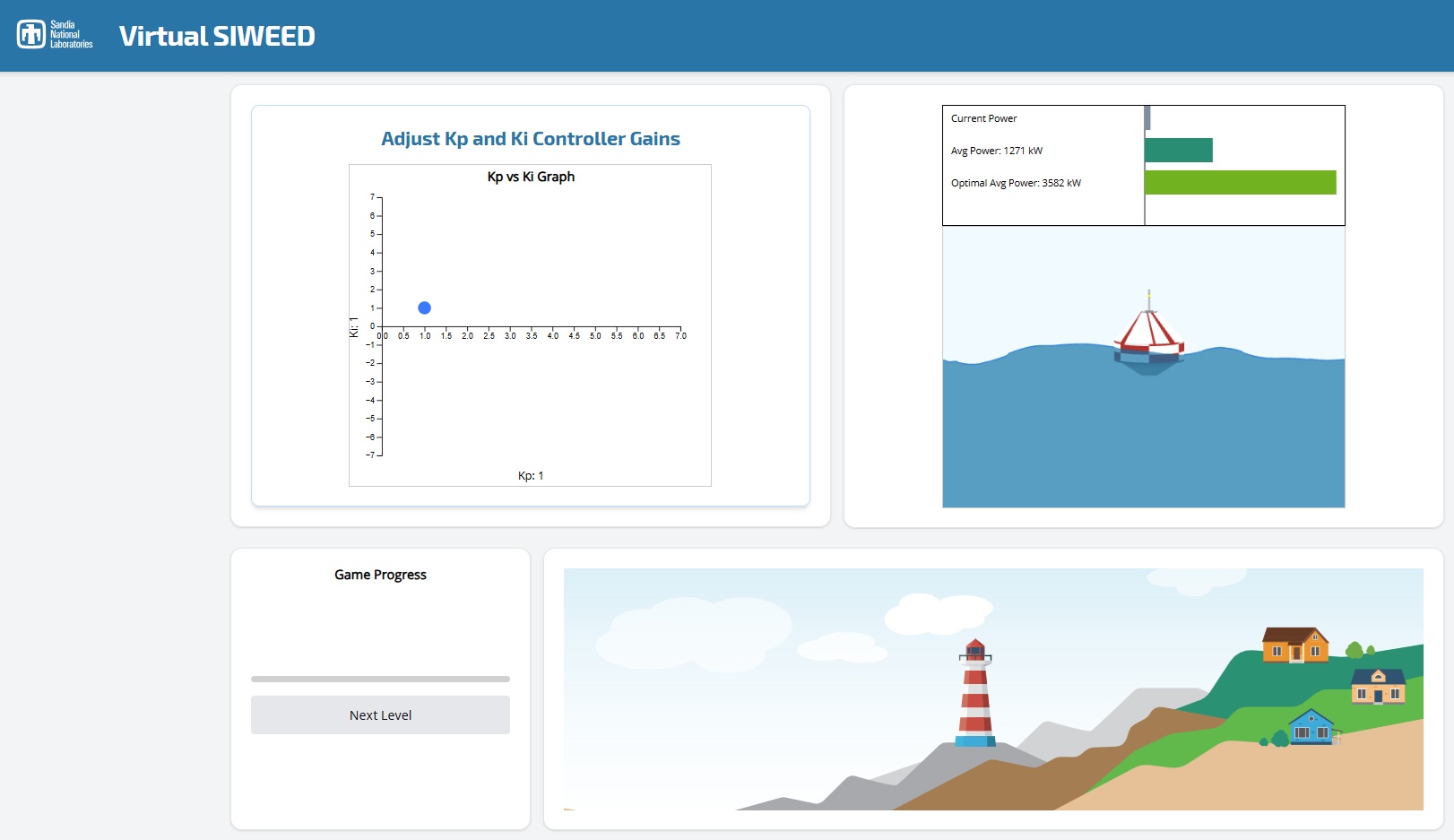
“Because ocean waves move in an oscillating or back-and-forth pattern, effective wave energy conversion requires controlling both the strength and timing of that resistance,” Daniel said.
On the development front, Tristan, with Mission Customer Engagement, shared insights into what made the Virtual SIWEED project remarkable from a technical standpoint. “The project centers around a live animation for the WEC device. We use a technology called a websocket to get very quick, real-time updates for the device’s position, then a 3D rendering library to animate it on the page, which I had never done before,” he said.
Tristan also described the challenges of deploying the game externally. “It was the first Sandia project I worked on that was deployed externally, involving extensive security testing and domain certifications. It was a long process with multiple service tickets but very worthwhile.”
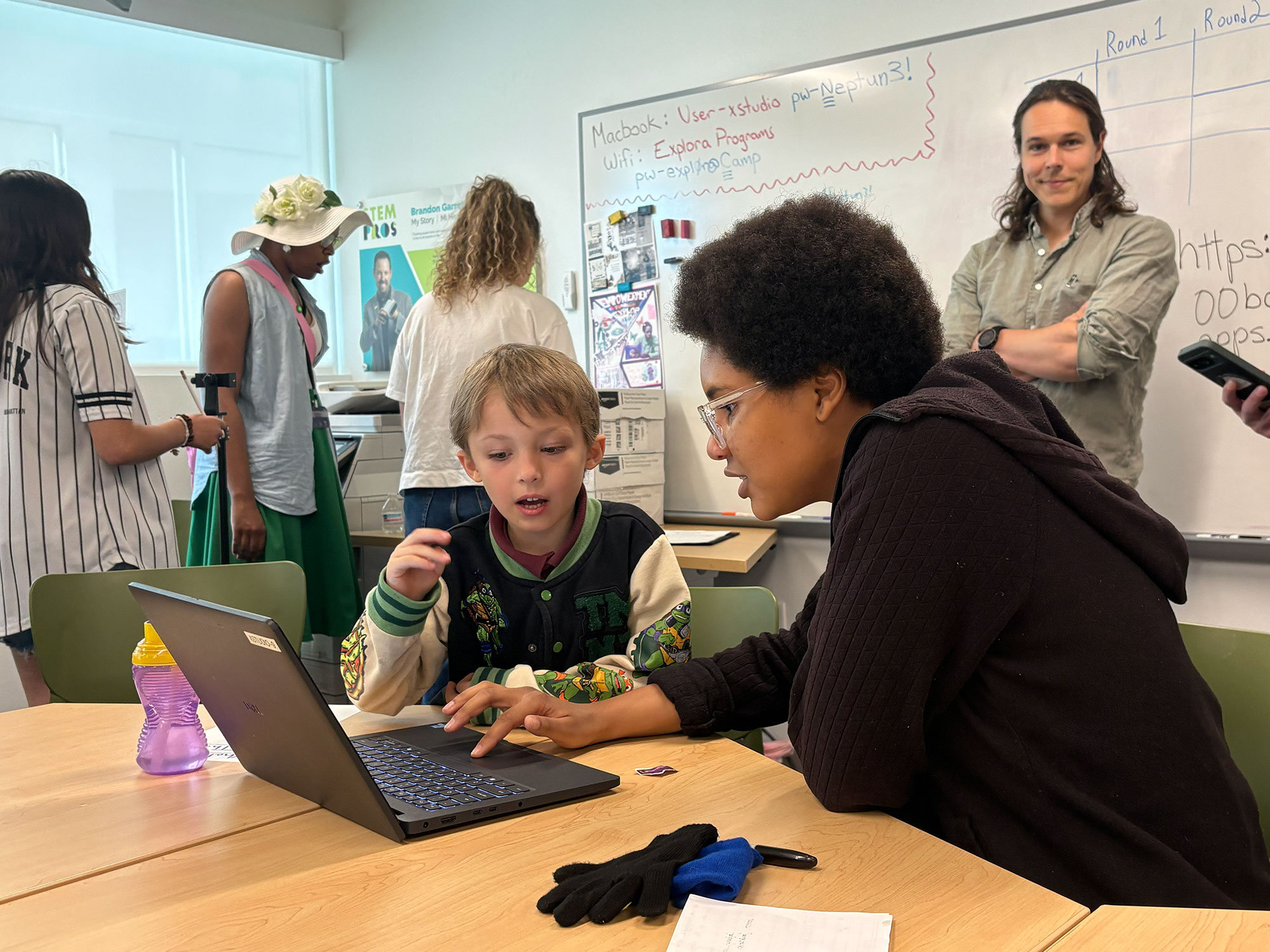
Recently, the team tested the game with students at Explora Science Center and Children’s Museum. As students played, Daniel and Spring observed and took notes. Based on the kids’ feedback, the team continues to refine the game and hopes to introduce a second version featuring immediate feedback to the control parameters and more device parameters for players to manipulate.
Funded by DOE’s Hydropower and Hydrokinetic Office, or H2O, the virtual SIWEED game is now live. Experience it and save Sandia Point at virtual-siweed.sandia.gov.