

As the United States approaches its 250th anniversary, we celebrate the pivotal moments when Sandia has stepped up to support the nation. Through innovation, collaboration and dedication, Sandia has consistently demonstrated its commitment to addressing the challenges that shape national security and future.
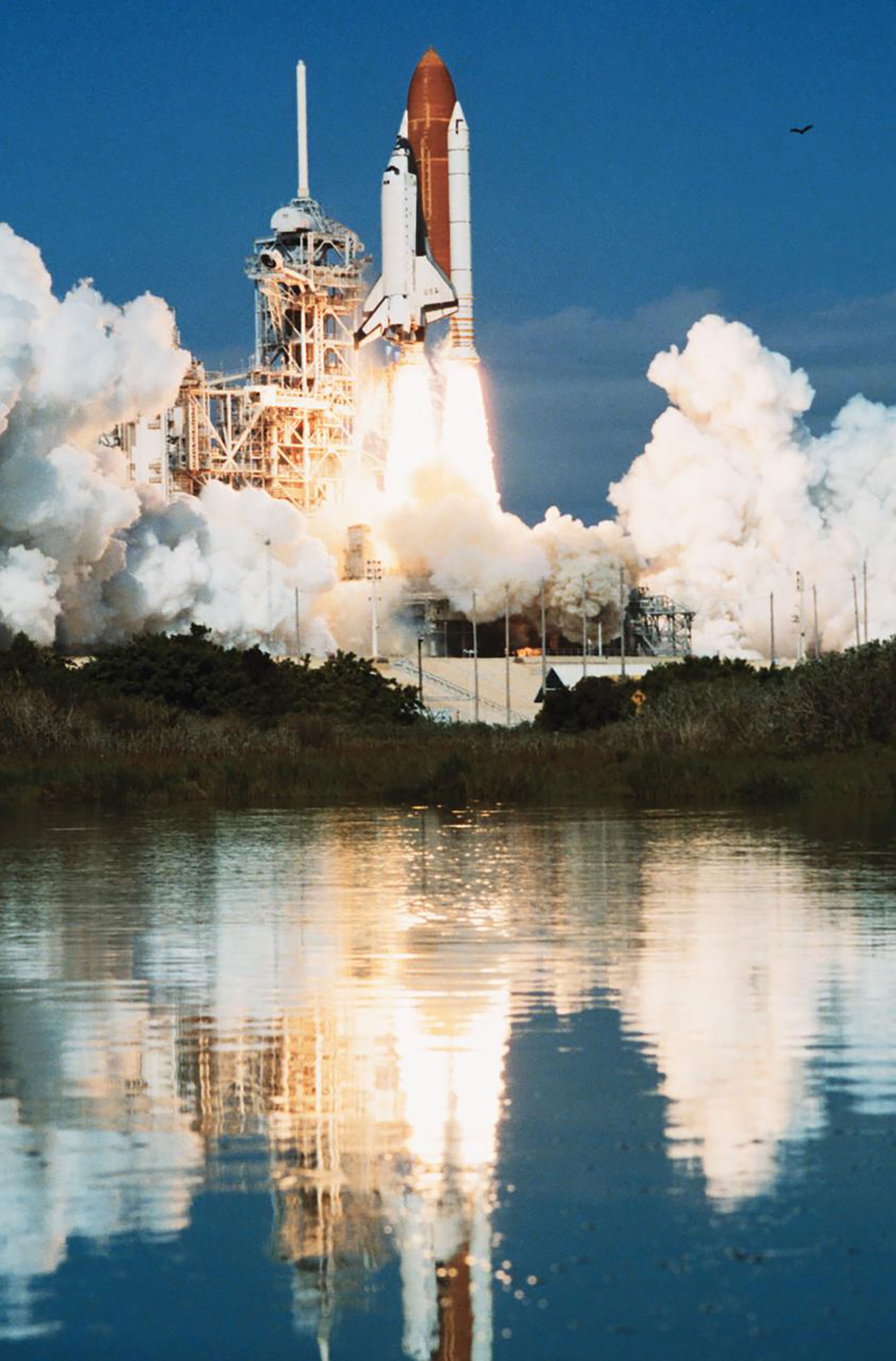
Space. A dangerous frontier. That reality was tragically painted across the sky in 2003 when the space shuttle Columbia disintegrated over Texas and Louisiana during reentry, just 16 minutes before it was scheduled to land at Kennedy Space Center in Florida. In the aftermath, as has often happened in times of dire national need, Sandia was called upon to help find what happened and what could be done to prevent such a tragedy from occurring again.
Two days after the Columbia disaster, Sandia was contacted to see how it could assist with an investigation. A team of Sandians including Tom Bickel, Carl Peterson and Basil Hassan were sent to Johnson Space Center to determine how the Labs could help.
“Sandia’s expertise in material and engineering science was a perfect fit in the investigation,” said Engineering Sciences Director Tom Bickel, programmatic lead for Sandia’s efforts at that time, in a 2003 edition of Lab News.
Not long after that visit, NASA initiated a comprehensive investigation with several agencies, and Sandia was a key part of it. Researchers from both New Mexico and California used the Labs’ computational and experimental engineering and material sciences resources, long before AI assistance, to help determine if an impact from foam insulation breaking off from the external tank during the launch could have led to Columbia’s fate. “Sandia played an important role in determining the cause of the disaster,” Bickel said. “Sandia helped guide the investigation and served as an expert advisor to NASA.”
Sandia’s work focused on two major areas: aerothermodynamics and impact analysis. In aerothermodynamics, Sandia used its expertise in computational fluid mechanics, rarefied gas dynamics and material thermal response to conduct computational fluid dynamics analyses for the orbiter at various altitudes, heat transfer predictions and calculations of plumes simulating hot gas entering the wing.
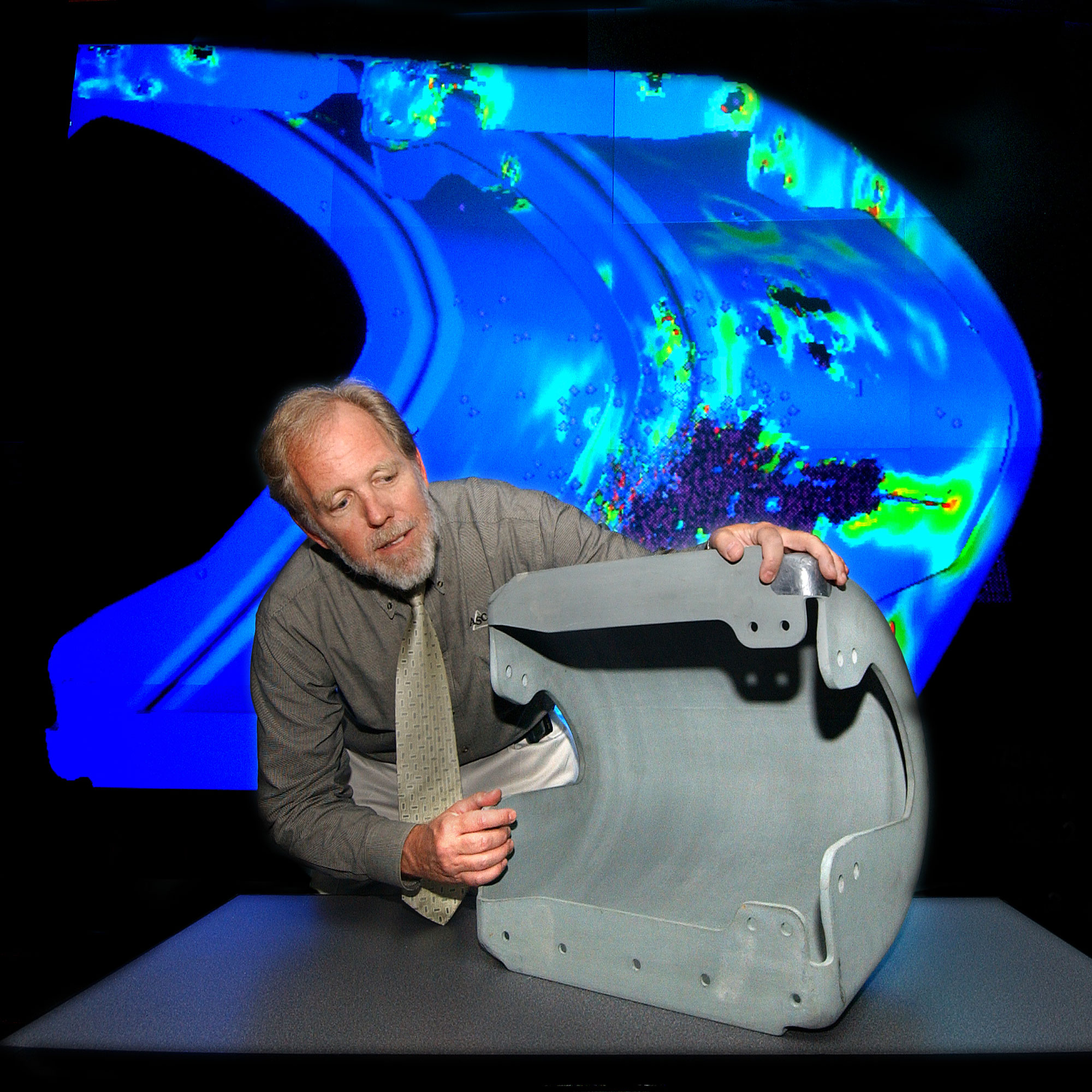
Meanwhile, engineers in Sandia’s structural mechanics groups performed simulations of foam impacting the orbiter. They developed and refined material response models for the shuttle’s reinforced carbon composite , thermal protection system tile and foam materials using NASA-provided data and Sandia-measured properties.
The simulation and material testing work performed by Sandia staff, along with corroborating work by NASA engineers and contractors, led to large-scale testing done at the Southwest Research Institute in San Antonio, Texas. Testing there was performed on full-scale mock-ups that used parts of the wing and flight hardware from the remaining orbiter inventory and museum displays. The tests assessed potential damage from foam impacts on different locations of the orbiter wing’s leading-edge and the thermal protection system tiles on the wing’s underside.
The team discovered that firing foam projectiles at various locations on the leading-edge reinforced-carbon composite panels could have produced damage ranging from localized cracking to actually breaking the panels. One of the most dramatic tests at the Southwest Research Institute produced a 16-inch diameter hole in the lower half of a leading-edge panel on the orbiter. Damage of that kind would allow high-temperature gases to enter the wing and melt the aluminum structure during reentry, a scenario that would end in catastrophe.
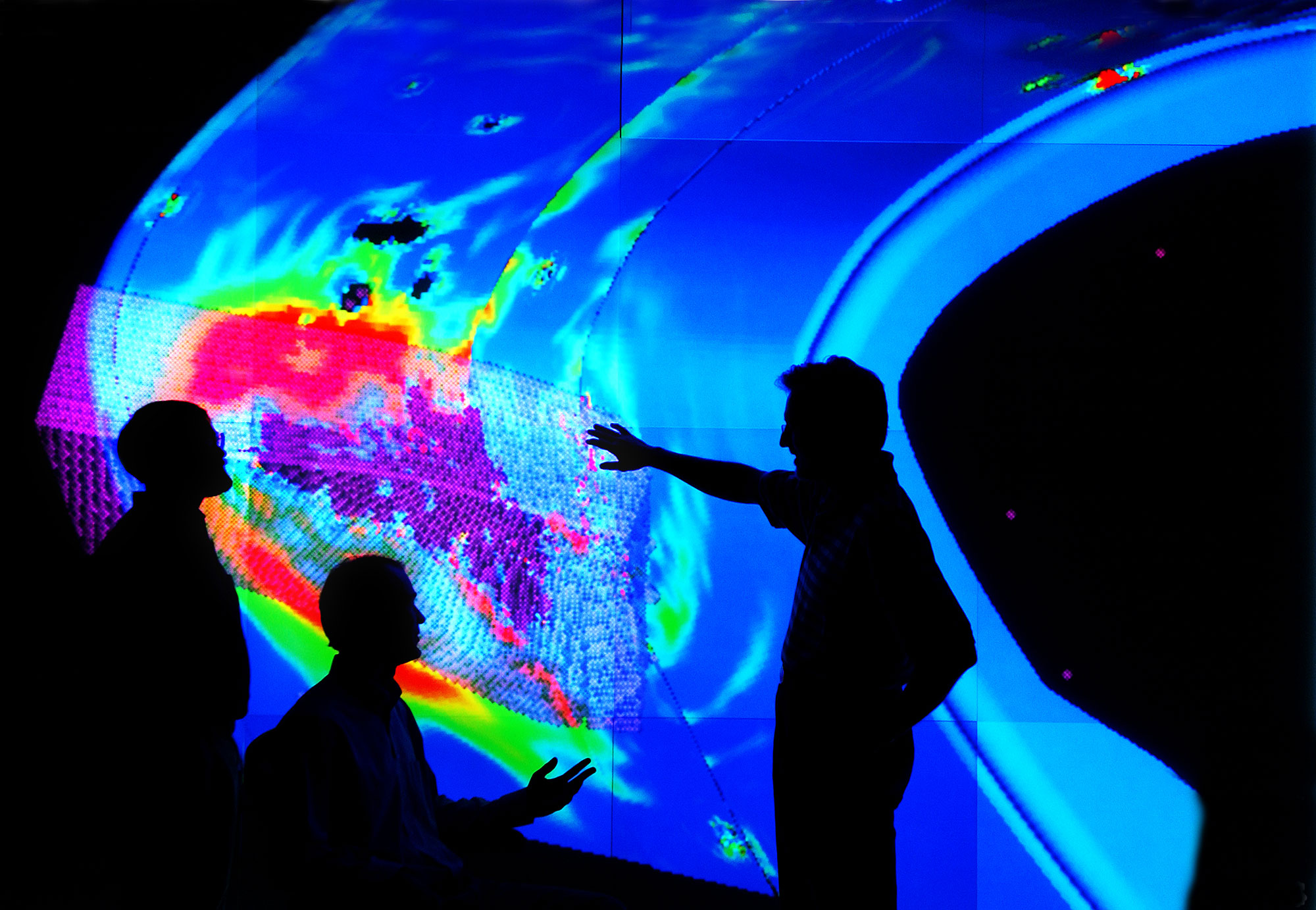
Ultimately, the investigation determined this is precisely, and sadly, what happened: foam insulation from the external tank did indeed break away and damage the left wing and its thermal protection system, leaving the wing as a vulnerable weak spot during the shuttle’s reentry through the volatile atmosphere.
However, Sandia’s contributions didn’t end with the investigation to determine what caused the accident. Solutions were also needed. As NASA prepared for a Return to Flight mission, which was scheduled for launch in early May 2005, Sandia’s engineers were developing the Impact Penetration Sensing System. This system was designed to monitor the shuttle’s wing’s leading edges for damage during launch.
The sensing system allowed for real-time monitoring of the shuttle’s structural integrity, sending signals back to mission control if significant damage occurred as the shuttle lifted off. This innovative technology was crucial for ensuring the safety of astronauts and the success of the future shuttle missions.
Space shuttle flights continued for another eight years after Columbia, due in part to Sandia’s ability to help determine what went wrong and how to prevent it in future launches. The shuttle program ended in 2011 with the final flight of space shuttle Atlantis. The subsequent flights after Columbia allowed NASA to continue work on the International Space Station and do repairs on the Hubble Space Telescope, missions that wouldn’t have been possible without the contributions of Sandia’s research and engineering expertise.
While space may always be a dangerous frontier, in 2003, Sandia helped make it just a little safer so the nation could continue to explore the boundless wonders it holds.