
Infrastructure doesn’t stop at buildings or power lines. It grows, it blows in on the wind, and, sometimes, it freezes overnight.
Managing Sandia’s living, shifting environment is the job of Rudy Sanchez, team lead for Infrastructure Operations’ Grounds and Roads crew. His team of 20, supported by other Facilities groups, maintains more than 30,000 acres of land — from manicured turf to remote roads deep in the foothills. Their mission is constant, complex and critical.
“Most people think of landscaping as just mowing grass,” Rudy said. “But this is full-scale operations work. Irrigation systems, fire mitigation, storm prep, debris cleanup — it’s every season, every zone, every detail.”
Landscapes and locations
Rudy runs the team with precision. Sandia’s New Mexico site is divided into four geographic sectors, each with its own environmental profile.
“Tech Area I is like a dense city core: highly landscaped, tightly packed,” he said. “Tech Areas II and IV are more suburban, with space between buildings. And Tech Areas III and V, plus the remotes. They’re rural, with open land, native vegetation and tumbleweeds.”
Those differences dictate the work. Some areas require delicate pruning and precise irrigation. Others call for tractors to clear fence lines and manage windblown debris. No two teams work the same, but they operate with shared structure and clear expectations.
“Each four-person team owns their zone,” Rudy said. “They know the trees, the irrigation systems, the turf conditions. They take pride in it.”
On any given week, crews respond to a flood of work orders, from trimming low-hanging branches to maintaining fire breaks. Tech Area III and the remotes span 13,000 acres.
“I have a handful of guys,” Rudy said. “What we can’t do with labor, we make up for with equipment.”
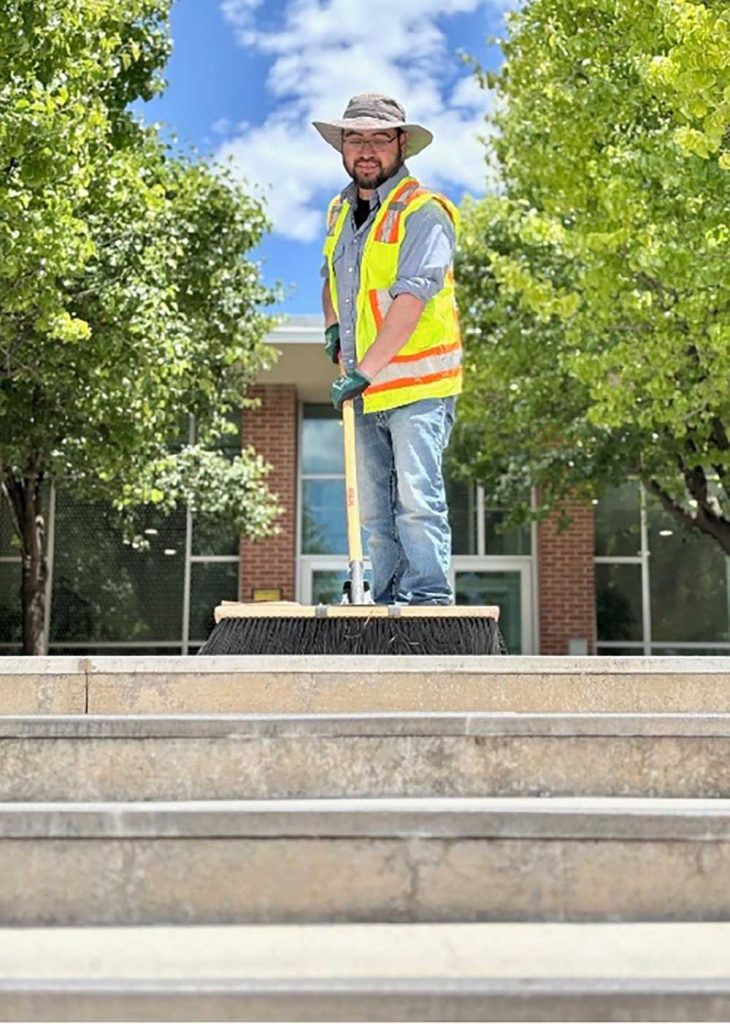
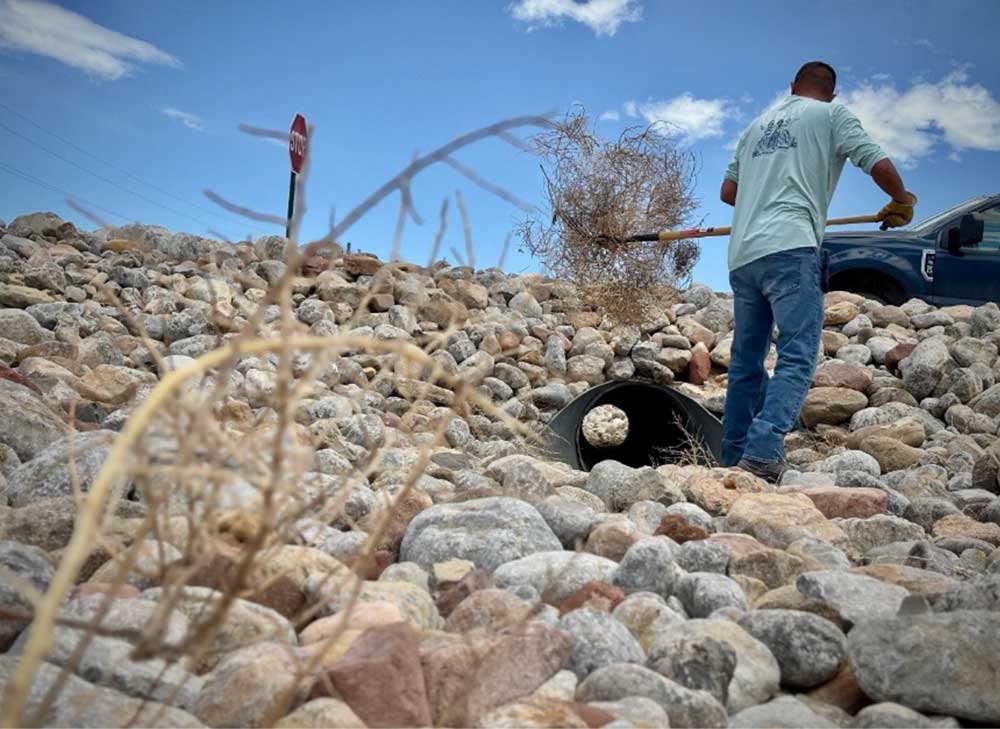
Equipment includes skid steers, 6-foot mowing decks, walk-behind sweepers, utility vehicles and herbicide sprayers. Some tools are specialized, like the rotary brooms used in winter or the deck mowers designed to mulch tumbleweeds in place.
“Shredding does more than clean up,” Rudy said. “It prevents regrowth by blocking sunlight and air. We’re not just reacting; we’re managing the land.”
Every season has a job
Each season signals a shift in operations. In spring, the team moves from snow response to pruning and dethatching. Summer brings irrigation monitoring and repairs. Fall is for leaf cleanup and applying weed control.
“There’s never a quiet season,” Rudy said. “The work changes and stays constant.”
Though much of the work is green and growing, its consequences are rooted in safety. Debris buildup increases fire risk. Loose gravel and cluttered paths create trip hazards. Stressed trees become vulnerable to pests and disease.
“There’s a direct connection between what we do and how safely people can move around,” Rudy said. “If you walk from one building to another, we’re thinking about that pathway the slope, the ground cover, the visibility. All of it.”
The team also plays a key role in wildfire prevention, clearing brush and maintaining fire roads throughout the site.
“We’ve had small fires out there,” Rudy said. “We support the Air Force when they respond, but the best response is prevention. We make sure it never gets close.”
Research and relaxation
While safety and function drive the Grounds and Roads team, the benefits of a well-managed outdoor environment go beyond logistics.
When employees are focused on high-stakes national security work, the opportunity to step outside, even briefly, can offer a necessary mental reset. Rudy and his team take that role seriously.
“People need to step outside,” he said. “Breathe some fresh air or sit under a tree. That’s necessary.”
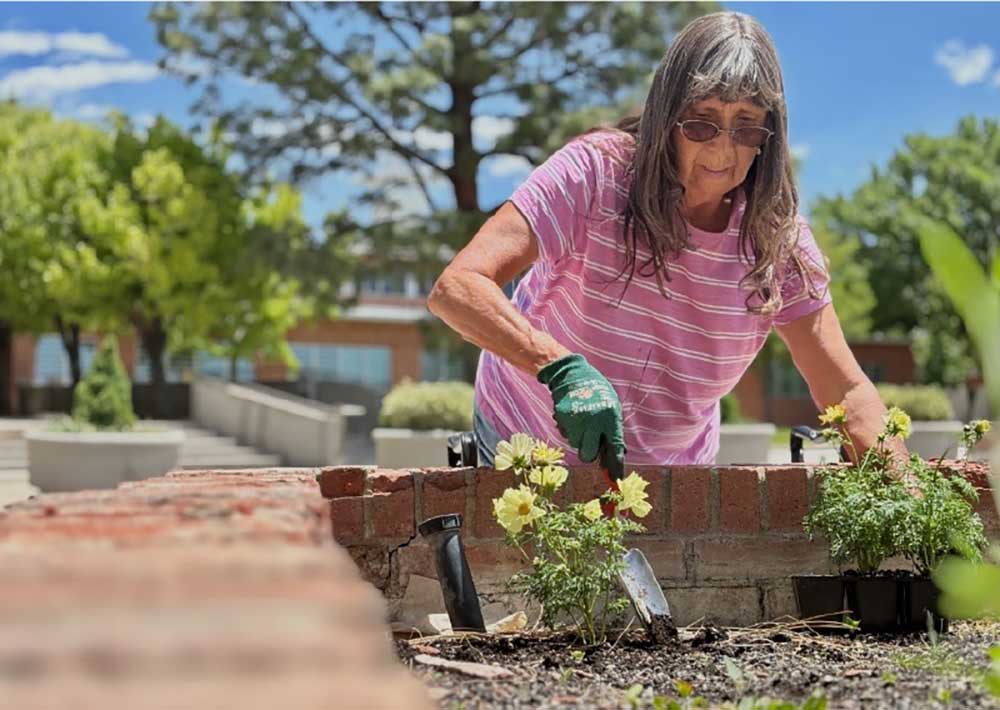
From shaded courtyards to walkable green spaces, the team maintains environments that promote well-being alongside safety. Trees, flowers and turf receive the same care and attention as fire breaks or drainage paths. Both visual comfort and hazard prevention are essential.
“A good outdoor space lets people clear their head, take a break and get through a tough day,” Rudy said. “Even if they’re just walking from one building to another, we want that space to feel good.”
The result is a campus that does more than support world-class research. It creates space for people to work, recharge and return with focus.
A seamless system
Whether they are pruning branches, repairing irrigation or mulching windblown debris, the Grounds and Roads crew works with a clear purpose: keep Sandia’s living landscape aligned with its mission.
Their work supports movement, safety and continuity across a vast and varied site. Season by season, zone by zone, they turn natural elements into something structured, dependable and an environment as intentionally maintained as the science it surrounds.