

Sandia engineers, along with National Nuclear Security Administration, conducted a series of stockpile tests in which inert units of the B61-12 were carried and dropped by an F-35 aircraft. For World Photography Day on Aug. 19, 2026, Sandia photojournalist Craig Fritz reflected on capturing images of the people behind the successful flight tests. “What makes a shoot memorable isn’t just the technology or the scenery — it’s the people who bring a story to life,” Craig said. “What really stood out, and what I aimed to capture, was the team’s genuine energy and dedication.” Photo by Craig Fritz

Sandia engineers, along with National Nuclear Security Administration, conducted a series of stockpile tests in which inert units of the B61-12 were carried and dropped by an F-35 aircraft. For World Photography Day on August 19, 2026, Sandia photojournalist Craig Fritz reflected on capturing images of the people behind the successful flight tests. “What makes a shoot memorable isn’t just the technology or the scenery — it’s the people who bring a story to life,” Craig said. “What really stood out, and what I aimed to capture, was the team’s genuine energy and dedication.” Photo by Craig Fritz

Sandia engineers, along with National Nuclear Security Administration, conducted a series of stockpile tests in which inert units of the B61-12 were carried and dropped by an F-35 aircraft. Sandia photojournalist Craig Fritz reflected on capturing photographs of the people behind the successful flight tests. “What makes a shoot memorable isn’t just the technology or the scenery — it’s the people who bring a story to life,” Craig said. “What really stood out, and what I aimed to capture, was the team’s genuine energy and dedication.” Photo by Craig Fritz

An F-35 aircraft carries inert units of the B61-12 as part of a series of stockpile tests conducted by Sandia engineers and the National Nuclear Security Administration, marking a significant milestone in evaluating the weapon’s performance. For World Photography Day on August 19, 2026, Sandia photojournalist Craig Fritz reflected on capturing images of the successful flight tests. “What really stood out, and what I aimed to capture, was the team’s genuine energy and dedication. I also felt lucky that the aircraft ended up taking off at sunrise with ideal light — a photographer’s dream,” Craig said. Photo by Craig Fritz

Sandia researchers are using reinforcement learning, a kind of machine learning, to teach autonomous drones how to play a strategic version of tag. The work could help advance algorithms for autonomous systems that need to pursue, evade or coordinate in rapidly changing environments, including future systems designed to defend critical facilities from hostile drones. In the photo, a Sandia engineer quickly replaces a drone’s propeller. Learn more at bit.ly/4qIJcPa Photo by Craig Fritz

Sandia engineers and interns watch as a fleet of small, inexpensive drones take to the air for a demonstration. The team is using reinforcement learning, a kind of machine learning, to teach autonomous drones how to play a strategic version of tag. The work could help advance algorithms for autonomous systems that need to pursue, evade or coordinate in rapidly changing environments, including future systems designed to defend critical facilities from hostile drones. Learn more at bit.ly/4qIJcPa Photo by Craig Fritz

Sandia researchers are using reinforcement learning, a kind of machine learning, to teach autonomous drones how to play a strategic version of tag. In the photo, drones are set up for a test at Sandia’s Center for Advanced Manufacturing and Innovation. The work could help advance algorithms for autonomous systems that need to pursue, evade or coordinate in rapidly changing environments, including future systems designed to defend critical facilities from hostile drones. Learn more at bit.ly/4qIJcPa Photo by Craig Fritz

With rockets propelling it down Sandia’s sled track, a semitrailer loaded with mock nuclear weapons slammed into a barrier. The impact marked the final full-scale crash test of the Mobile Guardian Transporter, a next-generation system designed to safely transport nuclear weapons and other sensitive materials for the U.S. Department of Energy's Office of Secure Transportation. Learn more at bit.ly/4xZdmjs Photo by Joel Ortiz

The Labs are being recognized as one of America’s top employers, earning spots on three lists: Best Large Employers, Dream Employers and Best Employers for Company Culture. “People come to Sandia Labs because they want to solve meaningful problems alongside exceptional colleagues,” Labs Director Laura McGill said. “As the nation’s premier engineering laboratory, we advance national security and U.S. technological advantage. We create an environment where talented people can do the best work of their careers." In the photo, a technologist grinds metal slag from a magnetically insulated transmission line of the Saturn accelerator following a test. Learn more at bit.ly/4xYDlaD Photo by Craig Fritz

Forbes recognized Sandia on three 2026 lists highlighting America’s top large employers: America’s Best Large Employers, America’s Dream Employers and America’s Best Employers for Company Culture. “We know that, fundamentally, Sandia Labs’ success comes through our people,” said Brian Carter, executive director and chief human resources officer for Sandia. “To attract top talent, we want to ensure employees know they’re important and valued, contribute to a mission with immense purpose and impacts, have opportunities for professional growth and advancement, enjoy a solid work-life balance, receive competitive compensation and benefits and more.” Learn more at bit.ly/4xYDlaD Photo by Craig Fritz

The Labs are being recognized as one of America’s top employers, earning spots on three lists: Best Large Employers, Dream Employers and Best Employers for Company Culture. At Sandia’s California site, a researcher pours liquid nitrogen to cool down a sample manipulator. Opportunities to work in cutting-edge science, technology and engineering are a draw for prospective employees. Learn more at bit.ly/4xYDlaD Photo by Craig Fritz

A sounding rocket flight test is giving Sandia engineers real-world reentry vibration data they can use to improve modeling and help drive nonnuclear component designs for the United States' W93 warhead, which is under development. The photo shows the Atrax sounding rocket test at Sandia's Kauai Test Facility. Learn more at bit.ly/3UsdWaW Photo by Sandia National Laboratories

The Defense Science Study Group, a program of university professors and mentors, listen during their tour of the Thermal Test Complex facility on Aug. 3, 2026. Fire Science and Technology manager Carlos Lopez explained how his team adapted a 12-panel radiant-heat array to mimic heat loads relevant to hypersonic flight. Learn more at bit.ly/4cLvq8s Photo by Craig Fritz

The Fire and Science Technology team performed a test on a 12-panel radiant-heat array, which is designed to simulate fire environments, for a new application: mimicking dynamic heat loads relevant to hypersonic flight environments. Learn more at bit.ly/4cLvq8s Photo by Sandia National Laboratories

Sandia researchers developed a sensor that uses a rare earth crystal and laser light to measure intense magnetic fields needed for fusion research and high-energy physics. The technology could help researchers collect precise measurements in places where conventional sensors can struggle with radiation, electromagnetic interference or plasma conditions. In the photo, the rare earth garnet used by Sandia researchers to measure intense magnetic fields is illuminated by a green laser. Learn more at bit.ly/3RMzZs1 Photo by Craig Fritz

Sandia physicist Israel Owens and his colleagues have developed a much smaller optics system that uses a rare earth crystal and laser light to measure intense magnetic fields needed for fusion research and high-energy physics. “We’re really excited about where things are going,” Israel said. “We think this technology is a pretty major improvement in measuring magnetic fields.” Learn more at bit.ly/3RMzZs1 Photo by Craig Fritz

Sandia led a two-week field exercise to test rapidly deployable security technologies in rugged, remote conditions. The exercise brought together drones, ground sensors, radar, high-definition cameras, communications networks and portable security systems designed and developed at Sandia to see how they worked as part of one integrated system. The portable system, pictured on a trailer, can be pulled by a vehicle or flown in a helicopter. Learn more at bit.ly/3S4W59b Photo by David Lienemann

Now in its 40th year, HMTech is Sandia’s longest-running education outreach program. Each year, about 100 Sandia and community volunteers teach activities on everything from cybersecurity to fermentation, introducing students to a range of STEM experiences. Learn more at bit.ly/4b2kjaz Photo by David Lienemann

Computers can’t perform arithmetic perfectly due to the limitations in floating point technology, which represents real numbers, like decimals, to handle very big or very small values. FLOPS, or floating-point operations per second, is a key measure of computer performance and the method is more than four decades old. Sandia computer scientist Samuel Pollard explains that little mistakes in arithmetic can have large impact as computers need increasingly more accurate data to perform precise functions. Now, Samuel has formulated a way to check these basic building blocks of modern computing, opening the door to more accurate arithmetic from computers. Learn more at bit.ly/4fLst9P Photo by Spencer Toy

QCaMP for Educators, co-led by Sandia and other national labs, provided teachers with hands-on activities and resources to bring quantum concepts into their classrooms. In the photo, QCaMP instructor and Sandia physicist Meagan Ivory discusses quantum entanglement and superposition with an educator. In addition to offering a weeklong camp for teachers in 15 states, QCaMP also hosts a four-week camp for students in New Mexico and California. Learn more at bit.ly/4yHCU5Z Photo by Craig Fritz
-

Aires Tide -

A Day in the Life of Sandia -

People of Sandia -
#WomenInScience -

Aerospace -

Basic science -
Biosciences -
Cognitive science -
Computing -
Energy, Environment, Water -
Solar Energy -

Wind Energy -

Large-scale Testing -
Materials Science -

Medical -
Microelectronics -

Nanotechnology -
Nuclear Science -
Photonics -
Pulsed Power -

Robotics -
Security and Defense -
Supercomputing -

Sandia's Security Force -

Wildlife of Sandia Labs -

History -
Davis Gun -
Maritime Hydrogen Fuel Cell Project -

Chelyabinsk Asteroid Airburst -

Sandia Guided Bullet -

Willis Whitfield -

Facilities -

Combustion Research Facility -

Joint BioEnergy Institute -

Pete V. Domenici National Security Innovation Center Dedication -
Community, Education -

CSI: Dognapping -

My Brother's Keeper Day -

STEM Mentoring Cafe -

Minority Serving Institute Partnership Program -

Events -

2016 Kirtland Air Force Base Air Show -

Annular Solar Eclipse -
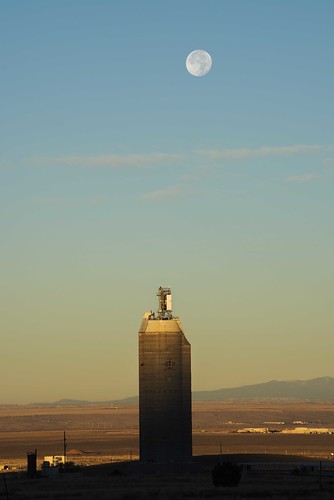
Supermoon 2016 -

2011 Robot Rodeo -
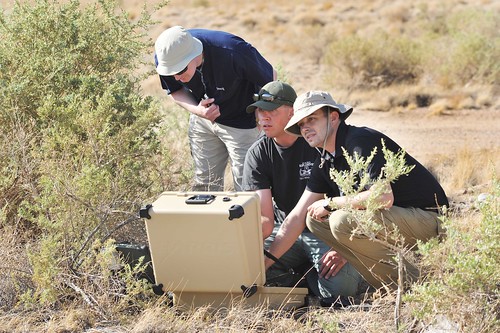
2013 Robot Rodeo -
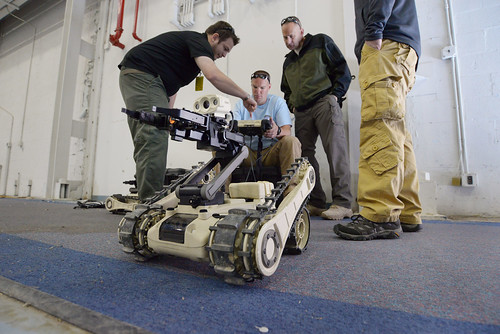
2015 Robot Rodeo -

Sec. Chu Visit, 2012 -

Sec. Moniz Visit, 2013 -
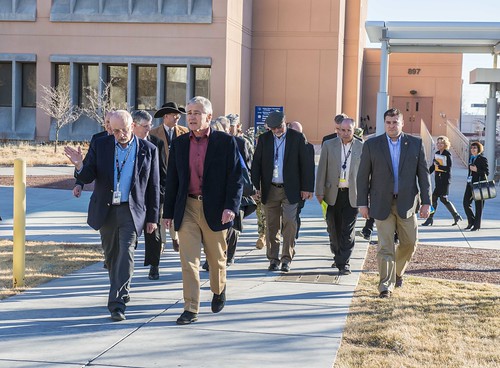
Sec. of Defense Visit, 2014 -

Sec. Jewell Visit, 2015 -
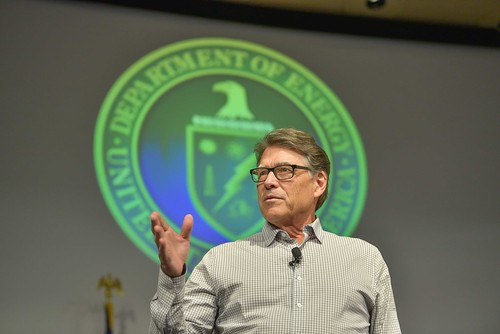
Sec. Perry Visit, 2018 -

Sec. Granholm Visit, 2022 -

Frank Klotz Visit
Members of the media are welcome to download and use these images and photos. Please credit either the photographer or Sandia National Laboratories.