
Federated AI model
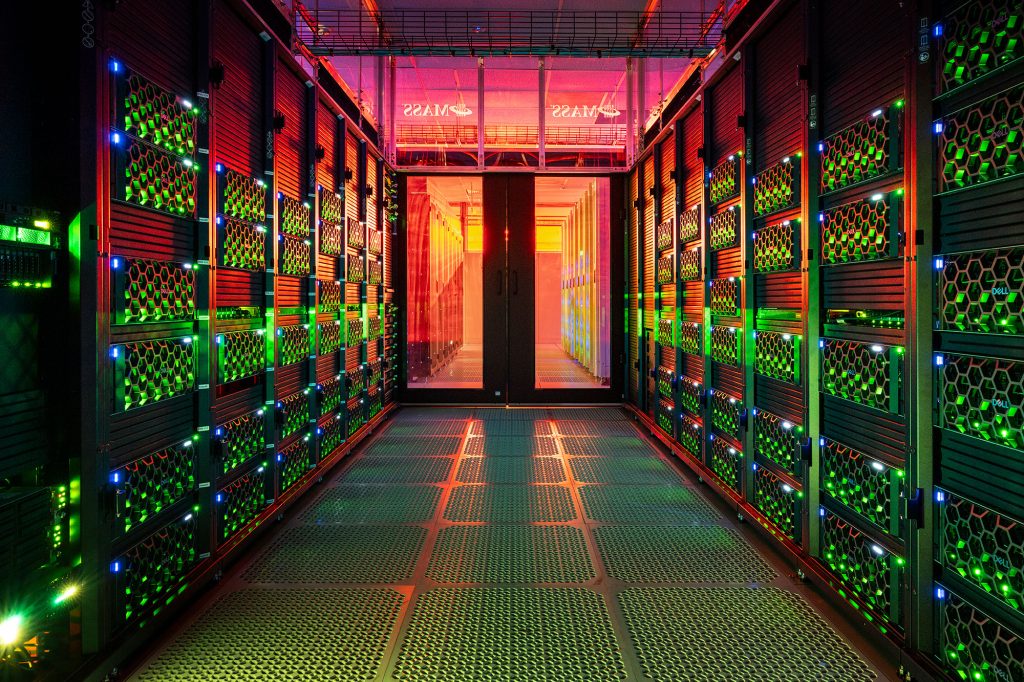
Sandia, Los Alamos and Lawrence Livermore national laboratories have developed a federated machine-learning model prototype to advance AI for national security. Federated learning is a technique for training AI models on decentralized data. Each of the three labs possesses datasets that are not easily shareable, yet they hold valuable insights for collaboration in critical mission areas. Despite the challenges, the research team has successfully demonstrated a prototype that proves a shared model is possible while protecting data held by each laboratory. 1000, LANL, LLNL
Advancing Sandia’s AI strategy
Sandia’s AI Board of Directors advanced its strategic themes of awareness, readiness and advantage. Key achievements include a comprehensive Labswide AI vision, goals and governance. The board launched a dedicated website that offers guidance, events and training programs. Engagement with stakeholders, including DOE and DOD, reinforced Sandia’s national role in AI and positioned it as a critical investment for fiscal year 2026. 1000, 5000, 7000, 9000, 10000
Enhancements to Sandia’s flagship internal AI chat tool
Since its launch in May 2024, SandiaAI Chat has grown. The tool continues to be enhanced with the release of the “Bring Your Own Data” feature, allowing users to securely upload datasets for analysis. This capability enables users to submit results and receive immediate, insightful summaries and trends. The chat team is committed to continuous improvement, planning future upgrades based on user feedback to better support the workforce. 9000

AI solution to better understand and
manage risks
Sandia is advancing AI across the Labs with innovative, cost-saving tools that streamline mission-critical and business processes. Tadpole, an AI solution developed by the Labs’ internal audit and modern systems solutions departments, integrates exact-match and semantic search to quickly surface insights from complex, varied data without formatting or language inconsistencies. By accelerating document review and sharpening trend identification, Tadpole strengthens data-driven decisions. Capabilities first built for internal audits were expanded for Sandia’s business development group, reducing process times and increasing consistency in discovery of mission needs. ESD, 6000, 9000, 10000
griDNA helps secure electric grid
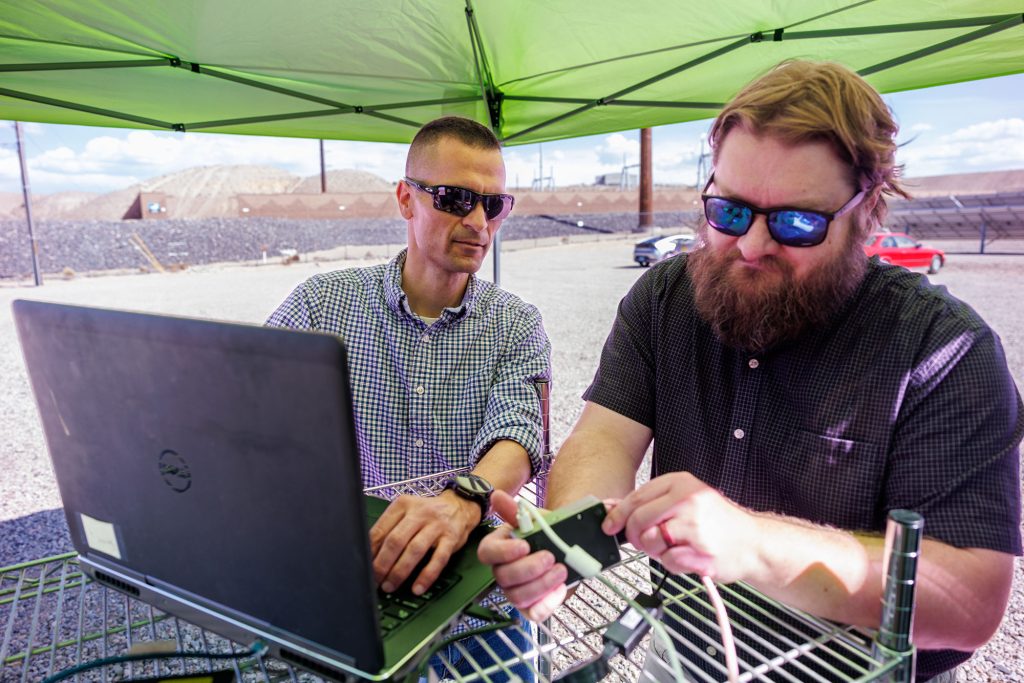
Researchers developed griDNA, AI technology designed to protect distributed critical infrastructure systems such as power grids, pipelines and transportation networks against disruptions caused by cyberattacks or system failures. The technology continuously gathers and analyzes cyber-physical system data, alerting operators and defenders with early detection of abnormal behavior that signals potential trouble, whether from inadvertent equipment failures or malicious cyberattacks. griDNA enhances grid reliability and comprehensive situational awareness, allowing for modern grid expansion. 9000
Reconfigurable electronics for edge processors
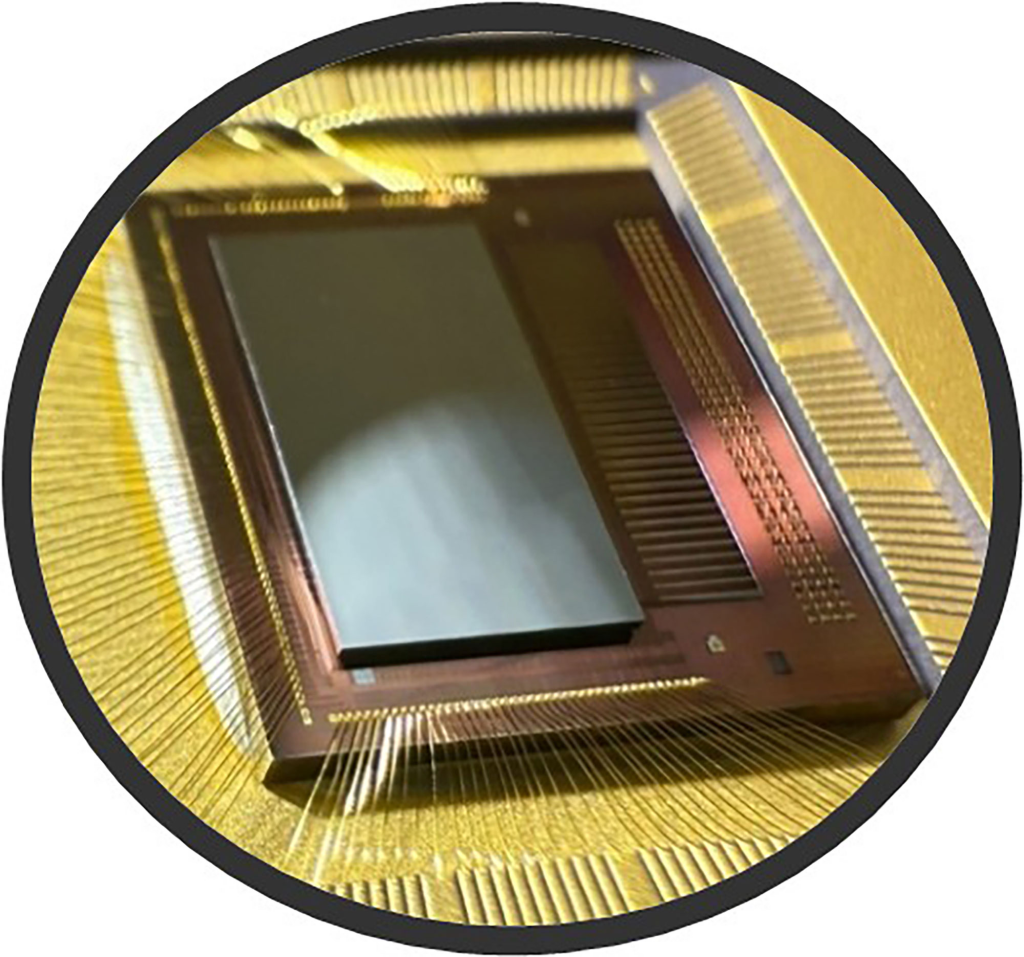
There has been a resurgence in analog signal processing due to increased demand for energy-efficient edge processing and AI capabilities. Edge processing refers to processing data where it is created rather than sending the data to a central cloud. Researchers recently demonstrated a programmable device that reconfigures itself to enable more efficient edge-processing tasks, including dynamic filtering, dynamic amplification and AI inference. The device, based on a Sandia-patented electrochemical cell, achieves orders-of-magnitude improvement in range and precision relative to other leading technologies. Sandia’s recent demonstration of a working microprocessor creates new possibilities for edge computing. 5000, 8000
Achieving operational readiness
A mission computing team replaced XNET with the Enterprise Research Network, an unclassified network environment to meet mission research computing needs. The team received the authority to operate and migrated over 30 customers’ systems and more than 450 devices before the end of the fiscal year. This process, which typically takes 18 to 24 months, was completed in seven months. The team gathered requirements while simultaneously building the solution, engaging 12 departments and 78 personnel to bring the Enterprise Research Network to life. 9000
New supercomputer El Dorado unveiled
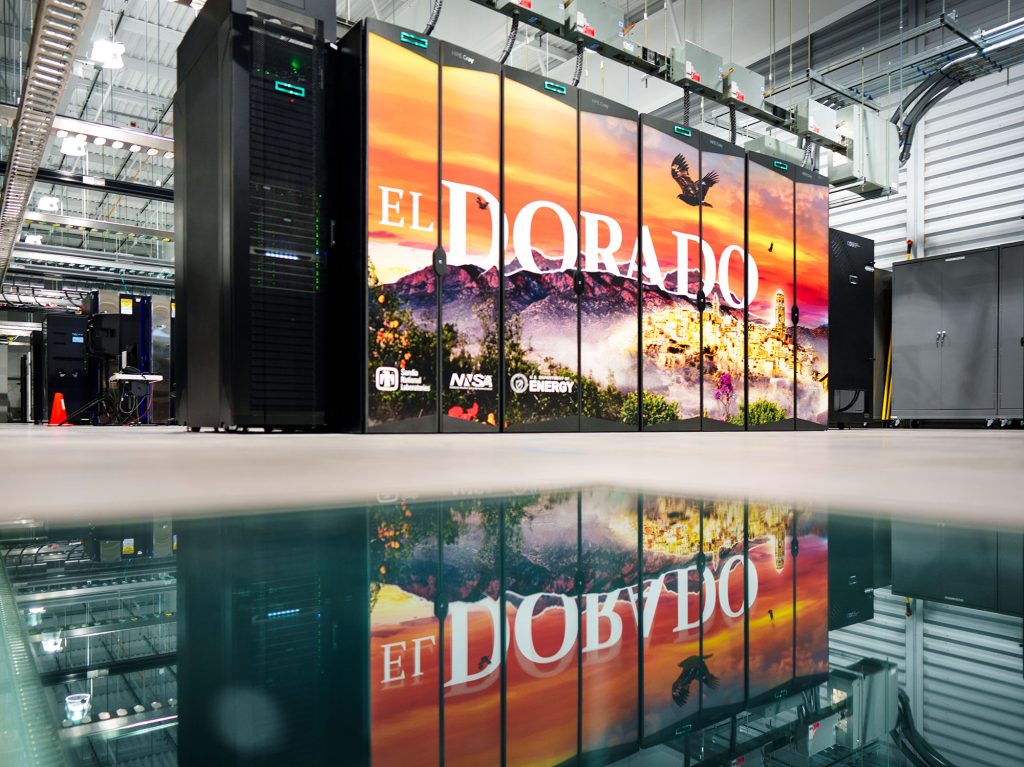
Sandia successfully deployed the El Dorado supercomputer, now ranked 20th globally on the latest Top500 list and the fastest in Sandia’s history. Architecturally identical to Lawrence Livermore National Laboratory’s El Capitan, El Dorado is the first leadership-class exascale system designed to support NNSA stockpile readiness, serving as an application-readiness test system. This achievement underscores Sandia’s commitment to advancing computational capabilities for national security. 9000
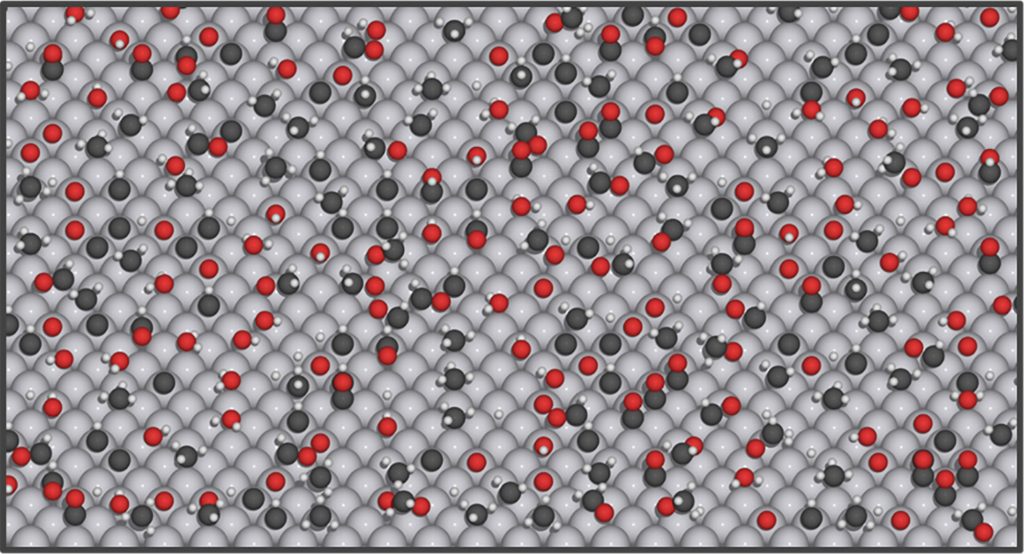
Improving catalysis predictions with AI
Sandia researchers developed an automated machine-learning framework that uses low data subgraph isomorphic decision tree models and efficiently predicts coverage-dependent parameters. This AI framework improves evaluation of lateral interactions, leading to more accurate predictions of catalytic processes. How neighboring adsorbates affect thermodynamics and kinetics is crucial to understanding how molecules react at catalytic surfaces. The new automated machine-learning framework addresses the challenge of calculating the number of possible co-adsorbed configurations, so researchers don’t have to rely on oversimplified models that leave substantial gaps in understanding catalytic behavior. 8000
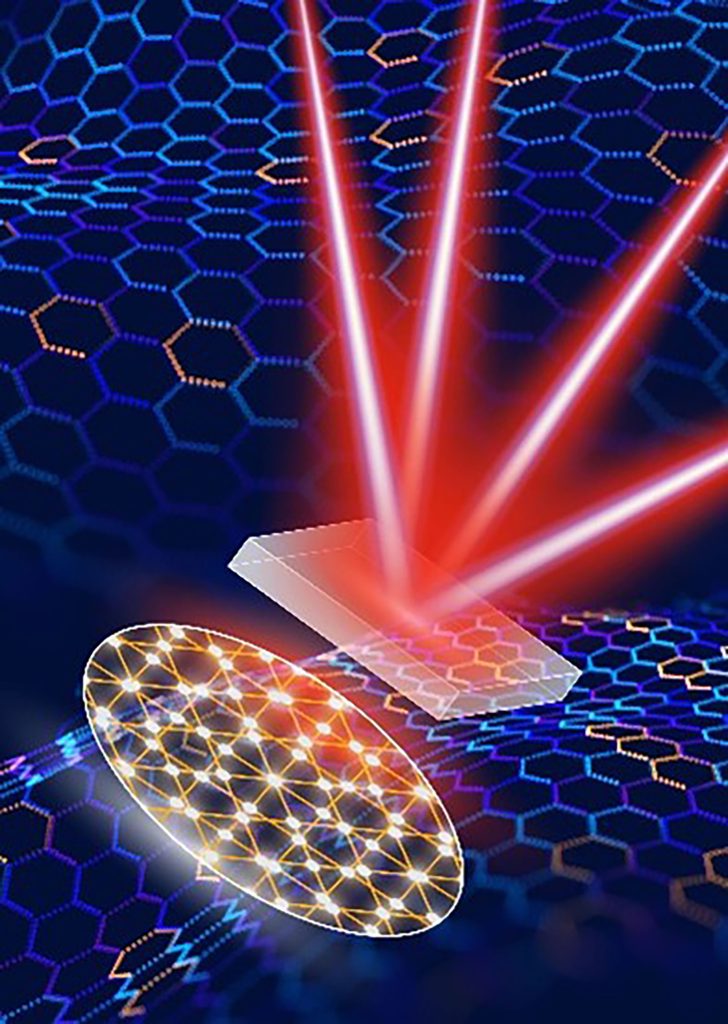
Lithography-defined artificial quantum materials
Quantum materials are gaining a lot of attention for their potential use in advanced microelectronics and quantum technologies. Researchers at Sandia, along with external collaborators, recently developed a method for creating lithography-defined artificial quantum materials, such as moiré superlattices, in semiconductor quantum wells. The work was published in Nano Letters and selected as a supplementary journal cover art article. This achievement opens up possibilities for creating novel quantum materials in conventional compound semiconductors, thus allowing future quantum materials applications to take advantage of state-of-the-art semiconductor synthesis and processing. 1000, 5000, 6000, 8000
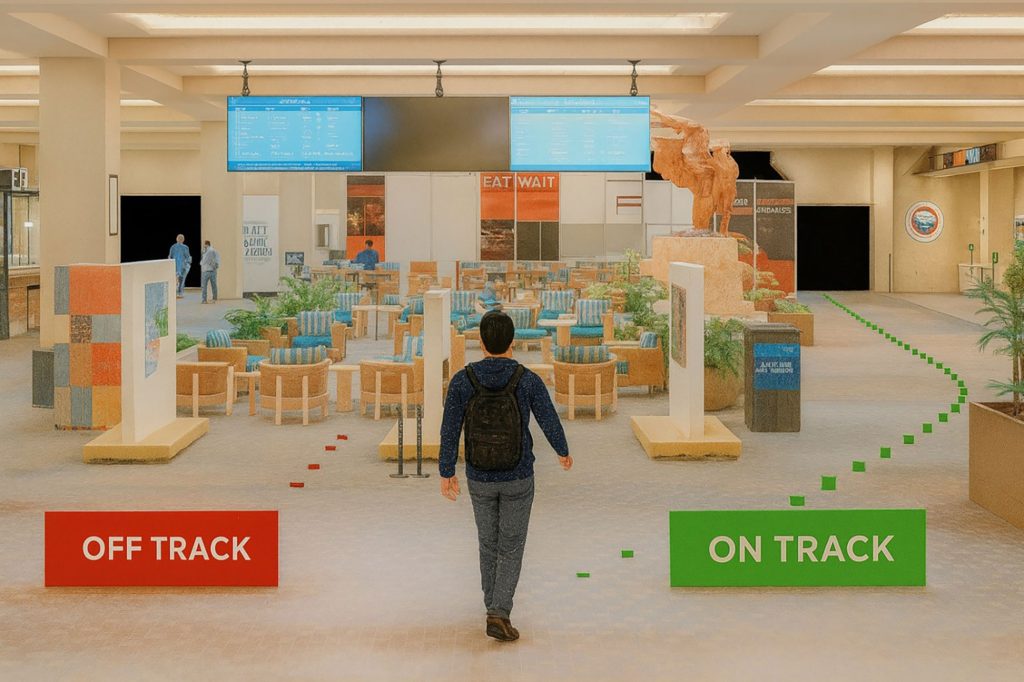
AI-enhanced curb-to-gate comprehensive airport security
Researchers demonstrated a modernized approach to airport security, envisioning a seamless process from curbside drop-off to boarding gates. Using next-generation sensors and AI-enhanced video analytics for anomalous behavior detection and predictive path modeling, the team showcased how real-time data could improve passenger flow and threat detection without disrupting travel by improving officer decision-making and incident response. The approach offers significant value to airports and passengers by improving efficiency, safety and the travel experience. 1000, 4000, 5000, 8000, 9000
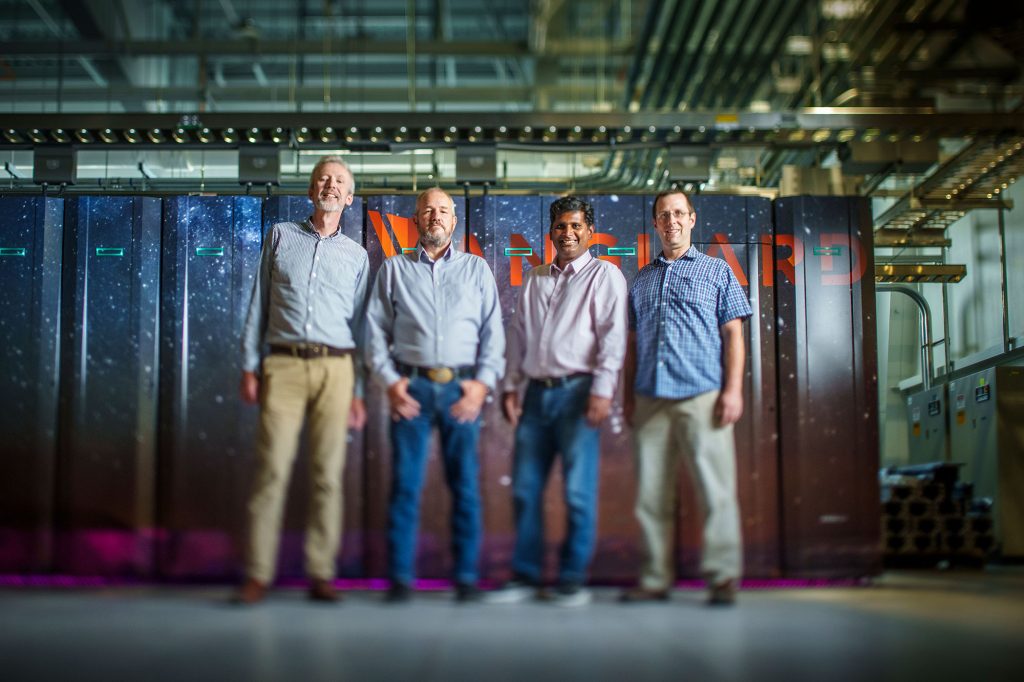
Advanced Memory Technology program awarded
Sandia’s Advance Memory Technology program exceeded the application performance of molecular dynamic simulations on current exascale platforms by 750 times. The collaboration with Los Alamos and Lawrence Livermore national laboratories and Cerebras Systems was a finalist for the Gordon Bell prize for outstanding achievement in high-performance computing, and deemed an Exceptional Achievement by the Defense Programs Awards of Excellence. 1000, LANL, LLNL