
Joint appointments increase university collaborations
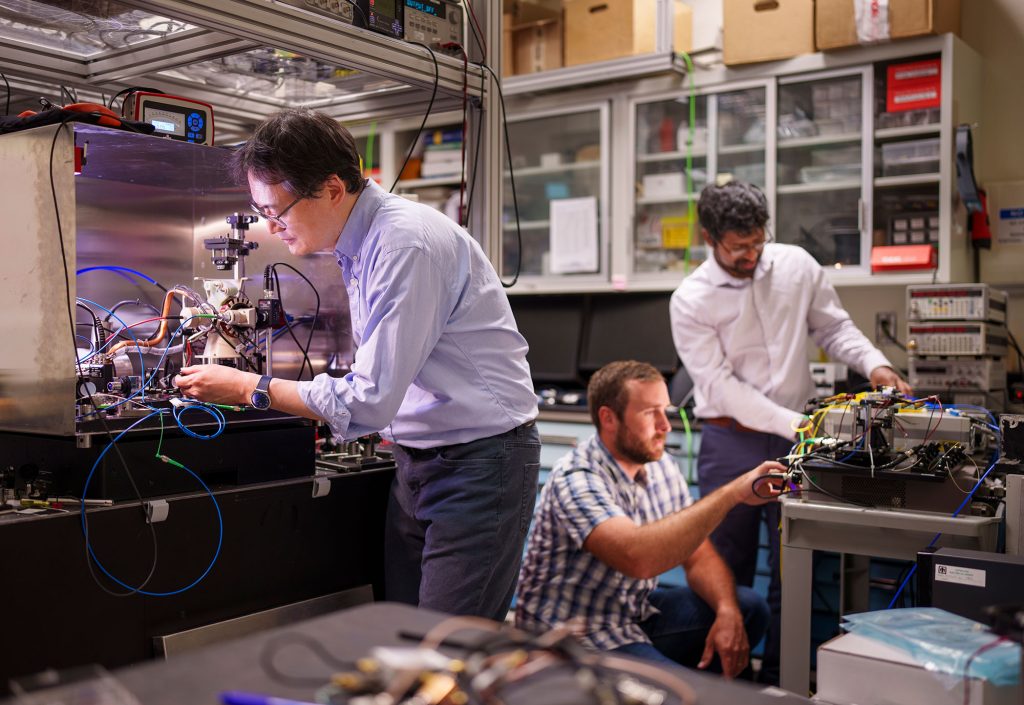
Sandia added four new joint appointment agreements, bringing the total number of partnerships to 20 universities and increasing the Labs’ collaboration with academic institutions. The program includes 25 joint appointments. About a dozen more joint appointments are in progress, which will enhance research capabilities and knowledge exchange between Sandia and university partners, ultimately driving innovation and scientific advancement. 1000

New LDRD Mission Campaigns
Two new Laboratory Directed Research and Development Mission Campaigns were selected this year at $45 million each over seven years. The Radiation Assured Design and Testing for Electronics and Computational Hardening campaign is assessing and advancing radiation hardness of state-of-the-art microelectronics needed for nuclear weapons in strategic radiation scenarios. The Digitally Realized and Enabled Agile and Advanced Manufacturing campaign is maturing advanced manufacturing to accelerate nuclear deterrence and hypersonics product realization. While both campaigns fully launch in fiscal year 2026, seedling funds from 2025 paid for several potentially high-impact initial investments. 1000
Virtual flight test for hypersonic vehicles
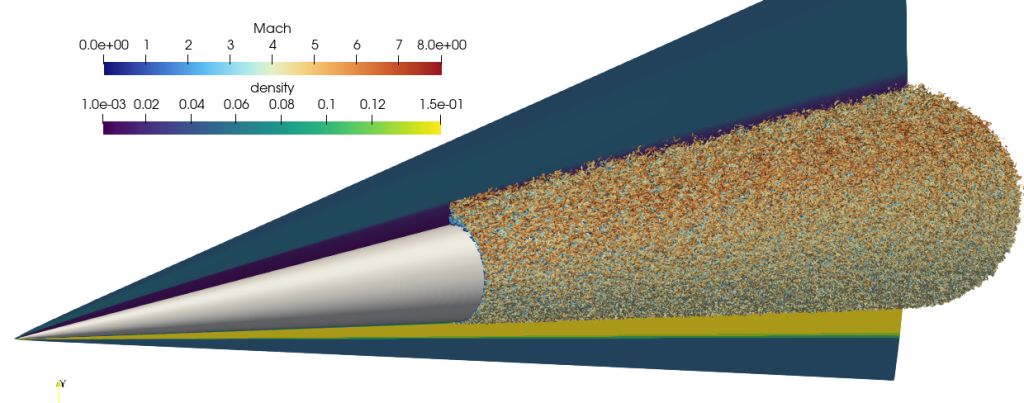
The Sandia Parallel Aerodynamics and Reentry Code software team has optimized code performance to enable unprecedented simulations for Sandia’s nuclear deterrence mission. SPARC is Sandia’s computational fluid dynamics simulation code for reentry, generic hypersonic flight and transonic flight. Using Lawrence Livermore National Laboratory’s El Capitan system and SPARC, researchers have performed large-scale simulations, demonstrating significant progress toward the creation of a credible full-system virtual flight-testing platform for hypersonic vehicles. 1000, LLNL
Shock and vibration testing cuts assessment time
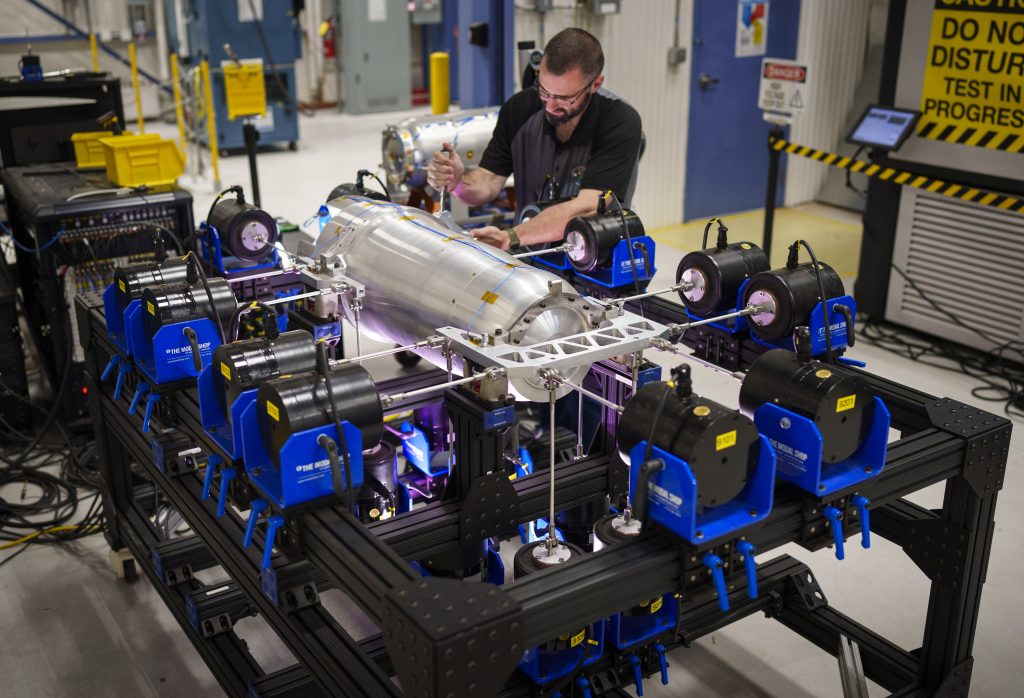
Multi-Input/Multi-Output shock and vibration testing is a significant advancement in creating real-world conditions in laboratory testing. MIMO enhances system and component evaluation by integrating modeling and simulation, analysis of environments and multiple test teams into a workflow. This methodology exemplifies rapid transition of research and development into practical applications. For the W80-4 program, testing time was cut in half as MIMO provides a more realistic test environment, preventing over- and undertesting of components. 1000, 8000
Second year of record collaborations
Sandia entered into 72 Cooperative Research and Development Agreements with private sector and academic partners, matching last year’s record and surpassing the average from the past decade by 93%. CRADAs enable Sandia and its partners to collaborate and share the results of jointly conducted research. Additionally, Sandia signed the first-of-its-kind agreement, called the ACCESS CRADA, which allows other national labs to join a Sandia CRADA and eliminates the need for a partner to go through separate negotiations with each lab. 1000
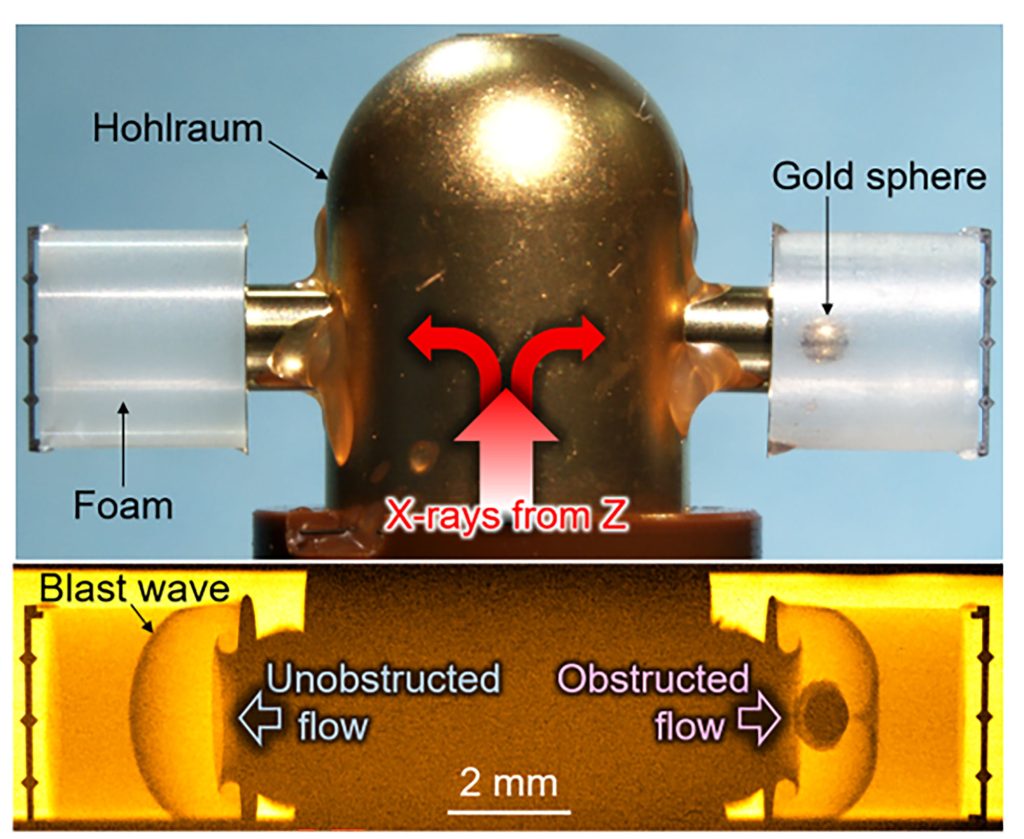
Radiation-driven supersonic blast waves captured at Z machine
Z machine has used its world-class radiography capability to capture subsonic and supersonic radiation-driven blast waves in complex geometries. The 1-nanosecond-gated, 20-micron-resolution radiography data are unique in NNSA due to their wide field of view — 20 millimeters — and their ability to image large objects in the millimeter-to-centimeter scale driven by pulsed power. These images visualize the density enhancement at the front of radiatively driven shocks and are used to constrain Los Alamos National Laboratory models of radiation flow in complex hydrodynamics. 1000, LLNL
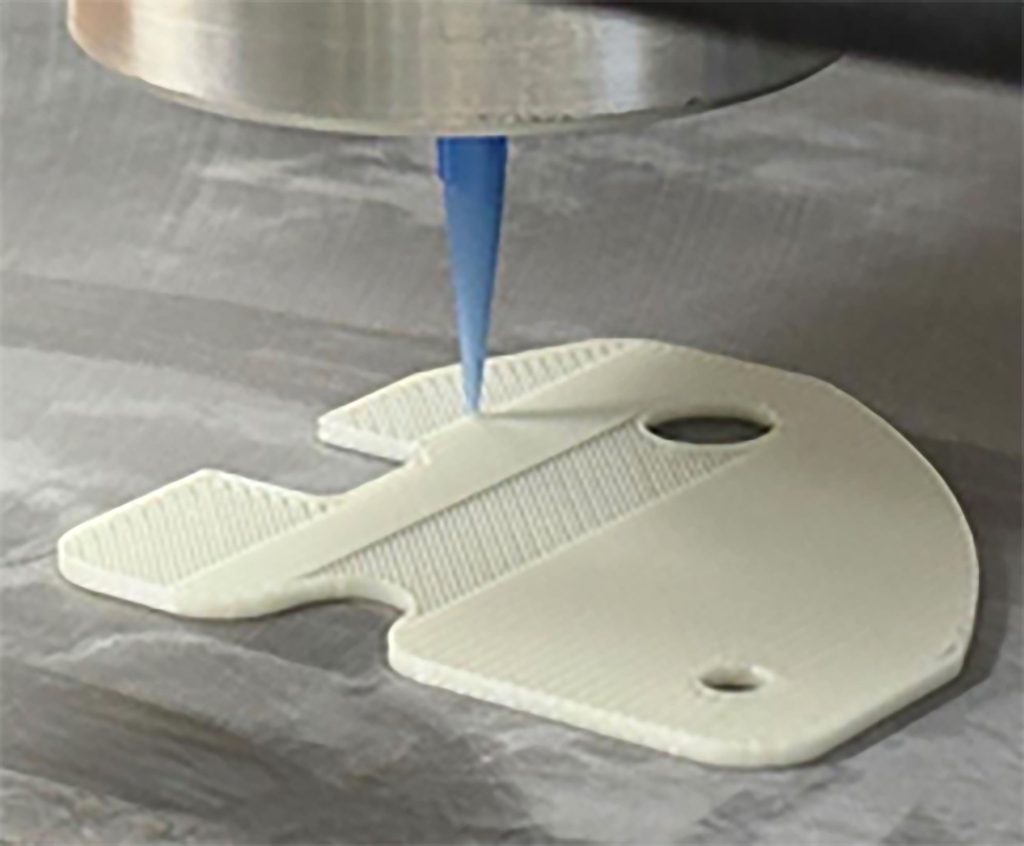
Additively manufactured polymer components using SliceWrite
The Advanced Materials Laboratory developed technology to print complex 3D-polymer cushions. Direct-Ink-Write pads are 3D printed using silicones and a computer-controlled manufacturing process to build lattice structures with tunable properties. Sandia developed SliceWrite to design complex silicone pads in hours instead of weeks or months. SliceWrite couples conventional computer-aided design definition with open-source software to develop print paths for exceedingly complex shapes. 1000
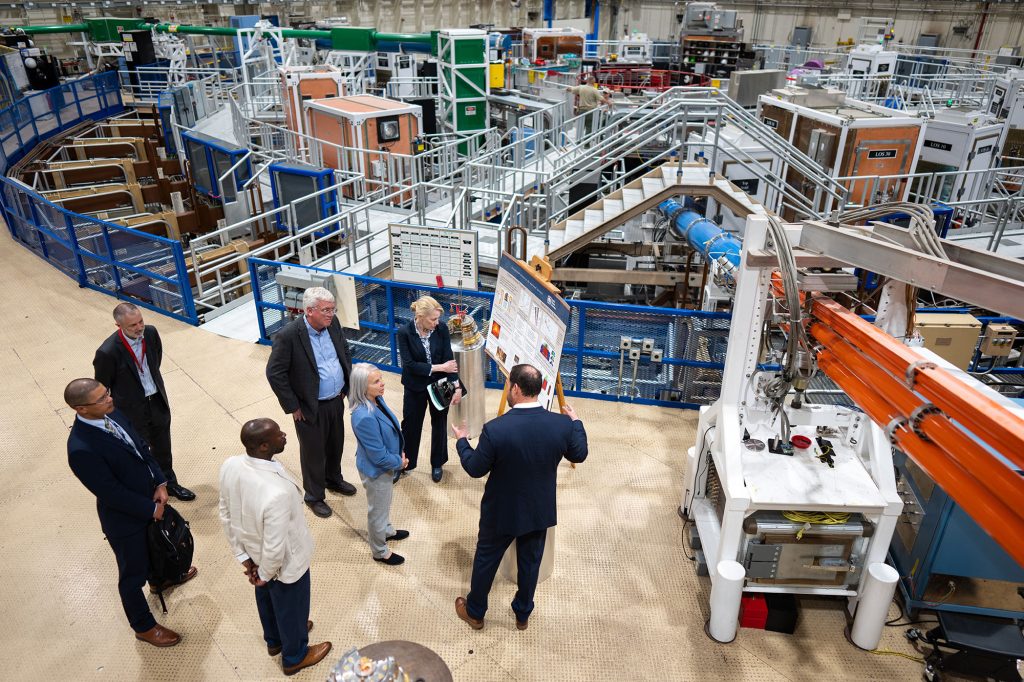
Z machine tackles plutonium mysteries
Through Z machine testing, the plutonium team made significant strides in high-pressure plutonium physics through reduced-scale targets to compress plutonium to unprecedented pressures, employing new diagnostics to measure plutonium temperature during dynamic compression events and increasing the allowable plutonium mass in single-shot experiments. The resulting data has reduced material response uncertainty, increased applicability of directly informed material model parameters and enabled new types of plutonium experiments that are essential for primary weapon physics assessments. 1000
Sugar formation in extraterrestrial settings
Researchers explored a new chemical reaction that produces sugarlike compounds in gas-phase conditions, mimicking environments thought to exist before life on Earth. This work, published in the Journal of the American Chemical Society, suggests that hydroxycarbene and aldehyde reactions could serve as plausible pathways for sugar synthesis in extraterrestrial settings, challenging traditional views on the necessity for aqueous environments for abiotic sugar formation. 8000
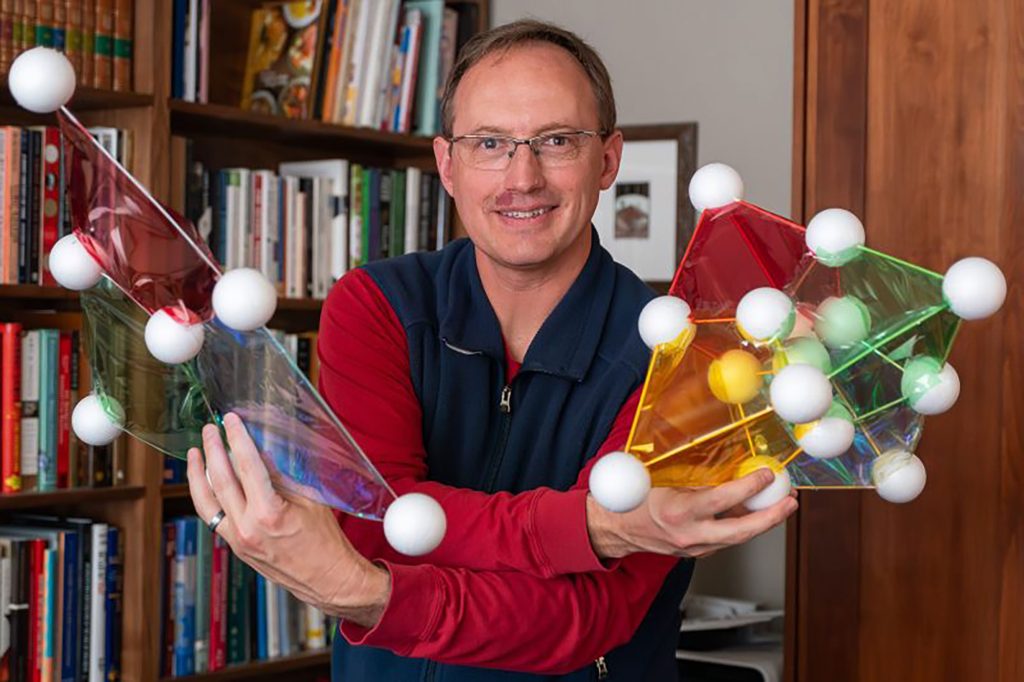
Magic states for quantum computing
Sandia, in collaboration with University of California, Davis, and Quantinuum, validated a new algorithm for creating high-fidelity “magic states,” which will enable future quantum computers to run programs even if one component fails. Featured in Physical Review X, the research demonstrates a method, code switching, which prepares magic states in one error-correcting code and then switches it to another. This enables quantum computers to reliably execute operations that cannot be performed directly, achieving a full set of error-resistant operations more efficiently using the magic states. 1000
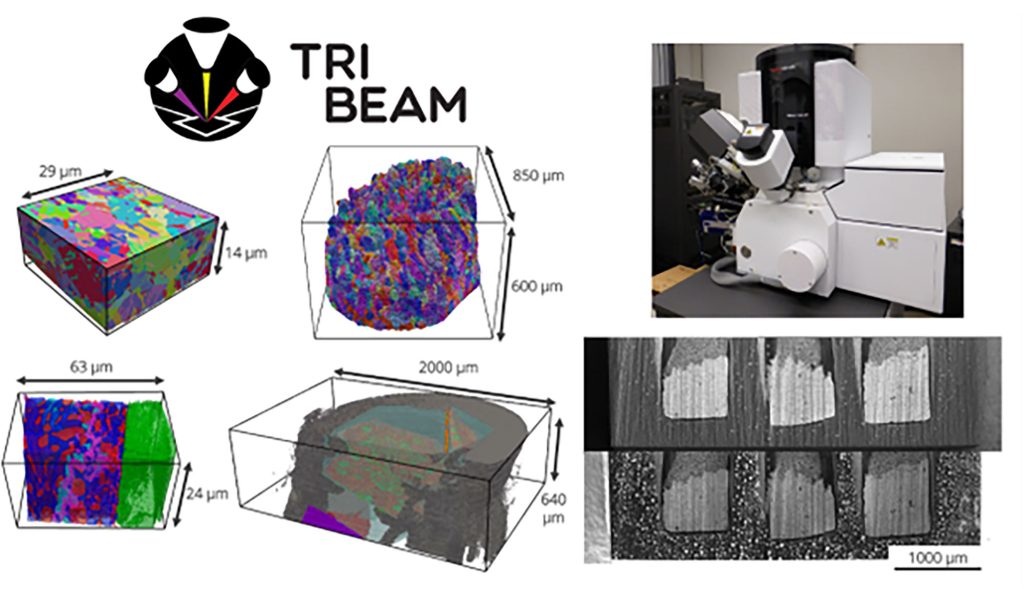
Automated microscope control with pyTriBeam
pyTriBeam is an automated scanning electron microscope control tool for 3D characterization, from submicron to millimeter-scale volumes. Released as open source in early 2025, it supports diverse research applications with flexible workflows for complex geometries and multimaterial systems. Adopted by Kansas City National Security Campus, National Laboratory of the Rockies and the University of California, Santa Barbara, it enhances reverse-engineering and failure-analysis tasks. Its modular architecture allows for customization, instrumentation integration and collaborative development, making it a scalable platform for next-generation characterization in government, academic and industrial research. 1000, KCNSC, NLR, UCSB
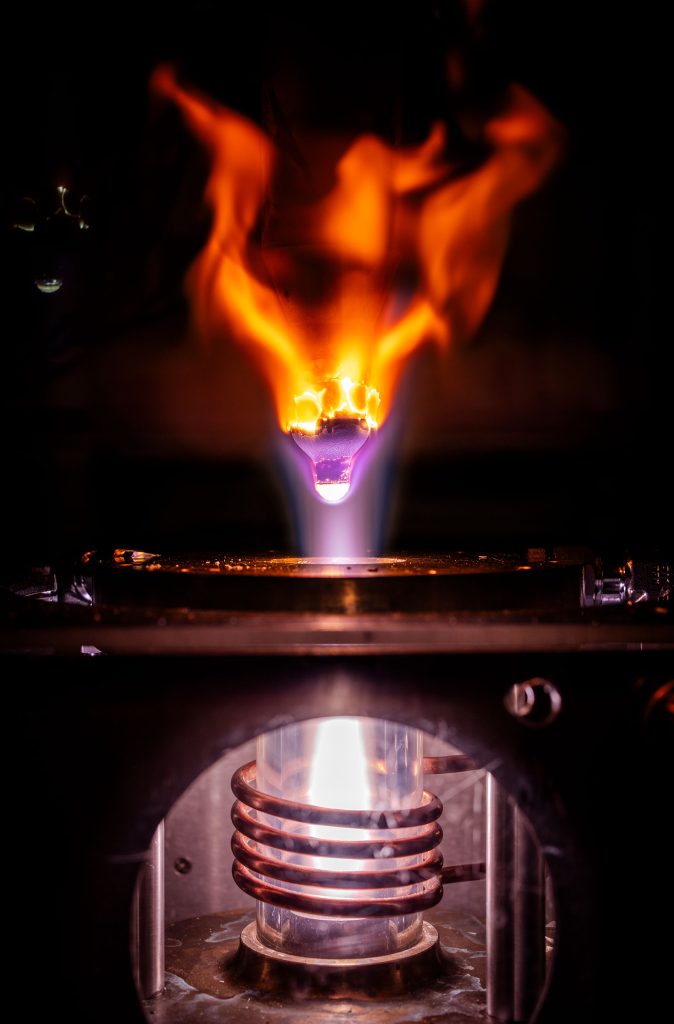
Enabling rapid heat shield analysis
The thermal protection system grand challenge Laboratory Directed Research and Development team developed an end-to-end workflow to rapidly predict the performance of advanced thermal protection system materials in flight applications ahead of qualification opportunities. Over 40 Sandians and several federally funded research and development centers, industry and academic partners manufactured samples, collected ground and flight data, and developed a coupled aero-thermal-mechanical model that simulates a full trajectory. Using this full-physics model, the team developed a reduced-order model with 90% accuracy, but 25,000 times faster, enabling standalone workstations to conduct design efforts normally reserved for supercomputers. 1000, 5000, 8000, LDRD
CREST achieves critical decision approval
On Sept. 29, NNSA granted critical decision approval for the Combined Radiation Environments for Survivability Testing project, marking it as the largest capital acquisition in Sandia history to achieve this milestone. This approval enables the project to proceed to preliminary and final design phases. The new hazard category 2 nuclear facility will enhance reactor-based radiation capabilities in survivability testing, supporting national security objectives while improving operational efficiency and safety. 1000, 4000
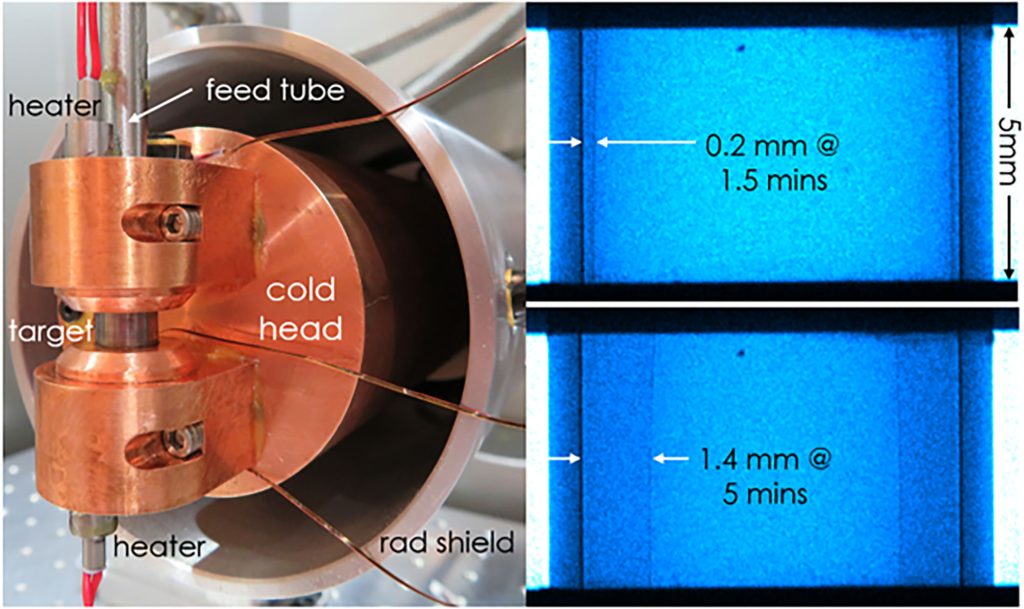
Krypton-doped ice enhances fusion research
Sandia researchers formed krypton-doped ice shells in prototypic and actual Z machine target configurations. Krypton-dopant spectroscopy offers a promising method for measuring several critical plasma parameters in inertial confinement fusion experiments. Fielding cryogenic targets with dopants, however, is difficult since deuterium freezes and diffuses at different temperatures and rates than krypton. In an effort to better understand, characterize and improve fielding of future shots, a target metrology lab was established using an X-ray to enable offline detailed radiographic examination of the krypton doping process. 1000
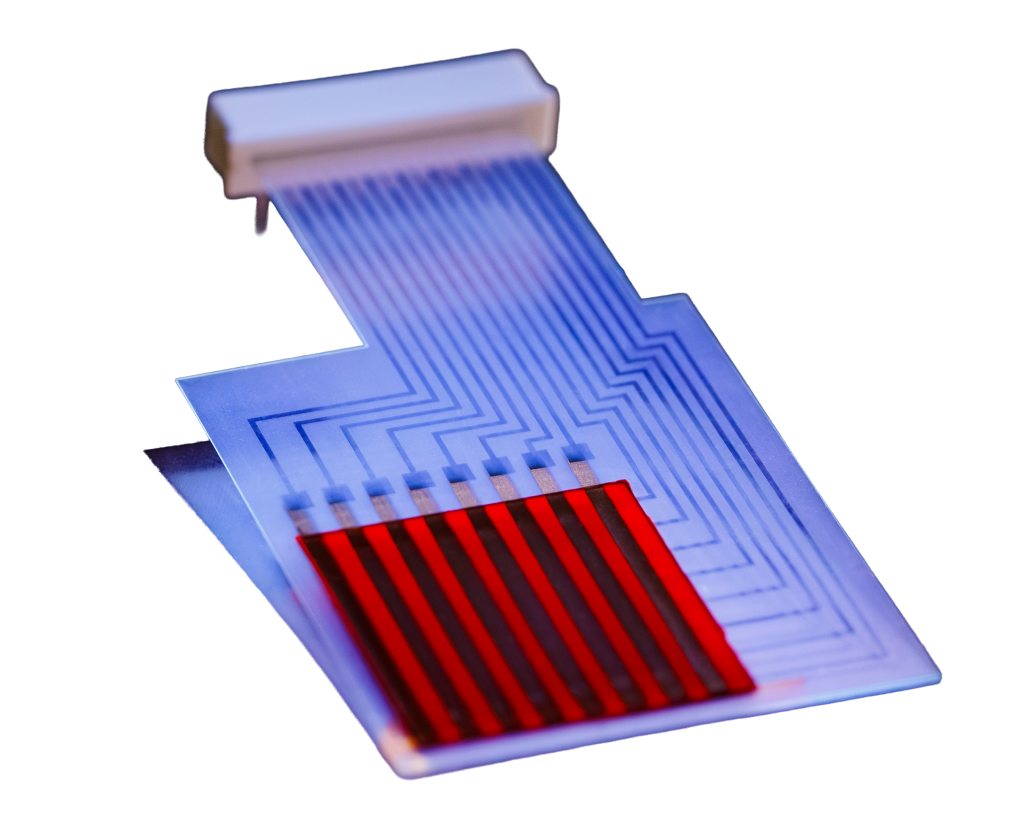
Wearable dosimeter for radiation therapy
Through the Royalty Fund Laboratory Directed Research and Development Program, a team developed a novel polymer-based radiation sensor. Fabricated using a 3D conformal etching technique only available at Sandia, this wearable dosimeter patch was designed to accurately detect and direct proton radiation beam therapy onto tumors with the goal of lowering cost, increasing treatment efficacy and enhancing treatment safety. The patent–pending solid-state disposable detector patch currently targets oncology applications and is being investigated as a material sensor for nuclear incidents. This technology is currently licensed to Cooperative Research and Development Agreement industry partner WearableDose Inc. 8000
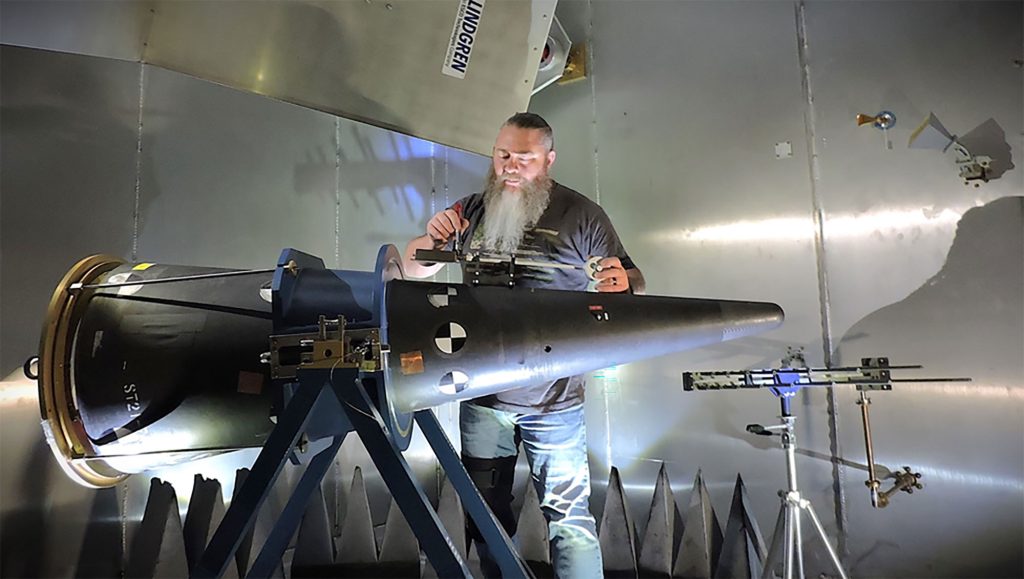
Integrated approach to electromagnetic analysis
An integrated team of electromagnetic radiation experimentalists and modeling-simulation experts collaborated to assess shielding effectiveness for the Mk21 reentry vehicle, crucial for understanding electromagnetic energy penetration. The experimental team developed innovative measurement techniques for superior calibration data. Using Lawrence Livermore National Laboratory’s El Capitan high-performance computing platform, the modeling team executed large-scale simulations, revealing key insights into electromagnetic field structure. This collaboration between the W87-1 modernization, Weapon Survivability and Advanced Simulation and Computing programs sets a new benchmark for collaborative electromagnetic testing. 1000, LLNL