
Groups across the Labs make connections, plan collaborations at summit
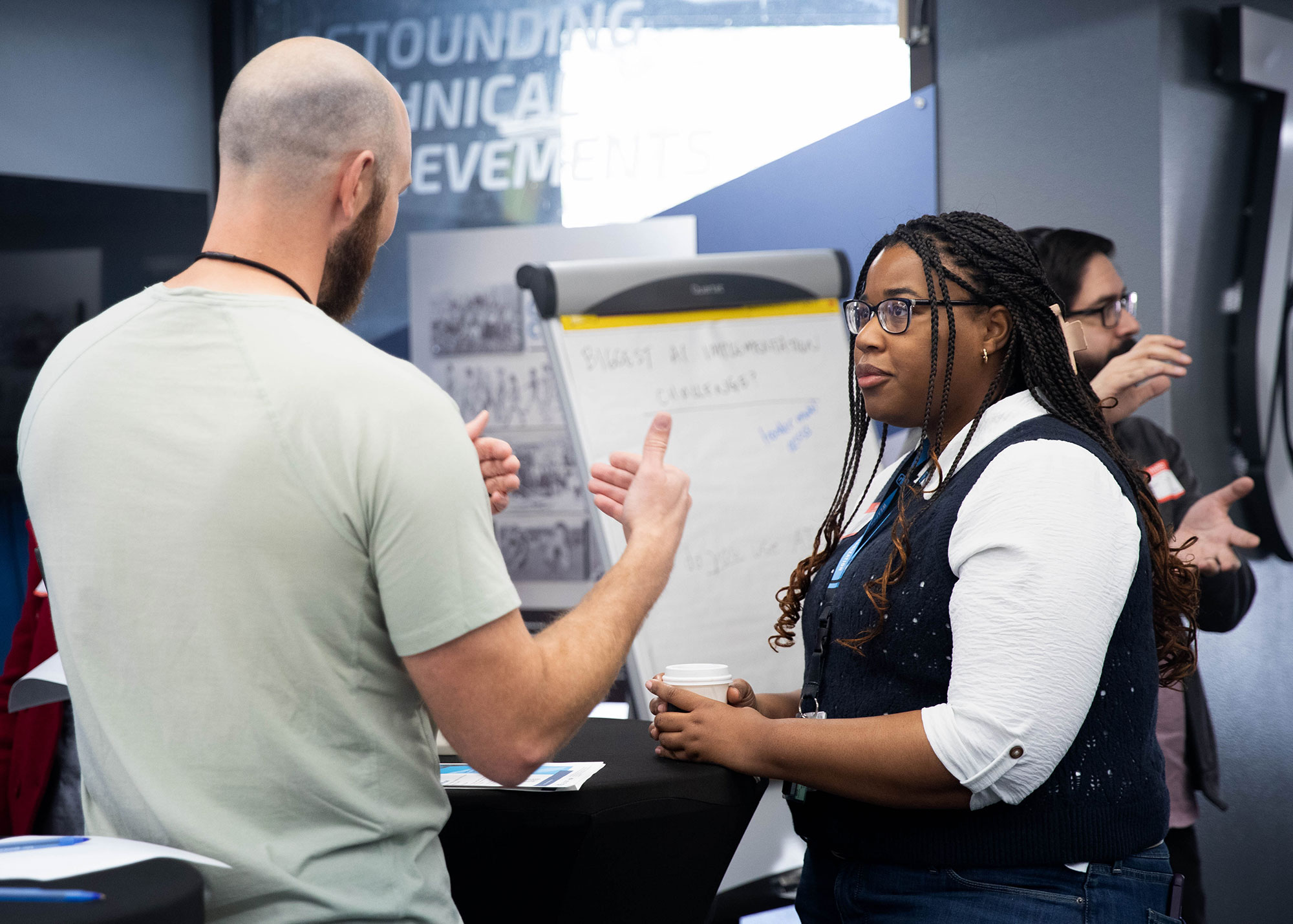
Not taking a risk is a risk. That’s one message from a two-day summit at Sandia focused on artificial intelligence that emphasized its value for nuclear deterrence.
“I get excited in the AI space about the things that I might never have to do again, including writing reports. Solutions that were taking hours can take seconds,” said Brad Boswell, associate Labs director for Nuclear Deterrence Modernization and Stockpile Systems. “AI can take things off your plate so you can put more thought into your engineering work.”
The summit, designed to provide resources for employees working on nuclear deterrence to build more AI into their work, drew more than 600 participants in person and virtually March 17-18.
Brad encouraged Sandians to be curious. “Build your skillset and make some contacts,” he said.
Dan Turner is leading Sandia’s effort, called AI4ND. He emphasized the summit was designed to share progress, allow time for connection and brainstorm new projects and ideas for nuclear deterrence.
“This summit is designed to springboard Sandia’s AI journey,” Dan said. “We want to prioritize where the big wins are going to be.”
Learning opportunities
The summit included an AI Genius Bar, with Sandia’s AI experts available to talk and answer questions from participants. It also featured short courses, seminars and demonstrations and tutorials, including a tour to the recently opened Center for Advanced Manufacturing and Innovation, or CAMINO. Each of the 15 courses and seminars, which ran concurrently to the main sessions, had about 40 participants. NVIDIA and Palantir also provided demonstrations of their commercial AI tools.
Astonishing results
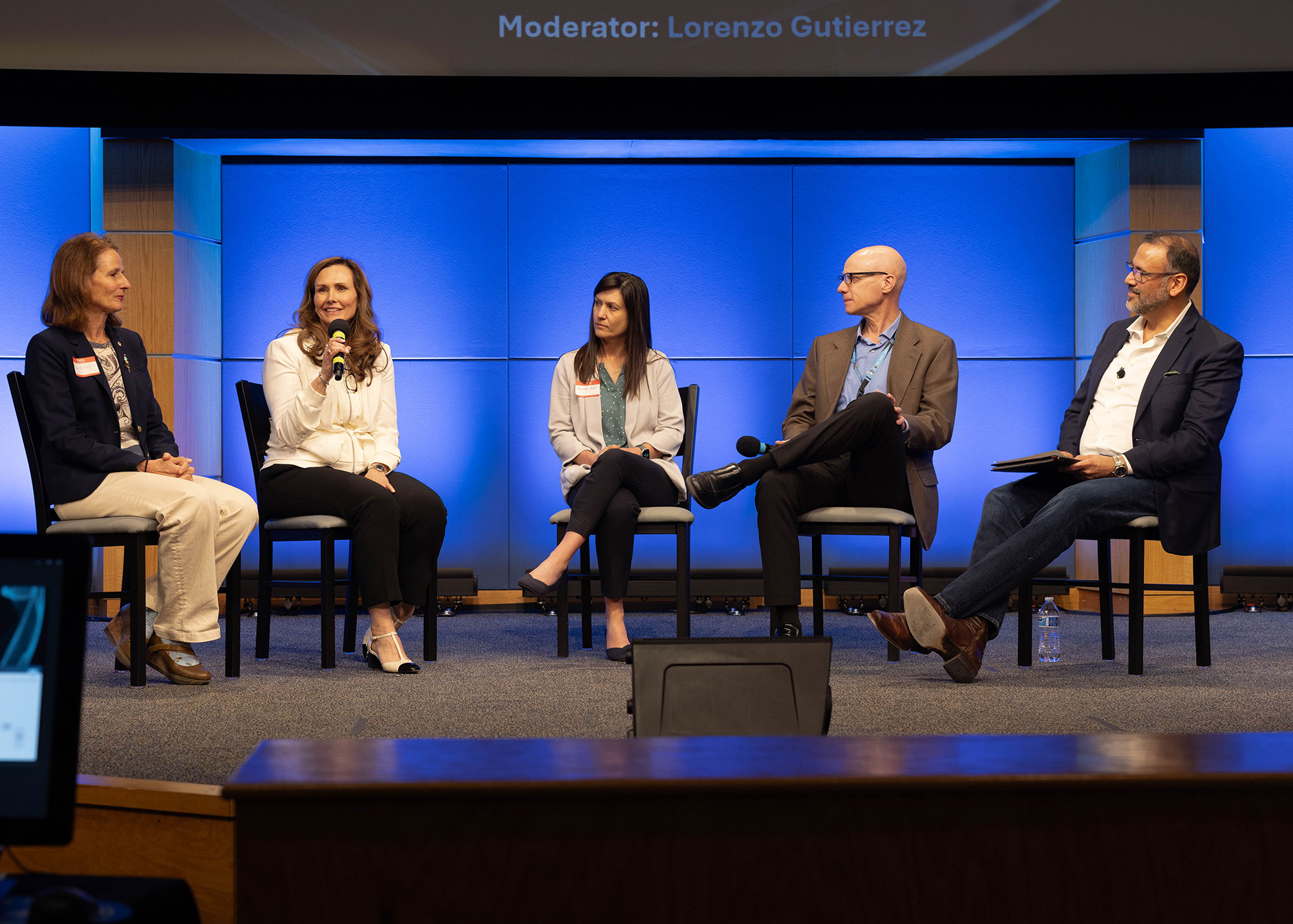
The value of AI to deliver quicker was highlighted during a panel discussion on the first day.
“As we approach two peer adversaries, our national security planning requires a very different approach,” said Sandia Fellow Tina Nenoff, who is leading the AI strategy for the Labs. “We must do our jobs differently. AI will enable us to pivot to new things, including faster production.”
Sandia is working on about nine AI projects for nuclear security, all funded by NNSA.
“Sandia is producing very quickly with astonishing results. I’m in awe; I sit there thinking, ‘This is phenomenal,’” Tina said.
“Timelines are continuing to shorten,” said Chrisma Jackson, a director in nuclear deterrence. “Not taking a risk is a risk,” she said, referring to those who might be reluctant to incorporate AI into their work.
In addition to the panels, workshops and tours, the summit highlighted more than a dozen projects that use AI in nuclear deterrence work during bright spots sessions.
“I was struck by how far we’ve come in our AI journey and it’s exciting to catch a glimpse of where we’re headed,” Dan said.
About 125 people contributed to the summit’s success including from the following divisions: Nuclear Deterrence; National Security Programs; Advanced Science and Technology; Deterrence, Science and Technology; and Mission Services.