
Honored inventors reveal pivotal choices that gave their work deeper meaning
Career paths rarely follow straight lines. But for two recently honored inventors, a professional zigzag became a catalyst to finding greater purpose.
The pair of Sandia scientists were elected fellows of the National Academy of Inventors in December. Each is a prolific innovator in his respective field. Yet each also made a deliberate career change that deviated from what might seem the obvious road to success.
The honor of being named a National Academy of Inventors fellow reflects not only their impressive portfolios of patents and publications but also their unique journeys, driven by a passion for research, discovery and leadership.
Igal Brener is a senior scientist in the Microsystems Engineering, Science and Applications center and co-leader of the nanophotonics thrust at the Center for Integrated Nanotechnologies, a DOE Office of Science user facility jointly operated by Sandia and Los Alamos national laboratories.
Hongyou Fan is a manager at Sandia and the program manager for the labs’ DOE Basic Energy Sciences-funded geoscience and critical minerals portfolios. He was the recipient of the 2025 R&D 100 Researcher of the Year award.
They each shared stories of how significant changes in their careers helped them find greater personal well-being without sacrificing professional success.
Igal Brener: An engineer who yearned for discovery
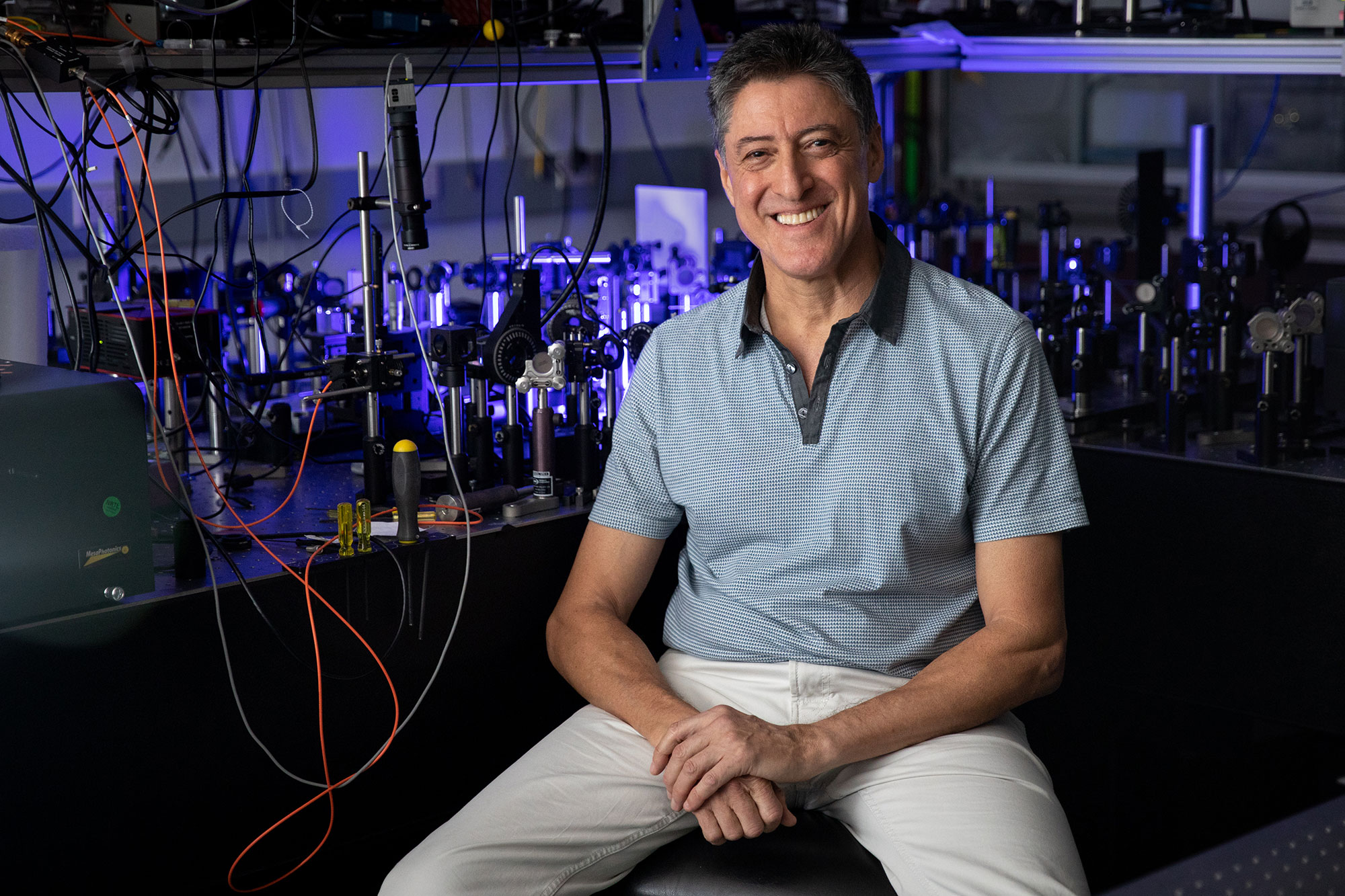
Igal Brener’s path to invention launched quickly in the bustling world of industry. He grew up in Uruguay, moved to Israel for college and found work there as a chip designer, where he made an early impact.
“I had a career in engineering where the CPU I designed was in thousands of machines. I think it still shows up as part of Texas Instruments’ catalog — some 20th generation of my initial work.”
Yet despite his success, Igal chose to advance his education.
“I craved the research path,” he said. His hunger led him first to graduate school for a doctoral degree. Afterward, he worked for several companies, including Bell Labs, before landing at Sandia, which enabled him to pursue discoveries in optoelectronics and photonics in a collaborative environment.
“The cool thing at Sandia is that there are always experts for something, so you can always reach out and get help. In a way, that’s very similar to the environment I experienced at Bell Labs and the reason why I came here.”
At Sandia, Igal has made pioneering contributions to semiconductor physics, terahertz science and nanophotonics. With 30 patents to his name, he has had a tangible impact on industries. His early developments in terahertz detectors enabled imaging instruments that were used by NASA to inspect foam panels on space shuttle missions and by auto companies to look for defects buried deep inside materials.
For more than 10 years, Igal has led a large team for a DOE Office of Science project. Collaboration has been a cornerstone of the work.
“Collaboration doesn’t mean everybody works on everything, but having a collaborative community is, in my opinion, incredibly important. It’s all about having critical mass because then you’re always bouncing off ideas with people in that community,” he said.
One of the projects he’s most excited about involves developing new lighting technologies. They are ultrathin and tunable, and he hopes someday they will change the way people interact with their environment, from LEDs that follow a person around instead of illuminating everywhere to compact augmented reality or heads-up displays.
Generally reluctant to give broad advice, Igal encourages young scientists and engineers to follow their passion.
“It sounds corny, right? But honestly, I could have been successful if I had stayed in chip design, but you have to figure out what excites you and find a way to make that happen, even if it means your path takes some turns.”
As a fellow of the National Academy of Inventors, Igal said the recognition reflects the value of curiosity and collaboration in building impactful science and technology careers.
Hongyou Fan: A scientist who discovered a new calling as a leader
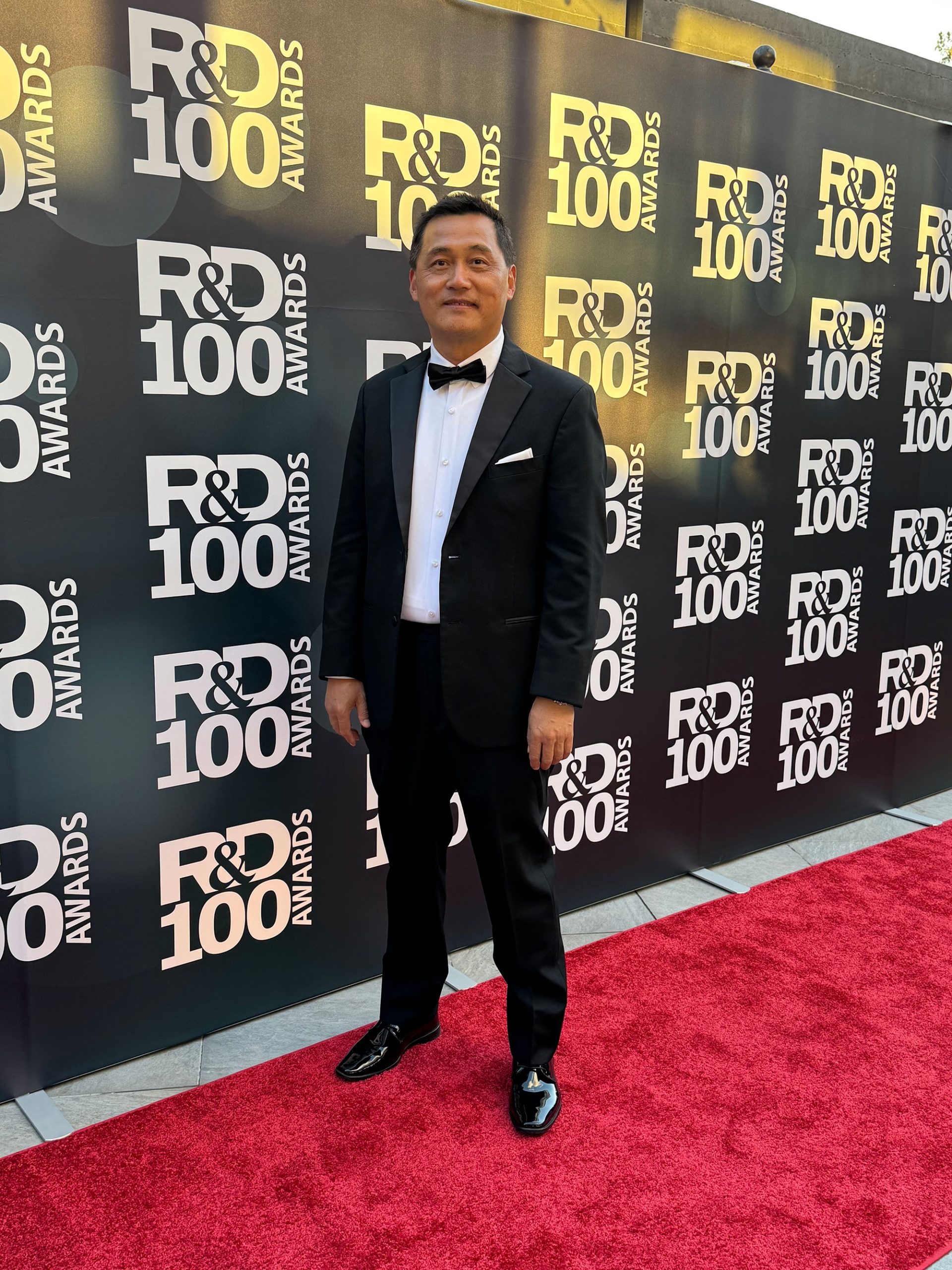
With more than 20 patents and two startups under his belt, Hongyou Fan has made major strides in materials science and nanotechnology.
His journey has included pioneering inventions such as nanoparticle disinfectants capable of killing harmful microbes, including SARS-CoV-2, and initiating technology transfer processes for extracting critical minerals from coal and coal ash, boosting U.S. supply.
Yet when an opportunity came to take a management role, it became clear to him that his greatest passion lies not just in serving the national interest but in mentoring the next generation of scientists.
“For 25 years I have benefited from all the people around me that support me and coach me and offer me opportunities. I think this is a time I’m able to do something to help others,” Hongyou said.
He has focused much of his mentorship on empowering researchers to achieve recognition for their innovations.
Hongyou is something of an expert at awards. His considerable list includes seven R&D 100 Awards for various inventions, six Federal Laboratory Consortium awards lauding his technology transfer prowess, four professional recognitions by the global Materials Research Society and even a formal commendation from the New Mexico state Legislature for his distinguished contributions as a serial innovator.
However, he emphasizes: “It’s not just about winning the award, but helping make them visible at the national level.”
For example, he described the R&D 100 Award for his microbe-killing nanoparticles as free advertising. Investors approached him after seeing Sandia social media posts, which resulted in the formation of a new business to commercialize the technology, Lunano LLC.
Now he teaches young researchers how to use the same path to commercialize their inventions.
“They have very fancy technologies, but they just don’t know what to do to build their visibility or how to sell their innovations to the market,” Hongyou said.
An early step in this process is often an introduction to Sandia’s patent and technology transfer offices. This gives researchers an opportunity to pitch their work while educating people with connections in the business community about the importance of their research.
“When I was a researcher and I completed a project or published a paper or filed a patent, I felt accomplished. But now I have a different level of happiness,” Hongyou said. “Now I measure accomplishment by how many people I have helped.”