
Industrial optimization project helps bioscience lab save time, clear space and work safer
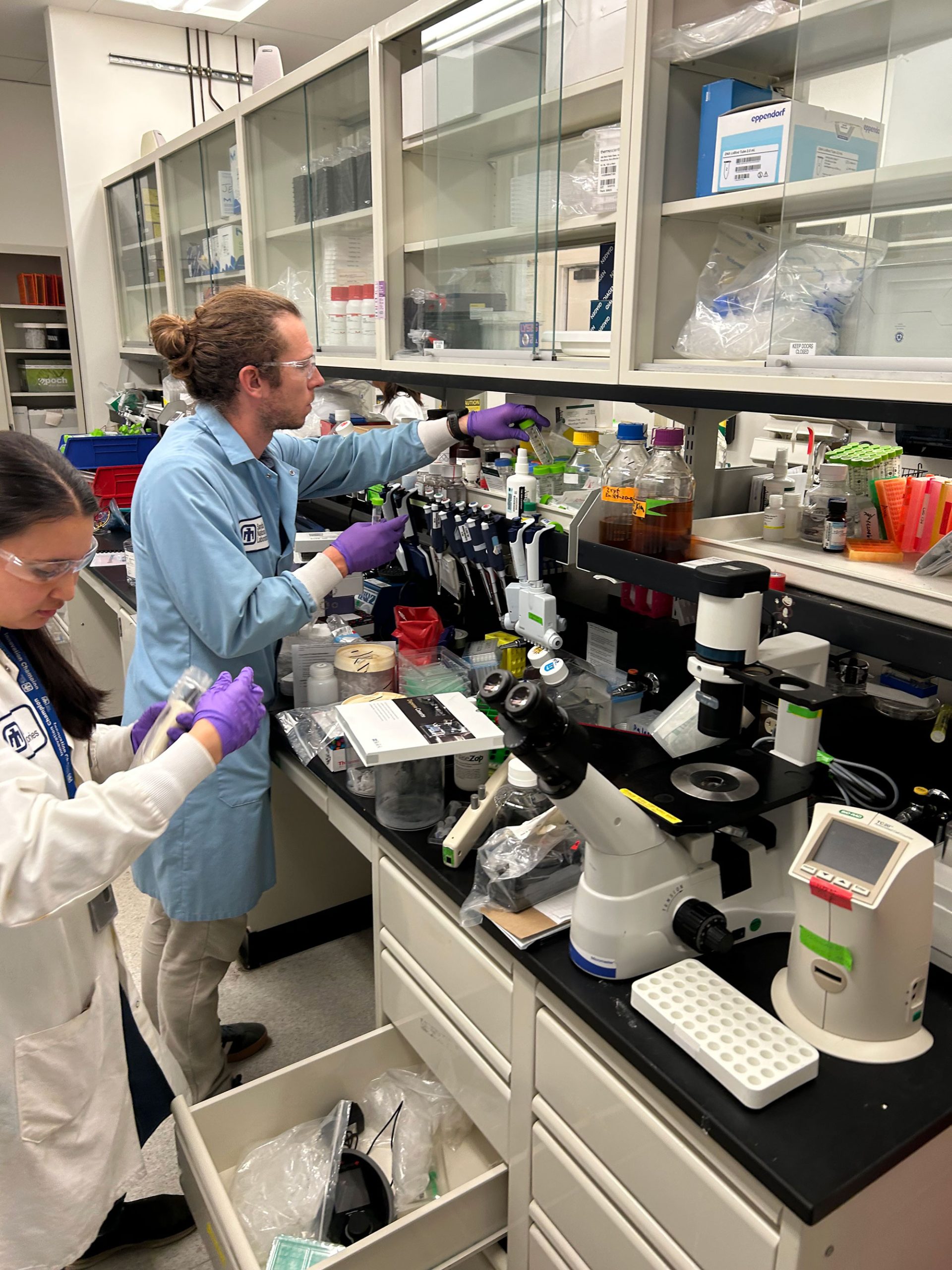
Researchers and staff in a Sandia California bioscience lab recently gained more usable workspace, reduced time spent searching for supplies and improved safety through a project led by the Industrial Optimization team.
The project focused on two high-use laboratory spaces supporting applied biosciences work. Before the effort, the lab faced common challenges: crowded walkways, limited bench space, unused equipment and materials stored far from where they were needed. The lab team knew these issues were slowing their work, but like many busy teams, they did not have the time or extra capacity to take on a full reorganization.
That’s where Sandia’s Industrial Optimization team came in.
“Our goal is to help teams improve how work happens in their space,” said Marcus Trujillo, a lean process engineer in Sandia’s enterprise optimization group. “A lot of customers know they have pain points, but they don’t always have the time to step back, redesign the process and sustain the improvements.”
The team uses 5S, a structured method for organizing workplaces so they are safer, cleaner and easier to use. The five steps are sort, set, shine, standardize and sustain. In practice, that means removing unneeded items, assigning clear locations for essential materials, cleaning and inspecting the work area, creating simple standards and building habits that help the improvements last.
“Many of us were skeptical that we could turn our space around in a matter of days,” postdoc bioscience fellow Jenna Andrews said. “But the 5S process completely transformed our space and exceeded all expectations. It feels like we got a brand-new lab space.”
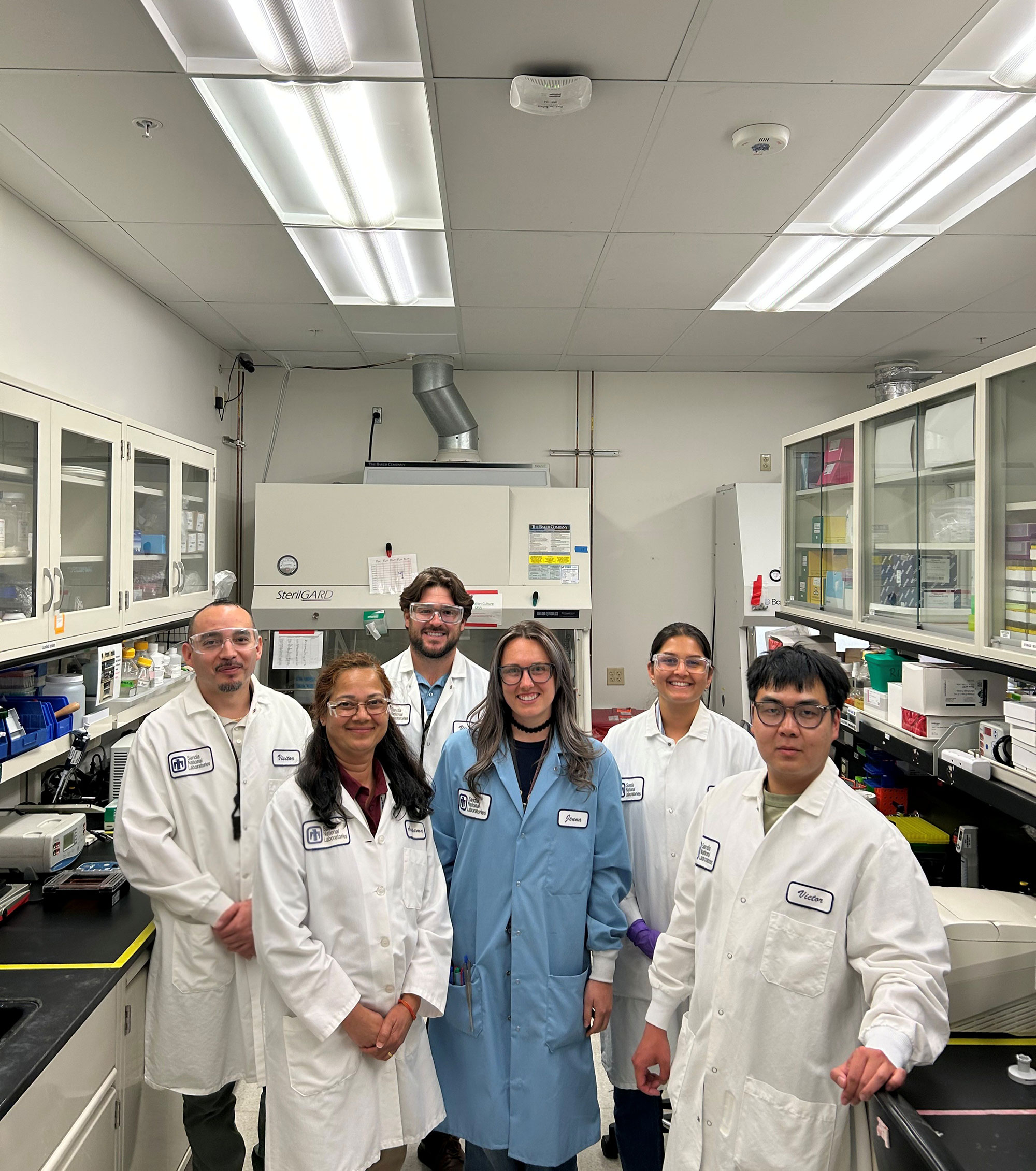
For the bioscience lab project, the work began long before anyone started clearing workspaces. Marcus and fellow lean process engineer Duane Marcum first worked with space owners and key stakeholders to develop a detailed plan. Interviews with lab users and video walkthroughs helped the team create a prioritization matrix to decide where to focus. A communication plan also clearly identified timelines, expectations and who needed to be involved.
“The partnership piece was critical,” Duane said. “We met with managers early, brought in the right stakeholders and made sure everyone understood what would happen before the weeklong effort began.”
Once on-site, the team worked with about 20 stakeholders, including lab staff and managers, to sort through tools, supplies and equipment. Together, they removed nearly 500 pounds of unused material from the lab spaces, opening valuable room where staff conduct experiments and prepare materials.
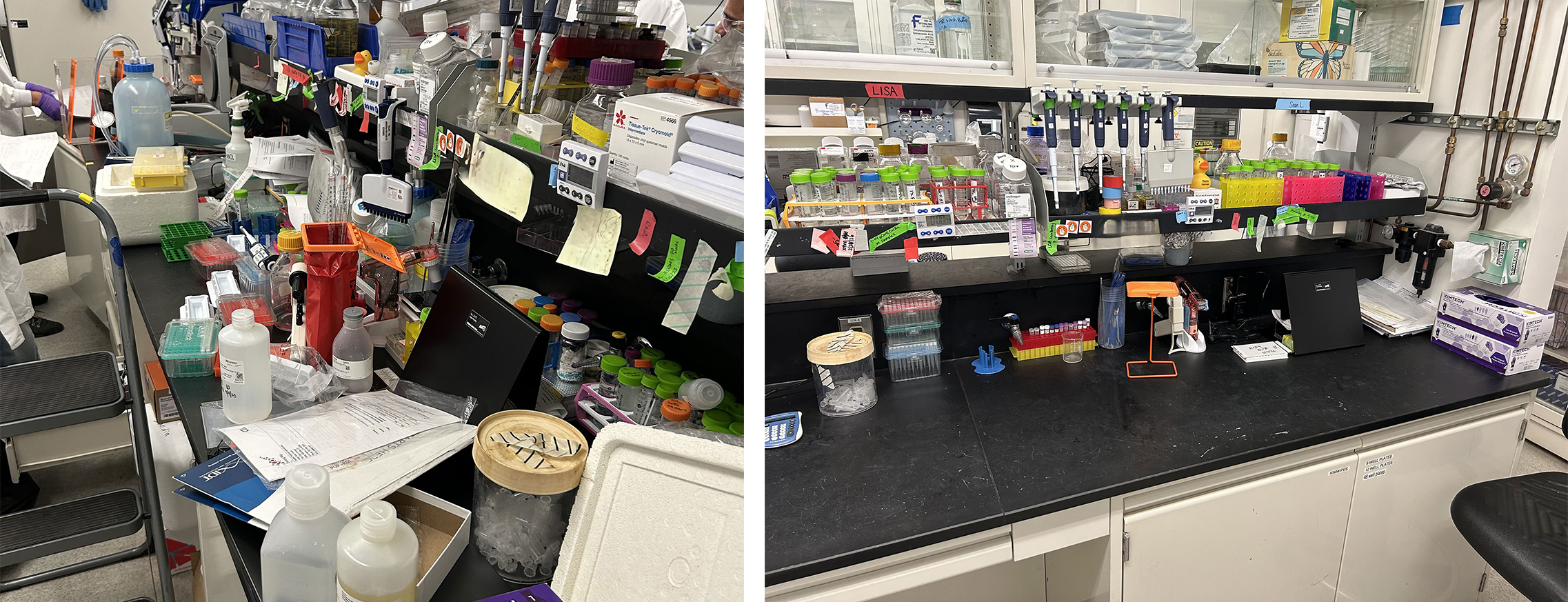
The changes were especially visible at lab benches and workstations. Before the project, bench space was often covered with paperwork, containers, chemicals and other materials. After the 5S effort, the team created organized work areas with clear locations for supplies.
Finding the golden zone
The team also studied how people moved through the lab during routine work. In one process, staff previously had to gather materials from several locations before starting work in a chemical hood. By moving frequently used items closer to the point of use, the team reduced preparation time for that process by about 33%.
The project created what the team calls “golden zones” or “heat zones” — areas where the most common work should happen. By placing supplies and equipment near those zones, staff can reduce searching and back-and-forth movements.
Overall, the team estimated the changes could save about 1,000 labor hours per year. When combined with other benefits, including reduced risk, the annual value of the improvements is estimated at nearly $100,000.
The focused effort did more than tidy up rooms. According to Brittany Esswein-Rice, manager of enterprise optimization, that has direct mission impact.
“Because of this cleanup effort and the movement of materials in the labs, they can deliver on the mission faster,” Brittany said. “And they increased usable production space without increasing the lab’s physical footprint.”
Keeping it tidy for what’s ahead
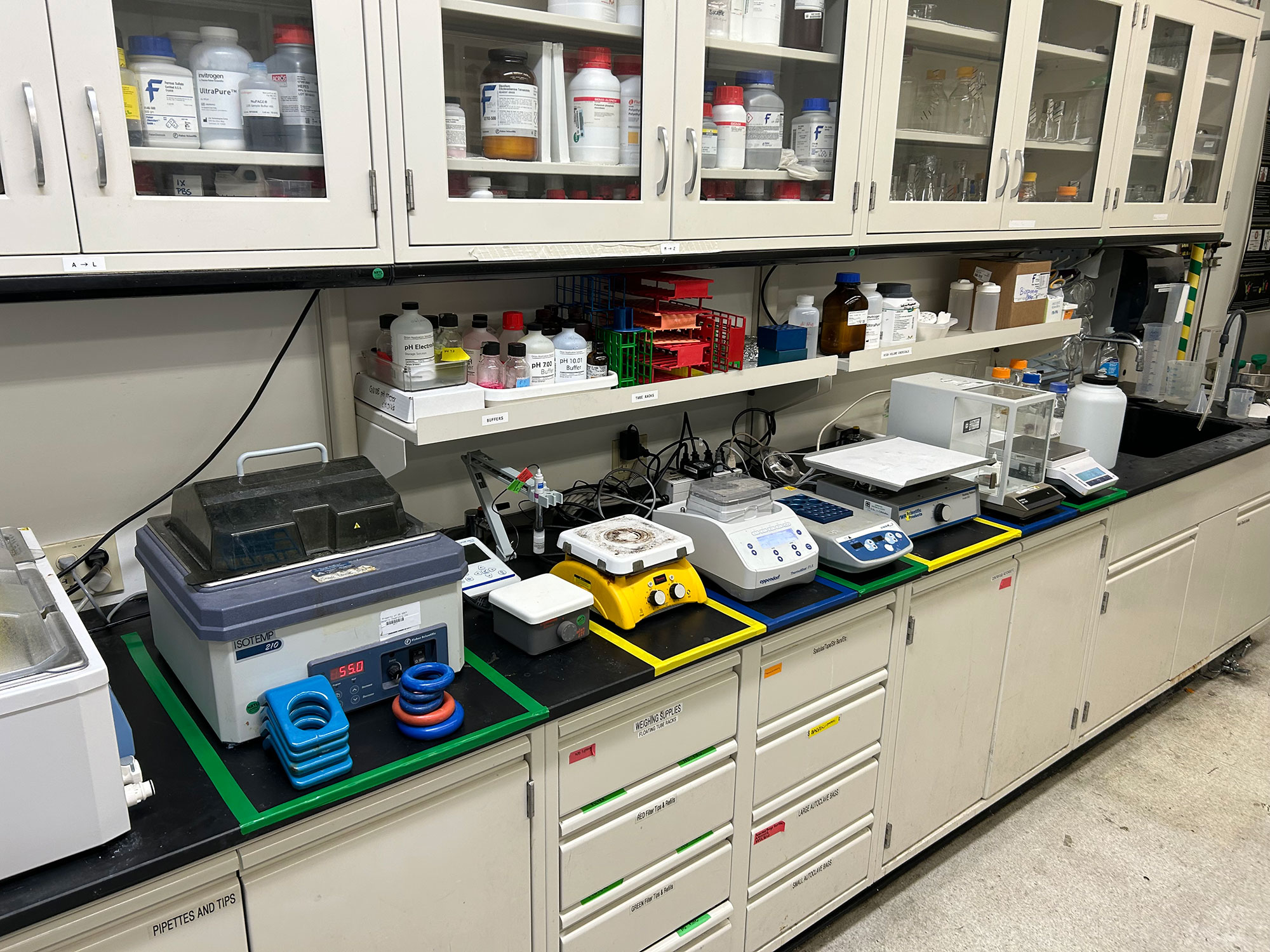
The final step is sustainment. The team helped the lab develop a checklist and scoring method to track conditions over time. The checklist gives staff a simple way to identify issues, recommend improvements and keep the workspace from gradually returning to its previous state.
The project also may help inform future space planning. The bioscience group is expected to continue growing, and lessons from this effort could shape how future laboratory areas are designed and organized.
For Marcus and Duane, the project shows how industrial optimization can support mission work across sites.
“We’re here when teams need help — from boots-on-the-ground support to project management,” Duane said. “It’s about helping people improve their workspaces when they don’t have the capacity to do it alone.”