
Labs’ radar innovation transforms military surveillance

As the United States approaches its 250th anniversary, we celebrate the pivotal moments when Sandia has stepped up to support the nation. Through innovation, collaboration and dedication, Sandia has consistently demonstrated its commitment to addressing the challenges that shape national security and the future.
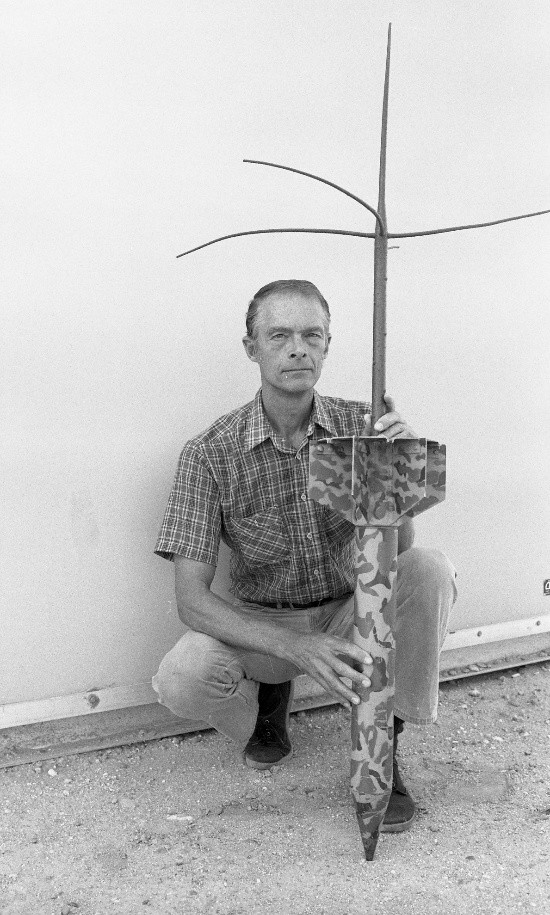
When the U.S. military needed to detect enemy movement through the dense jungles of Vietnam, it turned to Sandia. Using its expertise in terradynamics, the Labs helped develop earth-penetrating, air-dropped sensors — technology that would prove critical in Khe Sanh, one of the longest and bloodiest battles of the Vietnam War.
This year marks the 58th anniversary of when U.S. troops broke the 77-day siege of Khe Sanh. In 1968, three North Vietnamese Army regiments of about 20,000 troops encircled the 6,000 Marines defending the base. The Marines, their South Vietnamese counterparts and U.S. Army soldiers — with support from U.S. Air Force bombers — held their ground for 77 days with little food and water, facing the constant challenge of detecting enemy movement through the dense jungle terrain.
Battlezone
U.S. forces needed an extra set of eyes — or rather ears — to penetrate the low visibility in the jungle. The DOD sought assistance in detecting enemy sources, particularly convoys and troops along the Ho Chi Minh Trail. Sandia sensors such as the Air-Delivered Seismic Intrusion Detector and the Acoustic Seismic Intrusion Detector delivered. Their sensitivity and reliability provided critical intelligence that enabled U.S. forces to anticipate and counter enemy actions.
Two Sandians, Lyle Westherholt and Tom Banks, were sent to Vietnam to test these prototype sensors in the field. During the battle of Khe Sanh, Gen. William Westmoreland ordered “seeding” of the approaches to the base with Air-Delivered Seismic Intrusion Detectors. This early warning system alerted the Marines of imminent attacks, cutting casualties roughly in half.
This technology demonstrated Sandia’s early leadership in military sensing and battlefield surveillance. These systems did not produce images but instead acted as listening points, transmitting signals when motion was detected. The goal was to extend awareness beyond the line of sight using distributed sensor networks.
In ending the siege of Khe Sanh, the sensor arrays contributed to early warning systems that improved situational awareness in a highly contested environment. This battle demonstrated the promise and limitations of remote sensing — it could detect movement, but it could not yet clearly “see” it.
Synthetic Aperture Radar development
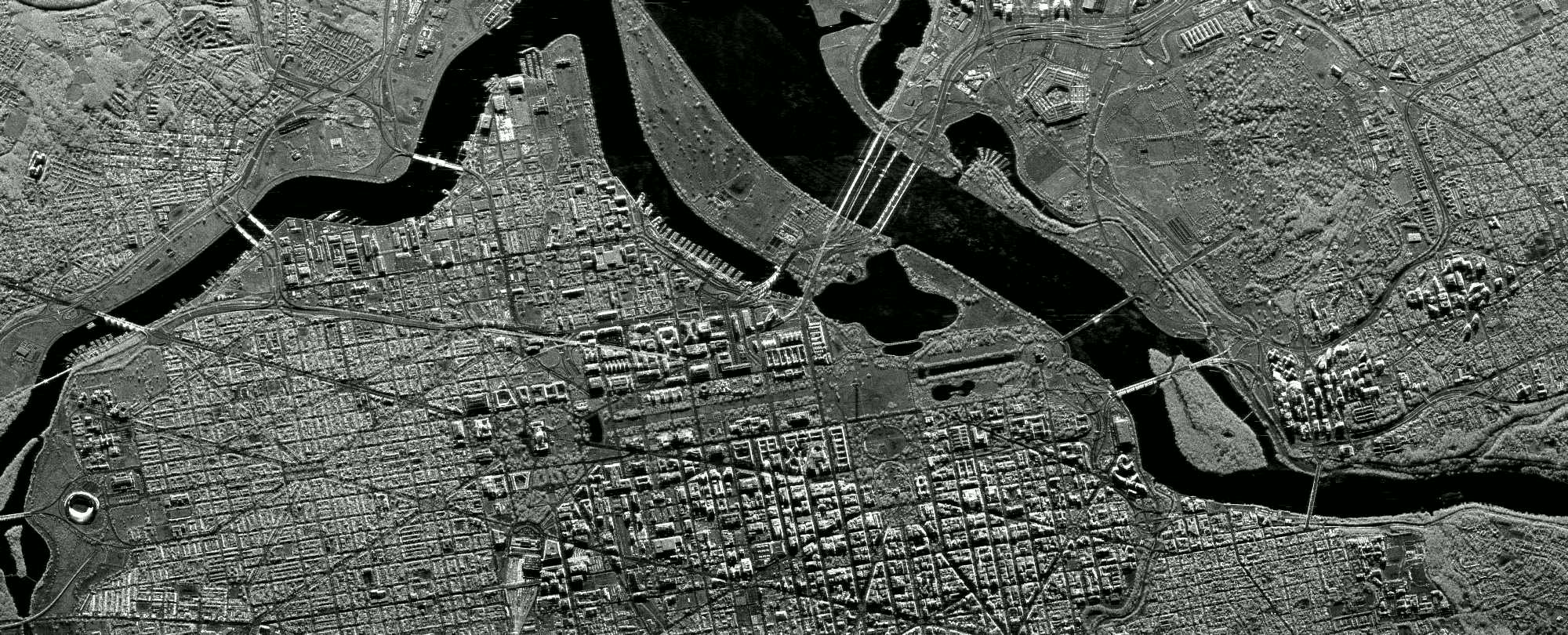
The next major development came through imaging from above. Synthetic Aperture Radar provides environmental monitoring, earth-resource mapping and imaging at resolutions high enough to be captured at night or in bad weather. SAR was first studied at Sandia in 1984 and became especially important during Operation Desert Storm in 1991.
Through the dust
Unlike the Vietnam-era ground sensors, SAR systems produced detailed images that could reveal vehicles, infrastructure and terrain features regardless of weather or lighting conditions. During Operation Desert Storm, coalition forces used airborne and satellite SAR systems to monitor Iraqi armor movements across open desert terrain, an environment ideal for radar imaging.
By the time of the Kosovo War in 1998, SAR technology had evolved and was integrated into platforms like unmanned aerial vehicles, which enabled persistent surveillance of ground movements and real-time battlefield awareness.
During the early 2000s, in the wars with Afghanistan and Iraq, the military used SAR technology to identify improvised explosive devices. Sandia’s development of the Miniature Synthetic Aperture Radar helped to identify and uncover IEDs by identifying small changes in the terrain such as tracks in the sand, new or removed bushes or lumps in the ground where there once had been none, ultimately saving many U.S. and allied lives.
Postwar and modern applications
Today, Sandia SAR technology systems are routinely deployed worldwide in high-profile conflicts and have operated under every U.S. military command. Sandia continues to develop and refine SAR systems for surveillance, reconnaissance, nonproliferation, arms control, counterterrorism, border security, research and development, and environmental and civilian applications like tracking land deformation, ice sheet dynamics and disaster response.
In collaboration with the DOD, NASA and other agencies, Sandia developed SAR technologies for satellites, aircraft and unmanned aerial vehicles. They also support Earth science missions, disaster monitoring and climate research, taking advantage of Sandia’s expertise in radar system design and data analysis. Some Sandia SAR systems have influenced commercial and academic research.
As technology advances, Sandia is ensuring its sensor innovations evolve to meet tomorrow’s challenges and remain at the forefront.