
Shining a light on Sandia’s Lamping Crew
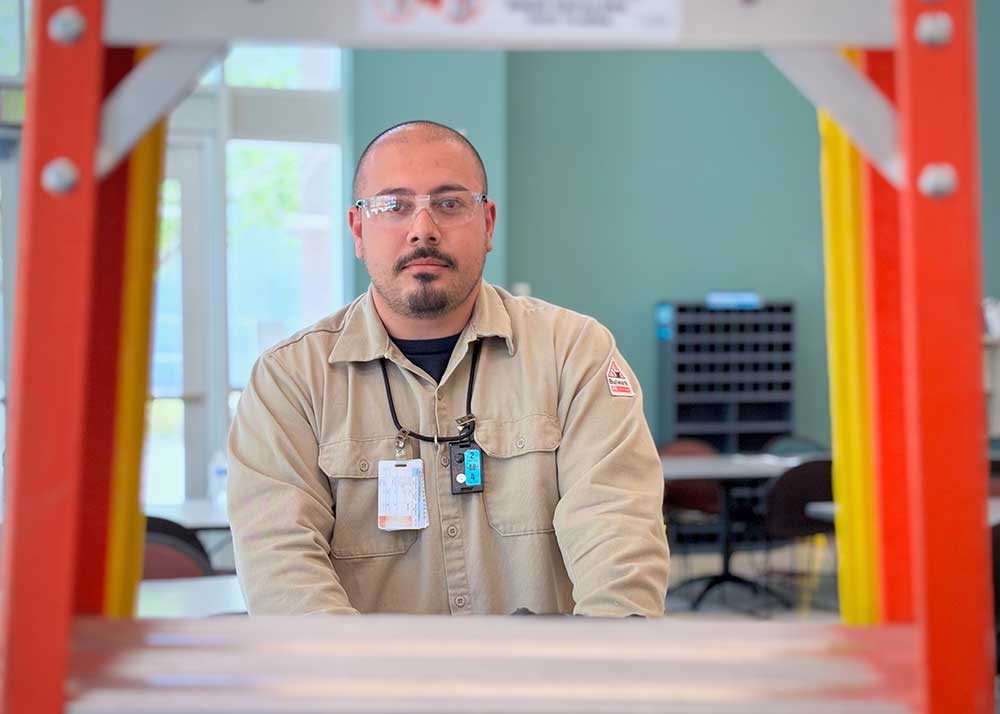
Tucked inside the sprawling city-within-a-city that is Sandia’s Albuquerque site, there’s a small crew of electricians who ensure one of the Labs’ most essential needs is met: light.
Known informally as the Lamping Crew, these technicians do far more than swap out bulbs. Their work touches every corridor, lab bench, emergency exit and conference room across the 6-million-square-foot campus — a job that is part science, part logistics and part endurance test.
“We’re in the business of keeping the lights on — literally,” said Troy Rogers, a Facilities team lead and veteran of the electrical trade with more than four decades of experience. “But it’s also about safety, compliance and supporting the mission. Without good lighting, people can’t do their work. And when that work is national security, there’s no room for shortcuts.”
Troy’s journey to Sandia began in 1982, wiring homes and industrial facilities before joining the Labs in 2002. Today, he leads a lean team of nine, overseeing preventive and corrective maintenance on lighting systems, from standard lab fluorescents to high-intensity bollards and emergency exit signs.
“Lighting is a utility you don’t think about until something breaks,” Troy said. “But when it does, we’re expected to be there — yesterday.”
Campus-wide coverage
With 709 buildings, 85 additional structures and more than 6 million square feet of developed space, Sandia’s campus is a lot to keep lit. The crew manages an estimated millions of fixtures — some as old as the buildings they hang in, others modern but still requiring specialized attention.
“It’s not like changing a vanity bulb in your bathroom,” said Omar Rivera, one of the team’s newer electricians.
Some fixtures house multiple lamps and aging ballasts. Others are mounted in high bays or integrated into emergency systems. Nearly everything is critical, and everything needs to be maintained. The Lamping Crew also handles monthly inspections of battery-backed exit lights, installs lightning protection systems, performs infrared scans and conducts preventive maintenance on electrostatic discharge grounding infrastructure.
“It’s a little city we’re dealing with,” Troy said. “The footprint, the systems, the access — it’s a lot.”
Two crew members work full-time on lighting, while two others split most of their time between lamping and other duties. Their responsibilities span not just lighting, but the layered systems that keep those lights reliable and safe.
Coordinating the work
A flickering light or dark hallway might seem like a quick fix, but resolving it often requires more steps than most realize. Work orders move through multiple teams before reaching the electricians. Jobs must be scheduled around secure access requirements, ongoing research and facility closures. Even reaching the fixture can be a task in itself.
“A lot has to happen before we even see the ticket,” said Martín Garcia, an electrician with more than 20 years in the trade. “By the time it gets assigned to us, it may have already gone through multiple hands.”
The crew often coordinates directly with requesters to line up access windows and avoid disruptions. In high-use spaces like conference rooms or clean labs, one missed appointment can push work back days or even weeks. And lighting repairs are just one stream among many — others include emergency outages, high-voltage switchovers and site-wide generator tests.
“There are two things people really yell about out,” Troy said with a half-smile. “Being too hot or cold and lighting.
“We do everything we can to keep up with demand. We want the mission to keep moving.”
Infrastructure in motion
Lighting might not be the most visible part of national security, but it’s one of the most essential. Without it, work stops. Safety drops, and the mission is at risk.
At Sandia, that could mean anything from halted research to a safety inspection delayed because the team couldn’t access a darkened room. The work that happens here depends on reliable, immediate visibility, and that keeps the Lamping Crew moving, job after job, week after week.
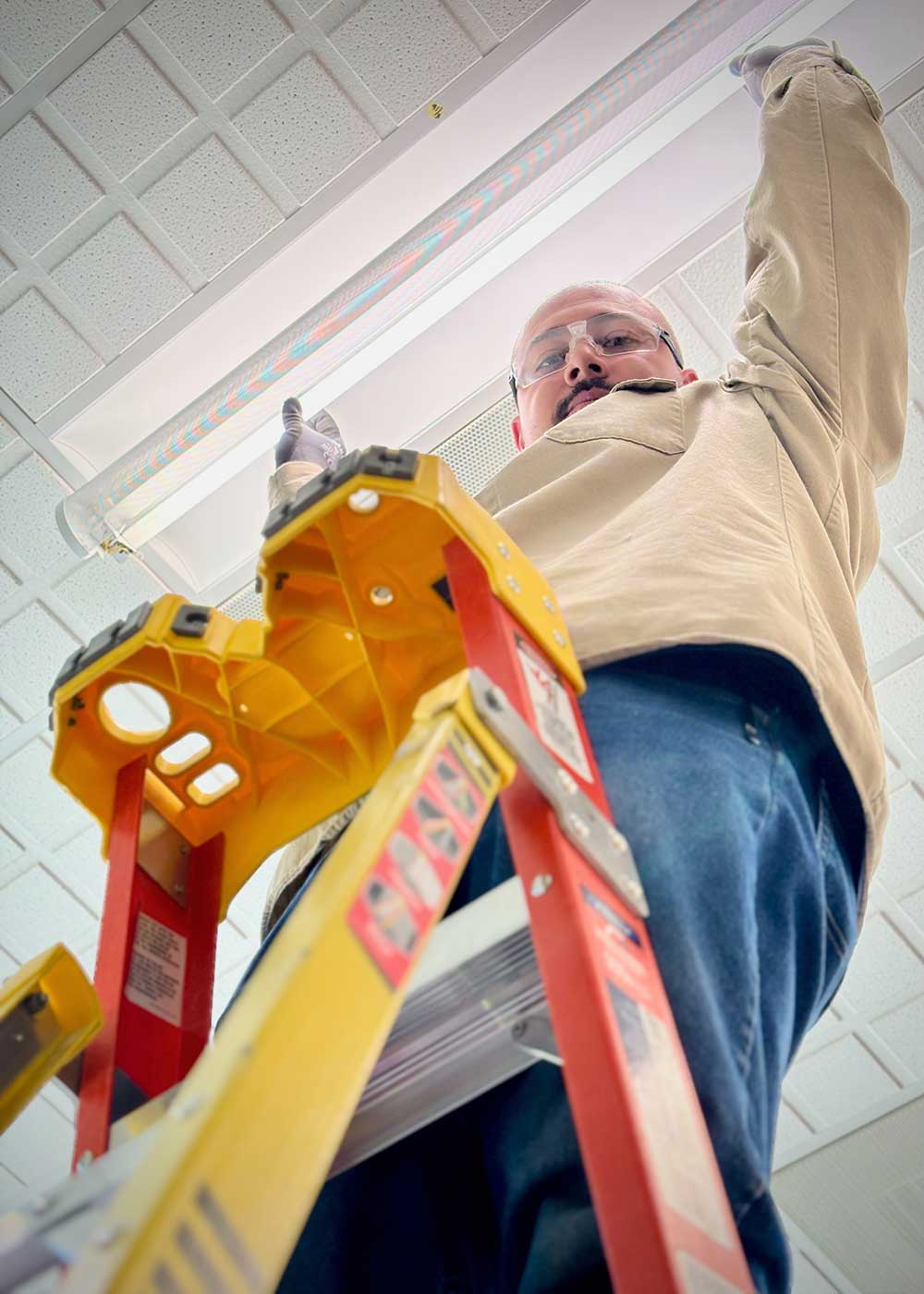
The team works in cycles: preventive maintenance, corrective repairs, system upgrades and coordination with other trades. A single lighting ticket might involve navigating a locked-down building, scheduling around research or sourcing parts for a long-outdated fixture.
“There’s always more to do,” Troy said. “It’s a constant balance, but we’ve got people who know how to make it work.”
As part of ongoing modernization efforts, the team has been steadily upgrading facilities with more efficient LED lighting. The shift reduces failure rates but introduces new technical demands, including compatibility challenges and the need to replace drivers when they fail.
“It’s not as simple as swapping bulbs anymore,” Martin said. “Even LEDs have their quirks.”
Their workload includes dozens of active requests at any time, ranging from routine replacements to complex multiteam jobs. Some fixtures date back decades and others require new parts, specialized access or long lead times. It’s not just a lighting job. It’s a logistical one that stretches across a vast site and touches nearly every function that supports national security.
In labs where precision matters and downtime can bring high costs, light is more than convenience. It’s capability.