
SMALL AND MIGHTY — Electrothermochemical random access memory chips are able to achieve 100 times higher precision than existing state-of-the-art technology. (Video by Ruth Frank and Arianna Andreatta)
The energy costs from data centers are expected to triple in the next two decades, accounting for up to 800 billion kilowatt hours of power, according to the U.S. Energy Information Administration.
A Sandia project called electrothermochemical random access memory, or ETCRAM, aims to change the way data is stored on computers and create more efficient and resilient memory.
“The technology that we’ve developed is designed to overcome a limitation of our existing computing technology to really improve energy efficiency,” materials scientist Elliot Fuller said. “ETCRAM is able to achieve 100 times higher precision than existing state-of-the-art technology — and at least three orders of magnitude greater dynamic range. That’s the value of a number that you can store in analog.”
Charged with potential
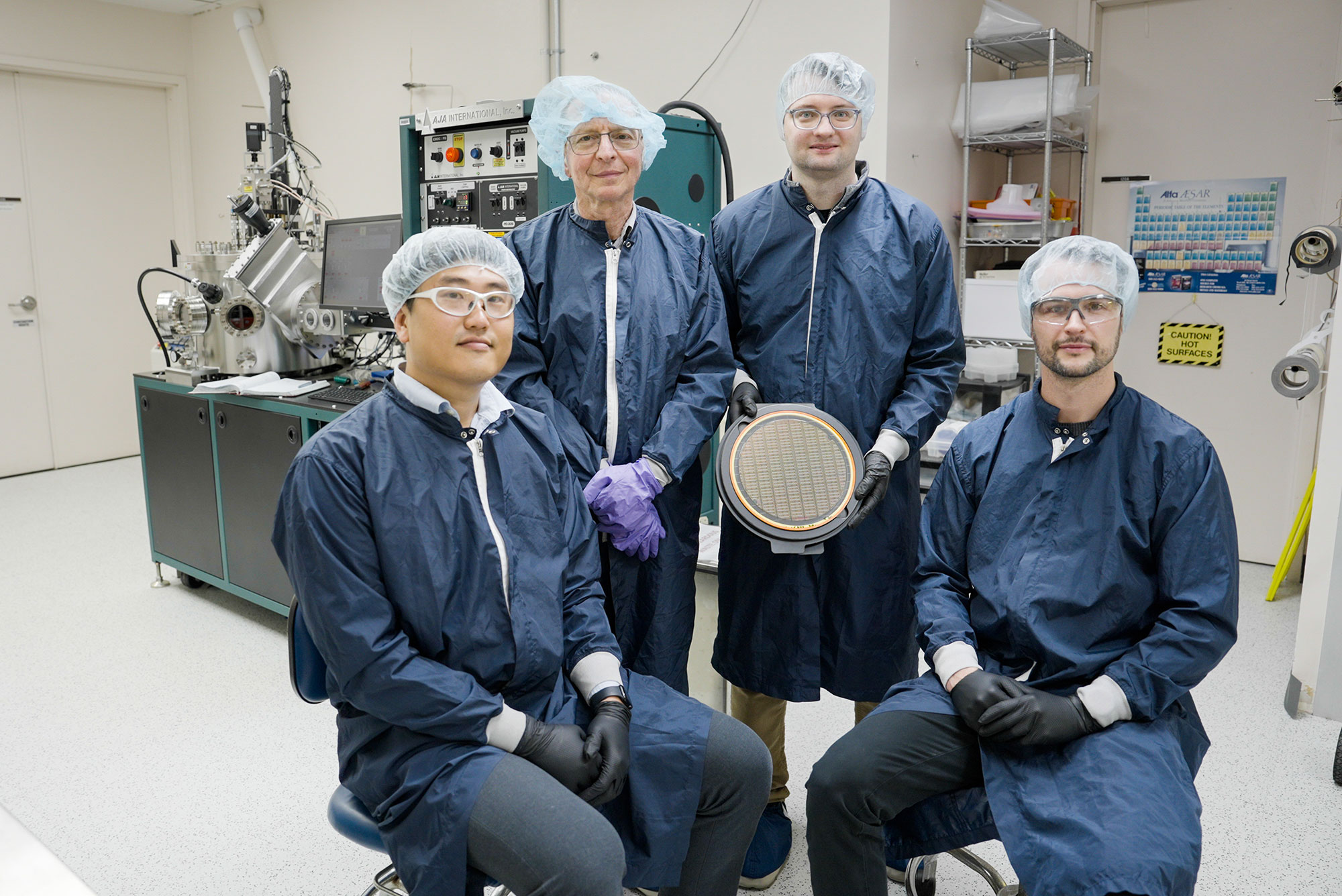
ETCRAM technology works differently than the classical method of programming ones and zeros on fragile silicon wafers. Instead of only two values, the team, led by Elliot Fuller and Alec Talin, demonstrated that electronics manufacturers can localize heat and electrical pulses in tantalum, a metal, and vanadium oxide, a compound, to create any analog value. Alec compares the process to an object that everyone uses daily: a battery.
“You can think of ETCRAM as a memory device,” Alec said. “You can charge a battery half way and then stop charging and use that energy. Think of the state of the battery as a memory. It stores that state.”
The team started with what is known about the properties of various materials used in batteries. Lithium ions are great for storing energy but not for holding data.
“We want to store the maximum amount of information density in a particular volume,” Elliot said. “The challenge with electrochemistry is often how slowly it works. The trick with getting this memory element to work was to have it self-heat. It heats up when the electrochemistry is activated, and that’s what gives us this very large dynamic range and allows it to have very high precision.”
Resilience to radiation
Devices outfitted with ETCRAM might also be more resistant to damage from extreme conditions. Consider satellites, which need shielding against solar radiation and extreme temperatures outside the atmosphere. They carry payloads of sensors to make phone calls, global chat, self-driving cars, global positioning and a host of other technologies possible.
“I’m working on what could be really affecting our lives,” electrical engineer Sangheon Oh said. “Regular technology that is already used for most computing elements cannot survive in high-temperature or high-radiation environments but this memory technology can.”
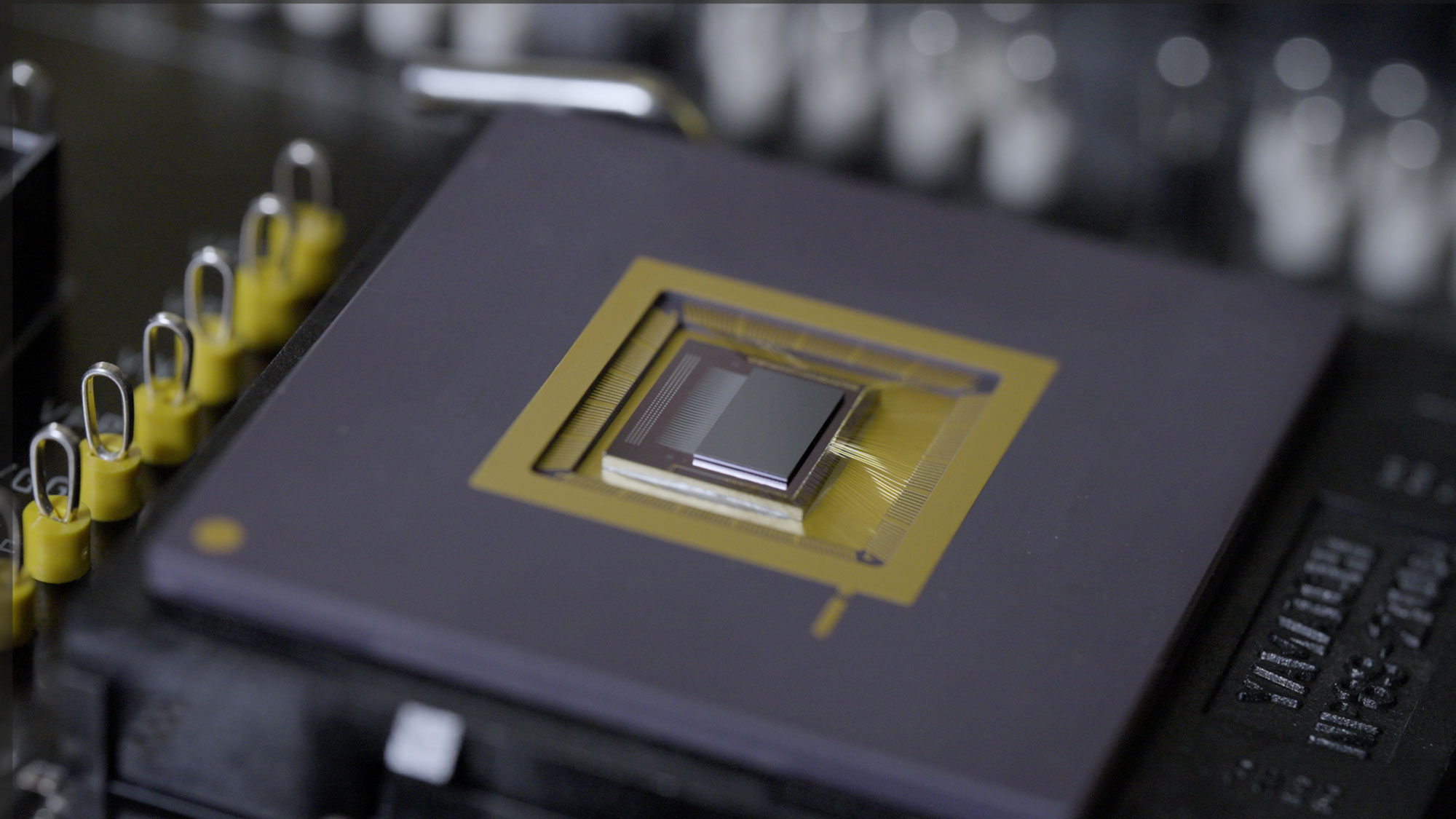
“These materials are much more tolerant to radiation that one could find in space and many other instances as well,” Alec said. “There’s still work to be done but fundamentally, these types of devices are orders of magnitude more tolerant to radiation.”
Streamlining sensors at the edge
The team is also researching how to make each piece of technology work independently of a central processor, called edge computing. They are working on pre-programming a sensor, like the camera on your phone, with the data it needs to analyze whatever it sees. Instead of your camera seeing light, sending it to the processor in your phone, processing the image from cloud-based computing and then compositing an image, the camera sensor would do it all by processing its own data in analog — increasing both speed and efficiency.
“We live in the 21st century, and there are electronics all around us,” postdoctoral researcher Adam Gross said. “You wake up in the morning, and there’s an alarm clock on your phone that has light sensors and sound sensors. Modern cars are outfitted with a suite of sensors. The number of sensors in so much of what modern life requires are all opportunities where our device could potentially make a difference.”
But right now, size is an issue for the team.
“We’ve developed a working microprocessor,” Elliot said, “but it’s relatively small compared to the computational capacity of a GPU. So, we need to scale the power up to millions of elements per computational array, while we scale it down in size to nanometer dimensions so it’s competitive with other memory technologies.”
Foundational first steps
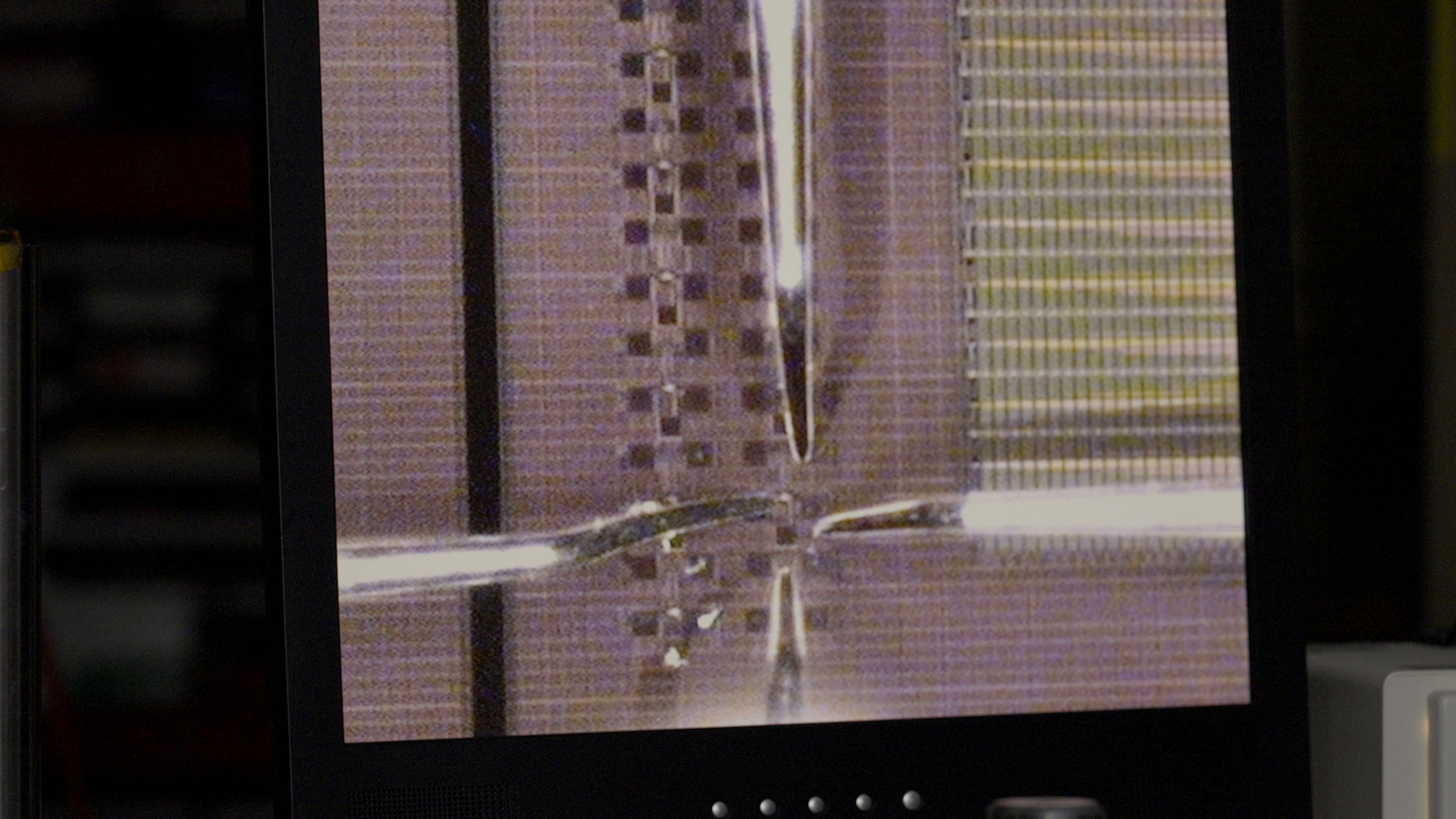
The technology is so promising that it was featured in scientific journals like Science Advances and Device and selected as a 2026 R&D100 award finalist. They were selected as finalists for the “novelty, impact, and practical applications” of their work, and they know the technology is revolutionary.
“We’re the first to develop this memory technology. Others are following in our footsteps to develop electrochemical-type memory that is thermally assisted. It was invented here, and we are the first to develop devices based on it,” Elliot said.
Funded by Sandia’s Labs Directed Research and Development program and the DOE Office of Science, ETCRAM has potential to usher in change that is almost limitless. The team is driven by the idea that creating components of larger systems that perform many operations on their own can mirror the extreme multifunctionality of the neurons in the brain.
“ETCRAM is really a way to be able to program and to retain information for a very long time, even at an elevated temperature,” Alec said. “The number of materials we can use and the kind of geometries and applications we can program is immense. That gives us hope that we will be able to find applications that are critical for national security and consumer electronics, all while being able to process information in a more efficient manner.”