
At Coyote Canyon, the challenge was not just whether a drone could be detected by radar or whether a sensor could spot movement across rough terrain. The bigger question was whether all that information could move through a portable security system fast enough to help people make decisions in the field.
For two weeks, Sandia led a field exercise designed to test rapidly deployable security technologies in rugged, remote conditions. The exercise brought together drones, ground sensors, radar, high-definition cameras, communication networks and Sandia-designed and developed portable security systems to see how they worked as part of one integrated system.
Jeff Hoaglund, a technical project lead for systems engineering research and development, said the exercise drew on Sandia’s extensive experience in physical protection systems, its work on the U.S.-Mexico border and its role managing the Physical Security Center of Excellence for the NNSA Office of Defense Nuclear Security.
“Sandia has decades of experience doing physical protection system design and evaluation,” Jeff said. “We have a very specific process that is systems-performance based.”
A need for rapid testing
Military leaders became interested in Sandia’s work because of the Labs’ border security experience and systems engineering approach. Jeff briefed the Joint Chiefs of Staff at the Pentagon, where the discussion centered on how to test new security technologies before they are deployed to operational environments.
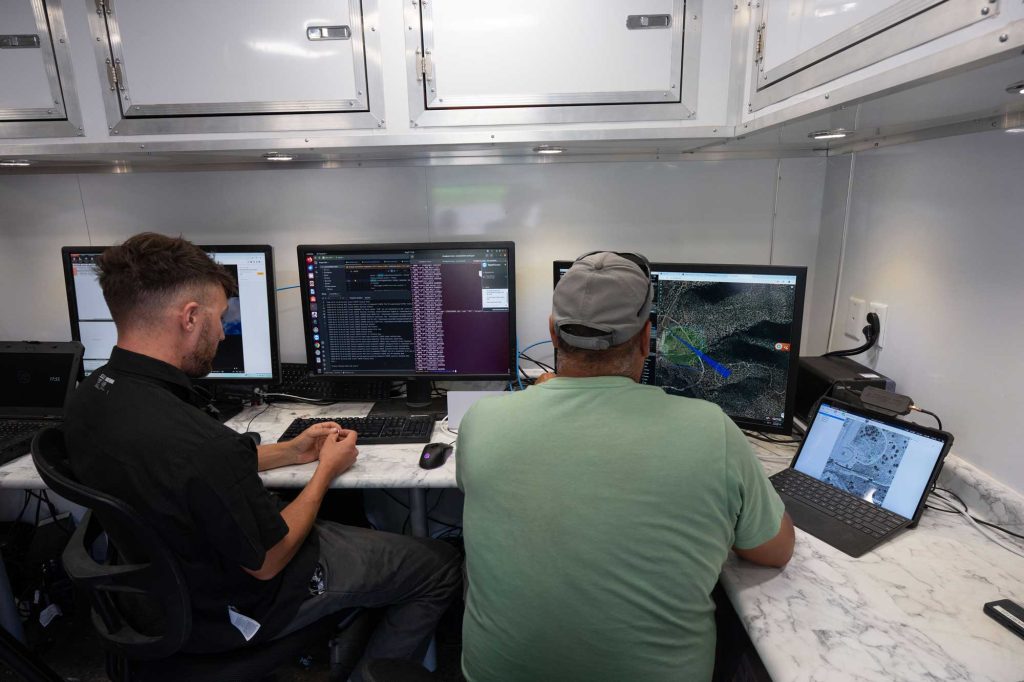
“They looked at Sandia’s test and evaluation process. It’s very regimented. We test everything,” Jeff said. “We look at the systems approach — how all the different models interface and their interdependencies. If you try to improve one thing, how does that carry through the system?”
The military needed a way to evaluate technologies that could be deployed quickly to locations including the U.S.-Mexico border.
“It needs to be tested and evaluated before deployment to ensure it is appropriate, functional and does what they expect it to do,” Jeff said. “Originally, they asked us to give them guidance and subject matter expertise on the exercise and testing process.”
Sandia was later asked to host and lead the exercise for the Root Integration of Tools project.
“We were trying to inject the type of environment and terrain challenges they would see in areas where the technology may be deployed,” Jeff said. “We have mountains, steep terrain and open areas.”
Testing portable systems in the field
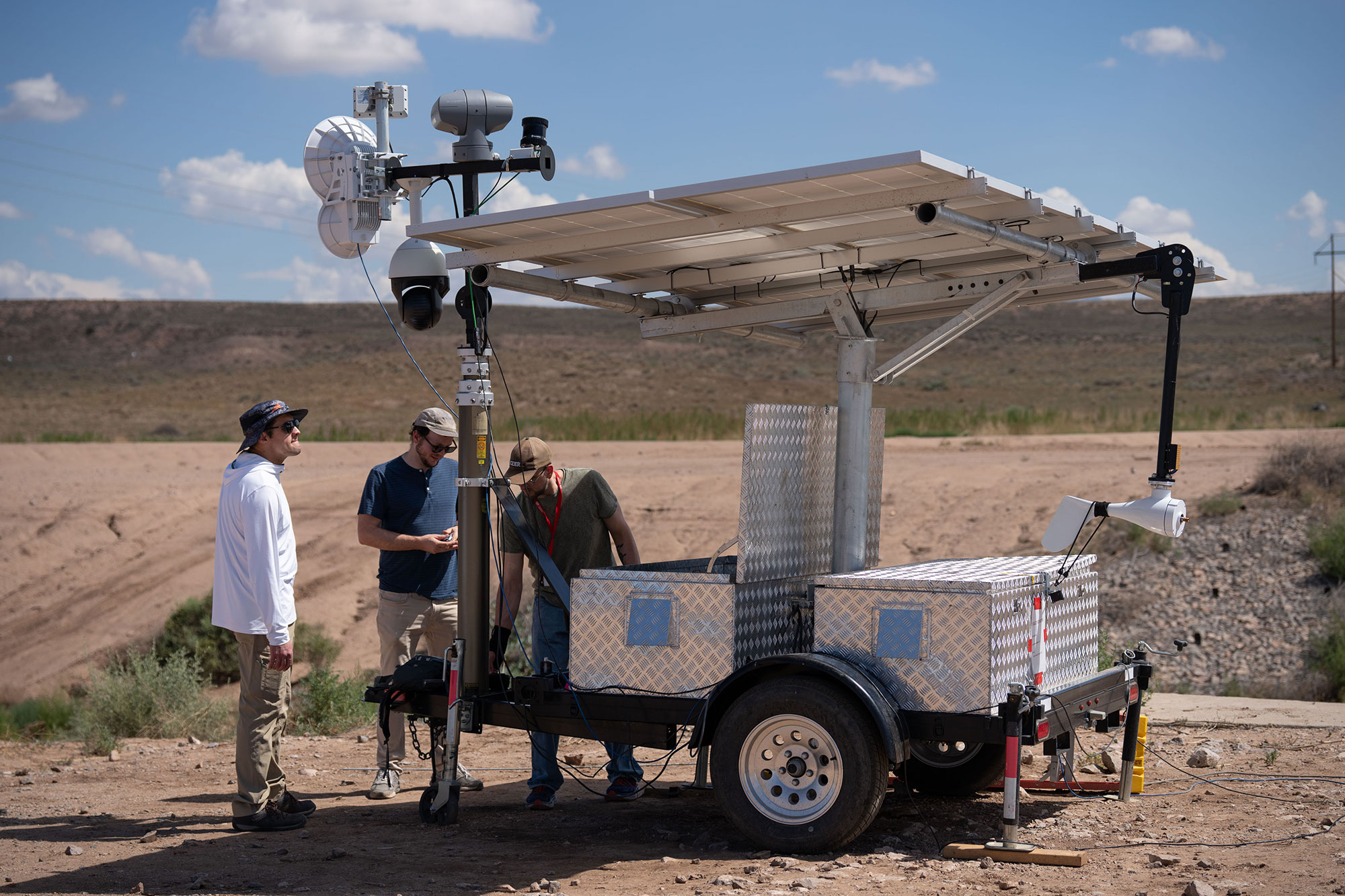
Sandia set up a security system that included unmanned aerial vehicles, or drones, ground sensors, radar, high-definition cameras and communication networks. One of the central technologies in the exercise was Sandia’s portable intrusion detection system, or PIDS, a trailer-based system designed by Sandia for NNSA to fill gaps in fixed-site security systems.
“The portable intrusion trailer is designed to be deployed to a fixed-site security system,” Jeff said. “Picture a square. If one of those lines goes down, everything is hardwired, so all those sensors go down. The trailer is designed to fill the gap in the perimeter intrusion detection system that’s gone down.”
PIDS was designed for deployment at NNSA’s most secure laboratories, plants and sites. It has already proven its suitability and operation during three real-world deployments within NNSA. The exercise built on the NNSA experience to determine whether PIDS and Sandia’s other portable sensor trailer platforms could be moved quickly into remote locations and used to support several kinds of sensors at once.
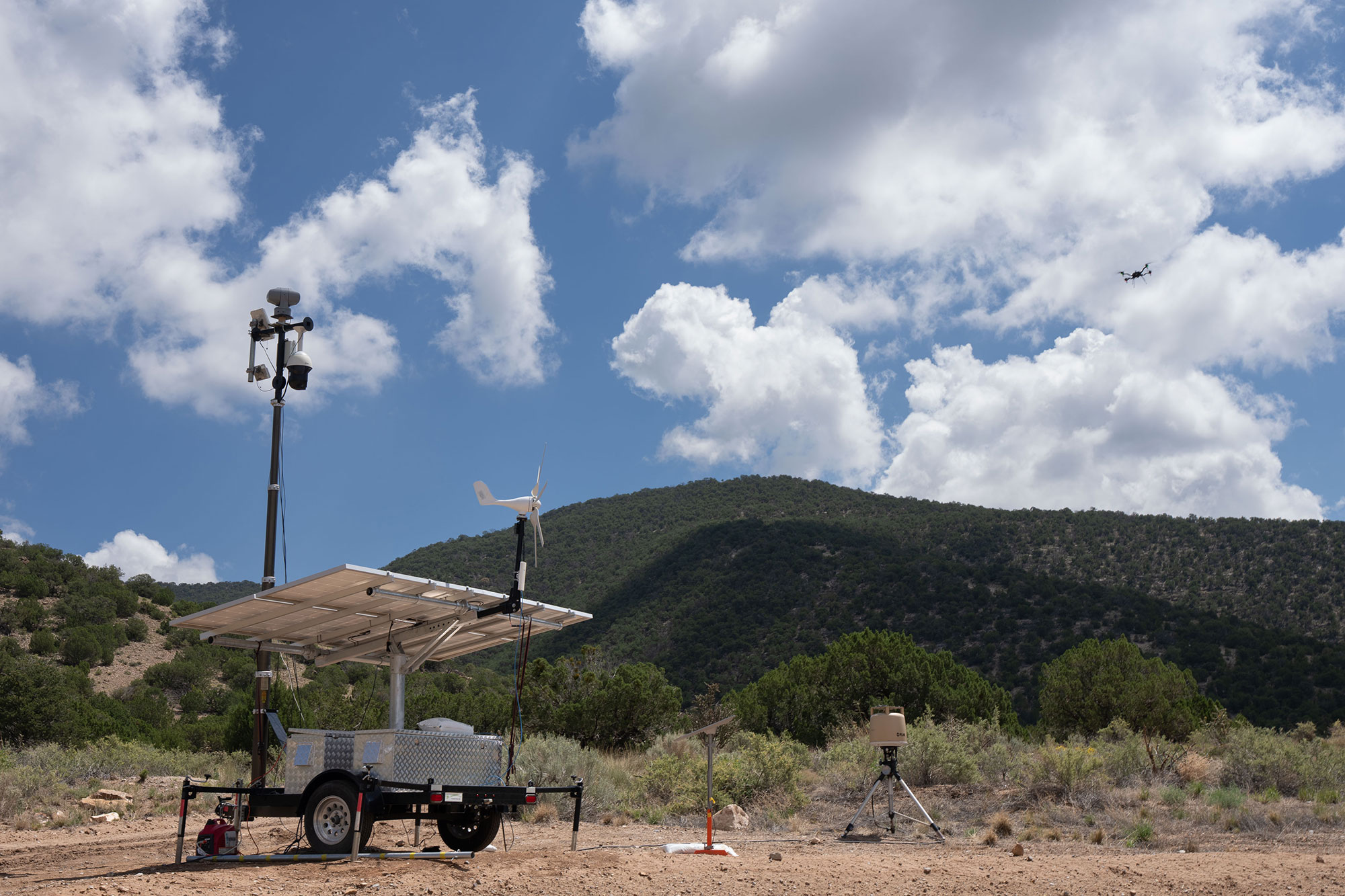
“We wanted to know if you could plug sensors into PIDS for it to serve as a communication hub for these sensor platforms and feed a network-type architecture to a command-and-control hub,” Jeff said. “PIDS is portable and can be airlifted or driven behind a small vehicle and deployed. It has solar, generator and battery power, so it’s designed for remote environments.”
Coyote Canyon served as the command-and-control hub for the exercise. The Sandia-developed CARBON system formed the backbone of the communications structure.
CARBON is a wireless communications management system originally designed to augment fixed communication infrastructure at DOE facilities. The exercise tested whether it could support portable security systems across rugged terrain and limited bandwidth.
“We put this in a location similar to what the U.S. Border Patrol or the military might see in an operational environment, where they have to use communication retransmission sites to communicate over high ground or mountainous terrain,” Jeff said.
Sending the right information back
That meant moving data from multiple sensors through the communications network under the same kinds of constraints teams could face in the field.
“We tried to make it as realistic and as challenging as possible,” Jeff said.
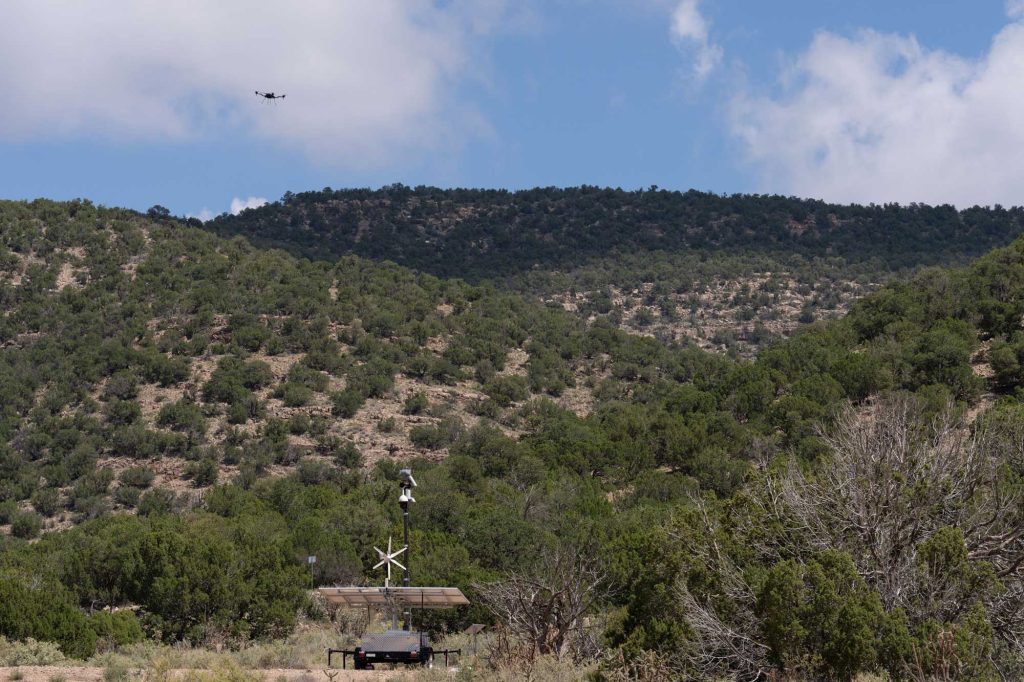
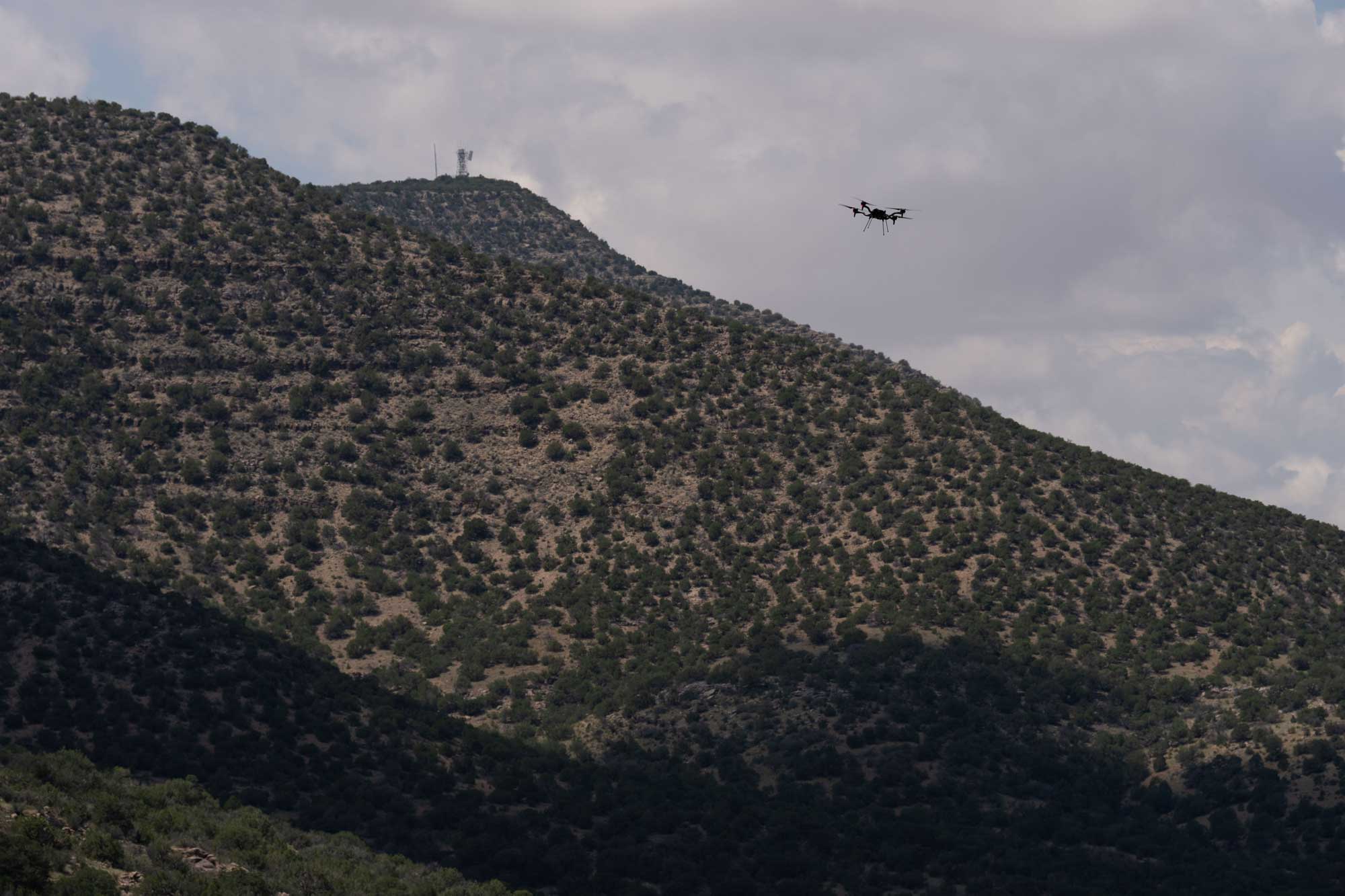
In one scenario, the team flew a drone over radar to test whether the radar could detect it, capture the data and move that information through the communications architecture.
“When we flew the drone over the radar, we wanted the radar to detect it,” Jeff said. “The intent was to capture the data and push it through the communication architecture with limited bandwidth.”
The team confirmed the communications system worked well in the environment, even though it was not originally designed for that kind of deployment.
Jeff said all exercise objectives were met. The biggest challenge was time. Sandia was asked to lead the exercise with about a month’s notice, though an exercise of that scale would normally take about six months to set up.
Sandia employees pulled together to make it a success, he said. Jeff also acknowledged Kirtland Air Force Base for collaborating with Sandia, especially on approvals for the exercise.
Lessons for future deployments
The exercise also showed where future work should focus. One of the biggest lessons, Jeff said, was the need to process more information at the sensor level instead of trying to send every data feed through the network.
“Do data processing at the sensor level,” Jeff said. “For constant situational awareness, that data processing needs to be done out at the sensor. You don’t have the bandwidth to support all those feeds.”
That lesson is shaping the next phase of the work, including efforts to add artificial intelligence that can help sort data before it is sent through the system.
“We’re looking at how we can use artificial intelligence to reduce the data, pick out what’s pertinent and then send that information,” Jeff said. “AI can help process information for the human, and then the human can decide what to do. It speeds up the decision timeline.”