
As the United States approaches its 250th anniversary, we celebrate the pivotal moments when Sandia has stepped up to support the nation. Through innovation, collaboration and dedication, Sandia has consistently demonstrated its commitment to addressing the challenges that shape national security and future.
Video by Brittany Mullins
Dinosaurs. No. Wait, let me try that again. (Clears throat. In a voice that sounds like Morgan Freeman.) DIE-no-saurs. Ancient giants of the distant past. They capture the imagination of every child, and every child at heart, who sees their mysterious fossilized remains. Their fossils have been discovered all over the globe, yet much about these prehistoric behemoths remains unknown.
Hollywood endlessly supplies imaginations with big-screen renditions of what the dinosaurs might have looked, and even sounded, like. Dr. Alan Grant of the “Jurassic Park” movies famously played a 3D-printed piece of a Velociraptor skull to mimic their sounds. But is it really that easy? Maybe they sounded like rrr-rrr-roaaaarrrr. No, wait, it should be more like (coughs andclears throat) gggrrrr-ooooaaarr-gghhh. Hmm, maybe I’ll leave this one to the scientists.
“The sound may have been somewhat birdlike, and it’s probably not unreasonable to think they did songs of some sort to call one another,” said Carl Diegert, a Sandia computer scientist, in a 1997 Lab News piece, which is the publication’s most popular article of all time.
The (dino) roaring nineties
In the late nineties, “Jurassic Park” and its sequel, “The Lost World,” reignited a new fascination with dinosaurs. People were flocking to natural history museums to learn the “real” story behind the digitized stars of the movies. Siezing this momentum, Diegert and Tom Williamson, curator of paleontology at the New Mexico Museum of Natural History and Science, set out to discover what a dinosaur may have really sounded like and see if Hollywood had gotten it right.
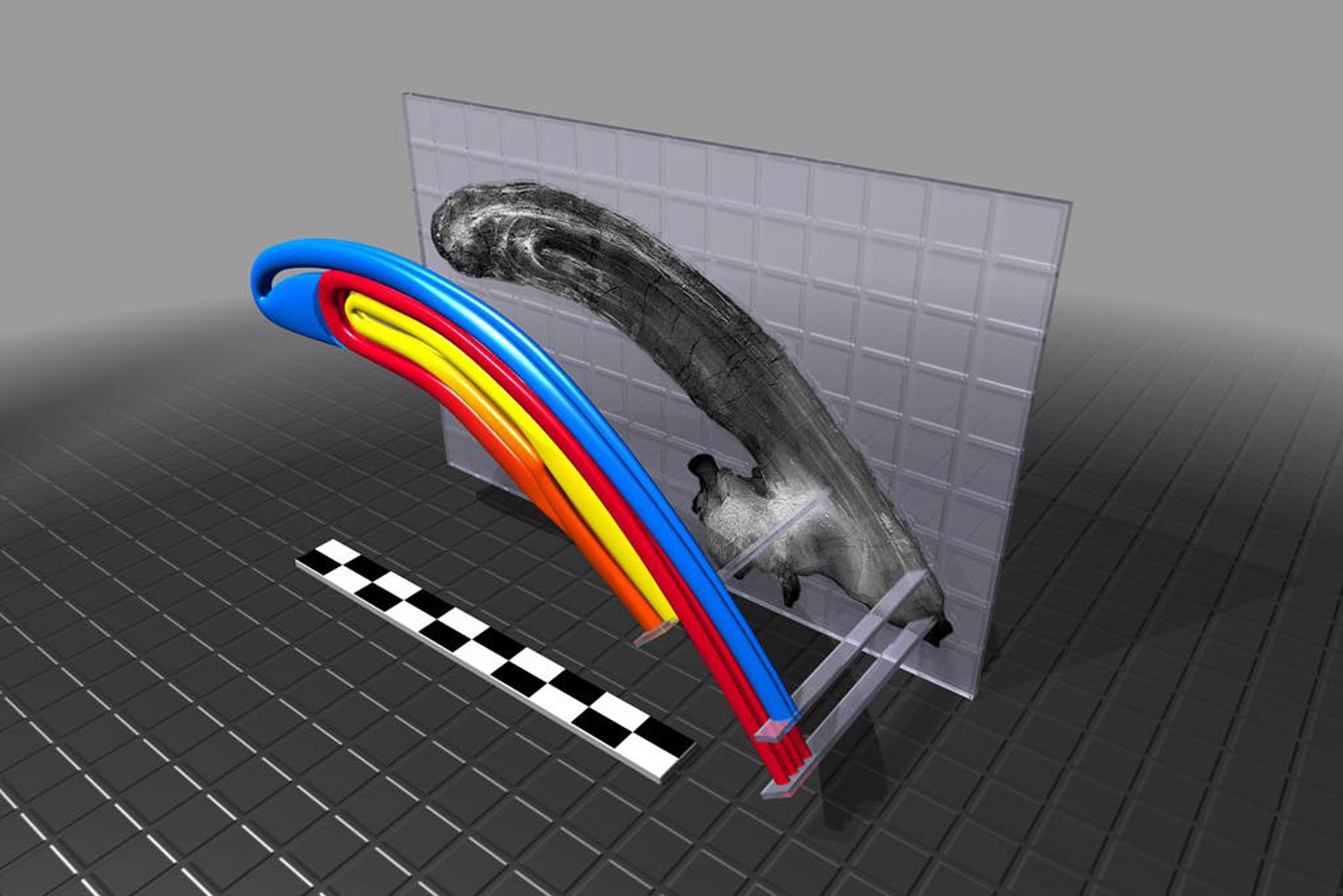
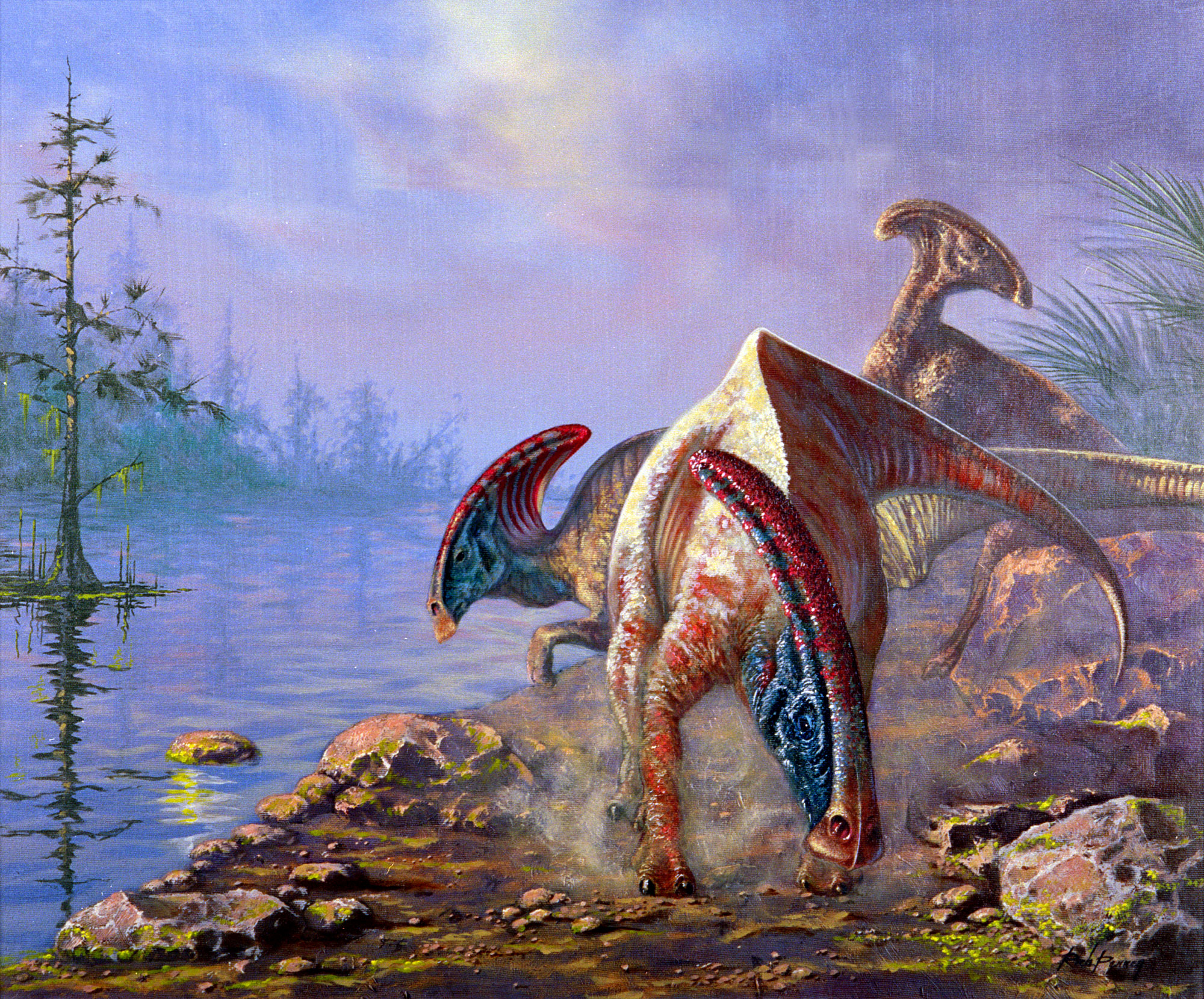
Their dinosaur of choice, a Parasaurolophus (pair-uh-sawr-AH-luh-fus), was one of many dinosaurs in the movies, but with a fascinating feature. A prominent crest flowed from the back of its skull that prompted a pronunciation-challenged character in “The Lost World” to call it Elvis. These herbivores lived during the Late Cretaceous Period, around 75 million years ago. One of the most complete skulls ever discovered for this species, complete with its crest, was found near Farmington in northwest New Mexico. The skull was about 4.5 feet long and the crest, which contained looping air cavities resembling a trombone, had many scientists theorizing the creature had a unique call.
Recreating dino-roars with modern technology
To determine if this was accurate and what sort of sound might be produced from these cavities, Diegert and Williamson started by getting a 3D-computed tomography scan of the fossil from St. Joseph Medical Center in Albuquerque. Three hundred and fifty cross sections taken at 3-millimeter intervals were used to reveal a complicated internal structure that had never been seen before.
“Not only are there more tubes than the simple, trombone-like loops described in previous studies, but there are new chambers within the crest,” Williamson said about their discovery.
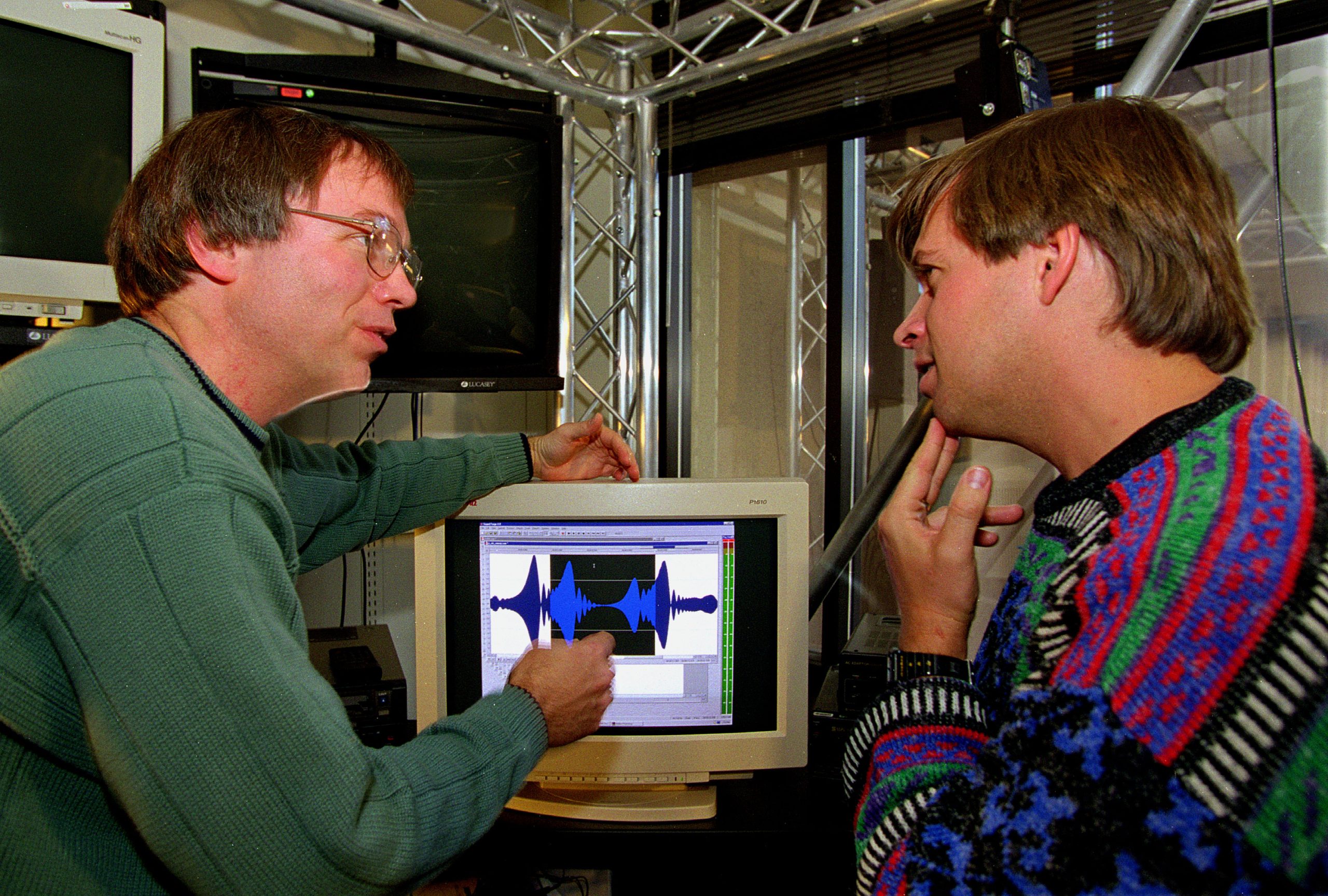
The cross sections were then loaded into a computer to reconstruct a complete crest as it would have looked without any distortions. Diegert and Williamson had to use a little imagination to fill in some blanks, such as the beak, nostrils and other soft tissues of the head and throat that weren’t fossilized. Plus, since no one really knows for sure if these dinosaurs had actual vocal cords, they worked on variants that included them and others that did not. With the 3D model in hand, high-performance computers were used to process the images, do analysis and help recreate the sounds. Essentially, the computer showed what would happen if air was blown through the recreated shape and helped amplify the natural frequencies that might have been produced.
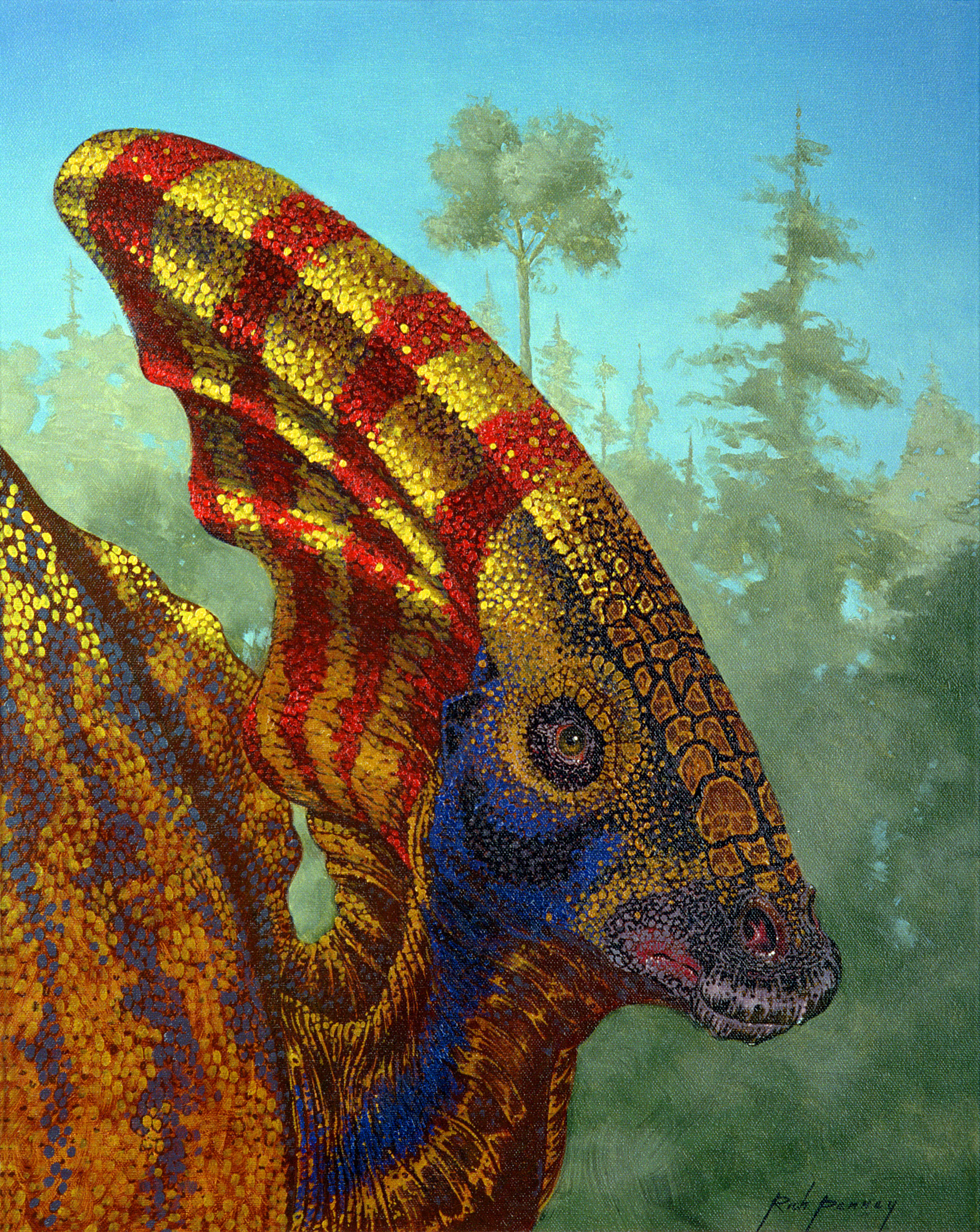
Hearing an extinct roar
The result was a resonating low-frequency rumble. This frequency could change in pitch and suggested that each Parasaurolophus may have had a distinct voice — maybe one sounded more like Elvis after all. It also helped support theories about Parasaurolophussess … Parasaurolophussi … hmm … the dinosaurs potentially having complex social behaviors.
In the decades since 1997, five more “Jurassic Park” and “Jurassic World” movies were released, though none reached out to Diegert and Williamson to get their real dinosaur sound. Decades of new discoveries and insights about dinosaurs followed but, for a brief moment in the late nineties, Sandia was known as (switching back to Morgan Freeman) the voice … of the dinosaurs.