
Teachers tour Sandia, see STEM at work
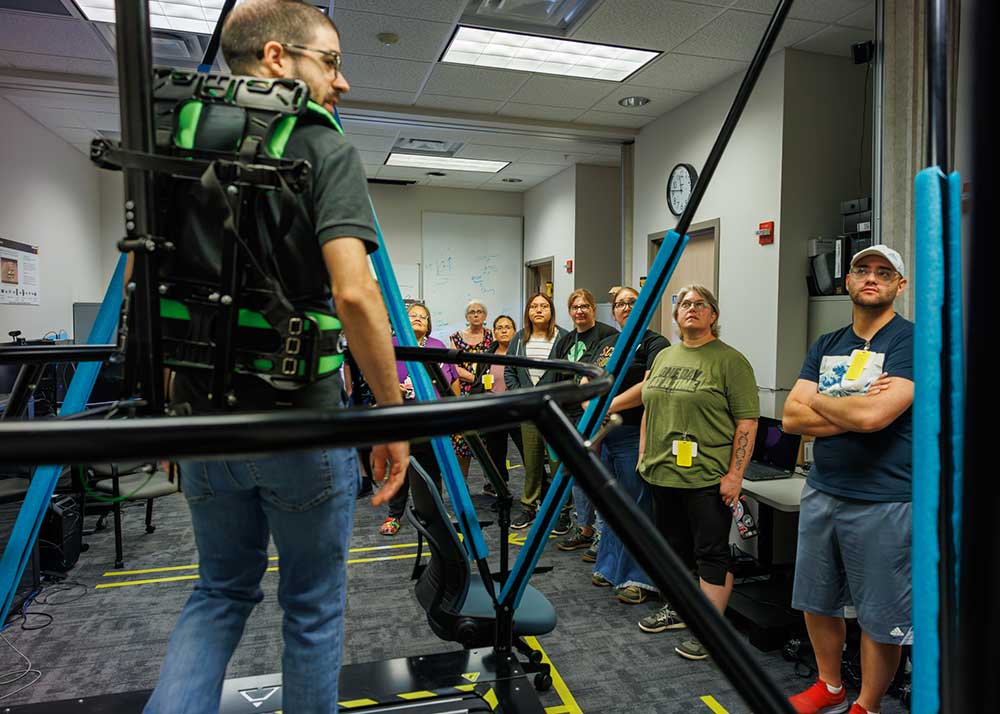
For Kristopher Klingler, manager of the Mobile Research, Development, Test and Evaluation department, robotics and engineering have been part of life for as long as he can remember.
“Engineering was the talk around the dinner table. My family all worked at the national labs,” Kristopher said.
So, when he gets to talk about it, his eyes light up, his smile fills his face, and his passion comes through in his voice — especially on the day he spoke to a room full of teachers, eager to see robotics and engineering in action at Sandia.
“What used to be sci-fi for us growing up, is not so out of the realm of reality; Think of Star Wars or WALL-E,” Kristopher said as he prepared to give teachers a tour of the Uncrewed Aircraft Systems Counter-UAS Lab.
A group of 16 teachers listened intently as they embarked on a rare educational experience: seeing firsthand what Sandia does with hopes of bringing it back to their classrooms to inspire students.
“Robotics is more than just a career — it’s a passion,” Kristopher told them. “Everyone involved in this work has a story of how they were introduced to robotics or engineering. They remember what led them on this journey and which teacher inspired that curiosity.”
These teachers hope to become that teacher one day.
Coming together to learn, grow, share
The teachers are part of the TODOS program, which stands for Teachers Organizing Diverse Opportunities Across a STEM Ecosystem. TODOS is a grant program that serves the national need for developing K-12 science teacher leaders. Led by professors at the University of New Mexico, teachers from across the state will spend five years building skills that benefit students in their districts.
“It’s about learning new ways to incorporate science into the classroom, science leadership and making connections across the STEM ecosystem,” said Deanna Gould, UNM assistant professor and project leader. “New Mexico has a big ecosystem, and STEM is happening in many places. We can increase student interest and student success by connecting with the many ways STEM is being done, from our national labs to our Indigenous people.”
Part of the program includes teachers experiencing new things and Sandia is the perfect place for that.
“Hosting teachers at Sandia Labs through the TODOS program is essential for strengthening New Mexico’s STEM ecosystem,” Sandia’s K-12 STEM program manager Deb Menke said. “By providing educators with firsthand insights into cutting-edge research, we empower them to inspire diverse students.”
Touring the VIPER Lab
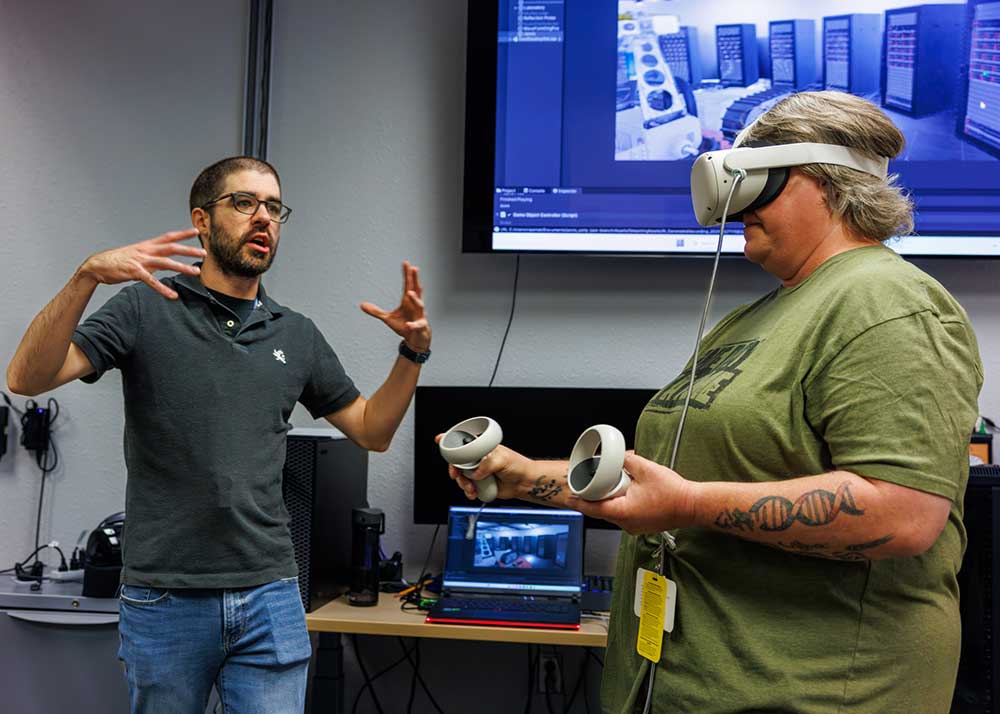
One of those teachers is Laura Debusk, an educator of 30 years looking to put a new spark in her teaching at Yucca Middle School in Clovis. “Teaching science is like the foundation of everything,” said Debusk.
Her favorite part of the tour was the VIPER Lab where she and others put on virtual reality headsets and worked with JARVIS, Sandia’s immersive extended reality environment. Debusk hopes to incorporate VR into her classroom.
“This is a pathway for kids,” she said. She’s especially focused on opening the doors for students who may not have many opportunities. “I am thinking of some of my gamers. You put them in this virtual reality world and science is alive. That’s what I envision in my classroom.”
Debusk is working on a grant proposal with fellow TODOS member Gian Poteste, who works hundreds of miles away at Spartan Learning Academy in Bernalillo. They’re seeking grant funding for VR headsets and Promethean boards for their classrooms. They hope the technology will connect their students not only to science but one another.
“I think the coolest thing about being here is that we get to see science in action,” Poteste said. “We get to see where we’re at in terms of science and engineering and where we’re headed. We are such a science-rich state. I want our students to be proud they are from New Mexico and to jump into that realm.”
Inspiring new ideas
While New Mexico is rich in STEM thanks to its two national labs, getting that science to kids can be a challenge.
“Our school is an hour and a half from an interstate,” said Taos High School teacher Miranda Chavèz.
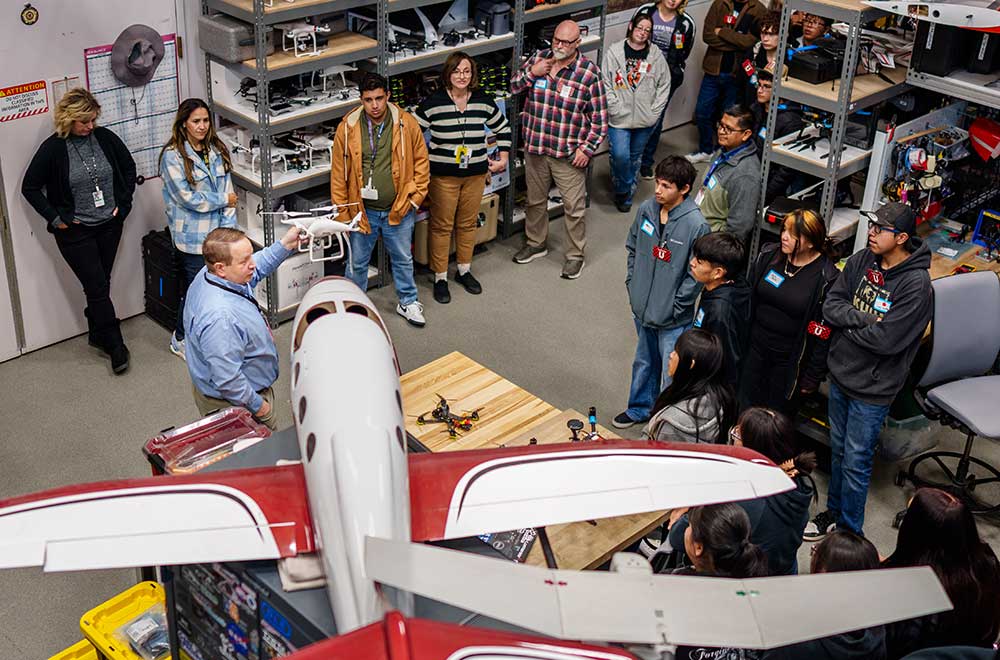
That distance makes learning more difficult. But Chavèz was inspired by the drones and camera capabilities she saw at Sandia.
“We live in an incredibly biologically rich area. I would love to use a 360-degree camera to make a virtual field trip to go see the petroglyphs that are too hard to reach by foot or are off limits because they’re on private land,” she said.
It’s an even bigger challenge for Chavèz, who teaches special education students. But she is undeterred.
“Challenge accepted,” she said. “I was one of those students. I want to look for opportunities I didn’t have when I was young.”
The next generation of Sandians
For Cuba teacher Daniel Delgado, the field trip to Sandia was about seeing where America’s workforce is headed. He leads the Cuba Independent School District internship program.
“We are really isolated because we are far from the big cities,” Delgado said. “It’s hard from a distance to know what we should be training our kids for if they want a job here at home.”
Delgado said he had no idea how diverse Sandia’s work was until this visit, which included a tour of Sandia’s National Security Technology Center. There, teachers learned more about the cutting-edge technologies and research underway and about Sandia’s role in national security.
“Opening up the doors and allowing us in and explaining what Sandia does is huge. Knowing what kids could be doing in the future and what jobs are available is important for internships and for future careers,” Delgado said.
That’s why these visits are so important — not just for teachers, but for Sandia. They could be building the Labs’ future workforce. “These teachers help cultivate the next generation of innovative thinkers and problem solvers,” Deb said.