
Staff showcase capabilities at AI+ Expo
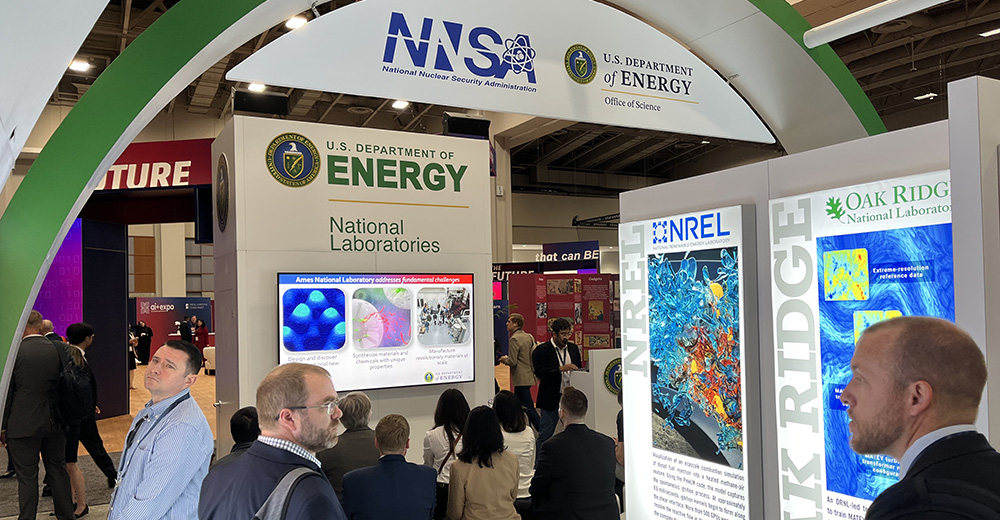
Sandia and the DOE national lab complex showcased artificial intelligence capabilities in Washington, D.C., in June, exemplifying their role as trusted advisers among government officials.
Staff from the Labs hosted two demos and gave one presentation at the AI+ Expo, a relatively new event that has quickly become a major conference for government and industry. Sandia highlighted its AI efforts related to advanced manufacturing. All 17 national labs exhibited from a combined DOE booth, the largest at this year’s event.
“Elected officials, their staff and government agencies are turning to Sandia and our partner labs for our expertise and capabilities when making decisions about AI for national security,” said Caylin Howard, chief of staff for Sandia’s AI board of directors. “We are a key player in this space.”
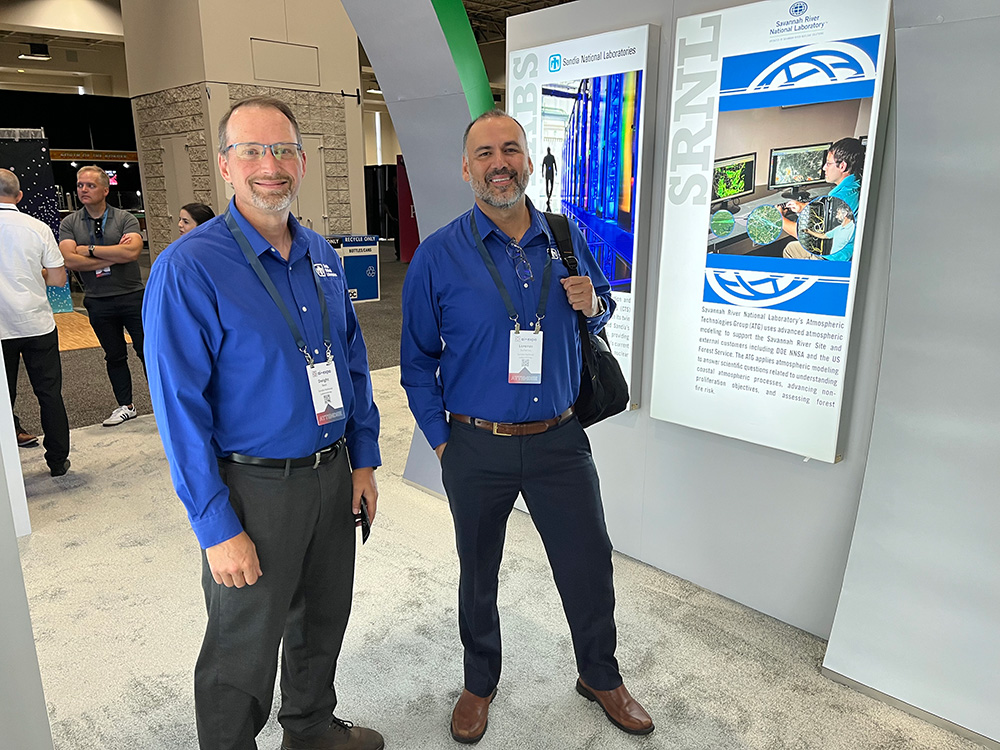
The event itself, which was open to the public, was indicative of how fast the government has come to see AI as critical to continued U.S. competitiveness.
ChatGPT launched only three years ago, abruptly changing how people view and use AI technologies. And yet this was already the second year the AI+ Expo has been held, which focused heavily on AI adoption and national security issues.
“Everything was about competition with China,” said Sandia’s Anthony Garland, one of about 15,000 attendees, according to the event website.
While sponsorships and keynotes were drawn from a mix of tech and defense staples, the event drew many government and military officials. Adm. Samuel Paparo, commander of U.S. Indo-Pacific Command, Ukrainian Ambassador Oksana Markarova and Mississippi Gov. Tate Reeves addressed the conference, among other public sector representatives.
“I had the privilege of presenting my demo briefly in front of DOE Secretary Chris Wright,” Sandia’s Nathan Brown said.
Wright touted the national labs during an interview with Ylli Bajraktari, president and CEO of the Special Competitive Studies Project, which hosts the expo.
“AI is certainly in the sweet spot of the Department,” Wright said, answering a question about how he sees his role as secretary, adding that the national labs have been pioneers in launching AI.”
Although the conference was well-attended, Caylin said there’s more work to be done to coordinate and amplify the national labs’ expertise, and at least one attendee recognized that need, too.
“I was expecting more people to come and check out all the DOE area,” Anthony said. “I think people don’t understand what the DOE does, especially for AI.”