Hemlines and blue jeans: Sandia’s fashion evolution
BY MAGDALENA KRAJEWSKI
THURSDAY, AUGUST 8, 2024
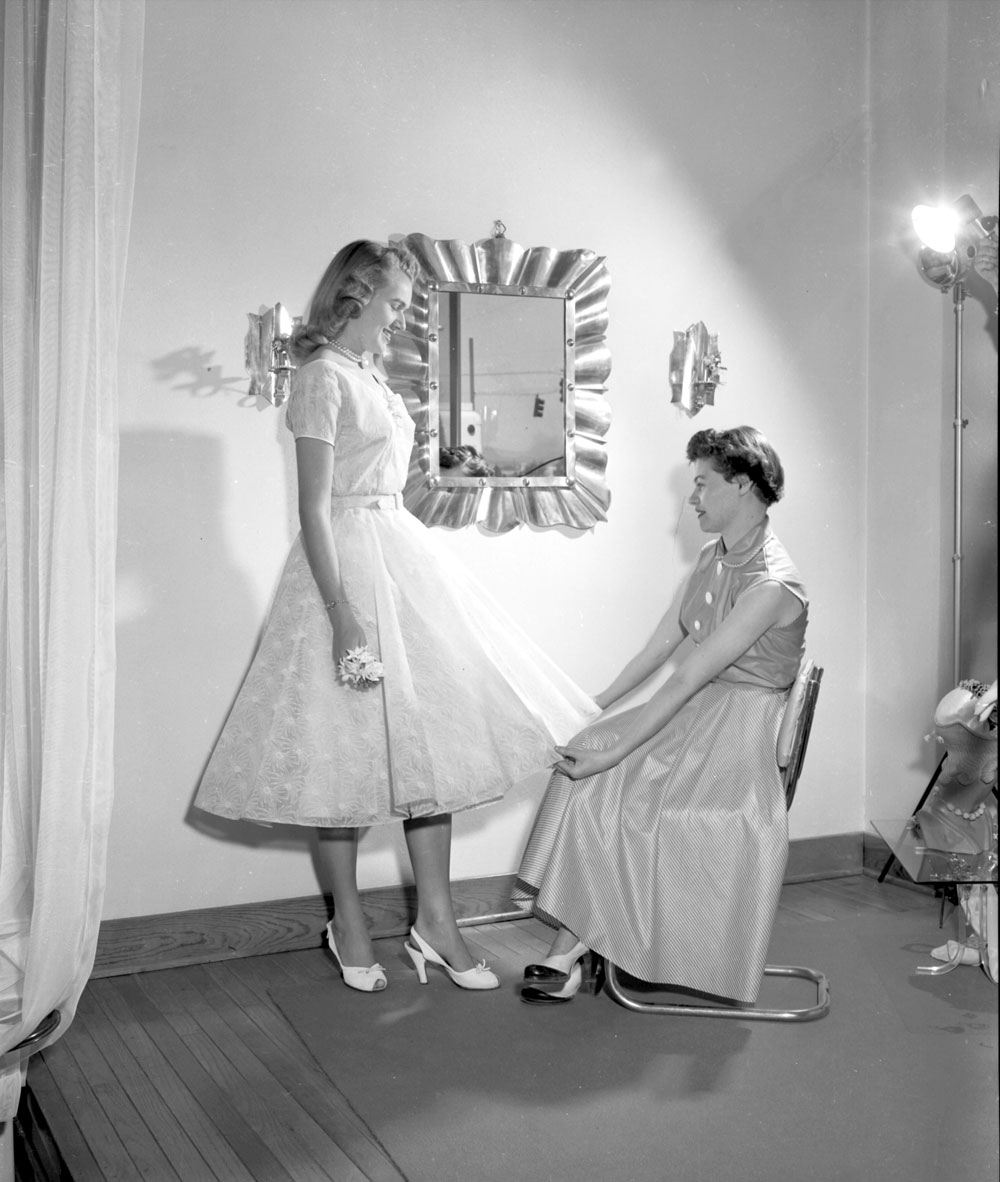
STYLE SHOWCASE — Dresses modeled from a 1954 Mother’s Day Fashion Show. (Photo from the Lab News archives)
When Sharon Mackel started at Sandia as a secretary in the 1960s, women in the workforce were expected to wear a full face of makeup, dresses with hemlines below the knee, nylons and heels.
Sharon remembers a supervisor at the time who would call out secretaries who did not wear lipstick properly. That same supervisor approached Sharon for wearing her hemline too short, but hemlines and lipstick would be the least of the fashion trends to evolve in the coming decade.
“They tried to control how we dressed, but it was a weird time as we were coming into the hippy era,” Sharon said. “Things started getting really loose.”
The ’50s and ’60s
Scrolling through early editions of Lab News, you see men mostly dressed in button-downs and pleated slacks belted high on their waists. When they wore sports coats, the lapels were wide, and the ties were bows. Hair was styled mostly neat and trim, but as Elvis Presley and James Dean were fashion icons of that era, those with enough of it sported a well-greased pompadour.
Marilyn Monroe and Elizabeth Taylor, also fashion icons of that era, inspired women to wear some variation of an hourglass silhouette with hemlines right below the calf. Hair rollers were the primary hair styling tool at that time, so hair was big yet smooth. Those with natural curls often turned to the poodle cut, inspired by Lucille Ball, where curls were stacked high with sides pinned close.
Things stayed relatively the same through the ’50s and ’60s. Twiggy and Jackie Kennedy came onto the scene in the ’60s, and their influence was a little less Hollywood glamour, more European chic. Hemlines started to come up a bit, albeit still right below or barely above the knee. For men, pants stayed high, but sports coats seemed to be less popular and the ties got skinnier.
Polyester and sideburns
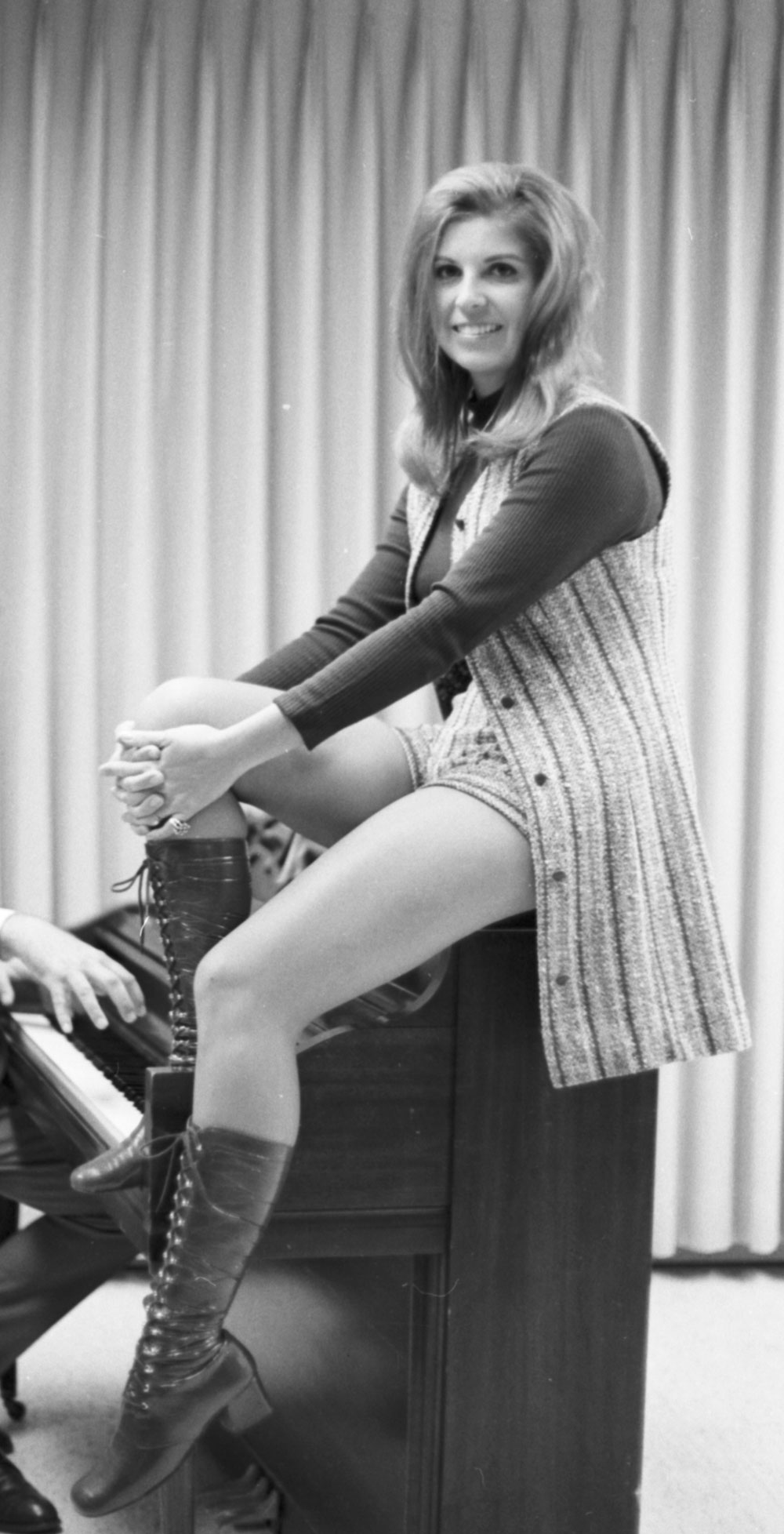
HOT PANTS — Sharon Mackel models one of the looks from Omar’s Boutique featured at a fall fashion show in 1971. (Photo from the Lab News archives)
Sharon remembers dress changing rapidly in the ’70s, especially for women.
“There was a group of us who lived on the second floor in building 805, we started challenging the norm,” Sharon said. “We stuck together and started wearing pantsuits to work, shorter skirts, like miniskirts. I even wore hot pants to work one day.”
Sharon and those hot pants were pictured in a 1971 edition of Lab News. She’s also wearing a long sleeve turtleneck and lace-up high boots. Also noticeable is her hair, which is much longer, falling below her shoulders. Influenced by the likes of Farrah Fawcett and Cher, many women started growing their hair long and wearing it straight or feathered out.
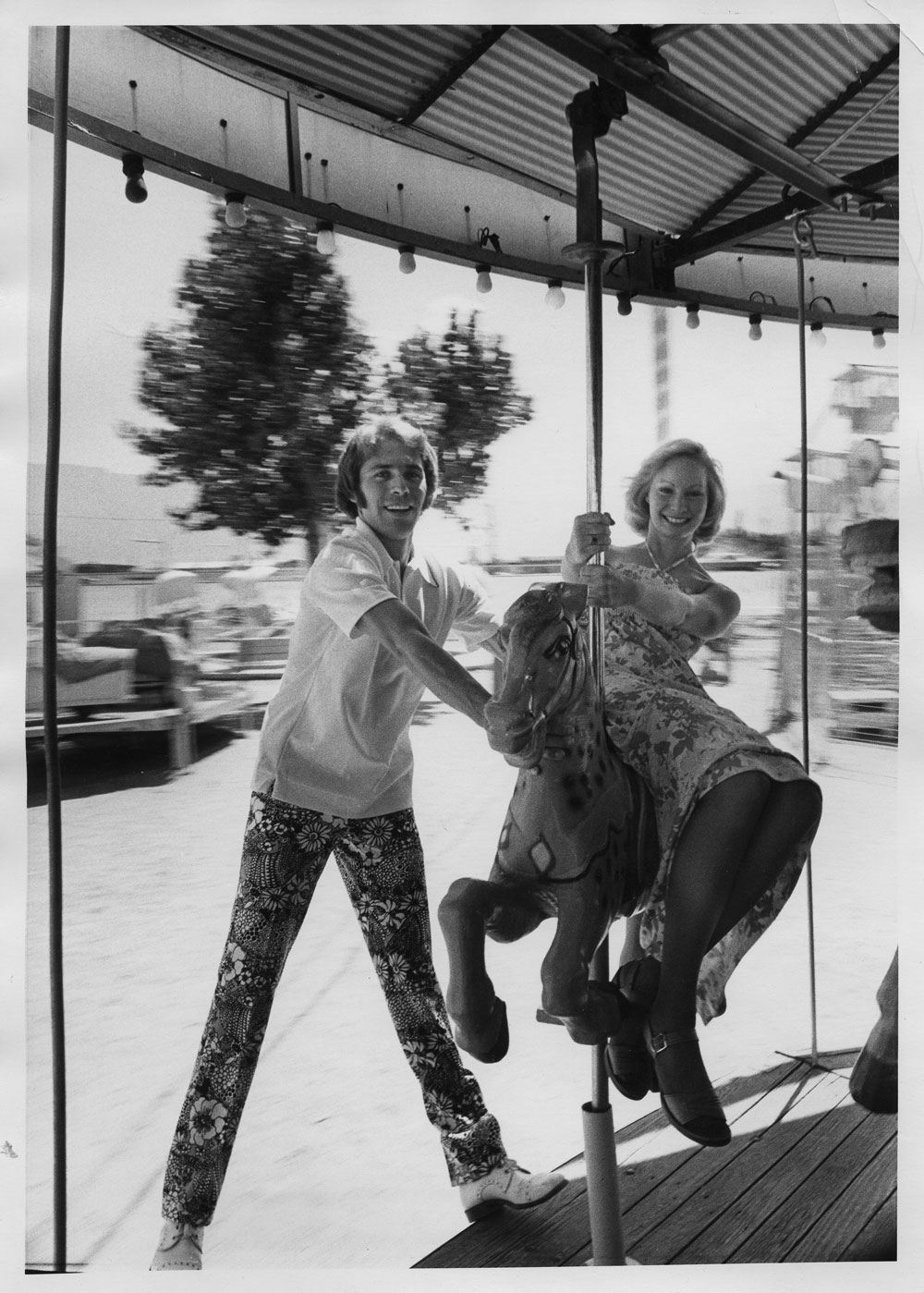
Both men and women were wearing brighter, more vibrant patterns, think floral, paisley and plaids. More clothing was made from polyester, which at the time was marketed as a miracle fabric that could be worn for days without ironing and still look presentable. Leisure suits were an especially popular polyester pick.
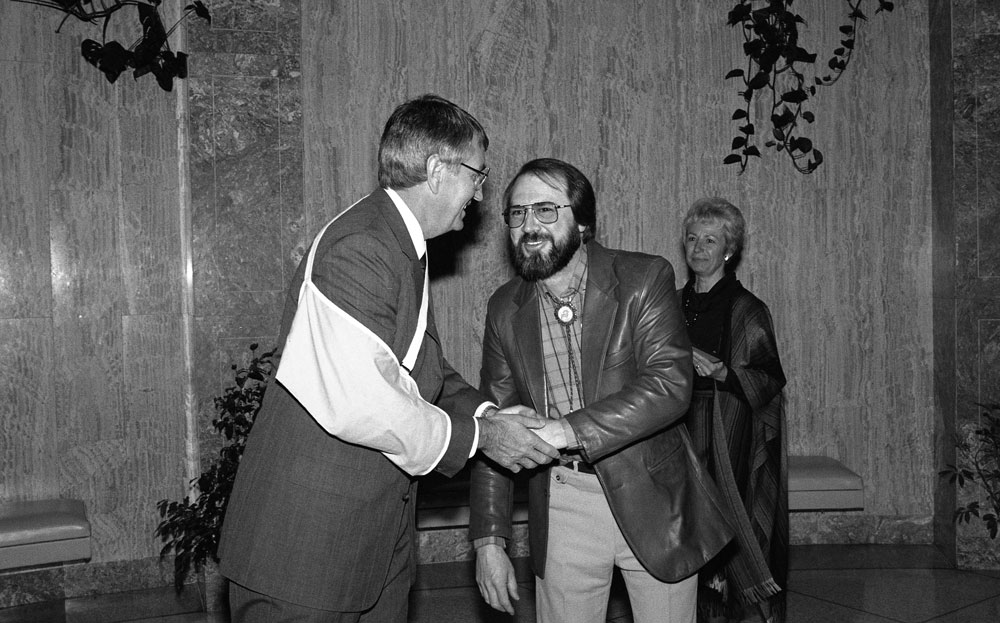
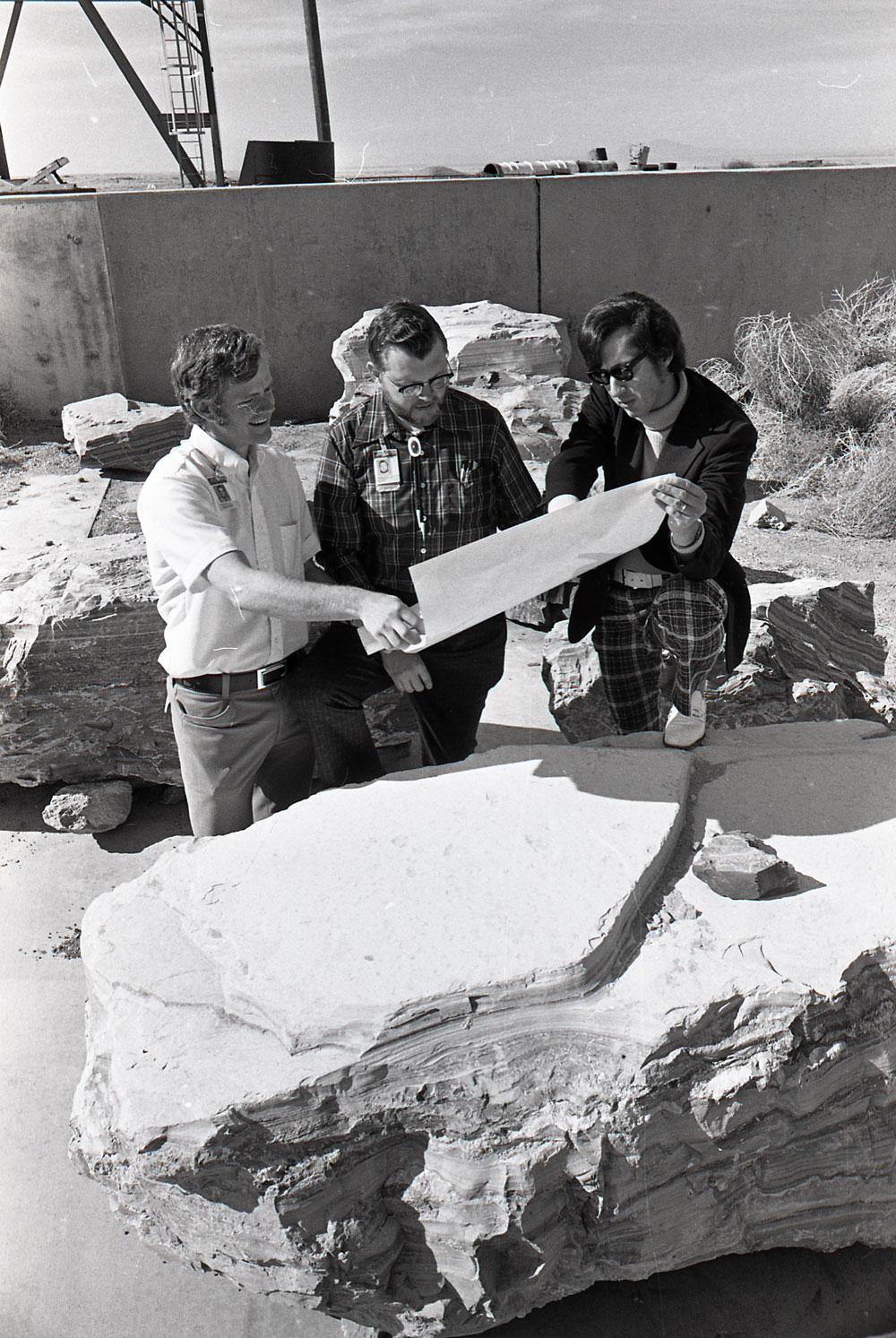
Turtlenecks under sports coats became a popular look for men, as did wide-legged pants. Wide ties returned to fashion, but due to southwest influence, many men swapped more traditional ties for bolo ties. Most noticeably, facial hair became more mainstream. Scrolling through Lab News editions from the ’70s, you’ll see men with thick mustaches and full beards. Men started wearing their hair longer as the Beatles, David Cassidy and John Travolta inspired many hairstyles of that era. For those who kept their hair short, thick sideburns were commonplace.
Shoulder pads and perms
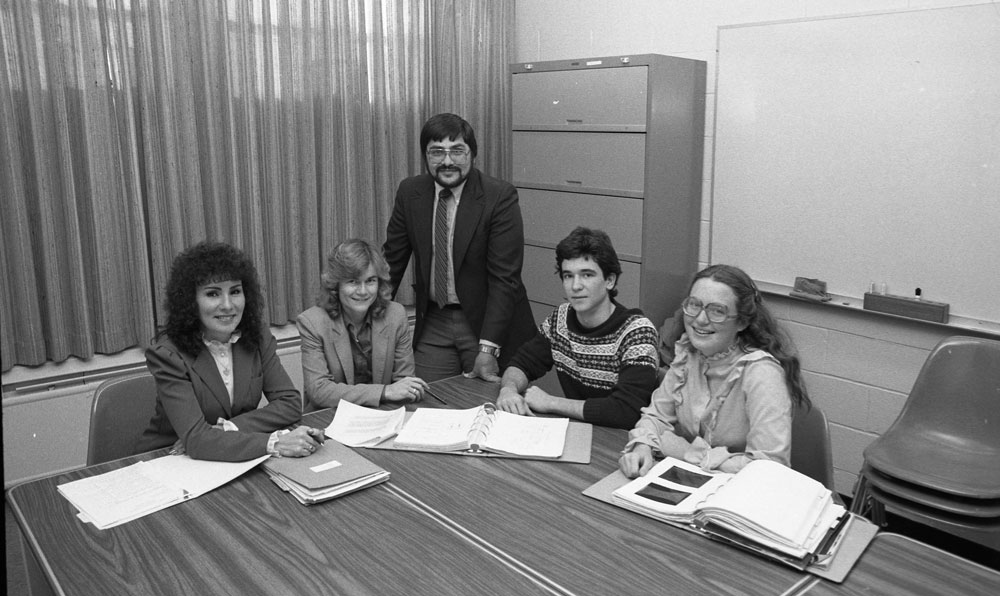
Once the eighties rolled around, everything seemed to get bigger. The hair, the glasses, the shoulder pads — especially the shoulder pads.
“Dynasty” starring Linda Evans was one of the popular television shows at the time. Costume designer Nolan Miller is said to have leaned into Evans’ naturally broad shoulders, really wanting to accentuate them. And a fashion trend was born.
THE ’80s — A look at some of the more popular workwear looks from 1983. (Photo from the Lab News archives)
Princess Diana of Wales was another well-known trendsetter of the era. A fellow shoulder pad lover, she also popularized many looks chosen by women at the Labs and beyond, including piecrust and tie-neck blouses and dresses.
Then there was the hair, and the perm.
If there was an official hairstyle of the ’80s, the perm would have been it. Those tiny curls and the volume they created were everywhere, on men and women alike.
Men at the Labs were wearing more and more denim, first with their jeans and now with their jackets too. Polo shirts were also popping up as a casual alternative to the button down.
Casual Fridays
Compared to the bigger-is-better trends of the ’80s, the ’90s started to mellow out. But as Sharon recalls, things started getting, and staying, casual.
“Casual Fridays came to Sandia in the ’90s,” Sharon said. “And then it started stretching out past Friday.”
Once considered weekend wear, T-shirts and crewneck sweatshirts were suddenly popular work attire. But still, for both men and women, you saw remnants of decades past, both in clothing and hairstyles. Blue jeans and blazers, thick ties, bolo ties, no ties, dresses and pantsuits, big hair, short hair, facial hair and no hair.
Fashion around the world and at the Labs was becoming a little more choose-your-own-adventure, a lot less about wearing your lipstick correctly.
The 21st century
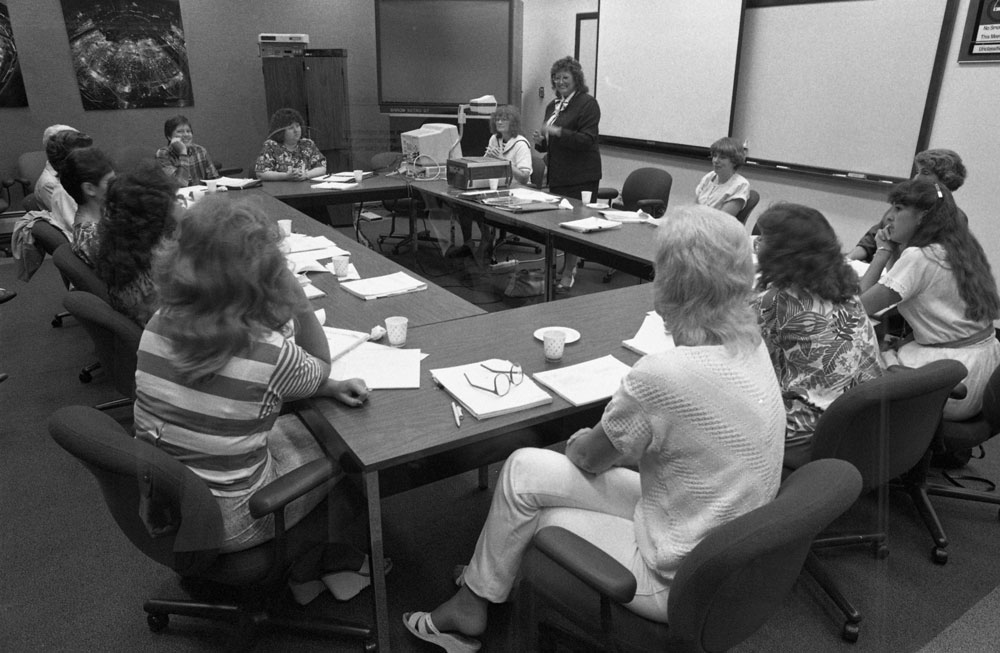
THE ’90s — A photo from 1990 shows some of the more popular hairstyles and styles for working women in the early ’90s. (Photo from the Lab News archives)
By the turn of the century, workplace fashion was less dictated by formal standards and more welcoming of varied choices that embraced individual expression.
Today, those choices and expressions continue to borrow from the trends of yesteryear while introducing new styles, some with a longer shelf life than others. Popular culture continues to influence hairstyles, outfits and more.
But when we wake up and take on the age-old task of deciding what to wear to work that day, our comfort takes precedence. For some, that means wearing a suit and tie, and for others, it’s jeans and tees. But these days, it’s all acceptable, and that is in large part due to women like Sharon who challenged the norm and paved the way for us all to wear what we want.
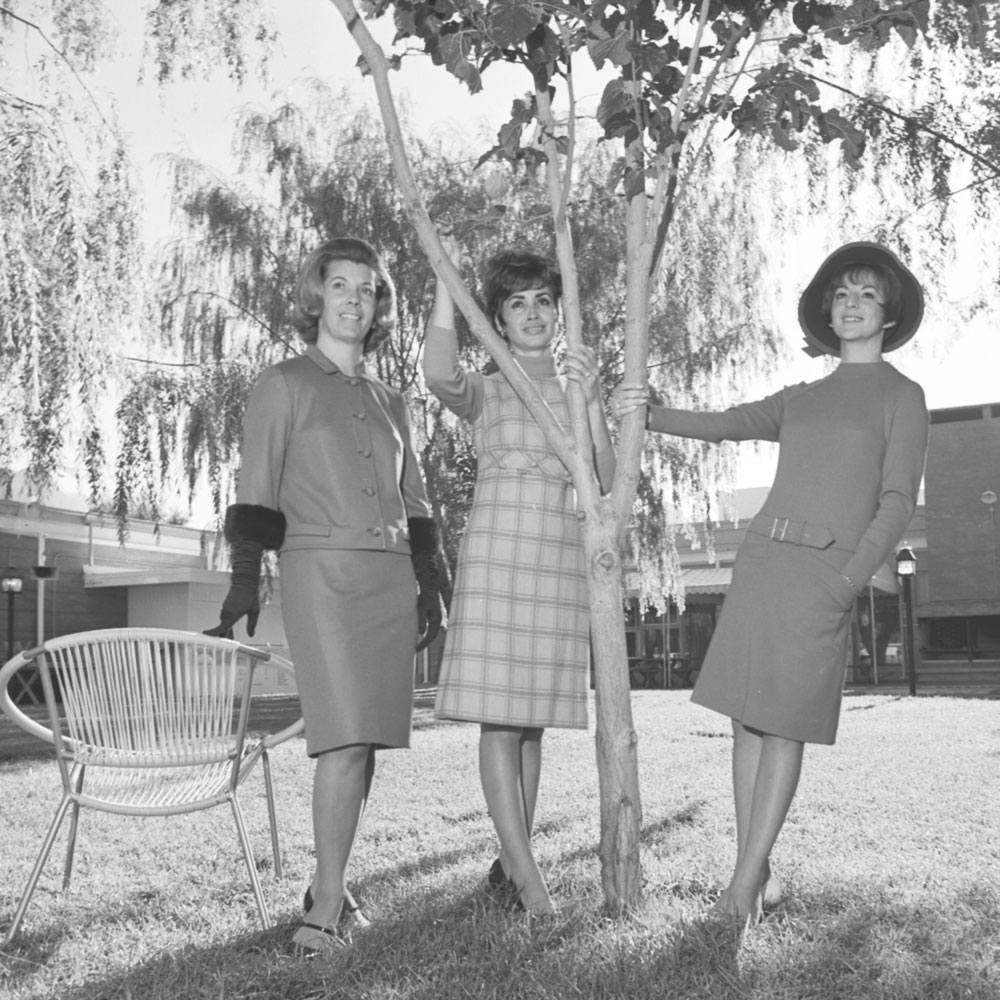
WOMEN’S FASHION — Models show off the latest trends in 1967. (Photo from the Lab News archives)
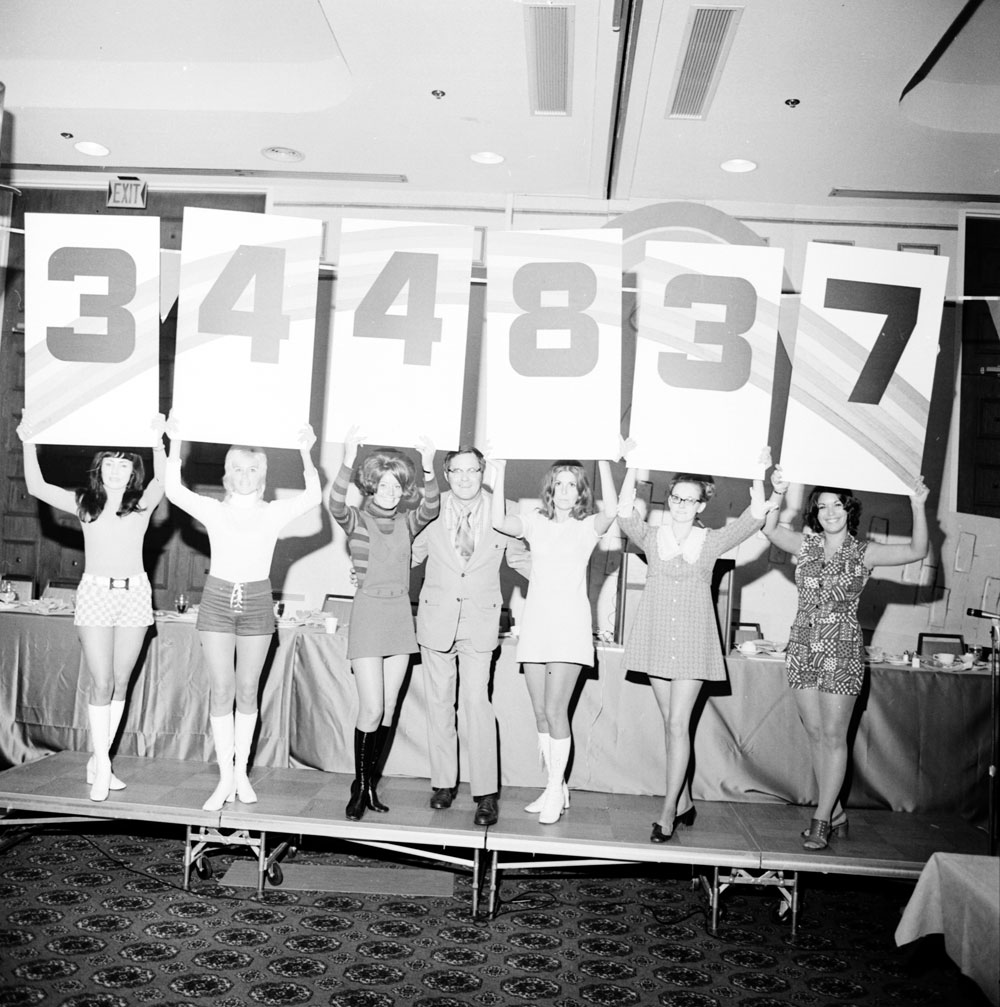
THAT ’70S LOOK — Pictured left to right, Solia Candelaria, Archie Pearlman, Peggy Stevens, Ken Sutton, Sharon Mackel, Jan Hawkins and Laura Garcia report Sandia’s contribution of $344,837 to the Albuquerque United Community Fund at a meeting in 1972. (Photo from the Lab News archives)
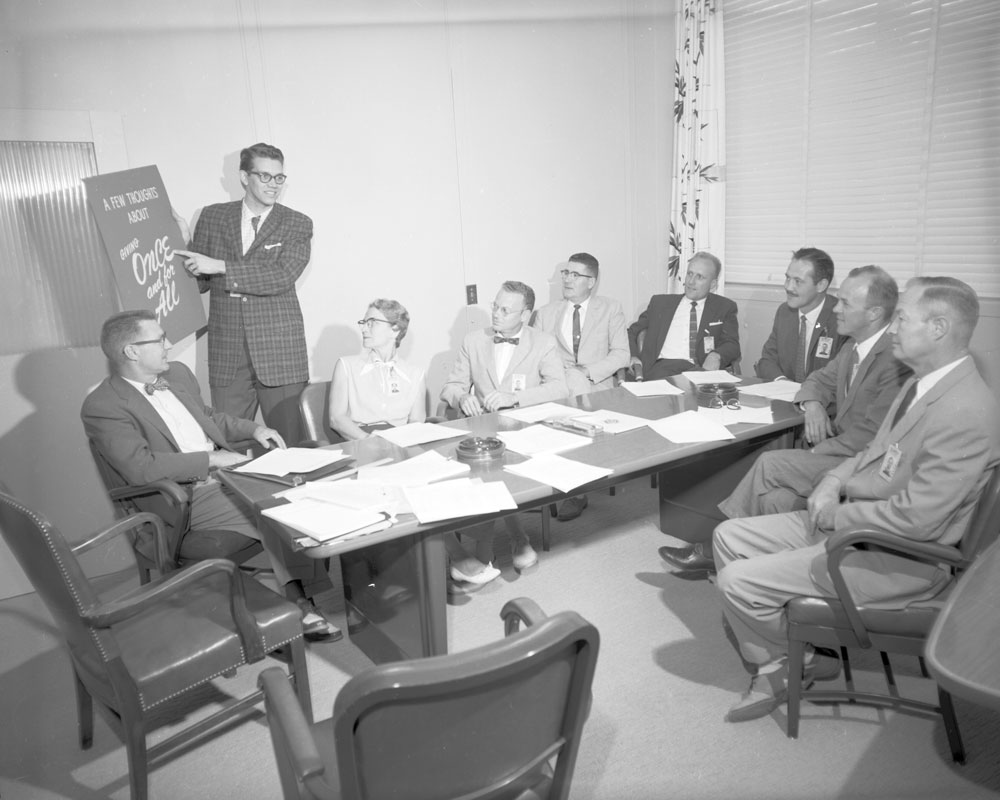
BUTTONED UP — A look at men’s workwear from 1959. (Photo from the Lab News archives)
SOUTHWEST STYLE — Pictured in 1988, Joe Padilla shows off a popular look of the time with his full beard, bolo tie and leather sports coat. (Photo from the Lab News archives)
POLYESTER PATTERNS — Rocky Medina and Terry Caress show off looks to be featured at a summer fashion show in 1974. (Photo from the Lab News archives)
MEN IN THE ’70s — Above shows a little bit of everything that was stylish for men in the ’70s. This specific photo shows Dave Northrop, Wendell Weart and Hap Stoller in 1974. (Photo from the Lab News archives)
Fashion at the Coronado Club
For almost two decades, the Coronado Club hosted fashion shows throughout the year. Sandia staff, both men and women, would model the latest seasonal trends provided by local clothing boutiques. Scrolling through Lab News from the ’50s, ’60s and early ’70s, you can find articles and photos promoting fashion shows showcasing spring hats, ski clothing, evening gowns and holiday styles.
Around the mid-’70s it appears the fashion shows had run their course as there was no further mention or promotion of them, in Lab News at least. The why is unclear, but Labs Historian Rebecca Ullrich says events such as fashion shows, high teas and dances seemed to wane in later years.