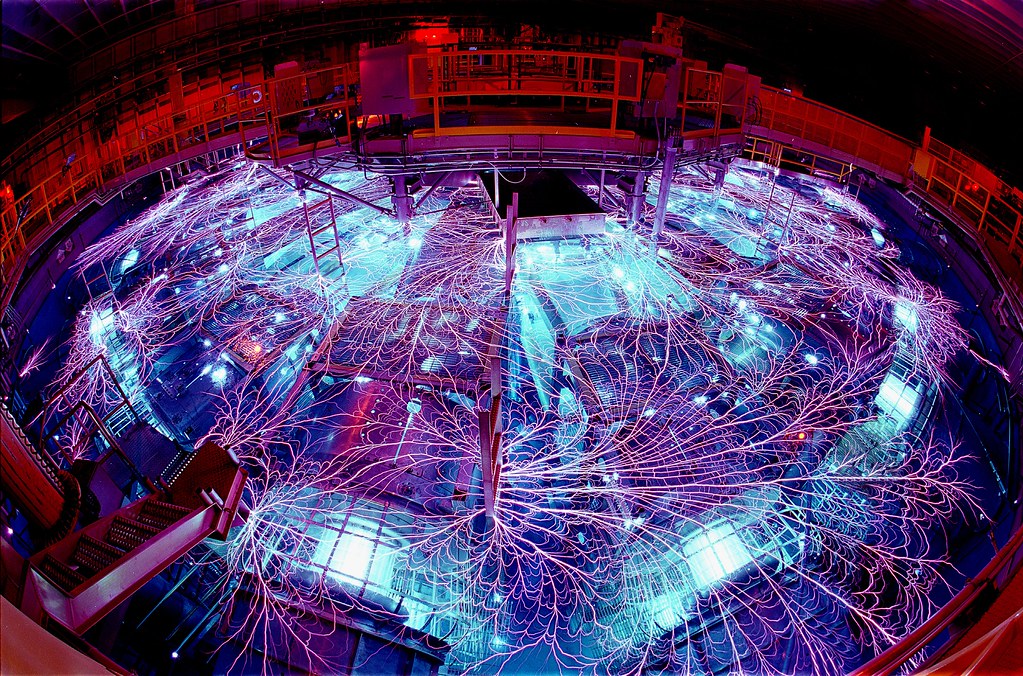
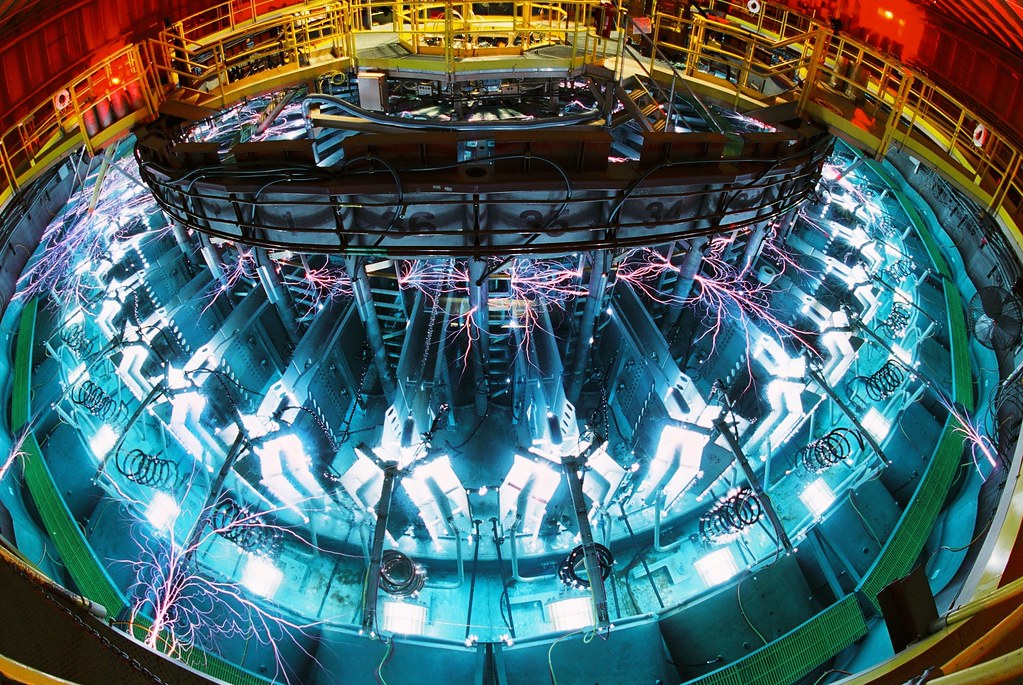
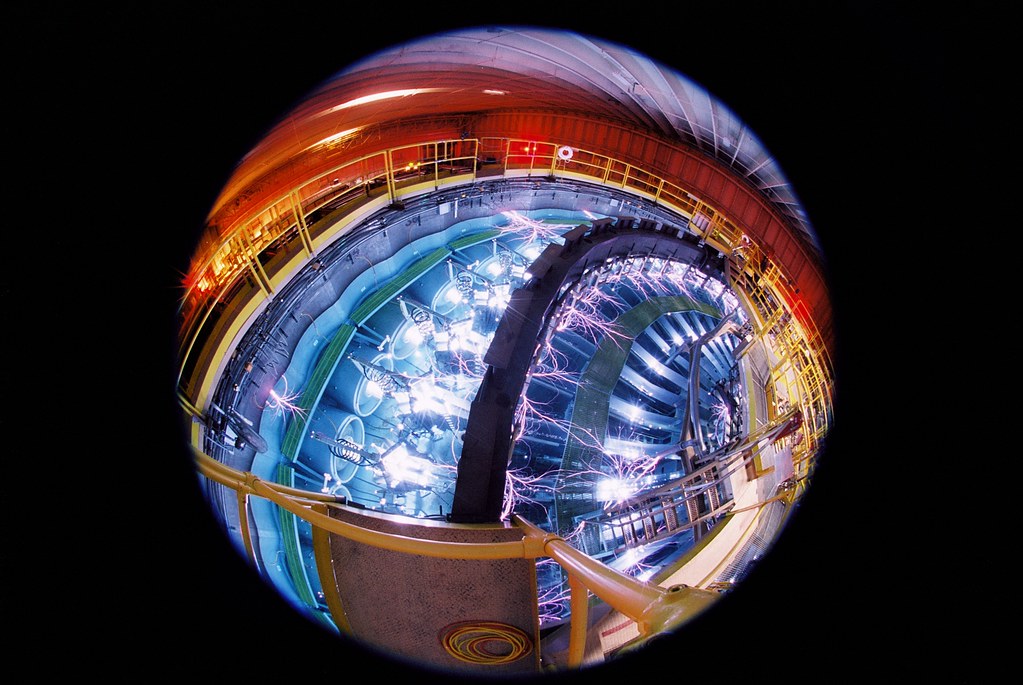
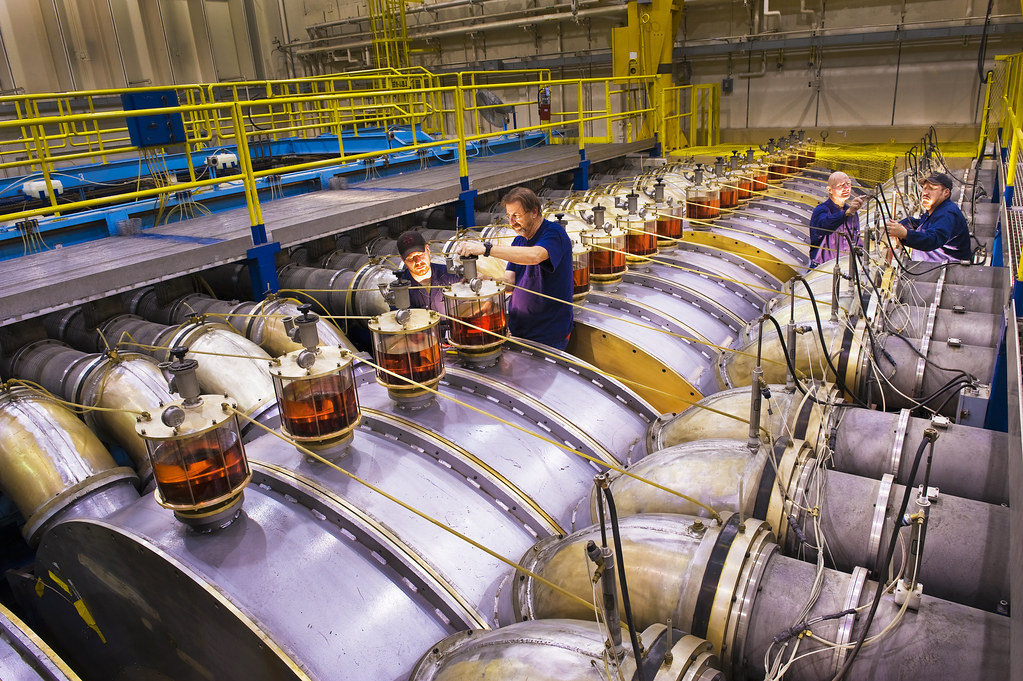
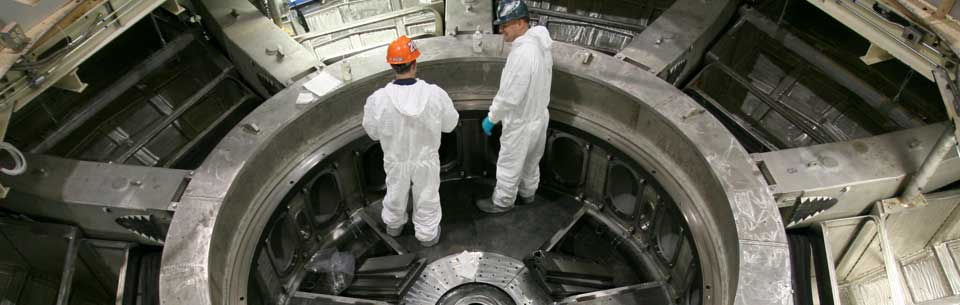
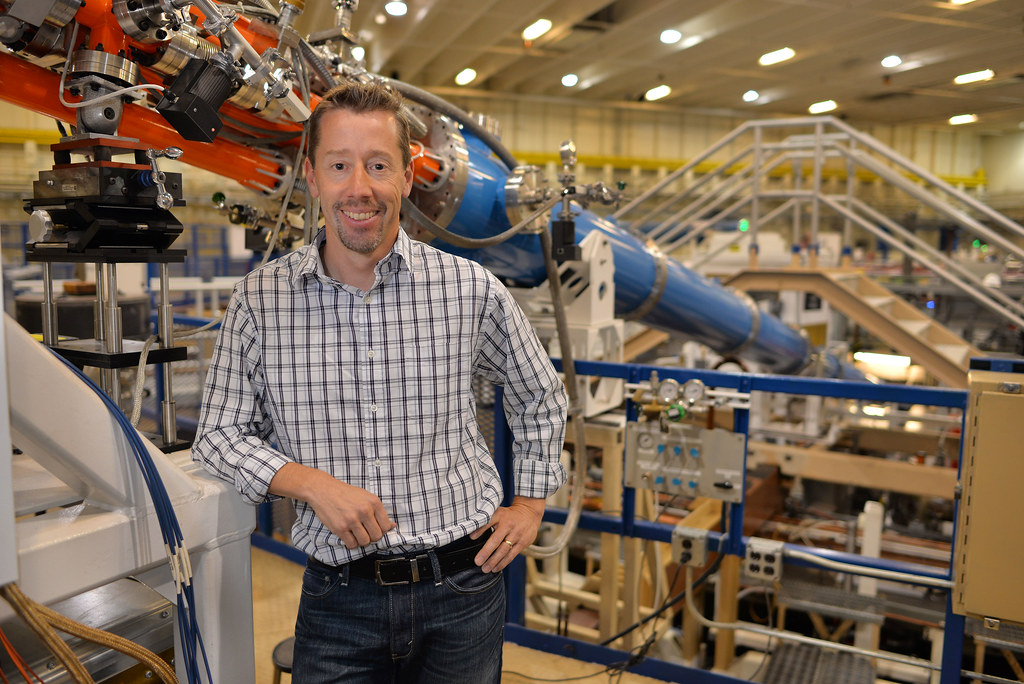
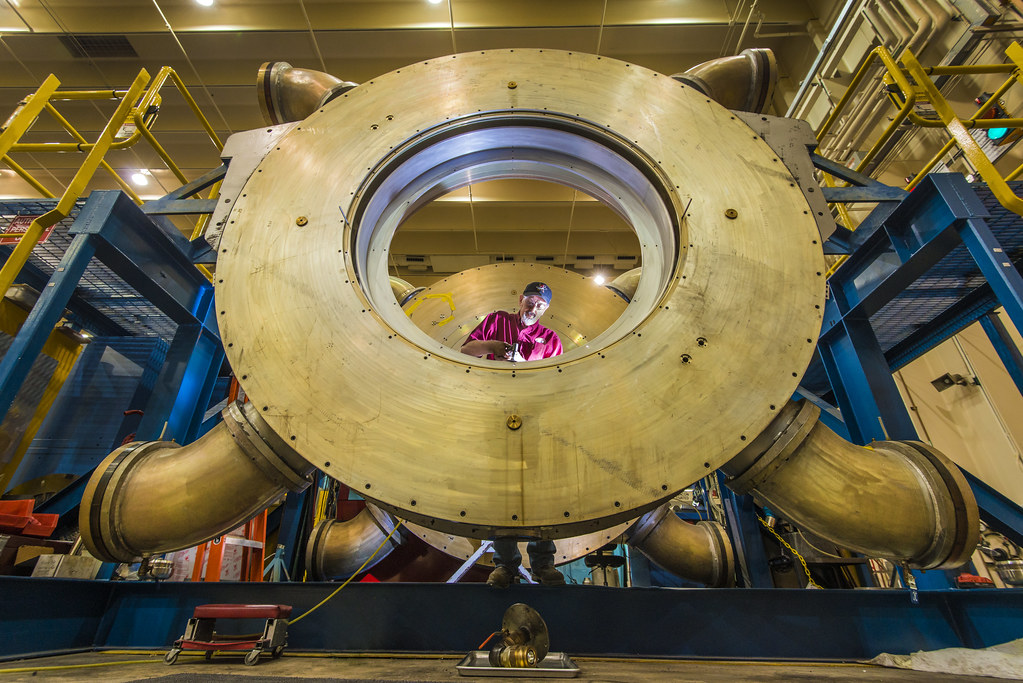
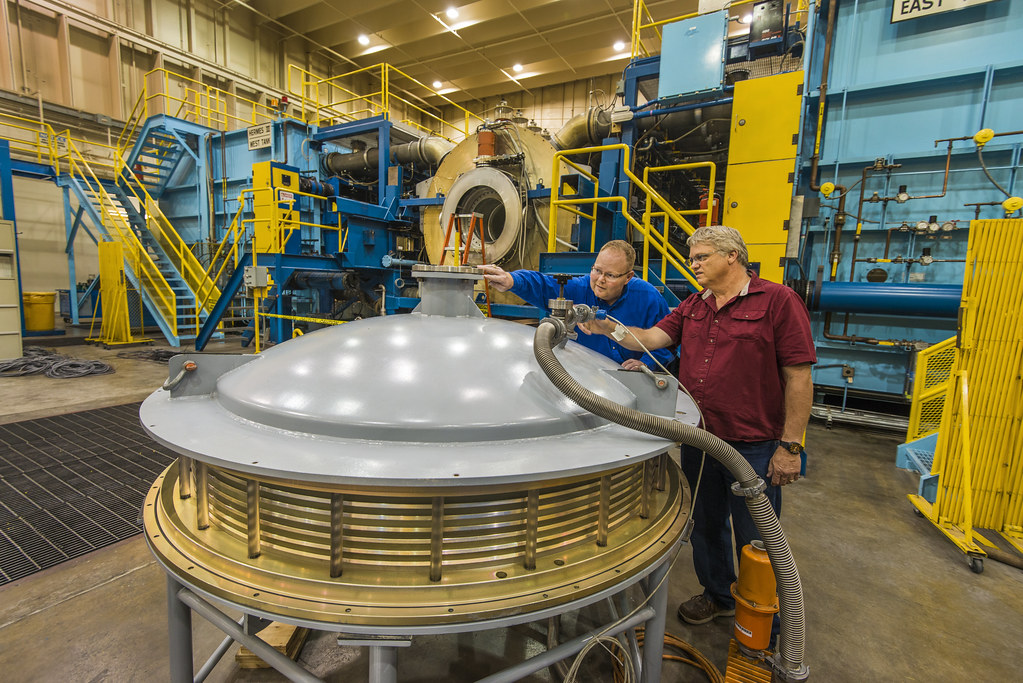
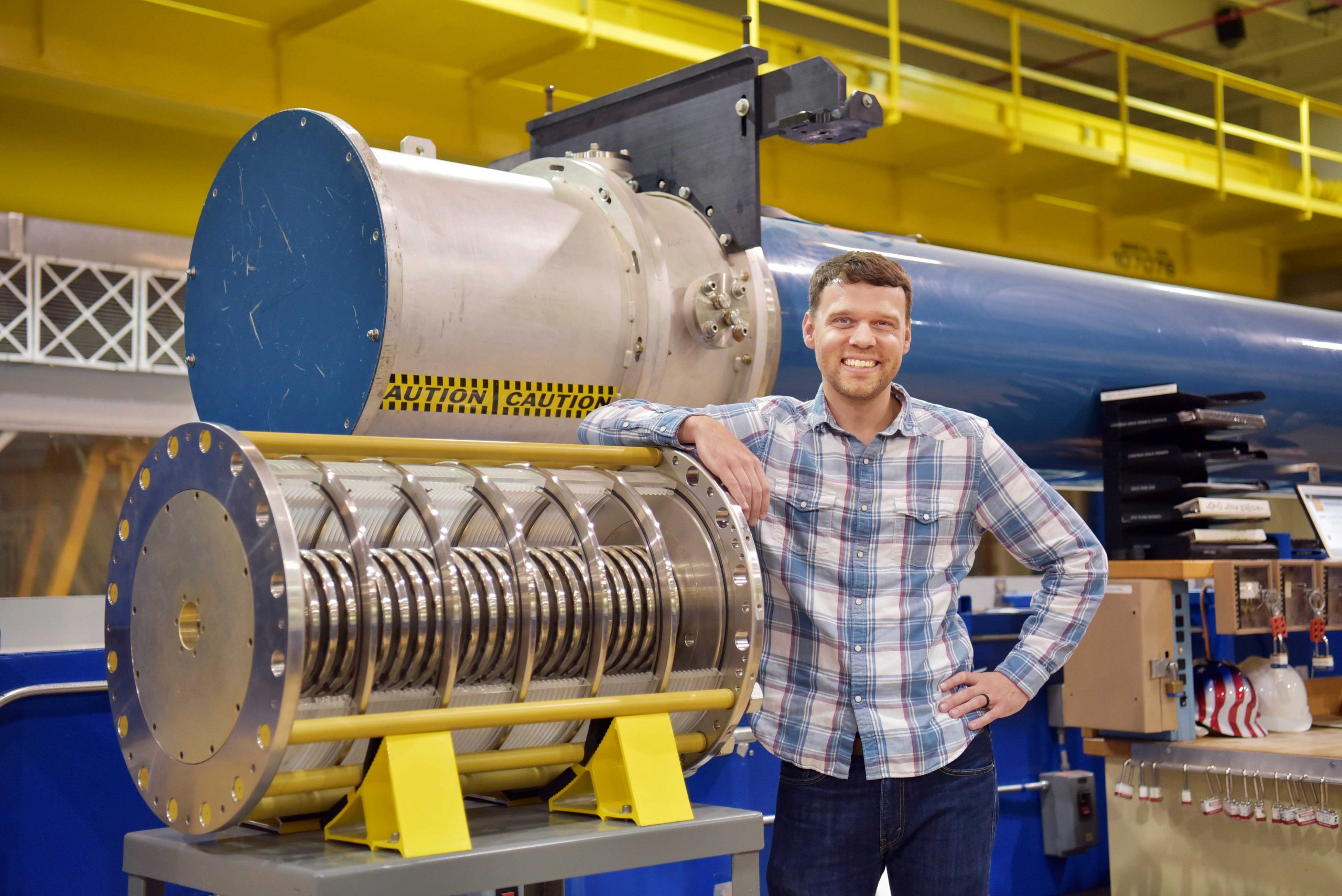
Sandia’s Z machine is the world’s most powerful and efficient laboratory radiation source. It uses high magnetic fields associated with high electrical currents to produce high temperatures, high pressures, and powerful X-rays for research in high energy density physics. The Z machine creates conditions found nowhere else on Earth. Located in Albuquerque, NM, Z is part of Sandia’s Pulsed Power program, which began in the 1960s.
Z Research
Z researchers meet the toughest scientific challenges with innovation and ingenuity that breed groundbreaking results. Read Z’s publications and the sections below to learn more about this work.
Science
Z provides the fastest, most accurate, and cheapest method to determine how materials will react under high pressures and temperatures, characteristics that can then be expressed in formulas called “equations of state.”
Fusion
Fusion is the process by which two atomic nuclei are joined together. As an unconfined event, fusion has long been used in the development of weapons. Its great potential as a new source of energy, which depends on scientists’ ability to harness its power in laboratory events, continues to be explored. The Z machine is central to that effort.
Energy
The Z machine’s role in solving the world’s energy challenges is directly tied to its fusion potential. With growing concerns about the health of our planet and escalating energy needs, the development of fusion technology is especially promising.
National Security
Z is crucial to Sandia’s mission to ensure the reliability and safety of our nuclear stockpile as it ages – it allows scientists to study materials under conditions similar to those produced by the detonation of a nuclear weapon, and it produces key data used to validate physics models in computer simulations.
Image Gallery