
As the United States approaches its 250th anniversary, we celebrate the pivotal moments when Sandia has stepped up to support the nation. Through innovation, collaboration and dedication, Sandia has consistently demonstrated its commitment to addressing the challenges that shape national security and future.
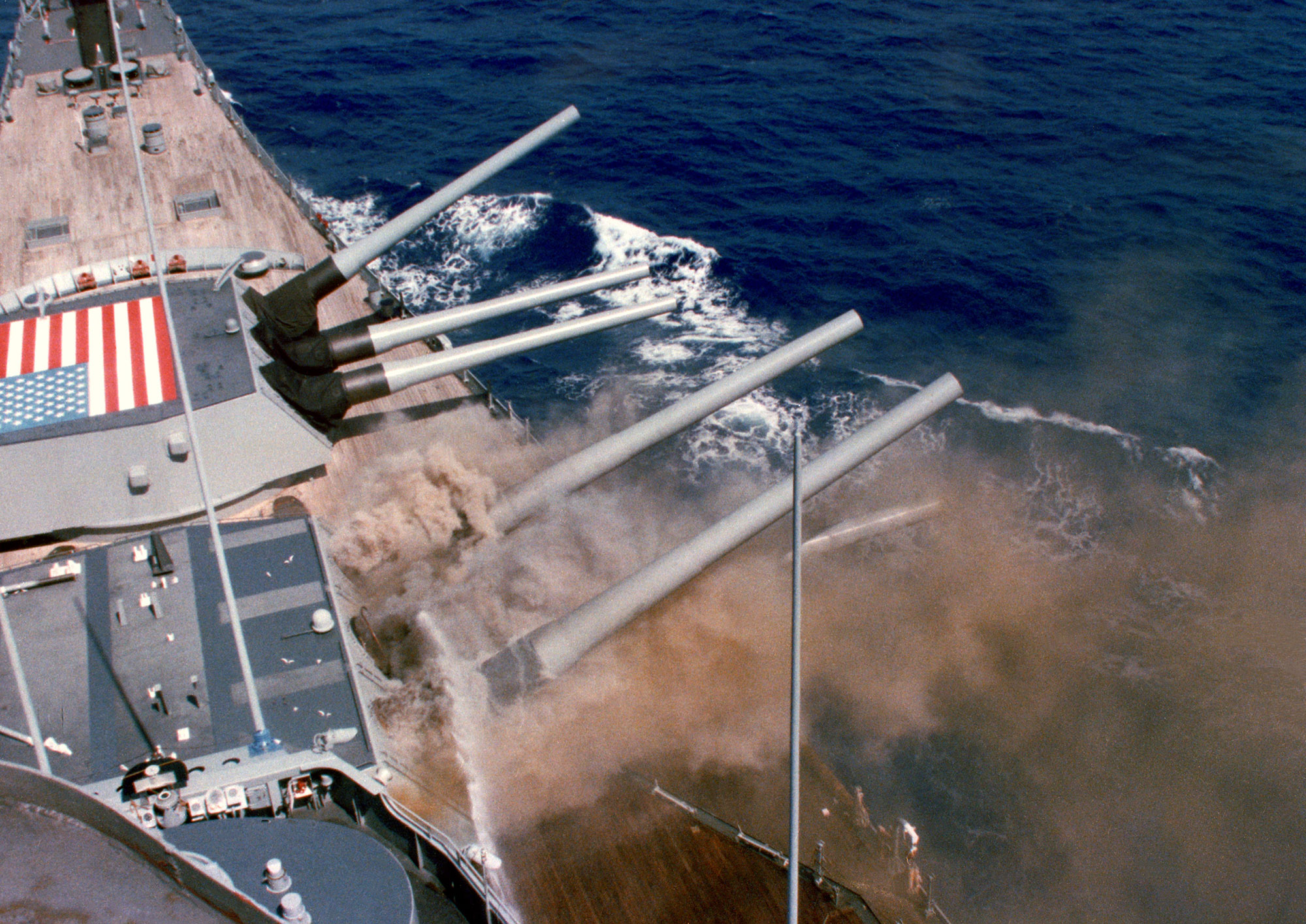
In April 1989, 47 sailors were killed after a gun turret exploded during a fleet exercise aboard the U.S. Navy battleship USS Iowa.
The initial investigation concluded that Clayton Hartwig, one of the crewmembers killed in the blast, had deliberately caused the deadly explosion. These findings were heavily scrutinized by the victims’ families, independent experts and members of Congress.
Critics argued the evidence was weak and demanded an independent, scientific review. The Government Accountability Office started asking around and, “They kept hearing the name, Sandia National Laboratories,” said Director of Components Dick Schwoebel in a 1990 Lab News article.
In November 1989, New Mexico Sen. Jeff Bingaman penned a letter, along with two other members of the Armed Services Committee, to then-Sandia president Al Narath asking for help. Sandia was well regarded as an expert in weapons testing and explosives analysis, so the request focused on exploring the physical evidence. Narath agreed, and dozens of Sandia experts, including Schwoebel, got to work.
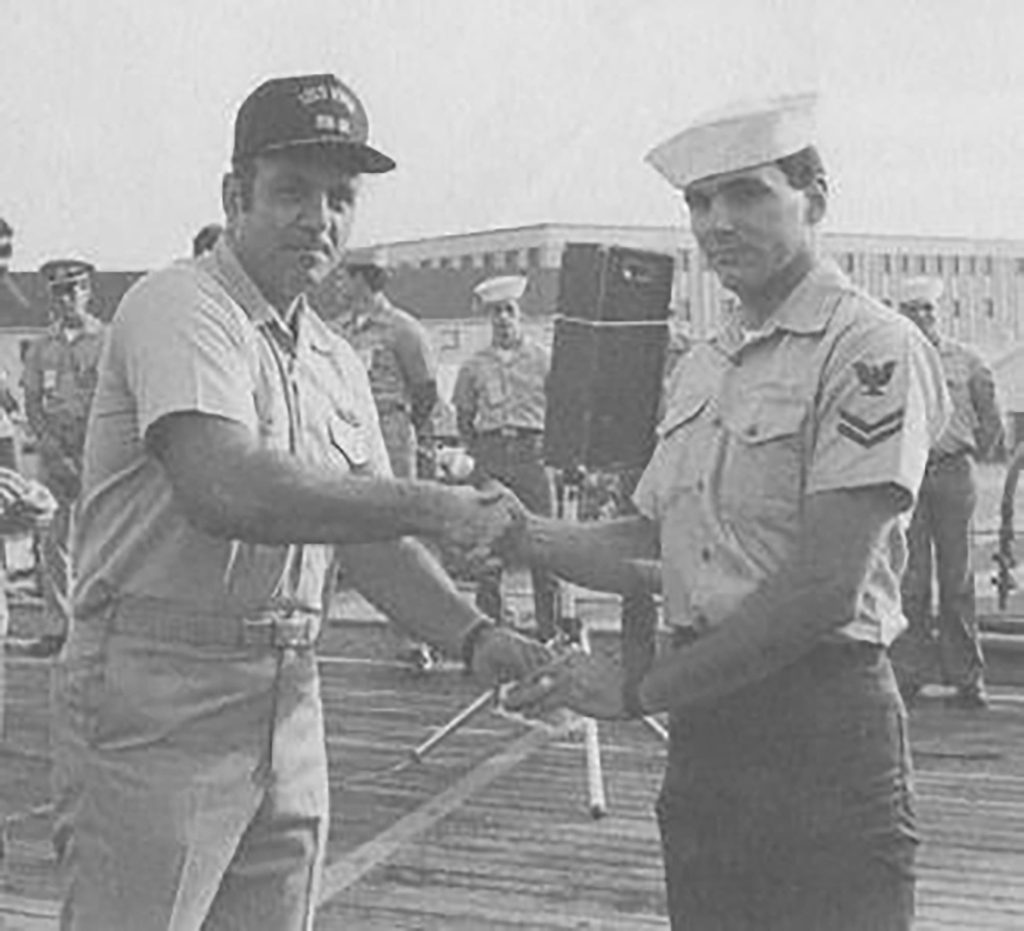
Testing the sabotage theory
As the project’s technical lead, Schwoebel kicked things off by reviewing the Navy’s initial technical report, making notes and adding questions in the margins. In mid-December, he and three other team members visited the Iowa, where they toured the gun turrets from top to bottom, witnessed the devastating effects of the explosion, took samples for materials analysis and interviewed some of the sailors.
From there, the team ran various controlled experiments to see if the Navy’s sabotage theory made sense, examining whether a small detonator or device could ignite the powder bags. They quickly discovered that it would have been extremely unlikely for a small device to have caused the blast the way the Navy described.
Next, the group tested accidental ignition scenarios, looking into mechanical causes — specifically the loading process of the 16-inch gun and a possible overram.
Overram theory
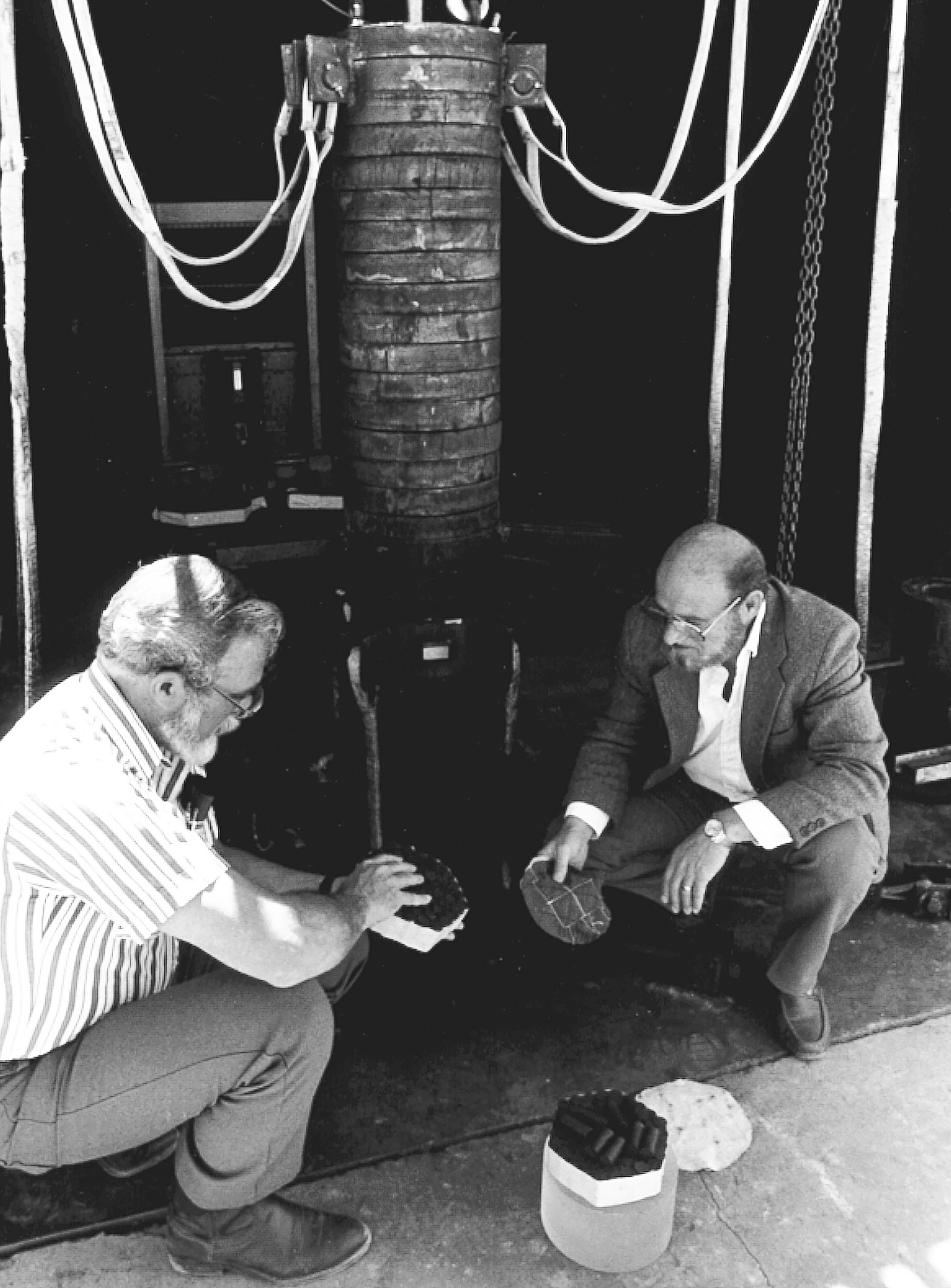
Dave Anderson was leading the explosives studies team at the time and, in a 1990 Lab News article, said, “Maybe halfway through the study, we began acknowledging to ourselves that the only real, hard evidence we collectively had — we and the Navy — that was not in dispute was the overramming. And we kept coming back to that.”
Iowa’s guns used powder bags that were pushed into the barrel using a hydraulic rammer. The question posed was whether the gunpowder bags could accidentally ignite if the loading ram pushed them too hard and too far into the barrel, causing them to compress enough to ignite.
Sandia conducted hundreds of impact tests simulating conditions just like these, albeit on a smaller scale, at the Coyote Canyon Test Complex in the Sandia foothills. As expected, many of the tests resulted in explosions.
On May 25, 1990, Schwoebel, Paul Cooper, Karl Schuler and Jim Borders were set to testify before the Senate Armed Services Committee on their findings. But the day before, the Navy announced that a full-scale test had been carried out that day at the Naval Surface Warfare Center in Dahlgren, Virginia, to check Sandia’s findings related to the overramming. The test had resulted in the powder bags unexpectedly igniting.
The Navy secretary immediately reopened the Iowa investigation and suspended all further firing of 16-inch guns on its battleships.
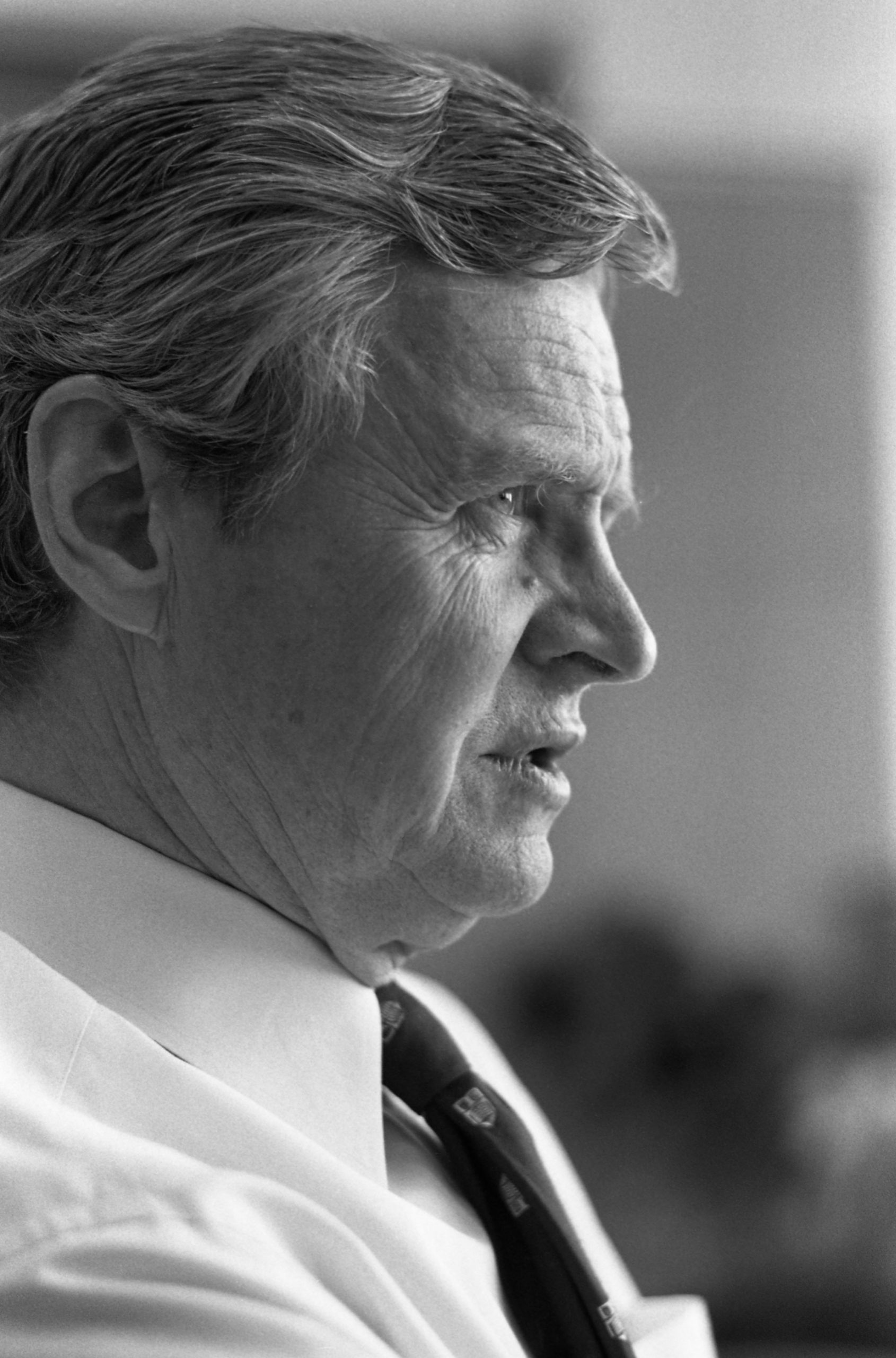
Sandia’s testimony
When Schwoebel first heard the news, he was stunned.
“It was almost like fiction, it was dramatic and could not have come at a more crucial time — just before our testimony,” he said in the same 1990 Lab News article.
The testimony continued, demonstrating that an accidental explosion was possible, challenging the Navy’s earlier theory that suggested intentional sabotage.
Upon the hearing’s conclusion, Armed Services Chairman Sam Nunn turned to the Sandia team and said, “Sen. Bingaman’s been bragging on your laboratory out there for a long time, and we know now that he’s been telling us a great deal of truth. We appreciate your being here.”
“People at the Labs worked extremely hard,” Schwoebel said at the time, emphasizing that Sandia did not prove what happened on the Iowa, only demonstrated a plausible scenario which “touched on some important issues.”
Hartwig exonerated
While the Navy never officially determined what caused the Iowa explosion, in October 1991, they formally exonerated Hartwig and issued an apology to the sailor’s family.
Adm. Frank B. Kelso II, the chief of naval operations, said that after reopening the investigation and reviewing the evidence connected to the explosion, the Navy had concluded that there is “no clear and connecting evidence” to support its initial claim against the 24-year-old sailor. He went on to say that while the cause of the accident may never be known, he was regretful for the Navy’s initial investigation and apologized for the “burden it has caused the family to bear.”