
Oliktok research facility demonstrates viability of solar-generated electricity in Alaska
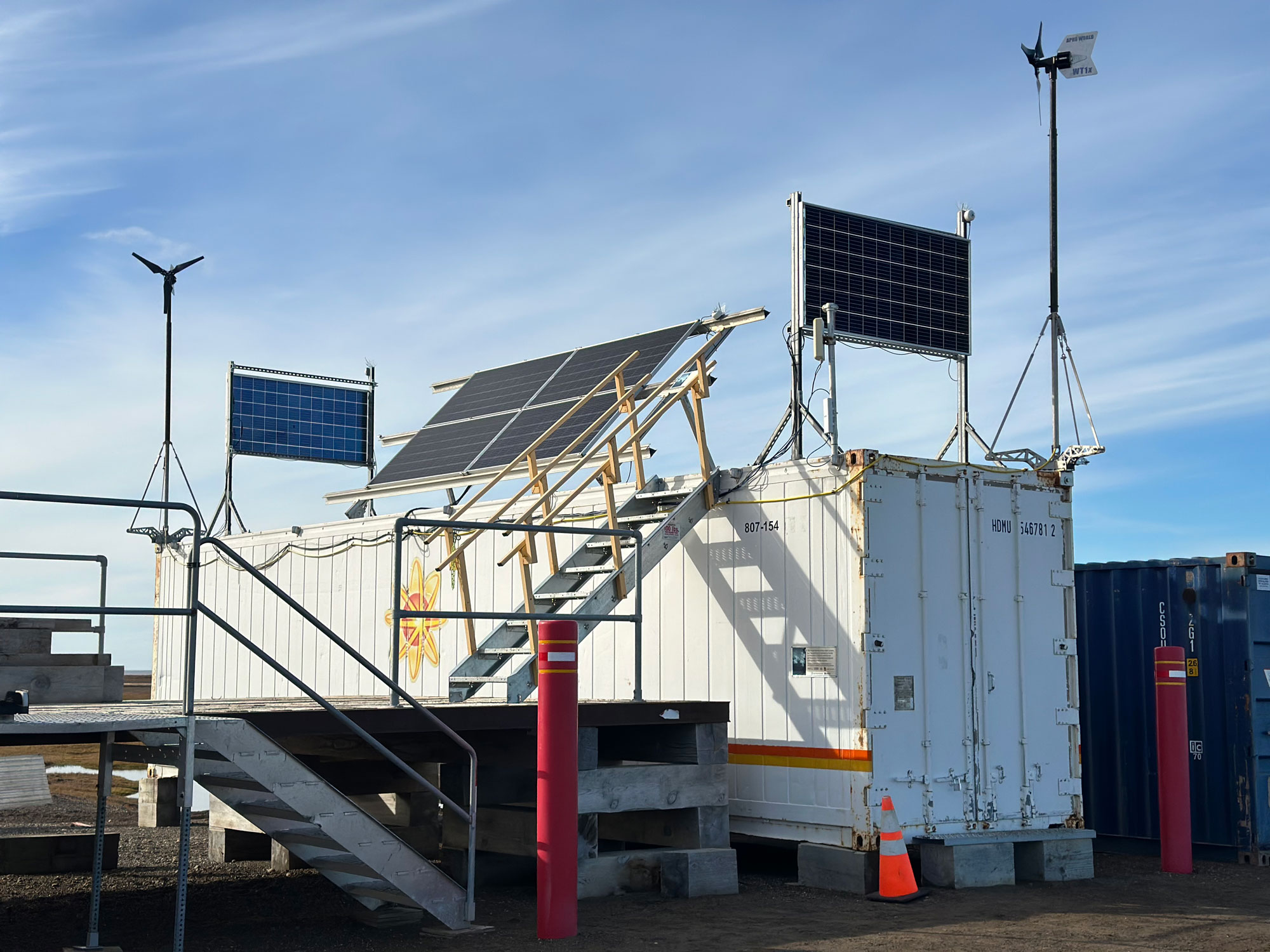
In 2022, Sandia researchers installed one of the first photovoltaic systems on the North Slope of Alaska. Every year, that group of researchers revisit the site to evaluate whether photovoltaic systems can survive consecutive winters of extreme cold and high winds. The results thus far are promising, suggesting that multiangled photovoltaic arrays, as part of a hybrid energy system, could reliably supply primary or backup electricity for remote communities, as well as research and national security operations across Alaska and other northern latitudes.
Sandia operates the Oliktok research facility to support field research and testing in harsh Arctic conditions for science, energy and national security applications. Located 320 miles north of the Arctic Circle in Oliktok, Alaska, the site presents multiple challenges for energy generation from solar panels. Solar cells are more brittle when temperatures drop below freezing, increasing the risk of cracking. The photovoltaic array in Oliktok is exposed to persistent and gusty wind loading, which can loosen bolted joints and cause modules to bend under high wind speeds. Moreover, the sun does not rise much — or at all — above the horizon in winter, reducing solar production to zero during November, December and January. In the fall and spring, however, high snow reflectivity has the potential to boost performance depending on the installation, and in summer, the arrays generate electricity for up to 23 hours a day.
The Sandia team regularly monitors the system, collecting time-series energy and irradiance data from each subarray, synchronized with on-site meteorological data. The data are transmitted every 10 minutes to Sandia’s Albuquerque site, where the team at the Photovoltaic Systems Evaluation Laboratory analyzes the data for evidence of equipment degradation or failure, tracks daily energy generation and monitors the system’s overall performance.
“Operating in the Arctic presents unique opportunities to test systems in the most extreme of conditions,” Justin LaPierre, the project’s principal engineering technologist, said. “The collaborative effort between the photovoltaic team and the Alaska operations teams really highlighted their ability to adapt and succeed, resulting in four years of data, reliability testing, monitoring and successful operation of the system.”
Sandia leveraged decades of research at the Photovoltaic Systems Evaluation Laboratory to design and support the experimental Oliktok system. The intent was to demonstrate and quantify the energy advantages of multidirectional photovoltaics at high latitudes where the sun never rises above 40 degrees, enabling the vertical modules to generate energy in the morning and late afternoon when the sun is low on the horizon and the solar rays are mostly perpendicular to the modules.
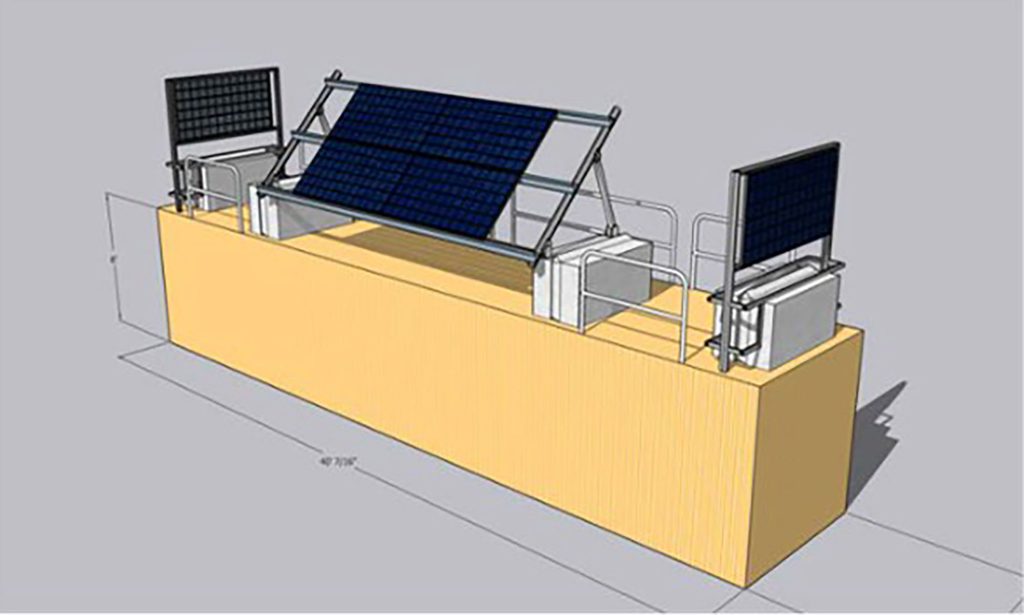
Energy output is further increased by the array’s bifacial modules, which capture reflective light from the back, with a significant energy boost when the ground is covered by highly reflective snow. Moreover, the unusual system design, with modules pointing in different directions, generates energy that is distributed throughout the day: east-facing vertical modules generate maximum power in the morning, west-facing vertical modules produce maximum power in the afternoon, and south-facing fixed-tilt modules are most productive at or close to solar noon, when the sun is at its highest point of the day over Oliktok.
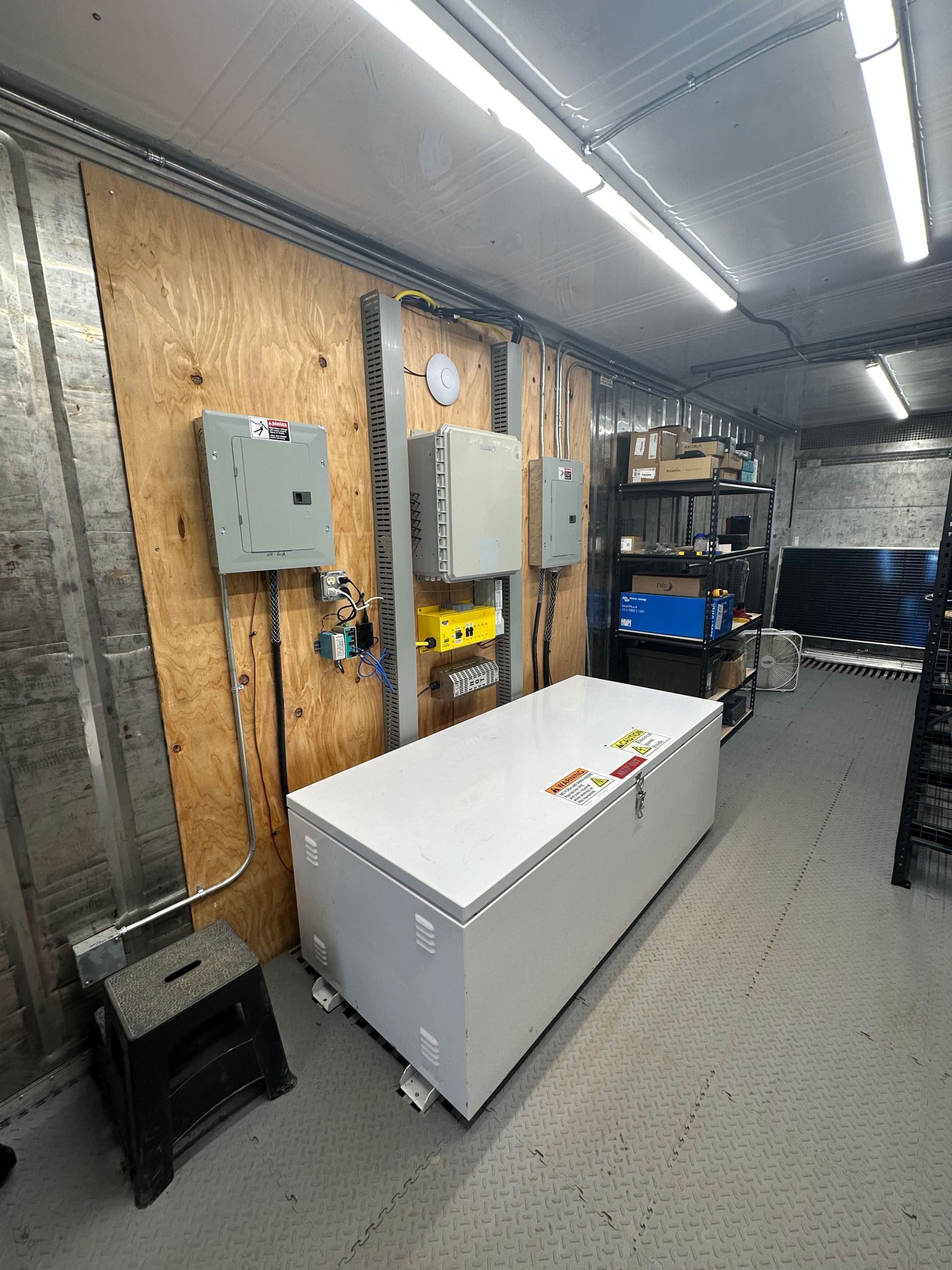
The small demonstration 4-kilowatt system consists of six U.S.-made photovoltaic modules donated by Minnesota manufacturer Heliene U.S.A. and six charge controllers. The photovoltaic system instrumentation consists of six plane-of-array irradiance sensors, back-of-module temperature sensors, and current and voltage monitoring. Data is transmitted daily via Starlink. The system also includes two 1-kilowatt wind turbines for the winter months, so scientists can continue to operate the site and monitor the system during transitional months and months without sunlight.
After four years of operation, the data suggest that multidirectional photovoltaics can contribute significant amounts of electricity to support the energy needs of remote villages and U.S. operations across Alaska. Solar energy systems could complement diesel fuel, expand energy resources for microgrid development in rural areas, and be rapidly deployed energy solutions for science and national security operations in the far north.
For questions about photovoltaics at the Oliktok research facility, contact Laurie Burnham at lburnha@sandia.gov. For general questions about Sandia’s Oliktok research facility, contact Andy Glen at aglen@sandia.gov. Read more about Sandia’s photovoltaic activities in northern climates at energy.sandia.gov/snow and STORMS.sandia.gov.