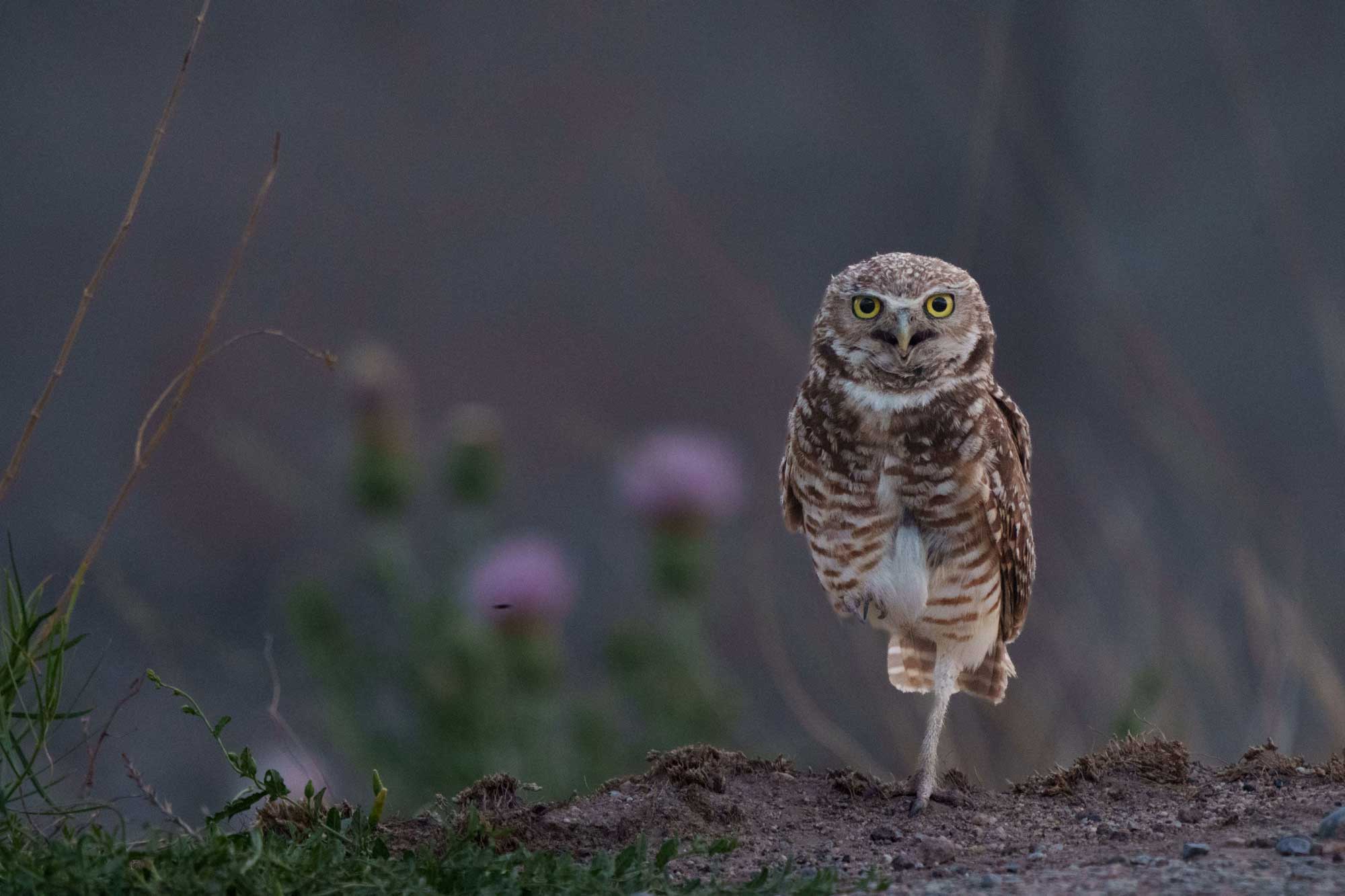
Out past the laboratories, beyond the military displays and acres of parking, something new has settled on base: a family of burrowing owls.
Despite their tiny stature, the new residents already have people monitoring their comings and goings. Every spring, adult burrowing owls return to the same area on the base, nest and grow their family, but they can be hard to spot. Sandia biologists support monitoring led by biologists under contract to Kirtland Air Force Base to find them and count how many grown owls try to nest and how many nestlings emerge from those nests.
Burrowing owls are diurnal, meaning they’re out and about in broad daylight — something extremely rare among owls. They are about eight inches long and bob when they’re nervous or curious. As far as scientific observations go, they are very cute.
Not all prairie dogs
“When people realize that it’s not all prairie dogs out in those fields, that there’s actually little diurnal owls, it’s pretty exciting,” Sandia biologist Evan Fahy said.
Burrowing owls live in holes dug by prairie dogs, which Evan said makes them “range restricted.” The prairie dogs don’t mind — they’ve usually moved on to new holes — but sometimes, owls show up in an occupied prairie dog town and are forced to tolerate the neighbors.
Prairie dogs are considered a keystone species for this reason. Despite their bad rap, their burrows become homes for owls and other species. They also aerate the ground, increasing water infiltration and resulting in better soil. Out at Kirtland, far from lawns and pest control, prairie dogs live their best lives.
The biologists in charge
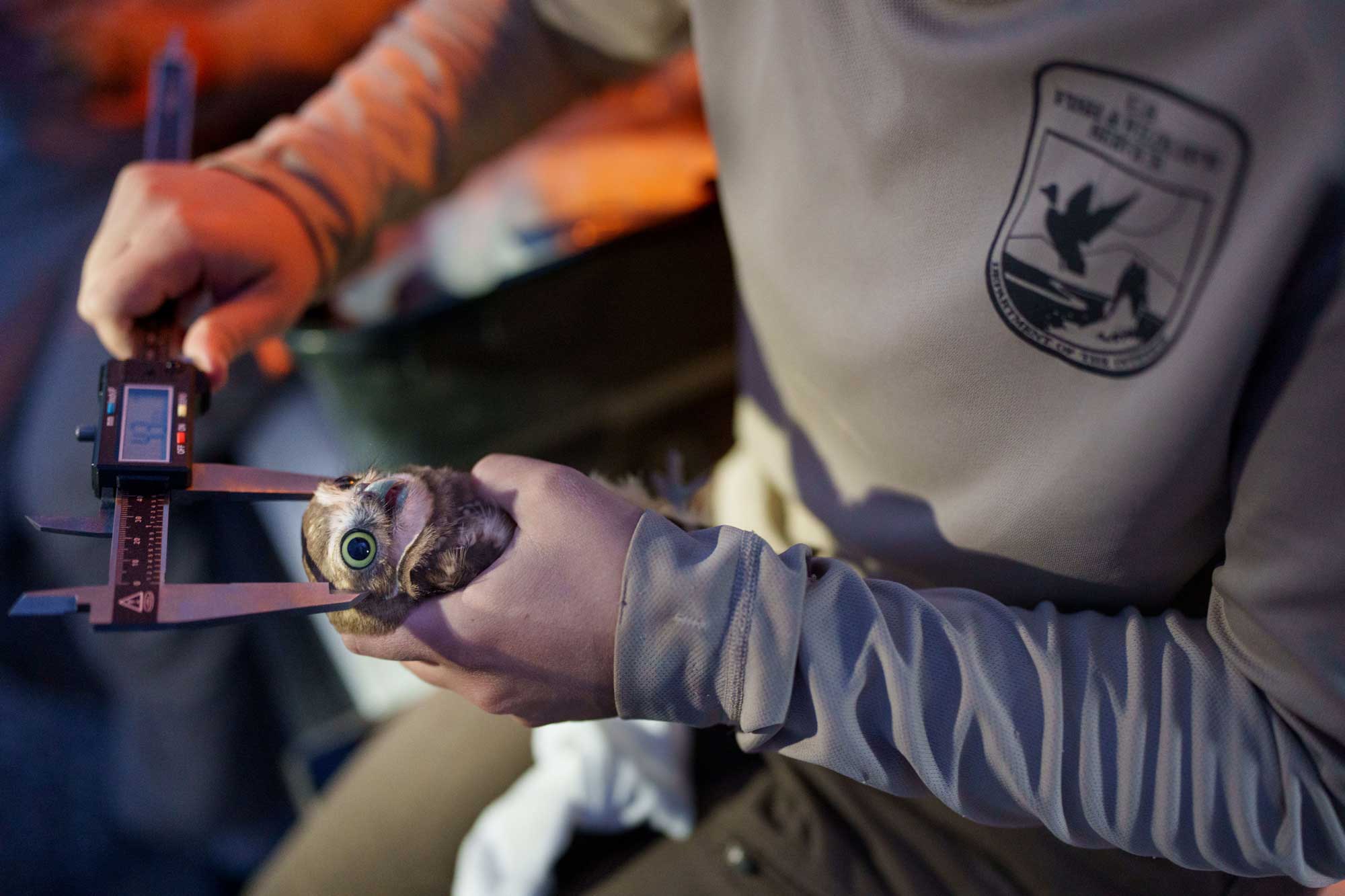
The work of monitoring Sandia’s wildlife is serious business. Work that was previously managed by university researchers is now handled by the U.S. Fish and Wildlife Service, longtime federal regulator of wildlife on base. Two years ago, Kirtland began contracting with them, and they collaborate with Sandia biologists to track wildlife across the base.
“At first, we were like, ‘Oh, man, the regulators, they’re going to be on site,’” Evan said. “We’re usually just seeing college students, but the people from Fish and Wildlife have actually been really good and been awesome to work with. They’ve been great to have on site.”
Summer spotting
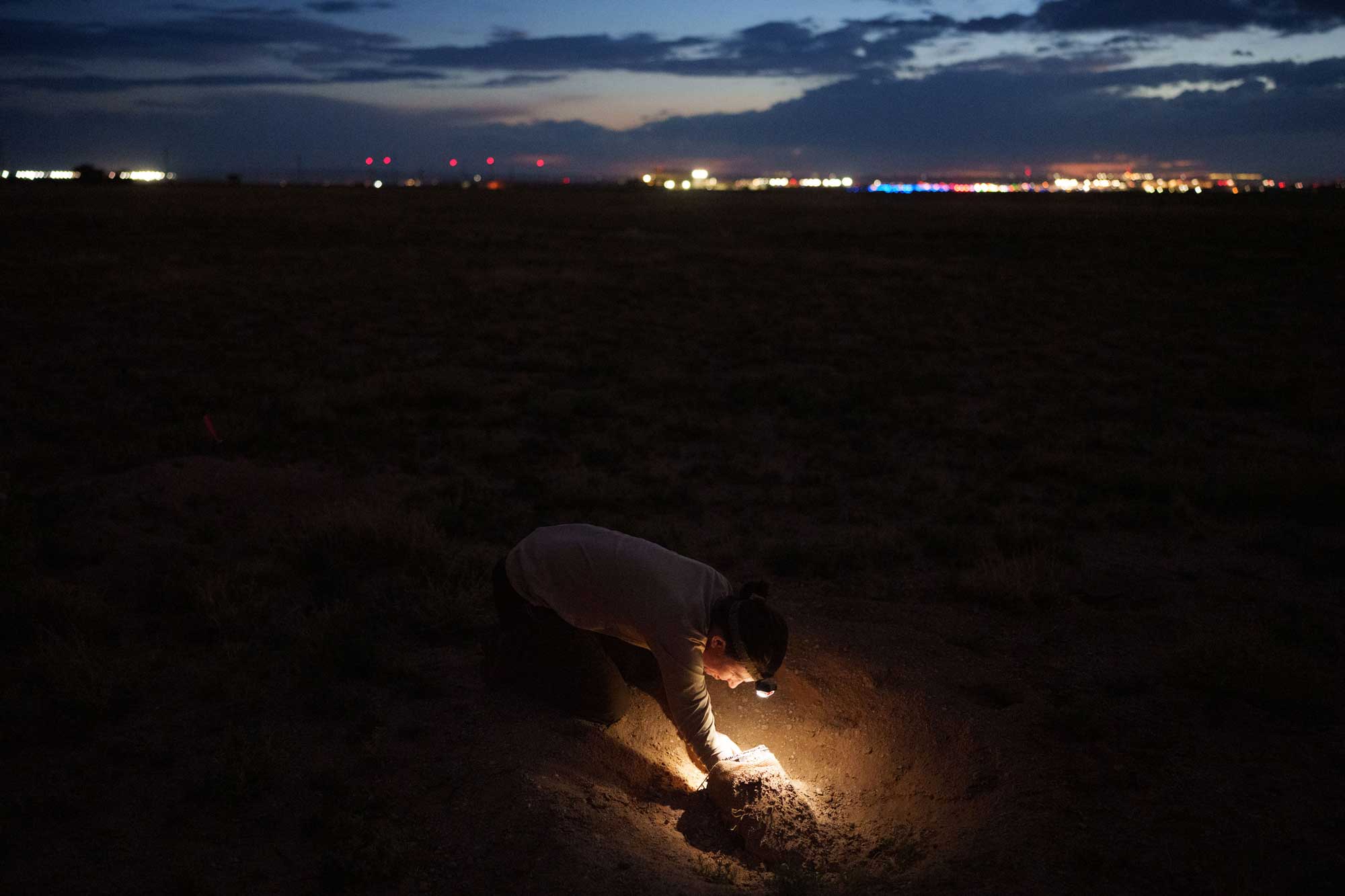
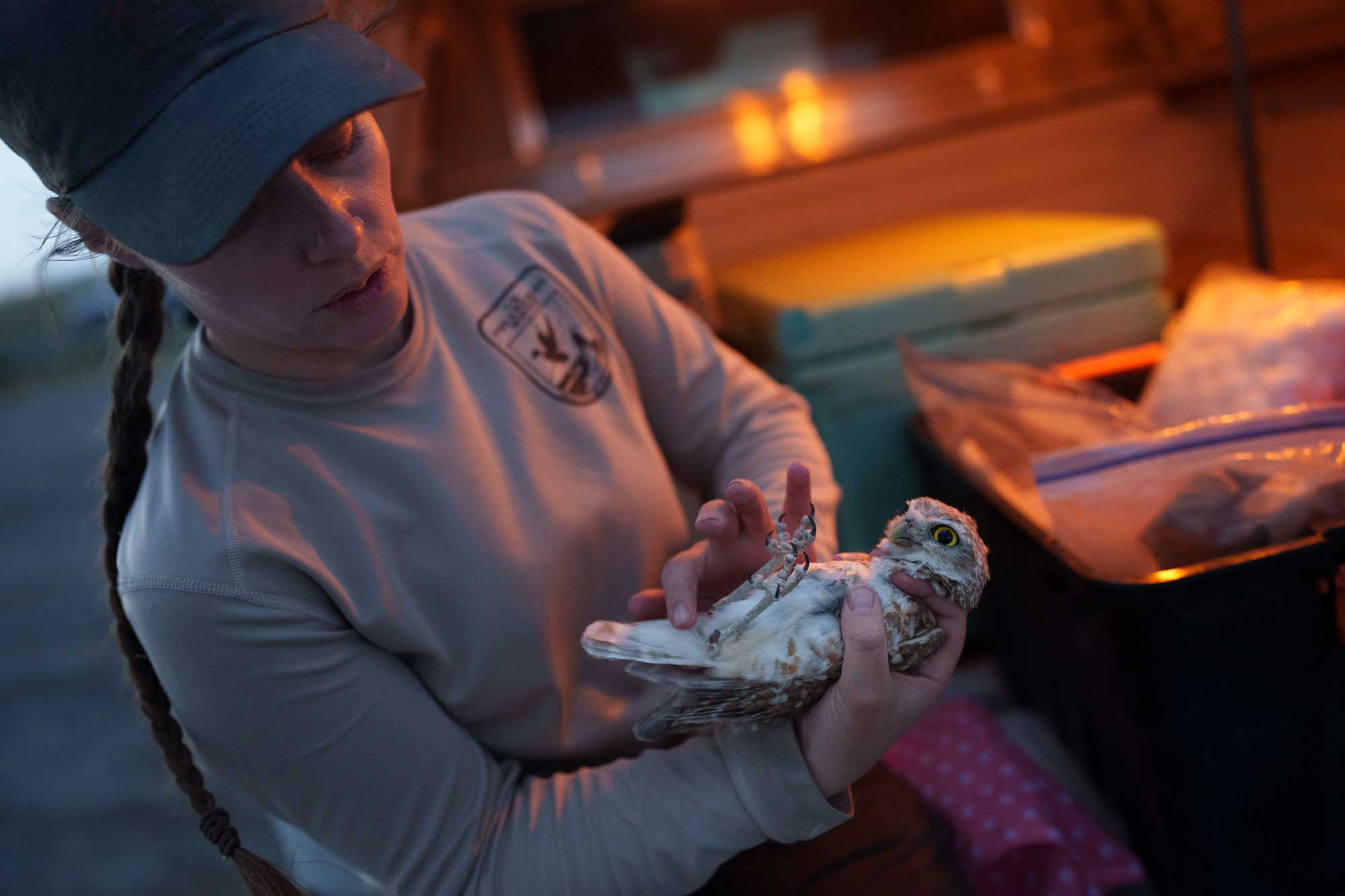
On a Saturday evening in June, Lab News photographer David Lienemann got a call from someone at U.S. Fish and Wildlife Service that they had found a nest of burrowing owls and were headed out to trap them for monitoring. David met them just after sunset and took photos as the technicians measured their heights and wingspans, collected blood and feather samples, scoped out their homes and more.
“Effectively, from a wildlife standpoint, we’re working on the same site, we’re working with the same resources, these wildlife don’t stick purely to Kirtland or to Sandia property.” Evan said. “It makes sense that we collaborate with them, communicate, share data and help out when we can.”
No word yet on whether the owls will need a security clearance. For now, they’re keeping a lower profile than most base inhabitants.