
How the anthrax investigation reshaped Sandia’s future

As the United States approaches its 250th anniversary, we celebrate the pivotal moments when Sandia has stepped up to support the nation. Through innovation, collaboration and dedication, Sandia has consistently demonstrated its commitment to addressing the challenges that shape national security and future.
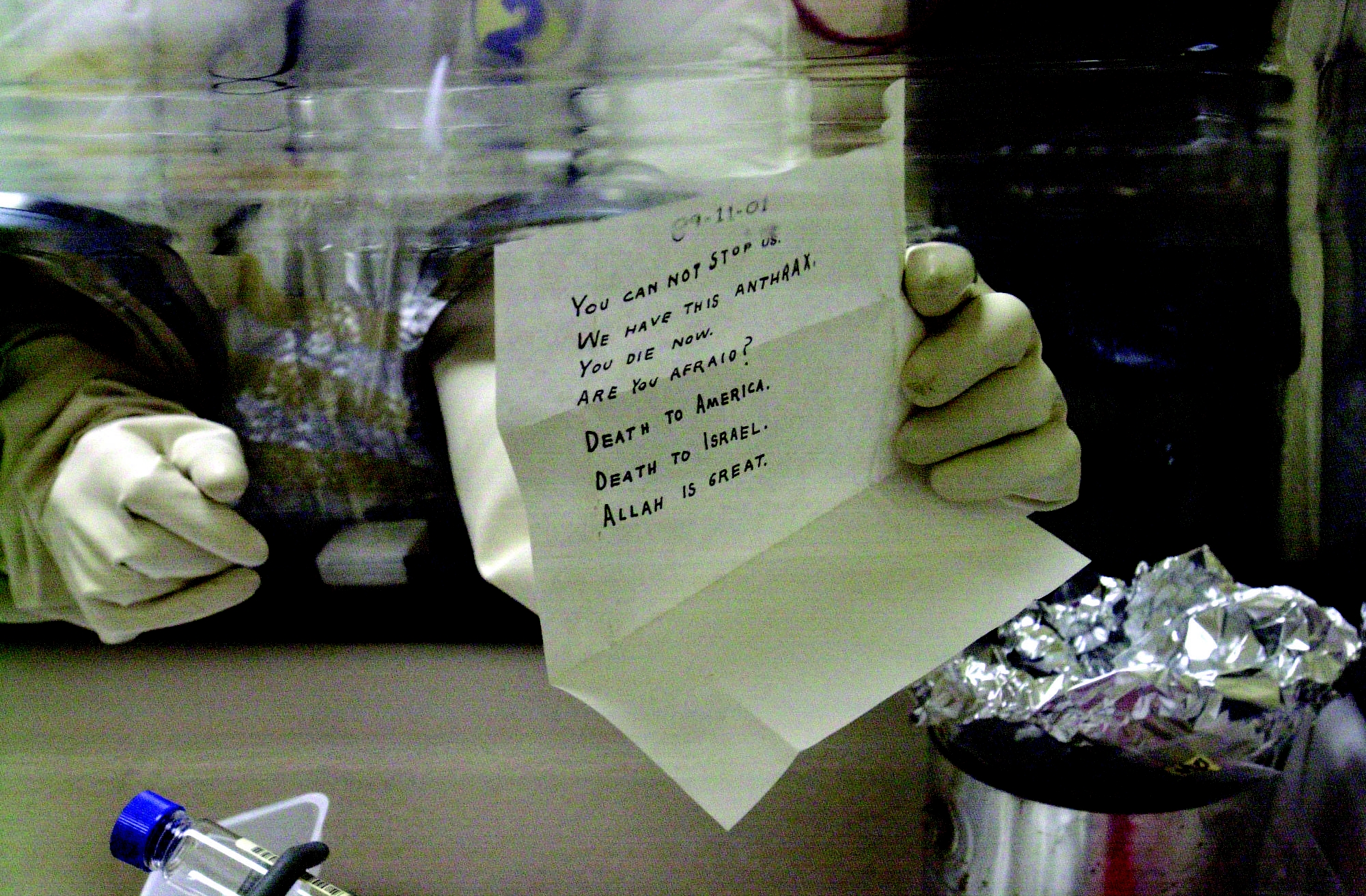
A week after the Sept. 11, 2001, attacks, a new threat was on the horizon. Letters containing vague threats and what was described as a sand-like substance were showing up in the mailrooms of major media outlets in New York City and Boca Raton, Florida.
That substance, the nation would soon learn, was anthrax.
Robert Stevens, who worked as a photojournalist for supermarket tabloid The Sun, published by American Media, would be the first known victim and fatality of the 2001 anthrax attacks.
Not long after Stevens’s death, more anthrax-laced letters would be mailed to U.S. senators Tom Daschle of South Dakota and Patrick Leahy of Vermont.
Five people, including Stevens, would die from anthrax inhalation, while 17 others would become ill after exposure.
At that time, Sandia’s work in bioscience was relatively new, but all of the sudden, bioterrorism was “no longer a theoretical event, it was not a hypothetical, it was not something that would only happen elsewhere,” Duane Linder, senior manager of Sandia’s Chem-Bio National Security program, said in a 2011 Lab News article. “We had individuals dying from exposure to anthrax. Just the stark reality of this was very much driven home. And it highly motivated everyone involved.”
Within weeks, Sandia was mobilized on multiple fronts in the biological sphere, drawing on its trusted strengths in physical security and technology development.
Decon foam
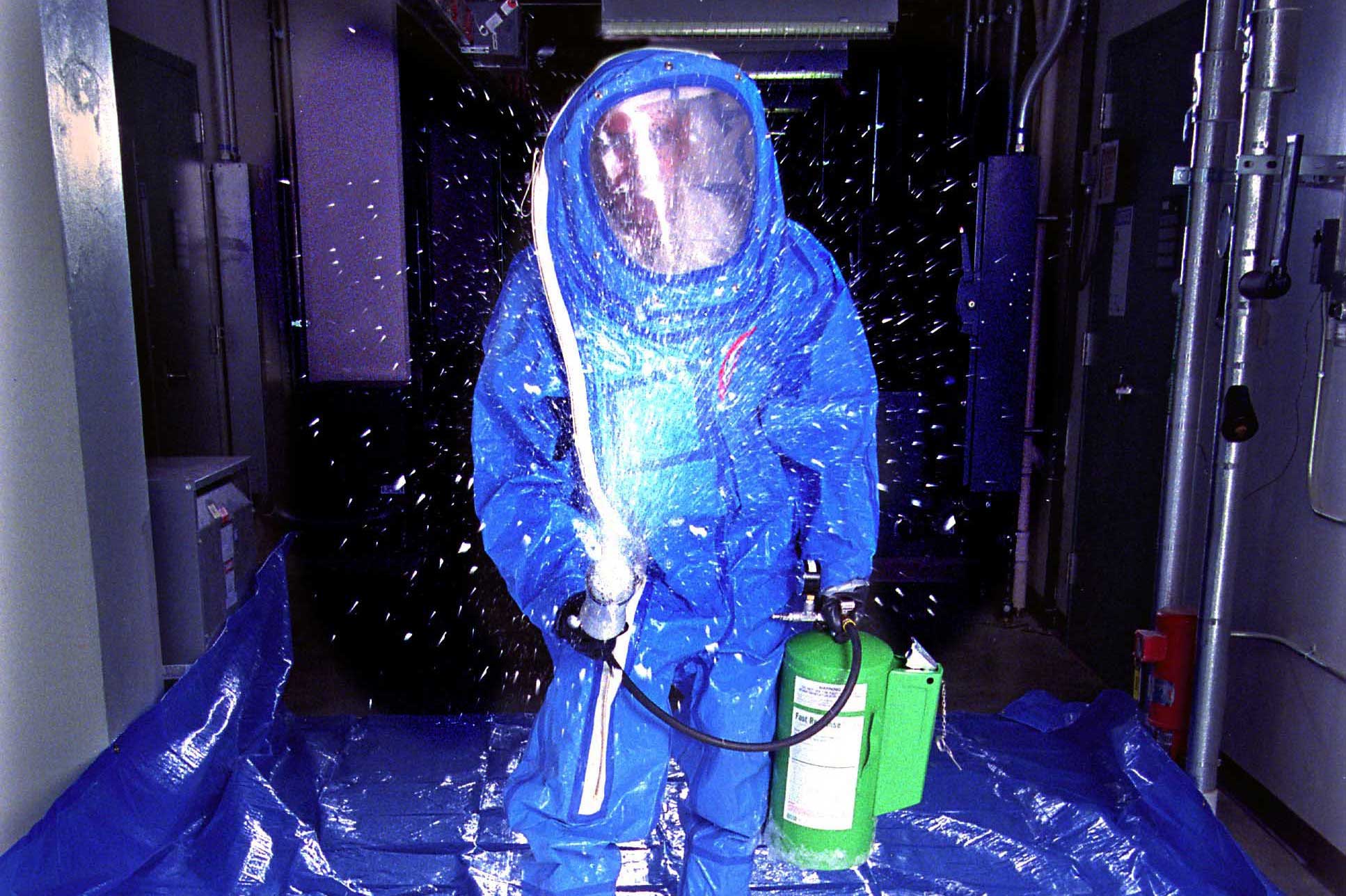
In 1999, Sandia researchers announced the development of a decontaminating foam referred to as “The Answer to Anthrax” in a news release photo caption that year.
Made from ordinary substances found in common household products, the foam was found to neutralize chemical agents the same way detergent lifts an oil stain from a stained shirt. In those early lab tests, the foam destroyed simulants of the most concerning chemical agents and a simulant of anthrax.
More than two years later, decon foam would be used in its first real-world application to successfully clean mailrooms and congressional buildings that had been contaminated by anthrax-laced letters.
Sandians Larry Bustard and Mark Tucker were flown out to Washington, D.C., to serve as technical advisors in the cleanup efforts there. The foam would also be used to successfully decontaminate portions of ABC News facilities in New York.
Weaponization concerns loom
By mid-to-late October, the letters had stopped, but the residual effects would continue for several more weeks.
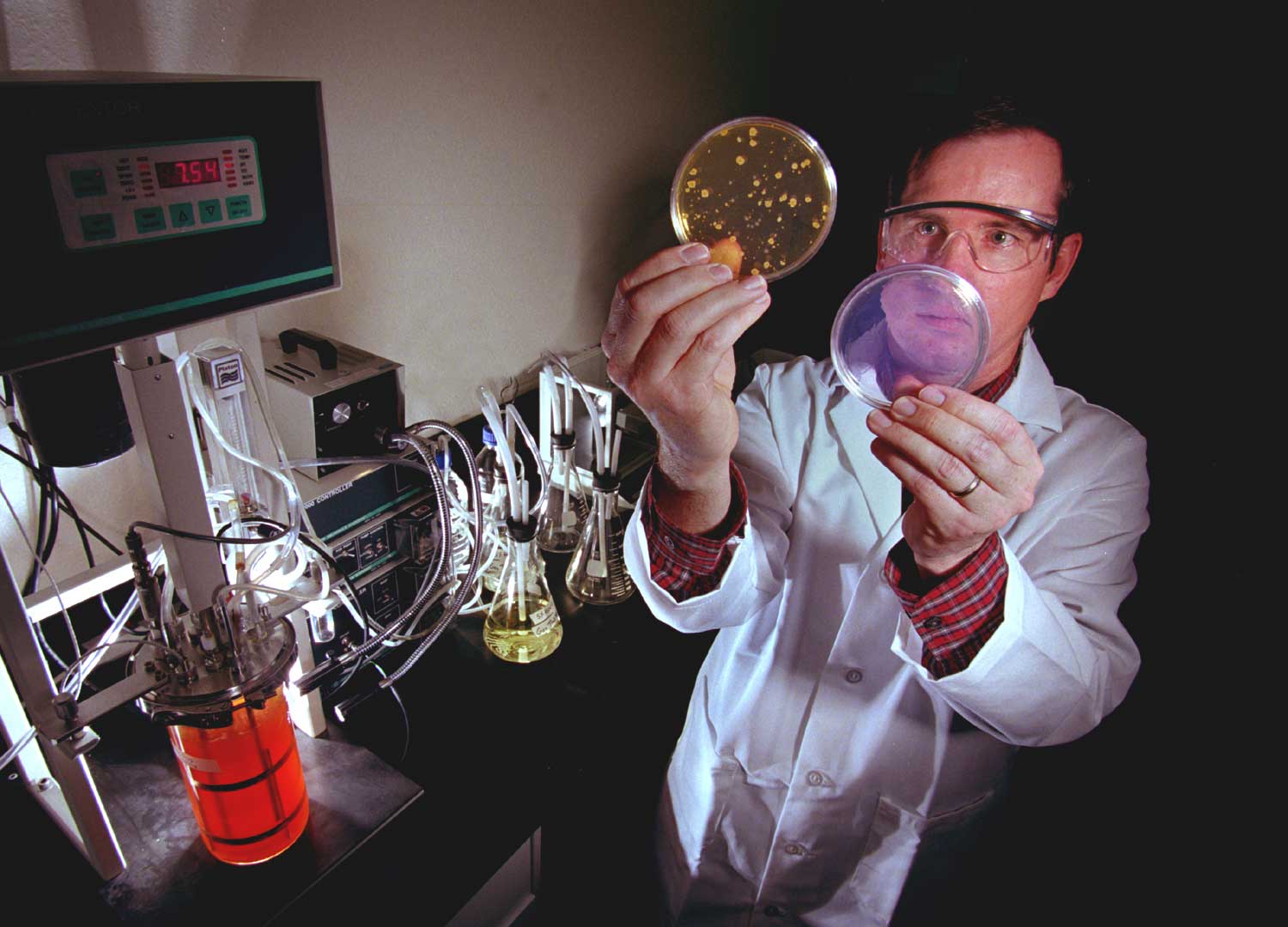
In addition to the criminal investigation led by the FBI, there was a technical investigation needed to explore the scientific and environmental impacts of the anthrax contamination. That’s where Sandia came in again.
In February 2002, the first anthrax spore materials from the letters sent out months earlier arrived at Sandia. The team tapped to investigate the spores had to sign nondisclosure agreements and work in secret for nearly seven years.
Using advanced microanalysis tools developed for nuclear weapons work, manager Ray Goehner and his team in the materials characterization department analyzed hundreds of samples and found that the anthrax in the letters was not weaponized with added chemical dispersants that would enhance inhalation. While highly refined and deadly, the spores were not treated with additives meant to create an aerosolized cloud for widespread infection, which was of grave concern to investigators. Sandia’s findings were crucial in ruling out state-sponsored terrorism.
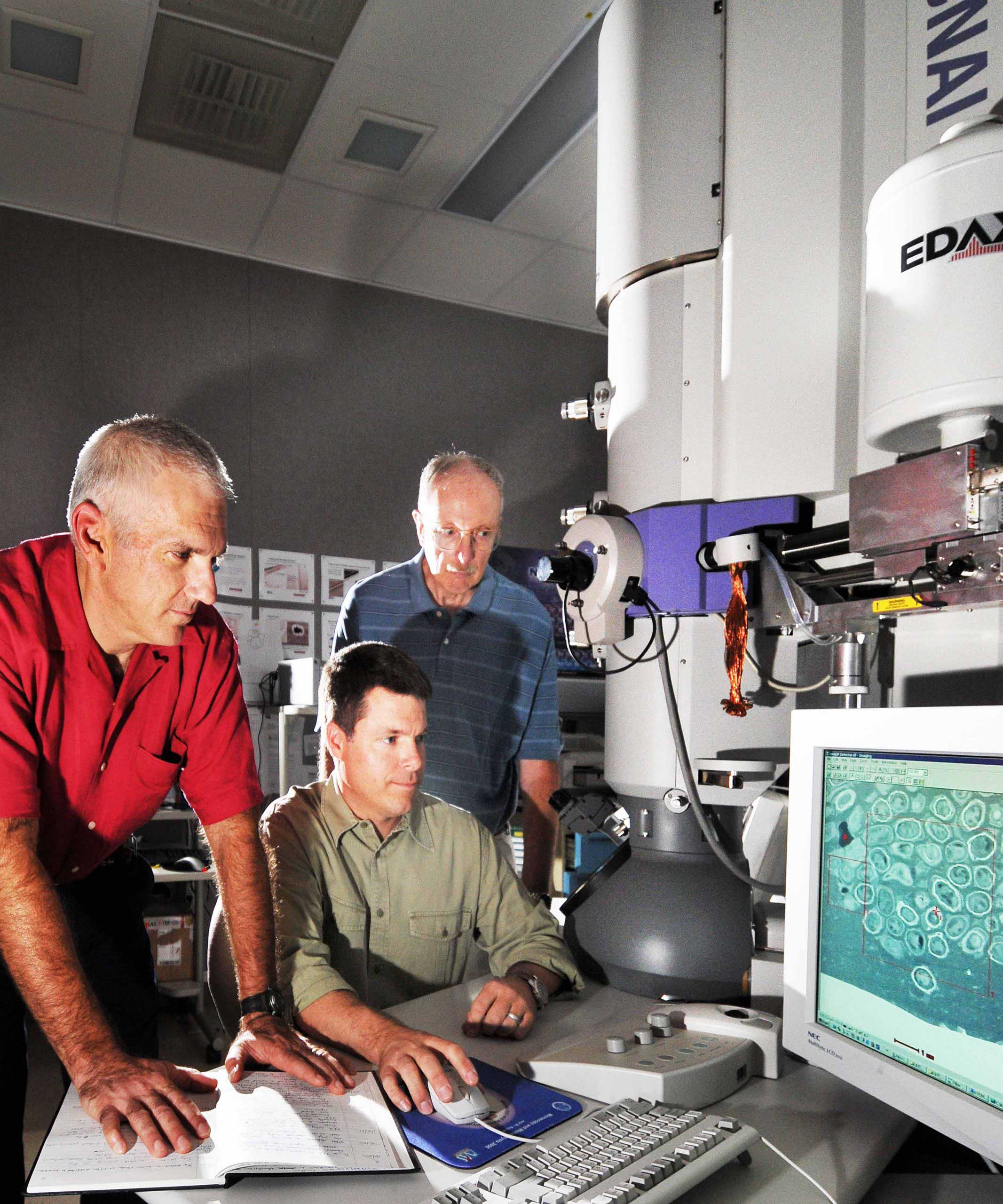
In the summer 2008, Joseph Michael, who had served as the principal investigator for the project, was released from his nondisclosure agreement and flown to Washington, D.C., to participate in an FBI press conference along with scientists from around the country who had been tasked with investigating other aspects of the case.
New class of threat
The anthrax attacks helped accelerate Sandia’s move into biotech and biosecurity, which, as Len Napolitano, then director of Exploratory Systems and Development in California, said in a 2011 Lab News article, was “the first area of fundamental science that did not have a tie back directly to our nuclear mission, but Sandia was transitioning from a nuclear lab to a national security lab.”
He goes on, saying, “This was a new class of threat. We were looking for bigger tanks or faster planes, and they were mailing little envelopes.”