

As the United States approaches its 250th anniversary, we celebrate the pivotal moments when Sandia has stepped up to support the nation. Through innovation, collaboration and dedication, Sandia has consistently demonstrated its commitment to addressing the challenges that shape national security and future.
Sept. 11, 2001, is a day still etched in the memories of most Americans, nearly 25 years later.
Former Sandia historian Rebecca Ullrich remembered driving to work when a radio announcer broke the news of a plane crashing into the World Trade Center. Before she could fully process the information, the announcer broke in with news that a second plane had hit the south tower.
“When I got to the Labs, people were huddled around the televisions in the break room,” Ullrich said in a Lab News article before her retirement. “No one knew what was happening, and then the towers collapsed. We were in shock.”
Ullrich and her colleagues, like much of the nation, were stunned, glued to the television as the unthinkable unfolded.
But not all was quiet on the Labs front.
Within an hour of the attacks, then-Labs Director Paul Robinson was on the phone with NNSA Administrator Gen. John Gordon.
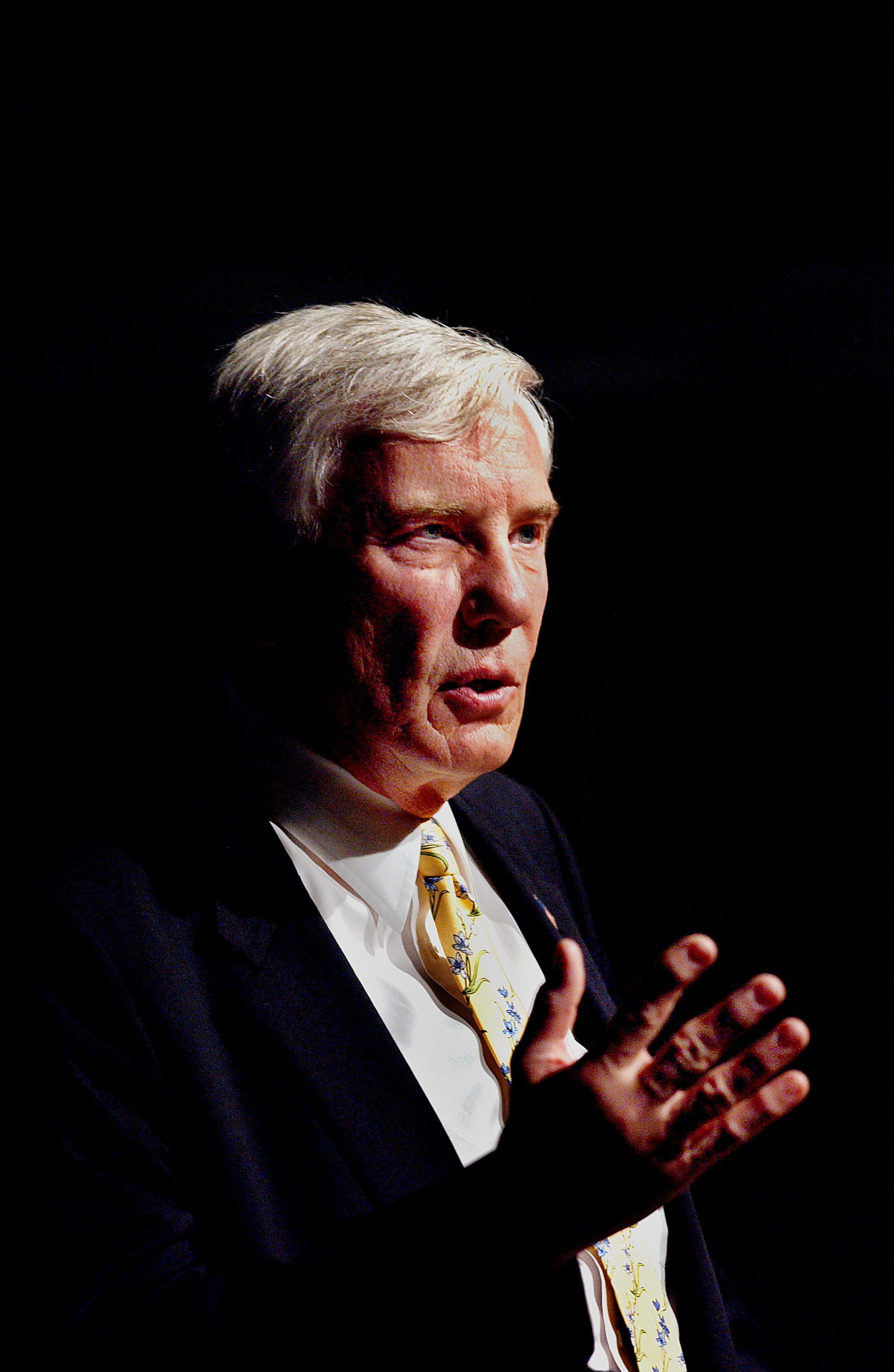
Sandia was well-known for its counterterrorism work, particularly in “modeling the collision of fully fueled large jet aircraft into structures,” Robinson said in a 2011 Lab News article.
“Gordon asked if we could immediately model the crashes at the World Trade Center and the Pentagon, an idea our computer modeling team had already started working on following the first crash,” Robinson said.
“‘You guys are the ones who have been working on counterterrorism the hardest,’” Robinson recalled Gordon saying. “‘Get some people back here to help me handle all the requests we’re getting and the communications with all the other labs and sites.’”
On Sept. 12, 2001, while all other civilian air traffic was grounded, a small Lear jet carrying a group of Sandians departed Albuquerque, headed to Andrews Air Force Base near the nation’s capital. Former Sandia Vice President Roger Hagengruber had been tapped to lead one of the teams on board and remembers the pilot calling him to the cockpit during the flight.
“He said, ‘You’d better take a look at this. I’ve never seen anything like this before; there isn’t a thing in the air. It’s empty,’” Hagengruber said in a 2011 Lab News article.
(Photo from the Sandia archives)
In the days that followed, Sandia experts assessed the security of critical infrastructure and government buildings. They worked 12-hour days through the weekend to produce a report categorizing risks as high, medium or low, along with recommendations for improving security. This report later became known as the 72-hour Report.
After five days, the team provided a classified briefing to Gordon on their findings.
“There were several important actions taken as a result of that report,” Hagengruber said. “The ability of this laboratory to contribute was a reflection of 30 years of capabilities and our understanding of how security and technology intersect.”
Following the briefing, he and his team returned home. Meanwhile, several Sandians were on the ground in New York City and at the Pentagon, assisting with recovery efforts.
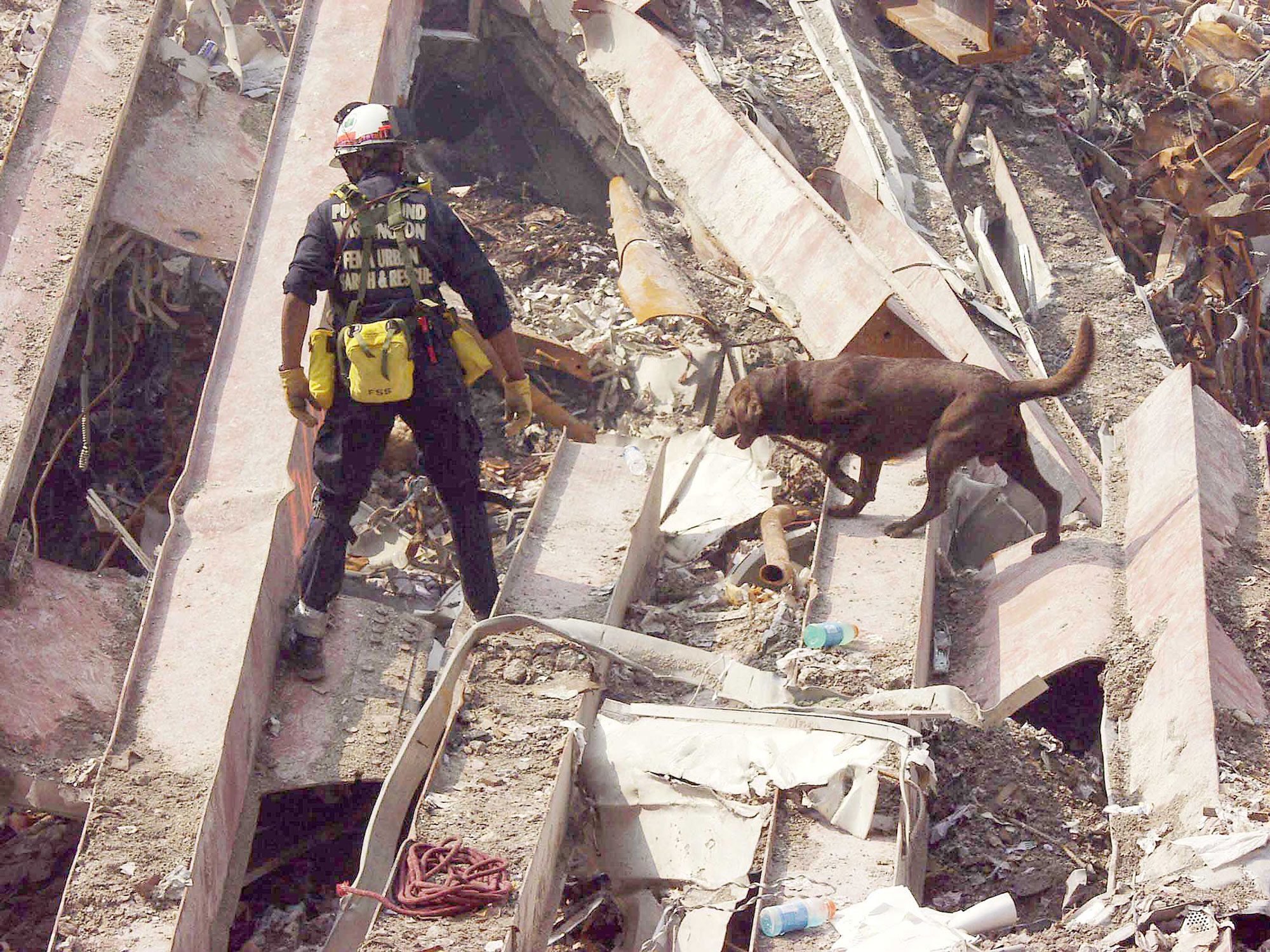
Months earlier, Sandia had begun researching how K-9 collar camera kits could provide police officers and emergency responders with K-9 vision from safer positions. Just days after the attacks, those kits and project leader Richard Sparks were on their way to Ground Zero in New York City. Sparks spent 22 days at the site, helping Urban Search and Rescue teams equip their search dogs with the kits to sift through the rubble for survivors.
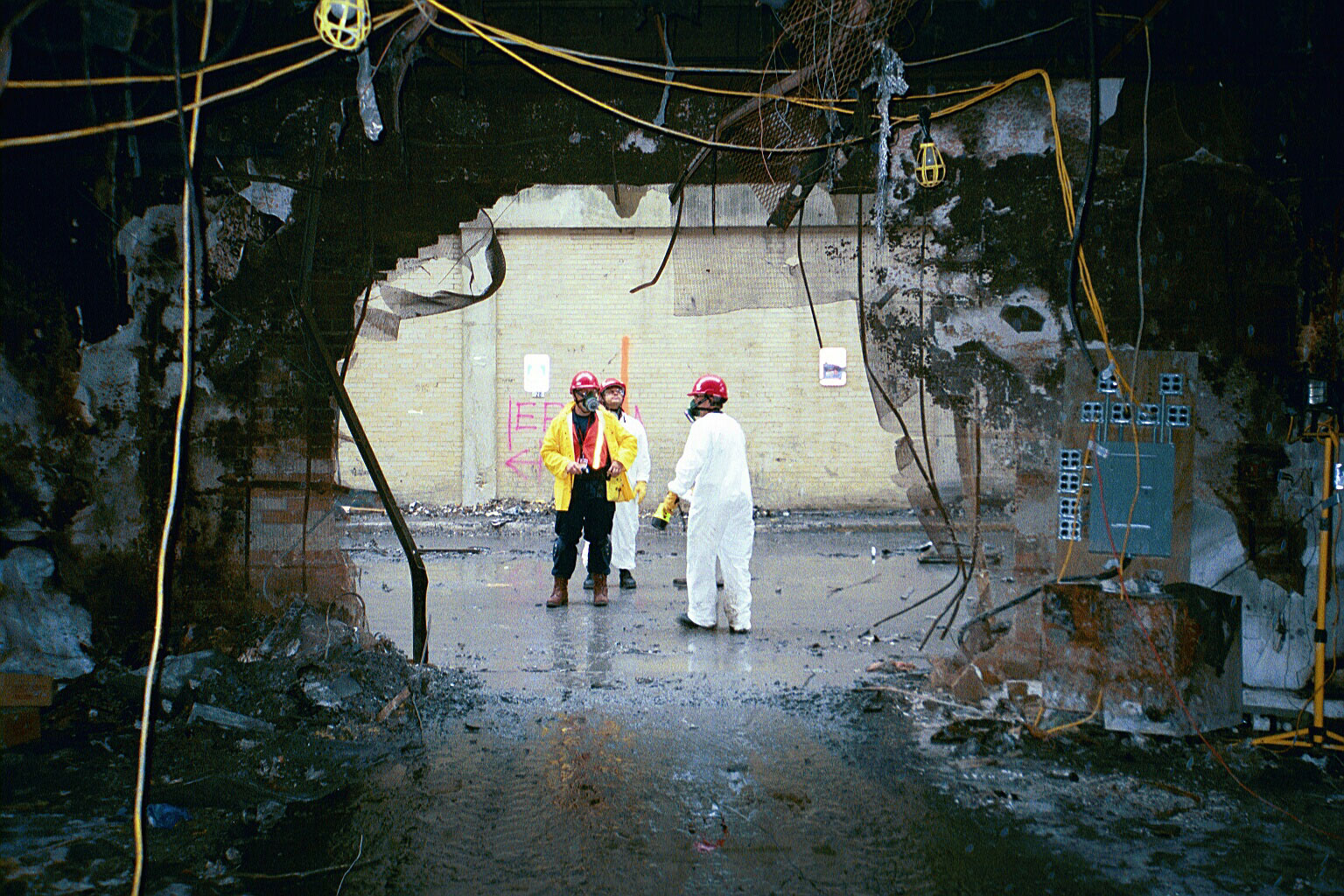
A group of Sandians from the Labs’ emergency management team was dispatched to the Pentagon to aid in rescue and recovery efforts as part of New Mexico’s Urban Search and Rescue team. They removed debris, helped stabilize the structure, recovered parts from the plane, identified victims’ remains and gathered personal items.
“You can’t help but feel anger or hate that this act was committed,” Bruce Berry, a Sandia emergency planner at the time, said in a 2001 Lab News article. “Of course, you can’t dwell on that because you are there to do a job. But when you come across remains, you wonder, whose mother was this? Whose son?”
On Sept. 21, 2001, Robinson penned an article in the first edition of Lab News to be published since the attacks and wrote, “This week the trumpet has sounded the call for ‘exceptional service’ louder than at any time in our lives. Let us answer the call.”