

As the United States approaches its 250th anniversary, we celebrate the pivotal moments when Sandia has stepped up to support the nation. Through innovation, collaboration and dedication, Sandia has consistently demonstrated its commitment to addressing the challenges that shape national security and future.
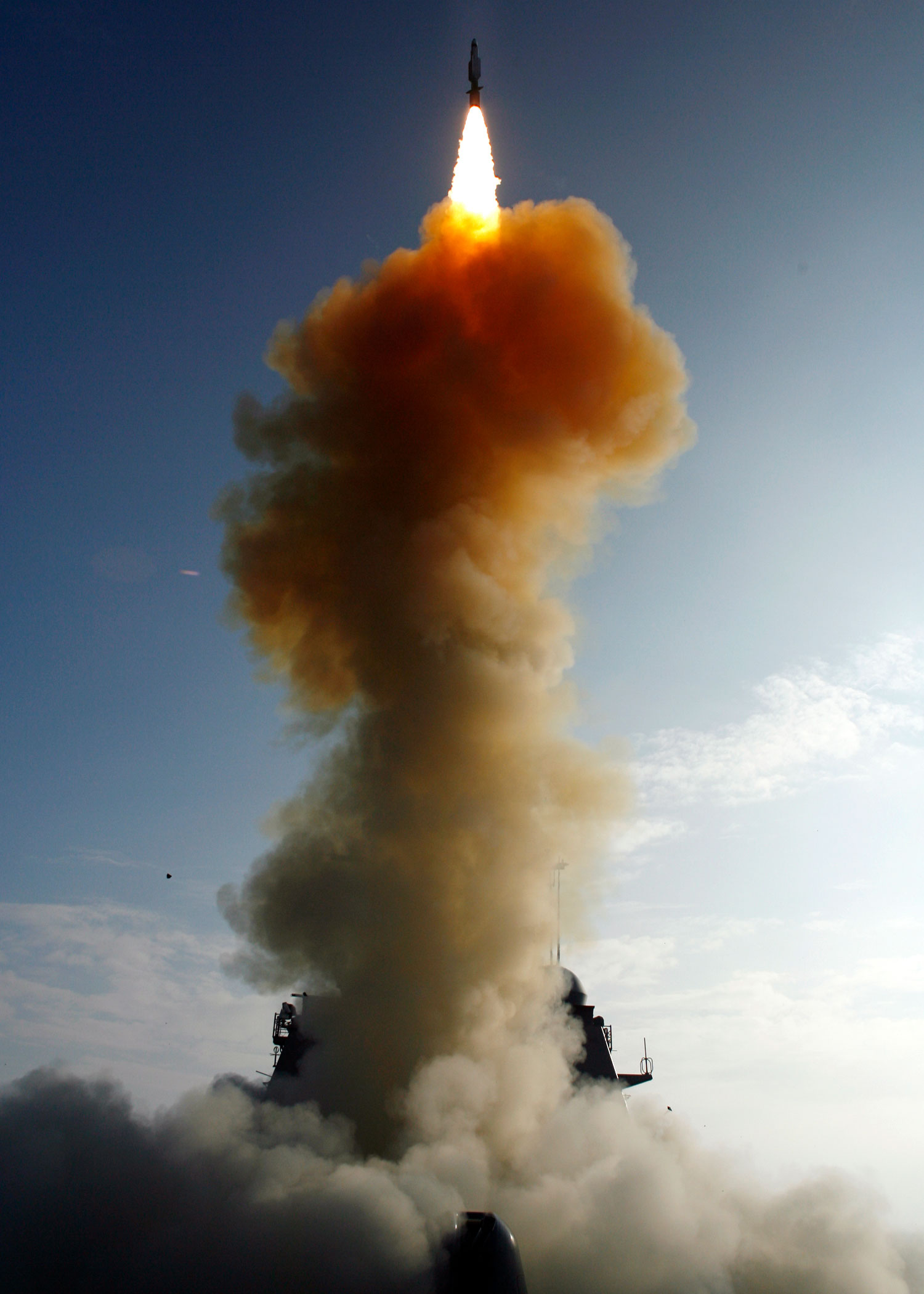
In 2008, the nation called on Sandia to help the Navy figure out how to shoot down a defective 5,000-pound satellite that was dangerously close to reentering Earth’s atmosphere.
The U.S. military reconnaissance satellite, known as USA-193, had failed shortly after its launch two years earlier. By January 2008, it was in a deteriorating orbit and expected to crash within weeks, but where it would land was anyone’s guess.
Officials were concerned that the frozen hydrazine fuel on board could cause debris to spread over several hundred miles, posing a serious safety risk. Additionally, there was a potential security threat if the satellite landed on an adversary’s territory.
The clock was ticking.
“We were contacted on Jan. 11, 2008, by the Missile Defense Agency and asked to deliver the required ‘hit point’ for a high probability of success within nine days,” said Daniel Kelly, then manager of the Lethality and Threat Department, in a 2008 edition of Lab News.
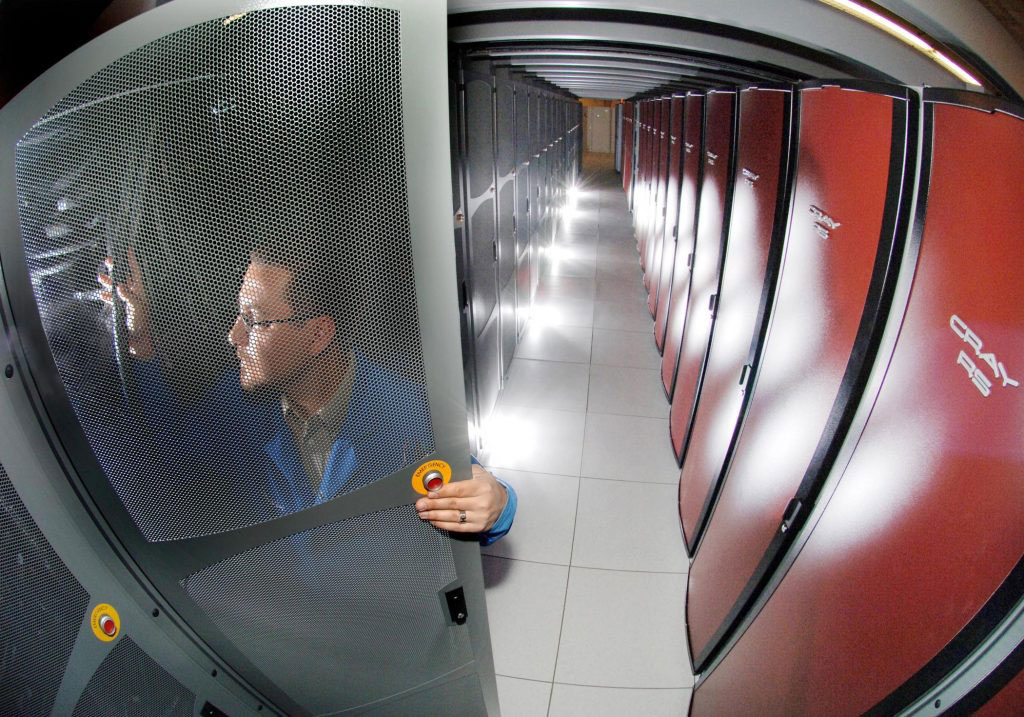
Kelly led a team of six who worked tirelessly to perform hundreds of impact simulations using Sandia’s now-retired Red Storm supercomputer, which was just two years old at the time.
Red Storm contained 26,569 processors and every single one was used to help researchers determine a slew of outcomes and possibilities, ultimately identifying the best option for shooting down the errant satellite. The complex simulations helped identify the optimal altitude to hit the satellite, how it should be struck to minimize the spread of debris — including its hazardous fuel — and the best way to shoot down and destroy the satellite with a single shot.
After more than a month of simulations and analysis, Sandia briefed then-President George W. Bush on his options and on Feb. 12, 2008, he gave the final go-ahead for Operation Burnt Frost, ordering the Navy to bring the satellite down. Eight days later, the Navy fired an SM-3 missile that intercepted the truck-sized satellite 153 miles above the Earth at 17,000 miles per hour, destroying it with a single missile shot. The successful mission was described as “hitting a bullet with a bullet.”
Red Storm originally was built to run detailed simulations and models to help researchers understand and ensure the safety and reliability of nuclear weapons without conducting underground tests. When it fired up in 2006, it was the world’s second-fastest supercomputer, but in scalability, it was the best of the best. By the time Red Storm was retired in 2012, it was considered one of the most influential machines of its era, Operation Burnt Frost was hailed as the machine’s most notable public impact.
Following the success of the operation, then-NNSA Administrator Thomas D’Agostino said in Lab News, “This is a great example of the ways that the nation’s investment in nuclear deterrence can be more broadly employed for national security.”