Search

Results 376–400 of 402

The Advanced Memory Technology program kicks off round three with Cerebras

News Article, August 21, 2025 • Sandia, along with Lawrence Livermore and Los Alamos National Laboratories, have entered a third round of collaborative research and development with Cerebras Systems through the Advanced Memory Technology program. Read the full article on Sandia's Computing Collaborations.
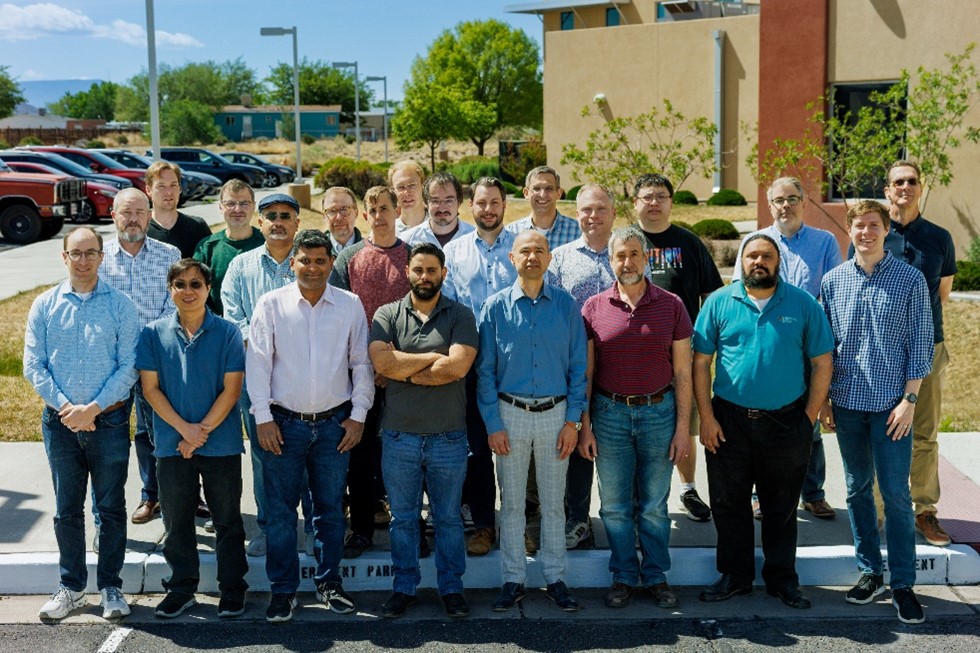
Team members from Sandia, Los Alamos, and Lawrence Livermore National Laboratories stand in front of Sandia's Computing Science and Research Institute.

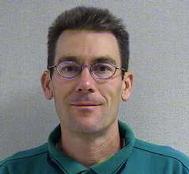
Thomas E. Voth

Staff Page • Computational Multiphysics. Biography Tom is a member of the Computational Multiphysics Department which is home to the ALEGRA multiphysics application. As a member of the ALEGRA team Tom has lead developments in contact/impact mechanics for explicit dynamics and remesh methods for Arbitrary Lagrangian Eulerian mechanics. Tom is also technical lead...

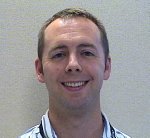
Thomas M. Smith

Staff Page • Computational Science. Biography My research and development interests center around two major topics. The first is discretizations of PDEs for unstructured grids such as; finite element, finite volume and discontinuous Galerkin methods. The second topic is modeling and simulation fluid flows such as; incompressible, compressible, turbulent, reacting, wave propagation and...

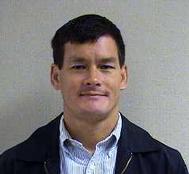
Tian Yu Yen

Staff Page • Scientific Machine Learning. Biography Tian Yu joined Sandia as a postdoc in 2021. His current research focuses on methods of aleotoric and epistemic uncertainty quantification for inverse problems as well as techniques for quantifiying uncertainty in machine learning algorithms. He has a background is in measure-theoretic inversion, Bayesian inference, and...

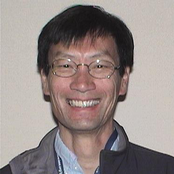
Timothy Michael Wildey

Staff Page • Scientific Machine Learning. Biography Tim joined Sandia National Labs in January, 2011 following a postdoctoral fellowship at the University of Texas at Austin. His research interests are finite element and finite volume methods, discontinuous Galerkin methods, hybridized discretizations, a posteriori error analysis and estimation, uncertainty quantification, adjoint methods, multiphysics and...

Tracktable

Software • Tracktable is a cross-platform library for analysis and visualization of the trajectories of moving objects. A moving object can be almost anything from a whale to an airplane to a cruise ship to the point on a screen where a user is looking. In other words, a moving object can...

Trilinos

Software • The Trilinos Project is an effort to develop algorithms and enabling technologies within an object-oriented software framework for the solution of large-scale, complex multi-physics engineering and scientific problems. A unique design feature of Trilinos is its focus on packages.

Trilinos

Project • The Trilinos Project is an effort to develop algorithms and enabling technologies within an object-oriented software framework for the solution of large-scale, complex multi-physics engineering and scientific problems. A unique design feature of Trilinos is its focus on packages.

Uncertainty Quantification

Focus Area • Uncertainty Quantification (UQ) is a growing area of importance for quantifying confidence in computational engineering simulations. Our activities in this area include fundamental algorithm research, implementation of those algorithms into our flagship software tools DAKOTA (http://dakota.sandia.gov) and Trilinos (http://trilinos.sandia.gov), and deployment of those tools to mission-critical application teams within Sandia...

US Frontiers of Engineering Symposium Invitee

Award, September 25, 2017 – September 27, 2017 • Other external recognition, National Academy of Engineering. Nominated to be one of ~100 young engineers to participate in a multi-day symposium on emerging topics in engineering. https://www.naefrontiers.org/Symposia/USFOE/USFOE-PastSymposia/54726.aspx

V. Gregory Weirs

Staff Page • Computational Science. Biography I am a Senior Member of the Technical Staff in the Computational Science Department. My expertise by training is computational fluid dynamics for compressible reacting flows, and these remain at the core of my recent projects. At Sandia I have also focused on verification and validation (V&V)...

Vanguard

Project • The Vanguard project is expanding the high-performance computing ecosystem by evaluating and accelerating the development of emerging technologies in order to increase their viability for future large-scale production platforms. The goal of the project is to reduce the risk in deploying unproven technologies by identifying gaps in the hardware and software...

Verification and Validation

Focus Area • Verification and Validation (V&V) are important technologies for enabling a science-basis for computational engineering predictions. Our activities include development of new methodologies and workflows for code verification, solution verification, and validation, in support of engineering analysis. This work requires close partnership with other Sandia organizations. We also work across organizations...

VisKores

Software • One of the biggest recent changes in high-performance computing is the increasing use of accelerators. Accelerators contain processing cores that independently are inferior to a core in a typical CPU, but these cores are replicated and grouped such that their aggregate execution provides a very high computation rate at a...

Vitus J. Leung

Staff Page • Discrete Math & Optimization. Biography Research Interests: On-line Algorithms Computational Complexity Analysis of Algorithms Graph Theory Combinatorics Publications

Wayne Witzel

Staff Page • Quantum Computer Science. Biography My primary research is in quantum information.  I have pioneered cluster expansion methods for calculating the decoherence rate of a spin qubit in the presence of impurity nuclear and electron spins.  I've also studied dynamical decoupling strategies in this context.  I've broadened my research into more...

William Chapman

Staff Page • Postdoctoral Appointee. Biography William is a postdoctoral fellow at Sandia, since Spring 2023. His primary research interests lie in utilizing biological inspiration from neuroscience for Neuromorphic algorithm development. Prior to joining Sandia William completed his Ph.D in computational neuroscience, creating detailed biological models of local learning rules for time series...

William Mark Severa

Staff Page • Principal Member of Technical Staff. Biography William is a mathematician and researcher specializing in deep learning, spiking neural networks, and neuromorphic computing. After receiving his Ph.D. in mathematics from the University of Florida, he joined Sandia in 2015 and his research has demonstrated the practicality and effectiveness of utilizing neural...

Zachary Morrow (Zack)

Staff Page • Scientific Machine Learning. Biography Zack's research interests lie at the intersection of approximation theory and scientific computing, with applications ranging from computational chemistry to wildfire simulation. He joined Sandia in 2021. Education Ph.D., Applied Mathematics, North Carolina State University (2021)Advisor: C. T. KelleyConcentrations in Computational and Interdisciplinary MathematicsM.S., Applied Mathematics,...

Zoltan

Software • Zoltan is a toolkit of parallel algorithms for dynamic load balancing, geometric and hypergraph-based partitioning, graph coloring, matrix ordering, and distributed directories. Zoltan is open-source software, distributed both as part of the Trilinos solver framework and as a stand-alone toolkit.
Results 376–400 of 402