
-
Geopolitical Effects of the Hungarian Election
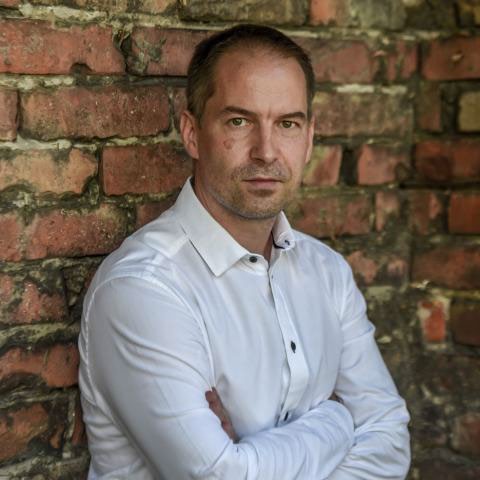
June 25, 2026 | The CMC welcomed Dr. Peter Krekó, a behavioral scientist and disinformation expert whose research examines the psychological drivers of belief in disinformation, its political and institutional consequences, the dynamics of state-sponsored disinformation, and effective counterstrategies.
Dr. Peter Krekó is a Research Affiliate at the CEU Democracy Institute and a Senior Fellow at the CEU Institute for Advanced Study. He has also been an Engaging Central Europe Fellow at the German Marshall Fund of the United States. Krekó is the owner and director of the Political Capital Institute and leads Hungary’s disinformation hub (HDMO-Lakmusz), supported by the European Commission under the European Digital Media Observatory (EDMO) hosted at the European University Institute.
-
Nuclear Insights from the Ukraine War
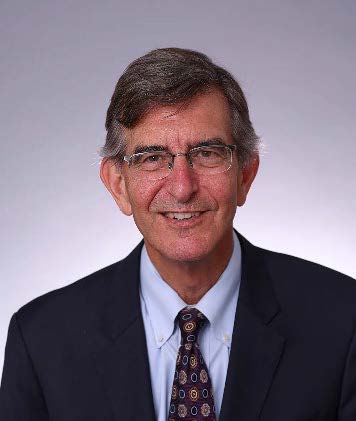
June 17, 2026 | The CMC welcomed Dr. George Perkovich, a Senior Fellow and Japan Chair at the Carnegie Endowment for International Peace, for a discussion on nuclear insights from the Ukraine War. Dr. Perkovich is the Japan Chair for a World Without Nuclear Weapons and a senior fellow in the Carnegie Endowment for International Peace’s Nuclear Policy Program. He works primarily on nuclear deterrence, nonproliferation, and disarmament issues, and is leading a study on nuclear signaling in the 21st century. He is author of forthcoming publication, Nuclear Weapons in the Ukraine War and co-author of the forthcoming Rethinking A Political Approach to Nuclear Disarmament.
-
Reactors under Siege: The Human Dimension of the Seizure and Occupation of the ZNPP

May 13, 2026 | The CMC welcomed Mariana Budjeryn, a senior researcher with the Center for Nuclear Security Policy at MIT’s Security Studies Program, to present on the story of the Zaporizhzhia nuclear power plant site and thoughts on how to mitigate risks to staff in such circumstances. She is currently funded by the Ukraine Team for Coordination to research the attacks into the Russian takeover of the Zaporizhzhia nuclear power plant site.
She is the author of Inheriting the Bomb: The Collapse of the USSR and the Nuclear Disarmament of Ukraine (Johns Hopkins University Press, 2023) and a winner of the 2024 William E. Colby Military Writers’ Award, the first female in the award’s 25-year history.
-
What Would Regime Collapse in Iran Mean for Pakistan?
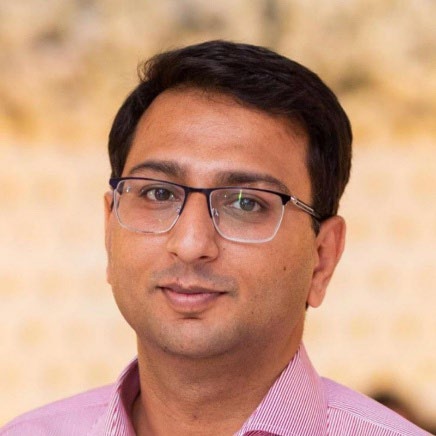
April 29, 2026 | The CMC welcomed Muhammad Faisal, a foreign policy analyst and PhD candidate at the University of Technology Sydney, to present his research on the implications of a collapse of the Iranian regime in Pakistan. A full overview on his research can be found here.
Muhammad Faisal researches Pakistan’s foreign policy decision-making amid intensifying great-power competition across South Asia and the Indian Ocean region. He is an alumnus of Sandia National Labs, having been a Visiting Scholar at the Cooperative Monitoring Center in 2015 and a Fellow in 2022, when he led a research project examining Pakistan’s western border security posture and capacities.
Previously, he was a Research Fellow at the Institute of Strategic Studies Islamabad for nearly seven years, and a Visiting Fellow at the Stimson Center in Washington, D.C.
-
Extended Deterrence Amidst US Retrenchment in Asia
April 15, 2026 | The CMC welcomed Zack Cooper for a presentation on how shifting US strategy in Asia might alter our approach to extended deterrence.
Zack Cooper is a senior fellow at the American Enterprise Institute, where he studies US strategy in Asia. He also teaches at Princeton University and serves as chairman of the board of the Open Technology Fund. He previously served on staff at the White House and Pentagon.
Dr. Cooper has also worked at the Center for Strategic and International Studies, the German Marshall Fund of the United States, the Center for Strategic and Budgetary Assessments, and Armitage International. He is the author of Tides of Fortune: The Rise and Decline of Great Militaries (Yale University Press, 2025).
-
Nuclear Facilities as Targets of Military Attack: Assessing Drivers and Implications for Nuclear Safety

April 7, 2026 | The CMC welcomed Darya Dolzikova for a session on counterproliferation, the threat of military strikes on nuclear facilities, and why states may use such military force against nuclear installations.
Darya Dolzikova is a Senior Research Fellow with RUSI’s Proliferation and Nuclear Policy programme. Her works covers issues of nuclear proliferation, nuclear deterrence, nuclear safety and security, and strategic aspects of civil nuclear supply chains. Darya’s current research focuses on the Iranian nuclear programme, the role of nuclear deterrence in Euro-Atlantic security dynamics and military and sub-threshold threats to nuclear facilities.
-
Legality of Military Space Activities: Gaps, Challenges and Avenues for Cooperation

March 31, 2026 | The CMC welcomed Nivedita Raju for a presentation on the legality of space weapons programs, associated activities, and the dialogues taking placing around them.
The discussion provided an overview of the legality of military space activities, focusing on ambiguous terms and gaps in space governance under the Outer Space Treaty and the UN Charter. Key challenges in space security governance and the status of talks at UN forums were presented. Also highlighted were the positions of key actors, particularly China and Russia, in space security forums as well as potential avenues for cooperation in the space domain.
Nivedita Raju is a Senior Researcher in the SIPRI Weapons of Mass Destruction programme. Her recent research explores opportunities for space-focused dialogue, trends in space security, the space-nuclear nexus, and transparency and confidence building measures.
-
A Game of Thrones: An Overview of Iran’s Political Leadership
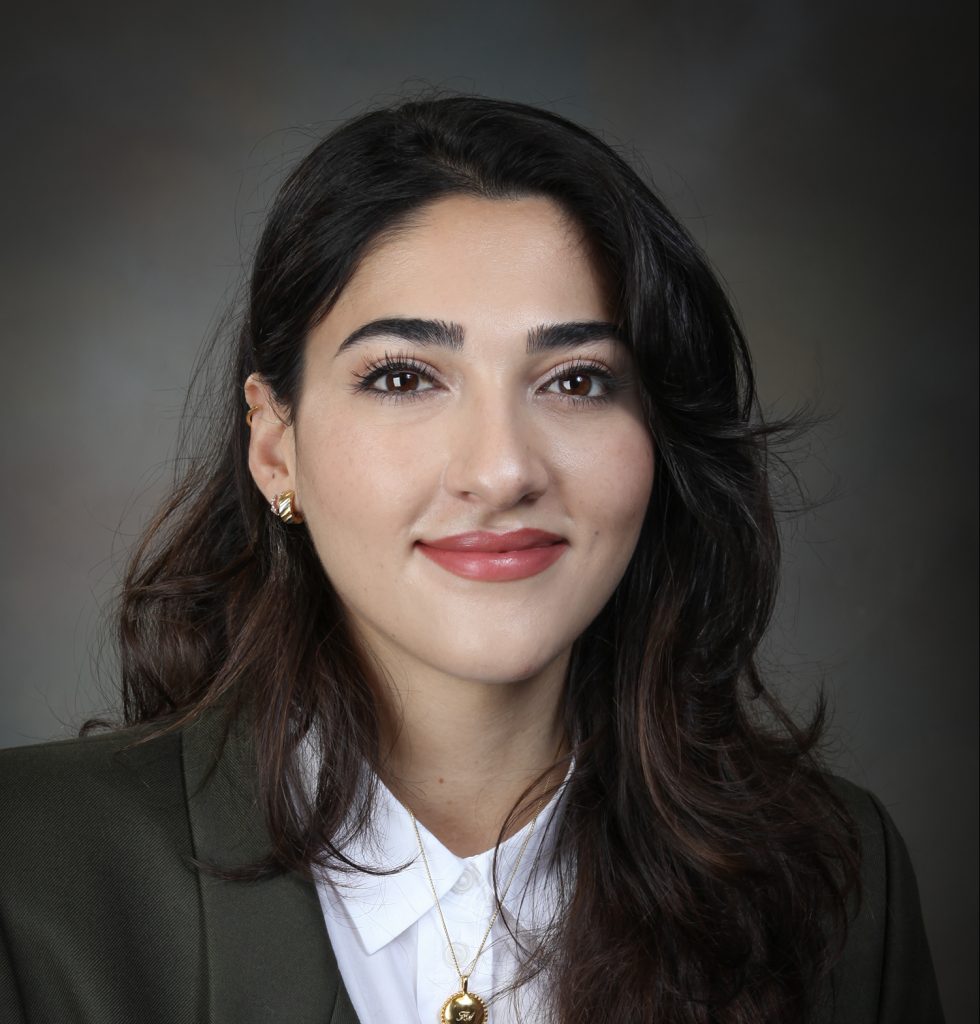
March 25, 2026 | The CMC’s Middle East and North Africa regional lead, Farnaz Alimehri, presented on Iran’s political leadership. See Farnaz’s biography here.
-
Russia’s Hacker Recruitment Machine: Criminals, Students, and the State’s Cyber Talent and Partnership Pipelines
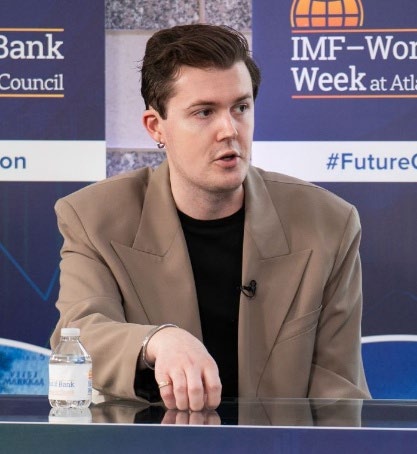
March 19, 2026 | The CMC welcomed Justin Sherman to speak about the how the Russian state uses of a complex web of actors and events to identify hacker talent and pull it into the state’s cyber apparatus, whether for outright employment, ad hoc support, or something in between.
Justin Sherman is the founder and CEO of Global Cyber Strategies, a DC research and advisory firm, an adjunct professor at Georgetown University, and a nonresident senior fellow at the Atlantic Council. His book, Navigating Technology and National Security, examines the history and future of US national security regulations of technology and data.
-
Examining Venezuela’s Fossil Energy
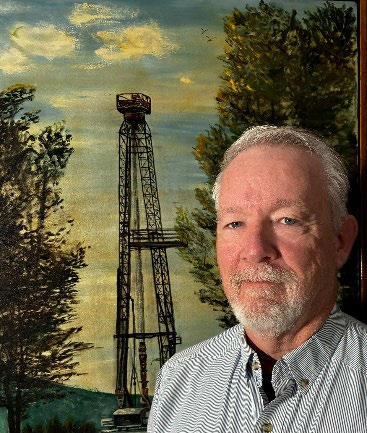
March 12, 2026 | The CMC welcomed Mr. Tony Gale, Coordinator of the Petroleum Technology Department at San Juan College’s School of Energy, for a presentation on Venezuela’s oil reserves, the economics of production, and technical limitations that could be overcome by research and technology development.
Mr. Gale previously served as the Vice President of Operations for EXXEL Energy and the Senior Vice President of Operations for Gunnison Energy. He has been a consulting engineer for more than 15 years. He holds a Bachelor of Science in Petroleum Engineering from Marietta College and is a registered Professional Engineer in the state of Colorado.
-
Cold War Solutions for the Future: Reflections from an International Security Practitioner

February 27, 2026 | The CMC welcomed Senior Fellow, Jennie Gromoll, to speak about lessons learned over a 40-year career in arms control and nonproliferation that apply to the changing circumstances of today, including the critical role of the CMC.
Previously, Jennie served in the U.S. Department of State’s International Security and Nonproliferation Bureau-equivalent and in the U.S. Arms Control and Disarmament Agency (ACDA) for thirty-eight years.
Jennie is currently a Senior Fellow the Center for nonproliferation Studies (CNS), and Odesa Center for Nonproliferation (OdCNP), and Trustee for the British-American Security Information Council (BASIC).
-
Assessing NATO: Deterrence by Denial, Deterrence by Punishment, and Escalation Concepts
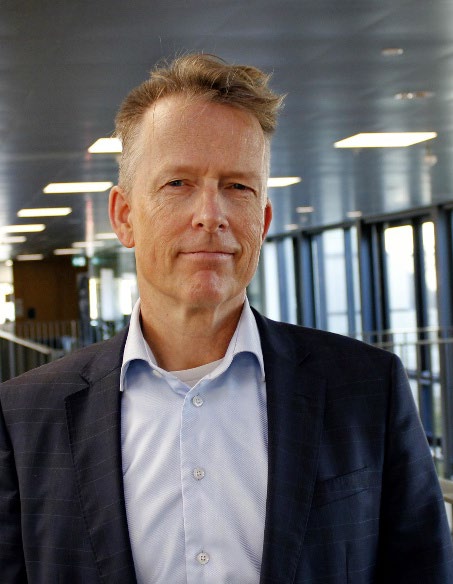
January 20, 2026 | The CMC welcomed Sten Rynning, Director of the Danish Institute of Advanced Study and Professor of War Studies at the University of Southern Denmark, for a presentation on his assessment of the NATO alliance. The presentation discussed deterrence by denial, deterrence by punishment, and the alliance’s framing of deterrence and escalation given the complexities and sensitivities of such a large group of allied nations.
Sten Rynning founded the University of Southern Denmark’s Center for War Studies in 2011 and headed it until 2019. He served on the official Norwegian Afghanistan Commission (2015−2016) and has in addition advised the commission of inquiry into the Denmark’s war participation in Kosovo, Afghanistan, and Iraq (2017−2019) as well as ambassador Peter Taksøe-Jensen’s official review of Danish Foreign Policy (2015−2016). In 2021 he was made Knight of the Order of Dannebrog.
-
Overview of the Gulf Cooperation Council’s Emergency Management Center
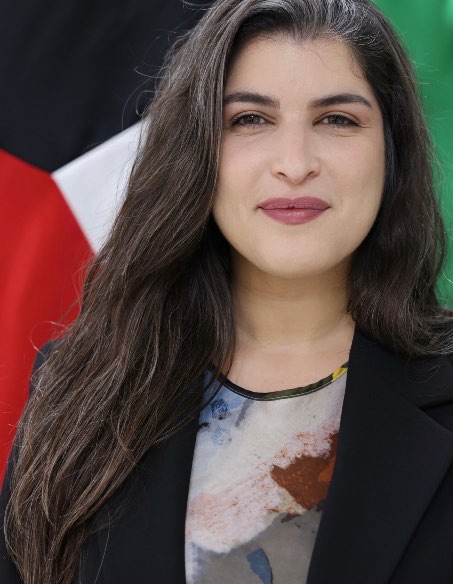
December 2, 2025 | The CMC welcomed Dr. Amnah Ibraheem, Director of Emergency Operations and Senior Advisor to the GCC Emergency Management Center for a presentation on the Gulf Cooperation Council’s Emergency Management Center.
Dr. Ibraheem was previously a researcher at the International Institute for Strategic Studies. She specializes in the nuclear and energy policies of the Gulf states. Her expertise includes Gulf energy policy, nuclear security, and Gulf regional security.
She previously worked at the Global Security Directorate of Oak Ridge National Laboratory in Tennessee and has attended trainings at multiple U.S. national labs including Brookhaven National Laboratory in New York and Sandia National Laboratories in New Mexico. Amnah is a member of Middle East Next Generation of Arms Control Specialists (MENACS), a program of the James Martin Center for Non-proliferation Studies (CNS) at the Middlebury Institute of International Studies at Monterey.
-
Verifying the Outer Space Treaty’s Nuclear Ban: Technical and Political Feasibility of In-Space Satellite Inspection

October 12, 2025 | The CMC welcomed Isobel Porteous, recent graduate of Stanford University, where she earned a bachelor of science in aeronautics and astronautics with honors in international security from the Center for International Security and Cooperation (CISAC). At Stanford, she published a thesis titled, “Verifying the Outer Space Treaty’s Nuclear Ban: Technical and Political Feasibility of In-Space Satellite Inspection,” which was awarded the William J. Perry prize. She now serves as head of business development at EarthTraq, a space startup firm developing satellite technology for GPS-independent positioning. Isobel led the Stanford Student Space Initiative’s Satellites team, successfully launching the Sapling spacecraft, Stanford’s first entirely student-built satellite. She also co-authored the space chapter of the Stanford Emerging Technology Review at the Hoover Institution, analyzing the use of new space technologies for U.S. national security.
-
The Case for Redeploying Non-Strategic Nuclear Weapons to South Korea
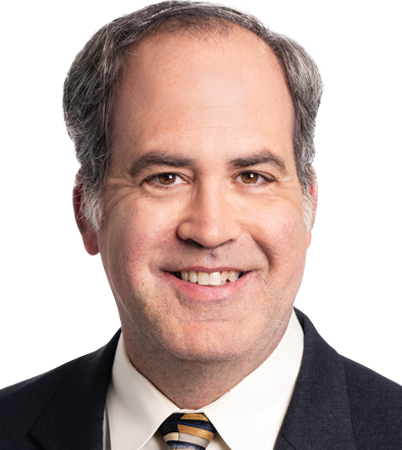
October 8, 2025 | The CMC welcomed Robert Peters for a presentation of his recent publication, “The Case for Redeploying Non-Strategic Weapons to South Korea.” Peters outlined regional threats, his thoughts on enhancing the credibility of U.S. deterrence, and arguments against deploying non-strategic weapons to Korea. Robert is a Senior Research Fellow for Strategic Deterrence in the Heritage Foundation’s Allison Center for National Security.
-
Remote Intervention Solutions for Nuclear Power Plants
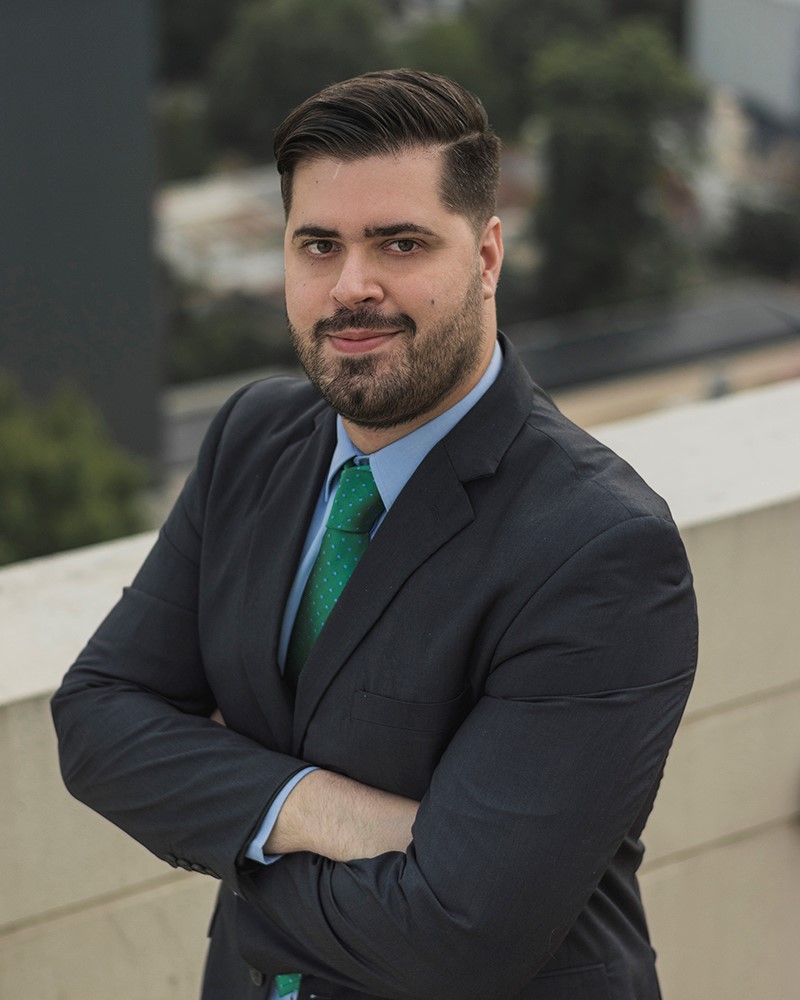
September 11, 2025 | The CMC welcomed Germán Kuglien, Head of Business Development of Combustibles Nucleares Argentinos (CONUAR S.A.) for a seminar presentation on the organization’s technical solutions for remote intervention in nuclear power plants and opportunities for U.S.-Argentina collaboration in the nuclear sector. Mr. Kuglien shared details of the repair of Atucha II Nuclear Power Plant and the technologies developed to assist with the repair. Watch the video here.
-
Understanding Violent Extremism in West Africa
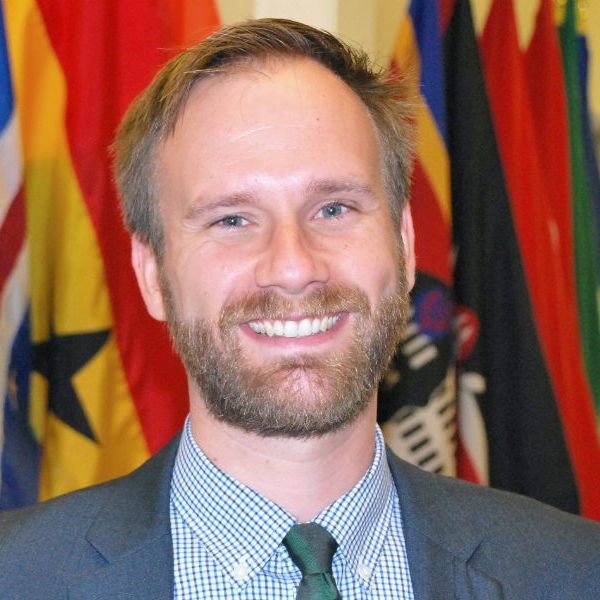
May 29, 2025 | The CMC hosted Dr. Daniel Eizenga, a Research Fellow at the Africa Center for Strategic Studies, for a discussion on countering violent extremism in the Sahel. He provided policy recommendations for West African governments and explored opportunities to enhance nonproliferation efforts in the region, drawing on his research into civil-military relations and the influence of traditional institutions and civil society on Africa’s political development. Watch the video here.
-
Navigating the Persian Puzzle
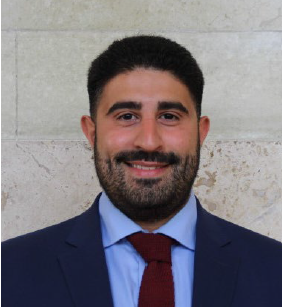
February 12, 2025 | Dr. Farzan Sabet provides an overview of 50 years of Iranian nuclear history offering a broader historical perspective focusing on the diplomatic and security aspects. His lecture on “Navigating the Persian Puzzle” examines the evolution of Iran’s nuclear programs and analyzes recent changes in the context of the nuclear issue. Additionally, he discusses factors influencing U.S. nuclear negotiations and sanctions relief, as well as potential deals and the future of US-Iran détente. Watch the video here.
-
Building Bridges to Foster U.S.-Africa Relations and Counter Chinese Influence
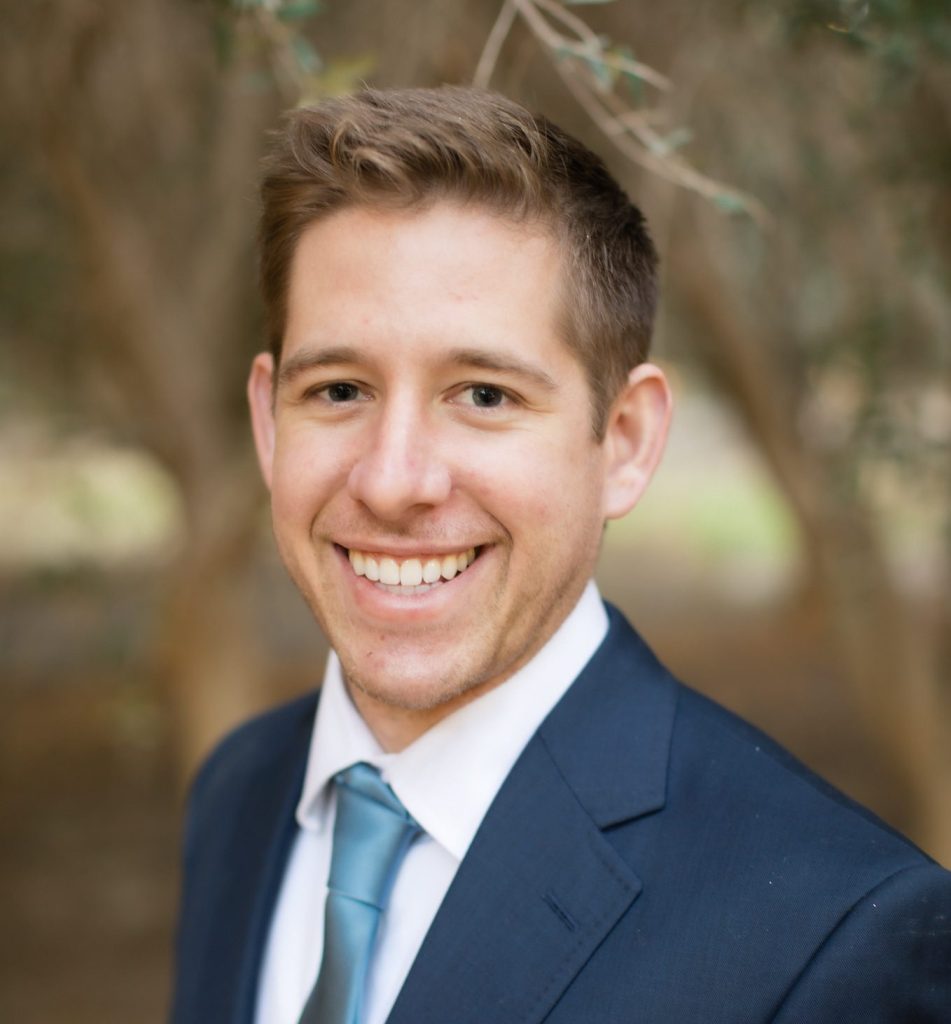
February 19, 2025 | Alternative diplomacy in Africa was the topic of Matthew Hauwiller’s seminar, which focused on research he conducted as a 2024 Aspen Strategy Group Rising Leader. Dr. Hauwiller suggests leveraging science diplomacy to address food security and to foster collaborative science and technology research in Africa. Dr. Hauwiller is a senior engineer at Seagate Technology, where he employs AI to innovate data storage technologies. Watch the video here.
-
Myths and Realities of China’s Growing Inroads into Maritime South Asia

December 11, 2024 | Dr. Jingdong Yuan discussed the causality, intentionality, and goal attainment of Beijing’s efforts in developing influences in Bangladesh, Sri Lanka, and the Maldives. Dr. Yuan is a senior researcher and director of the China and Asia Security Programme at the Stockholm International Peace Research Institute. He is co-editor of Trump’s America and International Relations in the Indo-Pacific (2021) and Engaging China: How Australia Can Lead the Way Again (2023). Watch the video here.
-
BESS from China: National Security Risk or Supply Chain Threat?
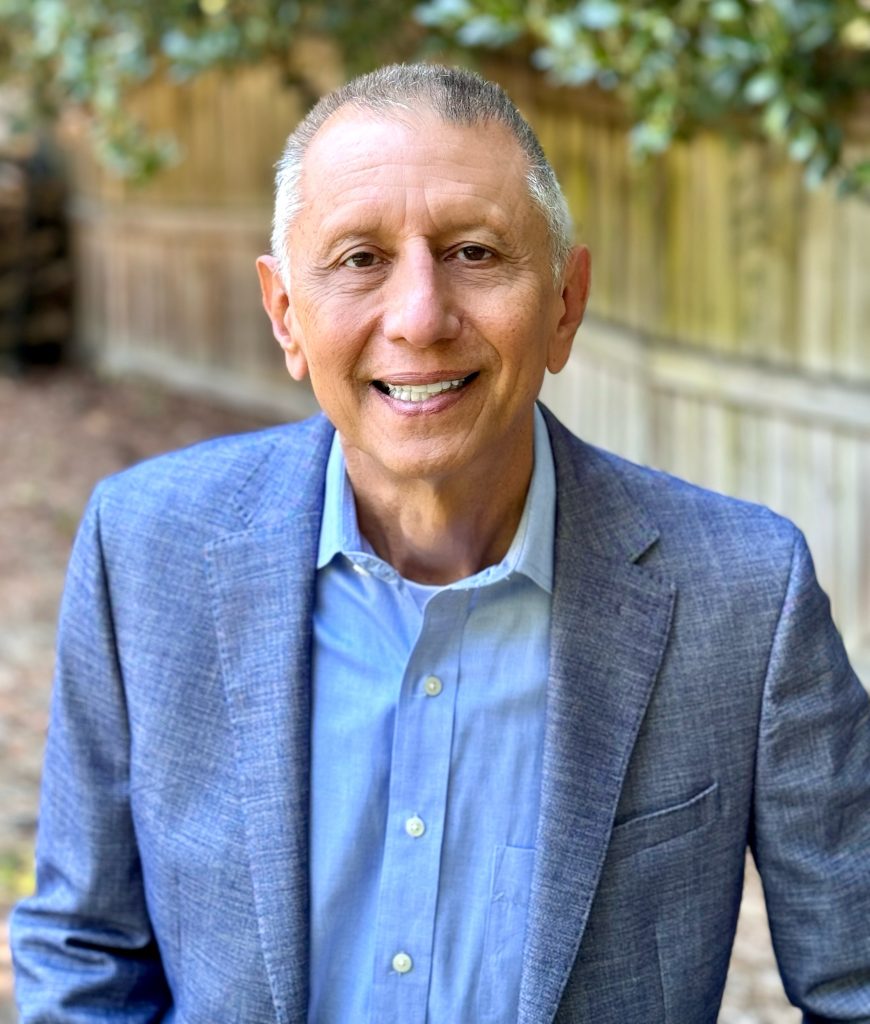
October 22, 2024 | Battery Energy Storage System (BESS) technology was the subject of Juan Villareal’s talk—in the context of potential cyber-attack scenarios involving Chinese-procured BESS and the broader geopolitical implications of such equipment. Villareal is an accomplished international operations leader specializing in cybersecurity, cyber-physical systems, and strategic business development. He actively contributes to the U.S. DOE’s Cyber Informed Engineering Initiative. Watch the video here.
-
JAEA Policy Research on Nuclear Nonproliferation and Nuclear Security
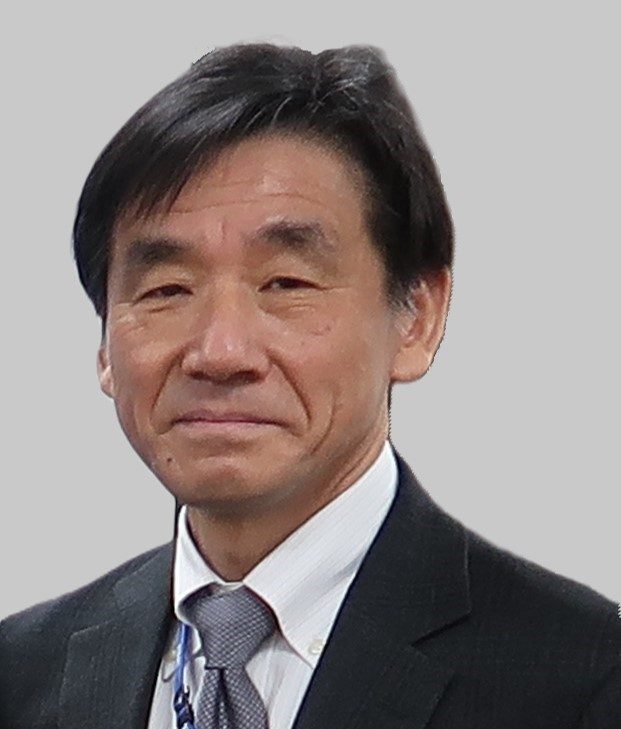
August 27, 2024 | Hirofumi Tomikawa of the Japan Atomic Energy Agency (JAEA) discussed recent research efforts including a study on the impact of Russia’s invasion of Ukraine on nuclear nonproliferation and nuclear security. Tomikawa is general manager of the Management and Policy Research Office of JAEA’s Integrated Support Center for Nuclear Nonproliferation and Nuclear Security and was previously a Senior Safeguards Training Expert for the IAEA. Watch the video here.
-
Regulating Migration in a New Security World

June 18, 2024 | For the Strategic Insights Series on the Migration/National Security Nexus, Dr. Gallya Lahav discussed changes in the politics of migration post 9/11—from demographic and economic considerations to cultural issues—in the context of national security. The author of Immigration, Security, and the Liberal State: The Politics of Migration Regulation in Europe and the United States (2024), Dr. Lahav is a professor of political science at Stony Brook University.
-
Haitian Migration in the Americas: Highlights
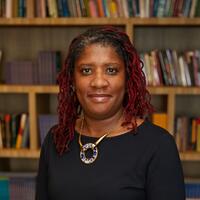
May 29, 2024 | For the Strategic Insights Series on the Migration/National Security Nexus, Dr. Valerie Lacarte discussed the looming immigration crisis as conditions in Haiti continue to deteriorate. Dr. Lacarte detailed the need for a regional proactive approach to Haitian displacements similar to the current Regional Interagency Coordination Platform for Refugees and Migrants of Venezuela. Dr. Lacarte is a senior policy analyst with the U.S. Immigration Policy Program at the Migration Policy Institute. The video of the seminar is available here.
-
“Escalate to De-escalate” and Limiting Nuclear War: From a U.S. Perspective
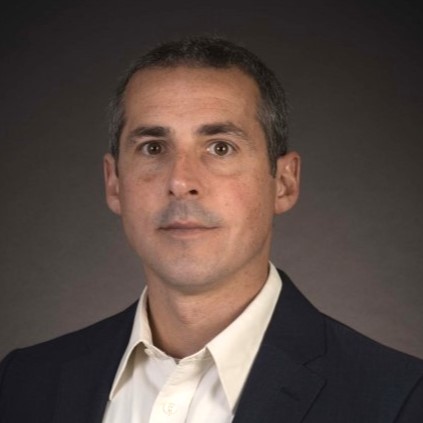
May 28, 2024 | Commander Daniel Post discussed his research on the concept of using “escalate to de-escalate” strategies to terminate war by threatening, for example, limited nuclear use. CDR Post’s findings strongly indicate that such strategies are theoretically unsound and likely to increase the risk of escalation in a nuclear conflict. A former Navy helicopter pilot, CDR Post is a military professor fellow in the U.S. Naval War College’s Strategy and Policy Dept. The video of the seminar is available here.
-
Competitive and Cooperative Dynamics Around UASs from the Baltic to the Arctic
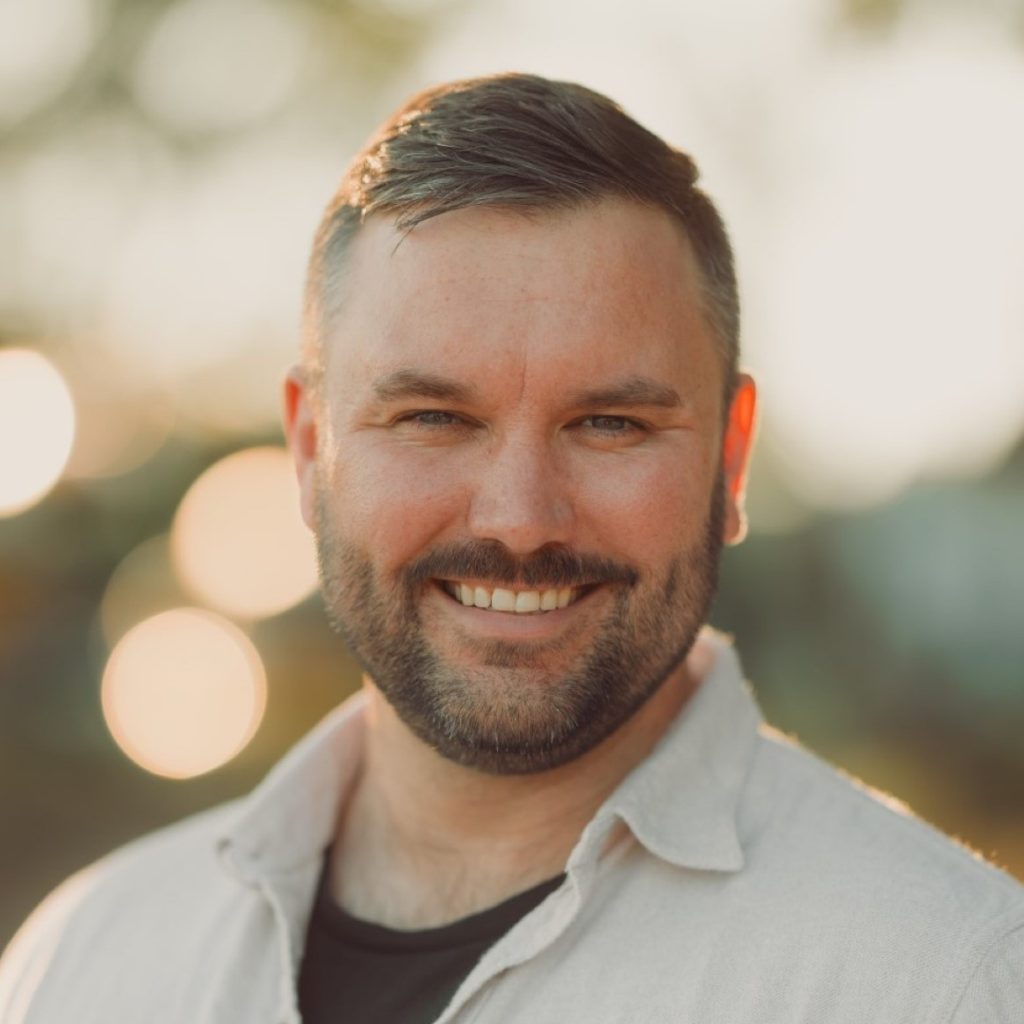
May 23, 2024 | Dr. James Patton Rogers discussed the use of military drone systems by Russia, the U.S. and NATO allies to secure and protect their interests in the Arctic—due in part to the presence of the Northern Sea Route (NSR). Dr. Rogers also addressed activity in the Baltic Sea (situated at one end of the NSR) and around the Greenland-Iceland-United Kingdom Gap. Dr. Rogers is executive director of the Cornell Brooks School Tech Policy Institute and NATO country director of the Full Spectrum Drone Warfare Project.
-
The Women and the Bomb Project

May 15, 2024 | Dr. Jana Wattenberg gave a talk on her Women and the Bomb project—an assessment of whether and how women working in the nuclear weapons field could effect change. This three-year research project won a Marie Skodowska Curie Postdoctoral Fellowship grant. Dr. Wattenberg is a postdoctoral fellow and lecturer in security at Aberystwyth University.
-
U.S. Immigration Policy: How Did It Become the Issue du Jour?
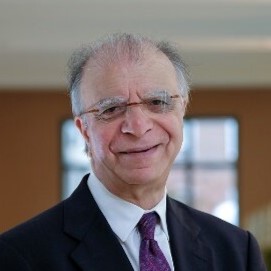
May 8, 2024 | For the Strategic Insights Series on the Migration/National Security Nexus, Muzaffar Chishti discussed two U.S. immigration crises—the labor market and border crises—and recommendations for radically improving the existing immigration selection system. A senior fellow at the Migration Policy Institute (MPI) and director of the MPI office at NYU School of Law, Mr. Chishti has testified before Congress on immigration policy and is frequently quoted in the media. The video of the seminar is available here.
-
Indigenous Security and Arctic Governance: Navigating the Intersection

February 29, 2024 | For the final seminar in the CMC Strategic Insights Series on the Arctic, Apostolos Tsiouvalas discussed the indigenous people of the Arctic—their demographics, rights under international law, governance participation, and ongoing security challenges. Tsiouvalas is an international lawyer, a research fellow at the Norwegian Centre for the Law of the Sea, and a research associate at the Arctic Institute. The video of the seminar is available here.
-
Cooperation, Competition, and Contestation in Arctic Security
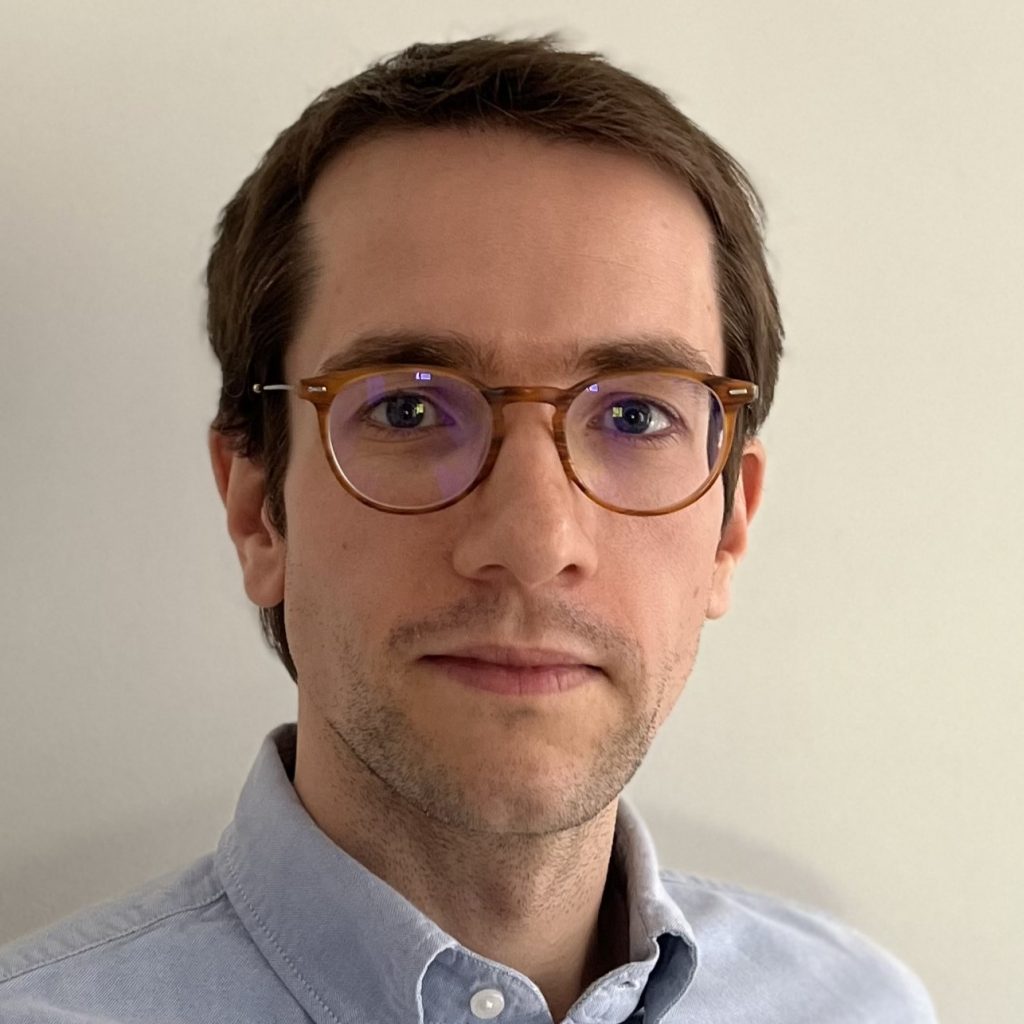
February 22, 2024 | For the CMC Strategic Insights Series on the Arctic, Mathieu Boulegue discussed the Arctic’s eight nations, its indigenous communities, and the fragility of its unique operating environment. Boulegue is a researcher and consultant in international conflict and security affairs and a fellow of the Chatham House, Center for European Policy Analysis, and the Polar Institute at the Wilson Center. The video of the seminar is available here.
-
Emerging and Disruptive Tech and the Future of Arctic Militarization
February 15, 2024 | For the CMC Strategic Insights Series on the Arctic, James Rogers discussed the use of Arctic drones by Russian and Western Arctic States in the context of the region’s increasing geologic and geopolitical importance. Dr. Rogers is Executive Director of the Cornell Brooks School Tech Policy Institute and NATO Country Director of the Full Spectrum Drone Warfare Project. The video of the talk is available here.
-
Opportunities and Challenges in a Changing Arctic

February 8, 2024 | Klaus Dodds gave the first talk in the CMC Strategic Insights Series on the Arctic, detailing the increase in geopolitical tensions. Dr. Dodds is Professor of Geopolitics and Executive Dean for the School of Life Sciences and Environment at Royal Holloway, University of London. The video of the talk is available here.
-
Rethinking Nuclear Deterrence
August 3, 2023 |
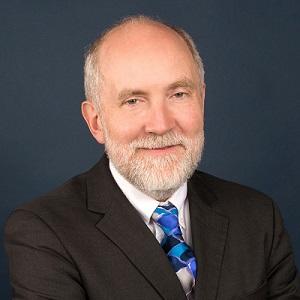
Dr. Matthew Bunn discussed rethinking nuclear deterrence in the context of a multipolar nuclear world, the fever pitch of hostility between nuclear-armed states, and new technologies from hypersonic missiles to artificial intelligence. Dr. Bunn is the James R. Schlesinger Professor of the Practice of Energy, National Security, and Foreign Policy at the Harvard Kennedy School.
-
Remote Sensing to Support Nuclear Nonproliferation Challenges and Opportunities
May 3, 2023 |
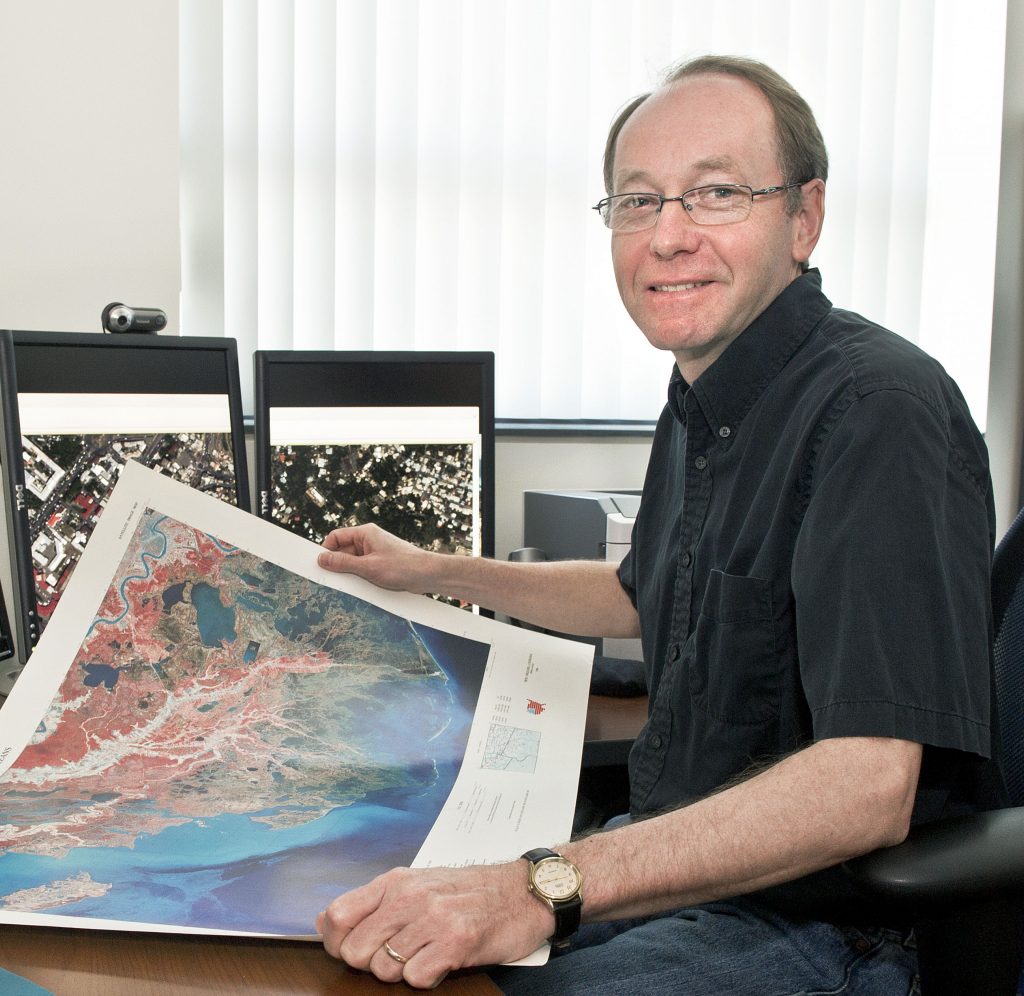
Dr. Timothy Warner, Emeritus Professor of Geology and Geography at West Virginia University, discussed the challenges and opportunities associated with using remote sensing to support the nuclear nonproliferation work of non-governmental organizations and treaty organizations like the International Atomic Energy Agency. For the past 10 years, Dr. Warner has contributed to remote sensing research and training—through the United States Support Program—for the International Atomic Energy Agency’s Department of Safeguards.
-
Negotiating Uncertainty into the Making of the Global Nuclear Order
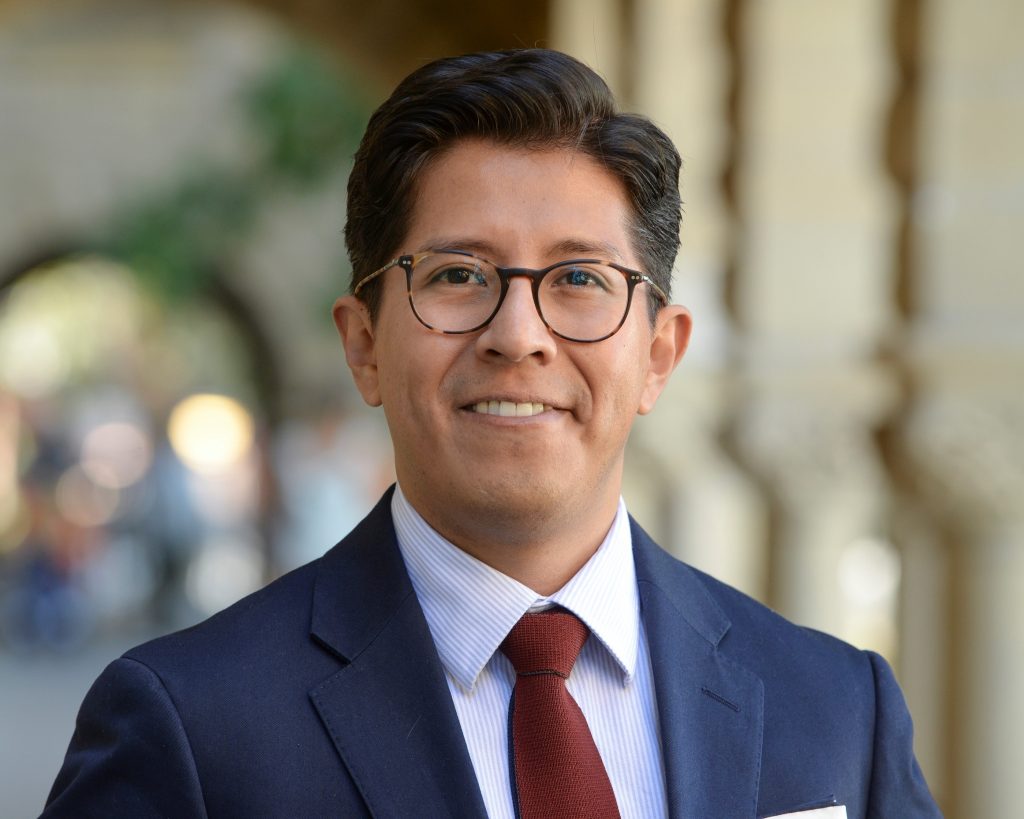
May 22, 2023 |
Dr. J. Luis Rodriguez, a Postdoctoral Fellow at Stanford University’s Center for International Security and Cooperation (CISAC), discussed the politics of imprecision in security-related international treaties. Dr. Rodriguez addressed why states choose to obfuscate the definitions of the object they set out to limit through international law, for example the lack of a definition for “nuclear weapon” in the Treaty on the Non-Proliferation of Nuclear Weapons.
-
The Nuclear Security Landscape and the NNSA Mission Space
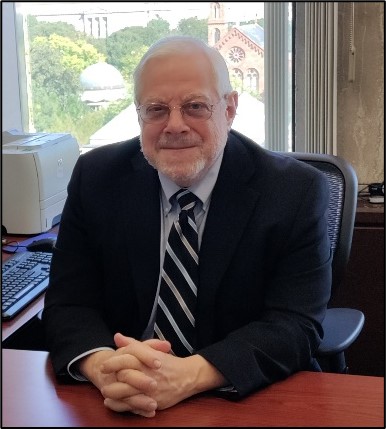
April 17, 2023 |
Monte Mallin, the Deputy Director of the National Nuclear Security Administration’s (NNSA’s) Office of Policy and Strategic Planning, discussed the NNSA mission space with regard to the nuclear security landscape. In his current role, Mallin helps to oversee the implementation of enterprise-wide strategic planning, governance, and internal NNSA directives.
-
Advancing Norms of Nuclear Responsibility Amidst a Shifting Nuclear Landscape
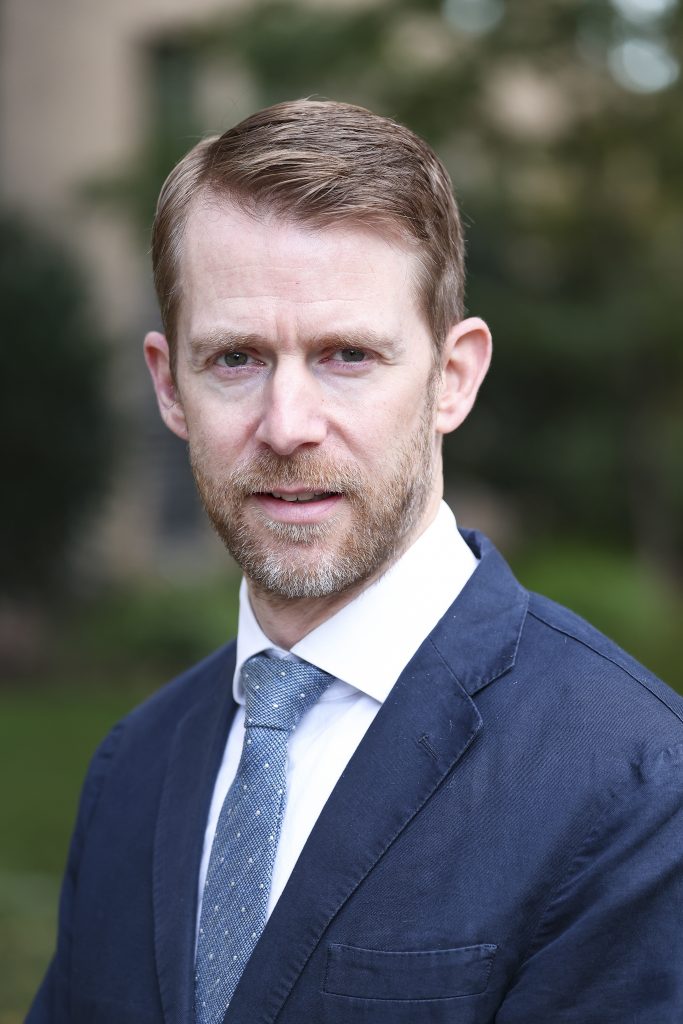
Nov. 17, 2022 |
Toby Dalton discussed the shifting landscape of the global nuclear order as it pertains to regional security dynamics and states’ policies concerning the governance of advanced nuclear technologies and nuclear weapons. He is Co-Director and a Senior Fellow of the Nuclear Policy Program at the Carnegie Endowment for International Peace. Prior to joining the Carnegie Endowment, he served as a senior policy advisor at the National Nuclear Security Administration Office of Nonproliferation and International Security and was posted as Energy Attaché at the U.S. Embassy in Islamabad, Pakistan.
-
China’s Global Role, Bureaucracy, and Perspectives on the United States
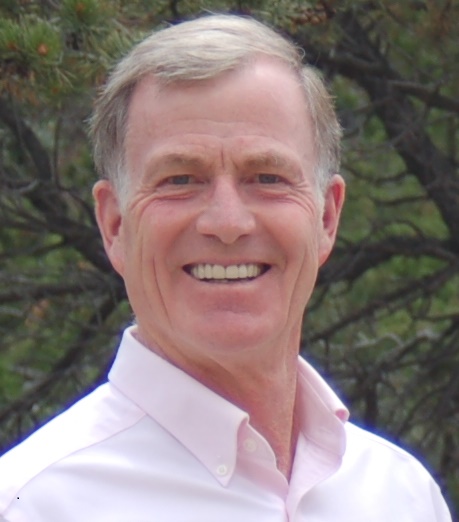
Oct. 26, 2022 |
Charlie Bergman discussed China’s global role, its bureaucracy, and its perspectives on the United States. Bergman currently works on special projects at St. John’s College, following a
five-year directorship of its Office of Personal and Professional Development. Bergman’s extensive experience with Chinese bureaucracy and culture began during the 1980s when—as an IBM professional—he served on a start-up team tasked with founding a China subsidiary in Beijing. Bergman also directed Meridian Resources Associates’ (now Aperian Global)
Asia-Pacific region to assist clients beginning or expanding operations in China. -
Biosafety and Biosecurity Initiatives in the MENA Region
Sep. 1, 2022 |
Dr. Nisreen AL-Hmoud, Director of the Biosafety and Biosecurity Centre at the Royal Scientific Society of Jordan, discussed the impact of initiatives to build biosafety and biosecurity capacity in the Middle East and North Africa (MENA) region. Dr. AL-Hmoud detailed the impacts, over the last decade, on scientists at local and regional levels and highlighted training gaps that require further development.
-
A Discussion on US-China Collaboration and Competition in Science and Technology Policy
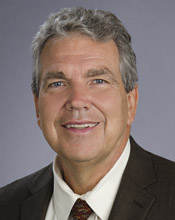
February 17, 2022 |
Dr. Peter Cowhey chairs the Working Group on U.S.-China Science and Technology Relations, organized by the UC San Diego 21st Century China Center, and served as a lead author for the “Meeting the China Challenge: A New American Strategy for Technology Competition” report, published in November 2020. He is Dean and Qualcomm Chair Emeritus of the School of Global Policy and Strategy at UC San Diego where he served as dean from 2002 to 2021.
Previously, he served as the chief of the International Bureau of the Federal Communications Commission (FCC) and negotiated US international agreements for telecommunications and satellite services. Dr. Cowhey is an expert on the future of communications and information technology markets and policy, specializing in U.S. trade and foreign policy.
-
A discussion of China’s perspective on arms control verification (12/7)
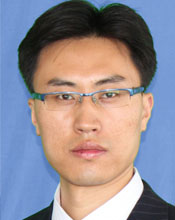
Dec. 7, 2021 |
CMC Visiting Research Scholar Tong Zhao discusses China’s perspective on arms control verification as part of a CMC Speaker Series event.
-
Cybersecurity Culture at Nuclear Facilities
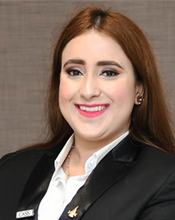
Nov. 16, 2021 |
CMC Visiting Research Scholar Maheen Shafeeq presents her research on Cybersecurity Culture at Nuclear Facilities and discusses cybersecurity risk at nuclear facilities, the relationship between international, state, facility, and individual cybersecurity culture, and the relationship between humans, physical security, and cyber networks.
-
An Update on India’s Nuclear Security and Governance
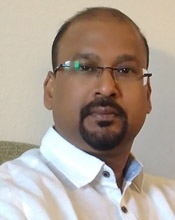
Oct. 20, 2021 |
Dr. Sitakanta Mishra, former CMC Visiting Research Scholar and Associate Professor of International Relations in the School of Liberal Studies of Pandit Deendayal Energy University, and Happymon Jacob, Associate Professor at the Jawaharlal Nehru University, both noted regional scholars and authors, will discuss India’s current nuclear security posture.
-
Best Practices for Nuclear Security of Spent Nuclear Fuel and Spent Nuclear Fuel Management

Sep. 30, 2021 |
CMC Visiting Research Scholar Fadime Özge Özkan currently serves as a research assistant in the Nuclear Research Division of the Energy Institute at Istanbul Technical University, where she is also pursuing her Ph.D. Ms. Özkan did her undergraduate work in nuclear engineering at Hacettepe University and received her master’s in nuclear engineering from the Energy Institute at the Istanbul Technical University.
-
Science at the OPCW – There’s Always Room for More
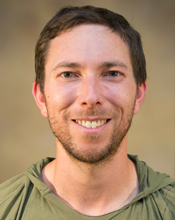
Apr. 28, 2021 |
Peter Hotchkiss, Senior Science Policy Officer at the Organisation for the Prohibition of Chemical Weapons (OPCW), discusses current scientific themes and the role that science plays at the Organisation as part of the CMC Seminar Series’ in-depth look at chemical and biological security issues affecting the U.S. and our global partners in a post-COVID-19 world.
-
Biodefense and the Return to Great Power Competition

Apr. 13, 2021 |
As part of the CMC Seminar Series’ in-depth look at biological and chemical security issues affecting the U.S. and our global partners in a post- COVID-19 world, the CMC hosts Dr. Gerald Epstein, a Distinguished Research Fellow at the National Defense University (NDU) Center for the Study of Weapons of Mass Destruction. Dr. Epstein addresses challenges posed by nuclear, chemical, and biological weapons, particularly including the security implications of advanced life sciences, biotechnologies, and other emerging and converging technologies.
A recording of Dr. Epstein’s seminar can be viewed here.
-
Cooperative Border Security in South Asia
Mar. 31, 2021 |
A densely populous region with porous borders, recurring interstate crises, three growing nuclear weapon programs, and expansive regional connectivity projects, South Asia is critical to global considerations of border security. Panelists will discuss the regional threat landscape: major threat actors; key official stakeholders for interdiction; land/maritime/air pathways for illicit movement; existing cooperation among regional and international stakeholders; prospects for cooperative security; and potential roles for emerging technologies.
Securing borders from illicit movement of conventional munitions, narcotics, human labor, sensitive radiological and nuclear materials, and (dual use) technologies presents a key transnational challenge in the 21st century. State efforts to understand threat actors, pathways for illicit movement, and the efficacy of countermeasures may benefit from information sharing and a cooperative approach to securing borders. A densely populous region with porous borders, recurring interstate crises, three growing nuclear weapon programs, and expansive regional connectivity projects, South Asia is critical to global considerations of border security. Panelists will discuss the regional threat landscape: major threat actors; key official stakeholders for interdiction; land/maritime/air pathways for illicit movement; existing cooperation among regional and international stakeholders; prospects for cooperative security; and potential roles for emerging technologies.
Please register to receive the link to watch the online event. Email CMC@sandia.gov with questions for the speaker before or during the event, or with questions about the event. If you can’t make the live event, a recording will be accessible on this event page for later viewing.
Panelists
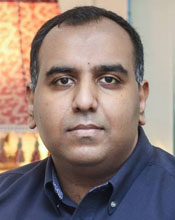
Shafqat Munir (@shafqatmunir) is currently Head of Bangladesh Centre for Terrorism Research (BCTR) and Research Fellow at the Bangladesh Institute of Peace and Security Studies (BIPSS). He is also a Senior Fellow (Non-Resident) at the Institute of National Security Studies, Sri Lanka (INSSSL). In addition to research and analysis on CVE, he also focuses extensively on strategic and security issues in the Indo-Pacific region. At BIPSS, Mr. Munir oversees a number of projects and coordinates the track 1.5 and track 2 dialogues organized by the institute. Awarded numerous fellowships, Mr. Munir was most recently an Indo Pacific Security Studies Fellow at the Daniel K Inouye Asia Pacific Center for Security Studies in Hawaii. Mr. Munir has published numerous articles, chapters in edited volumes, and op-eds on strategic and security issues. His latest publication is a book chapter on the implications of the Indo-Pacific strategy for Bangladesh, published in November 2020. Mr. Munir has participated in international conferences, such as the Munich Security Conference, Shangri La Dialogue, Raisina Dialogue, and lectures at the National Defence College in Bangladesh on counter terrorism issues.
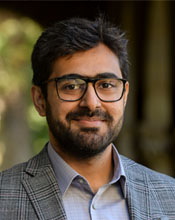
Asfandyar Mir (@asfandyarmir) is a Postdoctoral fellow at the Center for International Security and Cooperation at Stanford University. Mr. Mir holds a Ph.D. in Political Science from the University of Chicago. His research interests span international security and comparative politics, with current work focusing on counterinsurgency, counterterrorism, drone warfare, political violence, al-Qaida, and South Asian security issues. Some of his research has appeared in International Security, International Studies Quarterly, and Security Studies.

Ruhee Neog (@ruheeneog) is a security and foreign policy analyst and Director of the Institute of Peace and Conflict Studies (IPCS) in India. Her research considers the role of norms, language, and institutions in determining choices and behavior in international relations. Nuclear policy, emerging technologies, and cyber security are areas of particular interest. She has a wide-ranging portfolio of writing and speaking engagements at the national and international levels. At IPCS, Ms. Neog is responsible for setting and supervising research and programmatic mandates across all its verticals. She is currently visiting fellow at the CMC at Sandia National Laboratories, and visiting faculty at the Indian Ministry of Home Affairs’ Central Detective Training School, where she lectures on the links between intelligence and foreign policy. She has been awarded research fellowships supported by the Stimson Center and Nuclear Threat Initiative. Past appointments include political and policy work with the Houses of Lords and Commons, and Bell Pottinger, a public affairs firm, in the UK. Ruhee has a postgraduate degree in History of International Relations from the London School of Economics and an undergraduate degree in Literature from St. Stephen’s College, Delhi University.
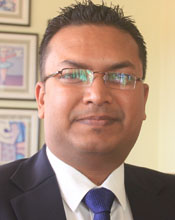
Dr. Pramod Jaiswal (@contactniice) is a Research Director at Nepal Institute for International Cooperation and Engagement and General Secretary of Center for Diplomacy and Development and is a current Visiting Fellow at the CMC at Sandia National Laboratories. He has been a regular and visiting faculty at different universities of Nepal (Tribhuvan University, Kathmandu University and Pokhara University) and China (China Foreign Affairs University, Beijing; Fudan University, Shanghai and Tongji University, Shanghai). He is a Senior Fellow at the Institute of Peace and Conflict Studies, New Delhi. Previously, Dr. Jaiswal worked with Manohar Parikkar Institute for Defence Studies and Analyses, New Delhi and as Delhi Correspondent with the Rising Nepal. He is the Member of the Editorial Board, Journal of International Affairs, Kathmandu; Member of the Academic Committee at the Pangoal Institution, Beijing; Member of International Advisory Committee, Journal of Liberty and International Affairs, Macedonia; and the Member of the Editorial Board, Gandhara Journal of Research in Social Science, Pakistan and member of Subject Committee of International Relations and Diplomacy, Tribhuvan University. Mr. Jaiswal holds Masters, M. Phil, and PhD from School of International Studies, Jawaharlal Nehru University, New Delhi. He has authored, edited, and co-edited around dozens of books on China and South Asia affairs.
Moderator
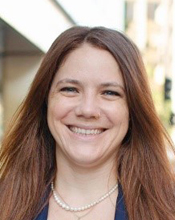
Hannah Haegeland (@HHaegeland) is a Senior Member of the Technical Staff at Sandia National Laboratories with expertise in Indian Ocean Region and South Asian regional security, nuclear issues, interstate crises, and risk reduction. She manages South Asia engagement for Sandia’s CMC, promoting global security in the 21st century through scientific engagement. In this capacity, Ms. Haegeland convenes Track 1.5 and Track 2 engagements, designs and facilitates wargames and tabletop exercises, leads cooperative research studies between the CMC and partner countries, and supports Sandia training workshops, courses, and laboratory visits. Her recent research focuses on cyber and emerging technology-enabled escalation in Southern Asia and prospects for cooperative risk reduction measures. Ms. Haegeland is a co-editor and author of Investigating Crises: South Asia’s Lessons, Evolving Dynamics, and Trajectories (Stimson, 2018) and her analysis has been featured in a variety of policy outlets including Foreign Affairs and the Bulletin of Atomic Scientists. Prior to joining Sandia, Ms. Haegeland held research and teaching positions in Kathmandu, New Delhi, and Washington, D.C.
-
Emerging Technologies & Strategic Stability in Southern Asia
Mar. 24, 2021 |
This Sandia CMC panel discussion covers the evolving crisis onset and escalation risks enabled by emerging technologies and military capabilities to assess their implications for strategic stability in the region. Technologies and capabilities under consideration include globally new developments, such as capabilities enabled by artificial intelligence, as well as those that may not be new globally but are being deployed by new actors in the region.
A recording of this seminar can be viewed here.
Future interstate crises in Southern Asia and the Indo-Pacific will be defined by multipolarity, asymmetric warfighting capabilities in overlapping and evolving domains, blurry “red lines”, and nuclear competition. Developments in power-projection by key nuclear-armed stakeholders in the region may create new escalation risks alongside opportunities for cooperative security and risk reduction. This Sandia CMC panel discussion will cover the evolving crisis onset and escalation risks enabled by emerging technologies and military capabilities to assess their implications for strategic stability in the region. Technologies and capabilities under consideration include globally new developments, such as capabilities enabled by artificial intelligence, as well as those that may not be new globally but are being deployed by new actors in the region.
Participation in this online event is limited, but it will be recorded for later viewing. Please register by 5:00 pm MST on March 23 to receive a link to the online meeting. Email CMC@sandia.gov with questions for the speaker before or during the event, or with questions about the event.
Panelists
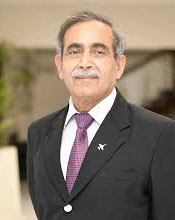
M. Ashfaque Arain, Pakistan Air Force Air Marshal (ret.), (@AshfaqueArain2) is the Director of Strategic Defence and Security at the Centre for Aerospace and Security Studies Islamabad (CASS). He is a graduate of Combat Commanders’ School, PAF Air War College, and National Defence University. He holds a master’s degree in Defense & Strategic Studies from Air War College (AWC) and a master’s degree in War Studies from National Defense University (NDU), Islamabad. In his 41 years as a fighter pilot with Pakistan Air force, the Air Marshal flew various top-of-the-line fighter aircraft with a singular honor of being first PAF pilot to achieve 2000 hours on the F-16 aircraft. During his career, he has served in senior command and staff assignments including command of a fighter squadron, an operational base, Air Adviser Pakistan’s High Commission in New Delhi, Chief Project director Horizon, Assistant Chief of the Air Staff (Operations), Assistant Chief of the Air Staff (Plans), Director General Air Force Strategic Command (AFSC), Director General Projects, and Deputy Chief of the Air Staff Administration). Air Marshall Arain’s research specialties include India-Pakistan relations, strategic defense and security, nuclear deterrence, air power employment, and unconventional warfare. In recognition of his meritorious services, the Air Marshal has been decorated with the distinguished awards of, Tamgha-i-Imtiaz (Military), Sitara-i-Imtiaz (Military), Hilal-i-Imtiaz (Military) and Sitara-i-Basalat.
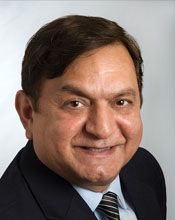
Feroz Hassan Khan, Pakistan Army Brigadier General (ret.), currently serves as a research professor at the U.S. Naval Postgraduate School. Brigadier Khan has experience in combat action and command on active fronts on the Line of Control in Kashmir, the Siachin Glacier, and the Pakistan-Afghanistan border. He has worked on numerous assignments in the United States, Europe, and Asia. He served as Director Arms Control and Disarmament Affairs, in the Pakistan’s Strategic Plans Division, Joint Services Headquarters. Brigadier Khan had been a key contributor in formulating Pakistan’s security policies on nuclear and conventional arms control and strategic stability in South Asia. He produced recommendations for the Ministry of Foreign Affairs and represented Pakistan in several multilateral and bilateral arms control negotiations on peace and security in South Asia and international treaties related to weapons of mass destruction. Brigadier Khan holds an M.A. International Relations from the School of Advanced International Studies (SAIS), John Hopkins University, Washington DC. He has held a series of visiting fellowships at Stanford University, the Woodrow Wilson International Center for Scholars; the Brookings Institution; Center for Non-Proliferation Studies at the Monterey Institute of International Studies and at the Cooperative Monitoring Center, Sandia National Laboratory. He also taught courses as a visiting faculty at the Department of the Defense and Strategic Studies, Quaid-e-Azam University, Islamabad. He has widely participated in international and national conferences on strategic issues, international security, terrorism, nuclear arms control and non-proliferation issues. Brigadier Khan has published widely, most famously his book Eating Grass: The Making of the Pakistani Bomb.
Tong Zhao (@zhaot2005) is a senior fellow in the Nuclear Policy Program at the Carnegie Endowment for International Peace, based in Beijing at the Carnegie–Tsinghua Center for Global Policy. His research focuses on strategic security issues, such as nuclear weapons policy, deterrence, arms control, nonproliferation, missile defense, hypersonic weapons, and China’s security and foreign policy. Mr. Zhao serves on the board of directors of the Asia-Pacific Leadership Network for Nuclear Non-Proliferation and Disarmament and on the advisory board of the Missile Dialogue Initiative. Mr. Zhao is also an associate editor of Science & Global Security and is a member of the International Panel on Fissile Materials. Previously he was a Stanton Nuclear Security Fellow at Harvard University, a nonresident WSD-Handa Fellow at Pacific Forum, and worked for the Office of Foreign Affairs of the People’s Government of Beijing Municipality. He holds a PhD in science, technology, and international affairs from Georgia Institute of Technology, as well as an MA in international relations and a BS in physics from Tsinghua University. Mr. Zhao is the author of “Tides of Change: China’s Nuclear Ballistic Missile Submarines and Strategic Stability” and “Narrowing the U.S.-China Gap on Missile Defense: How to Help Forestall a Nuclear Arms Race.”

Sylvia Mishra (@MishraSylvia) is a doctoral researcher at King’s College London, where her research focuses on nuclear strategy and nonproliferation, Southern Asian security, and emerging technologies. She co-chairs both the Chemical, Biological, Radiological, and Nuclear Working Group for Women of Color Advancing Peace & Security (WCAPS) and the Indian Women in International Relations Forum at Global Policy Insights. A CSIS Mid-Career Cadre scholar, Ms. Mishra was previously an India-US Fellow at New America, an Accelerator Initiative Fellow at the Stanley Center for Peace and Security, a Scoville Fellow at the Nuclear Threat Initiative, a Visiting Fellow at the Center for Nonproliferation Studies, a Carnegie New Leader. She also worked in New Delhi at the Observer Research Foundation on India-U.S. defense and security ties. Ms. Mishra has been invited to present papers, deliver talks, and participate in crisis simulation and Track 2 dialogues at various national and international forums. Her publications include book chapters, journal articles, and opinion pieces, and she was featured in Women in Foreign Policy. She holds a BA in political science from Hindu College, University of Delhi, an MSc in international relations from London School of Economics, and an MA in nonproliferation and terrorism studies from the Middlebury Institute of International Studies.
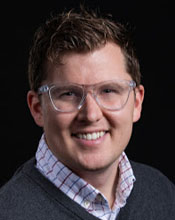
Andrew Reddie (@areddie89) is a Senior Member of the Technical Staff at Sandia National Laboratories and a Postdoctoral Fellow at the University of California at Berkeley, where he works on projects related to wargaming, nuclear issues, and cybersecurity. Dr. Reddie is currently a Bridging the Gap New Era Fellow, Hans J. Morgenthau Fellow, and a Krulak Center Non-Resident Fellow at Marine Corps University. His work has appeared in publications such as Science, the Bulletin of Atomic Scientists, and the Journal of Cyber Policy.
Moderator
Hannah Haegeland (@HHaegeland) is a Senior Member of the Technical Staff at Sandia National Laboratories with expertise in Indian Ocean Region and South Asian regional security, nuclear issues, interstate crises, and risk reduction. She manages South Asia engagement for Sandia’s CMC, promoting global security in the 21st century through scientific engagement. In this capacity, Ms. Haegeland convenes Track 1.5 and Track 2 engagements, designs and facilitates wargames and tabletop exercises, leads cooperative research studies between the CMC and partner countries, and supports Sandia training workshops, courses, and laboratory visits. Her recent research focuses on cyber and emerging technology-enabled escalation in Southern Asia and prospects for cooperative risk reduction measures. Ms. Haegeland is a co-editor and author of Investigating Crises: South Asia’s Lessons, Evolving Dynamics, and Trajectories (Stimson, 2018) and her analysis has been featured in a variety of policy outlets including Foreign Affairs and the Bulletin of Atomic Scientists. Prior to joining Sandia, Ms. Haegeland held research and teaching positions in Kathmandu, New Delhi, and Washington, D.C.
-
India in the Evolving Space Security Domain (with panel discussion)
Mar. 11, 2021 |
Dr. Rajeswari Rajagopalan, a leading Indian expert on space security, will discuss India’s evolving approach to space and its strategy to address the domain’s changing security dynamics. Ankit Panda from the Carnegie Endowment for International Peace, Aaron Bateman from Johns Hopkins University, and Dr. Nancy Hayden of Sandia National Laboratories will serve on a panel moderated by the CMC’s South Asia program lead, Hannah Haegeland. This is the first of a three-seminar series focused on strategic stability and cooperative security in South Asia.
A recording of this seminar can be viewed here.
Once an exclusive domain, today an increasingly diverse group of stakeholders utilizes outer space. Current and aspirant space-faring states pursue capabilities that enhance security, economic growth, and quality of life in an environment characterized by heightened competition. The CMC is hosting Dr. Raji Rajagopalan, a leading Indian expert on space security, to discuss India’s evolving approach to outer space and its strategy to address the domain’s changing security dynamics. Ankit Panda from the Carnegie Endowment for International Peace, Aaron Bateman from Johns Hopkins University, and Dr. Nancy Hayden of Sandia National Laboratories will serve on a panel moderated by the CMC’s South Asia program lead, Hannah Haegeland. The panel will respond to Dr. Rajagopalan’s remarks and discuss Indian and U.S. perspectives on the future of space security, space competition amongst Indo-Pacific countries, implications for interstate crisis signaling and escalation, and the prospects for advancing international space norms that promote strategic stability and cooperative security.
Participation in this online event is limited, but it will be recorded for later viewing. Please register by 5:00 pm MST on March 10 to receive a link to the online meeting. Email CMC@sandia.gov with questions for the speaker before or during the event, or with questions about the event.
Speaker
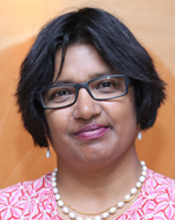
Dr. Rajeswari Pillai Rajagopalan (@raji143) is a Distinguished Fellow & Head of the Nuclear and Space Policy Initiative, at Observer Research Foundation. She is also the senior Asia defence writer for The Diplomat. Dr. Rajagopalan joined ORF after a five-year stint at the National Security Council Secretariat (2003-2007), where she was an Assistant Director. Prior to joining the NSCS, she was Research Officer at the Institute of Defence Studies and Analyses, New Delhi. She was also a Visiting Professor at the Graduate Institute of International Politics, National Chung Hsing University, Taichung, Taiwan in 2012. Her analysis has appeared in a variety of academic and policy outlets and she is the author of four books: Nuclear Security in India (2015), Clashing Titans: Military Strategy and Insecurity among Asian Great Powers (2012), The Dragon’s Fire: Chinese Military Strategy and Its Implications for Asia (2009), and Uncertain Eagle: US Military Strategy in Asia (2009). She has also co-authored and edited five other books, including Space Policy 2.0: Commerce, Policy, Security and Governance Perspectives (2017); Nuclear Security in India (Second Edition) (2016); Iran Nuclear Deal: Implications of the Framework Agreement (2015). Dr. Rajagopalan has lectured at Indian military and policy institutions such as the Defence Service and Staff College (Wellington), National Defence College (New Delhi), Army War College (Mhow), and the Foreign Service Institute (New Delhi). She has also been invited to speak at international fora including the UN COPUOS (Vienna), Conference on Disarmament (Geneva), UNIDIR (Geneva), ASEAN Regional Forum (ARF) and the European Union.
Panelists
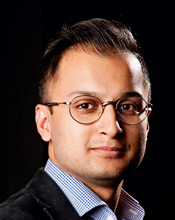
Ankit Panda (@nktpnd) is the Stanton Senior Fellow in the Nuclear Policy Program at the Carnegie Endowment for International Peace. An expert on the Asia-Pacific region, his research interests range from nuclear strategy, arms control, missile defense, nonproliferation, emerging technologies, and U.S. extended deterrence. A widely published writer in global periodicals and scholarly journals, Mr. Panda is the author of Kim Jong Un and the Bomb: Survival and Deterrence in North Korea (Hurst Publishers/Oxford University Press, 2020). Mr. Panda was previously an adjunct senior fellow in the Defense Posture Project at the Federation of American Scientists (FAS) and a member of the 2019 FAS International Study Group on North Korea Policy. He has consulted for the United Nations in New York and Geneva on nonproliferation and disarmament matters, and has testified on security topics related to South Korea and Japan before the congressionally chartered U.S.-China Economic and Security Review Commission. Mr. Panda was a Korea Society Kim Koo Fellow, a German Marshall Fund Young Strategist, an International Institute for Strategic Studies (IISS) Shangri-La Dialogue Young Leader, and a Carnegie Council on Ethics in International Affairs New Leader. He has worked at the Council on Foreign Relations and the Liechtenstein Institute on Self-Determination at the Princeton School of Public and International Affairs.
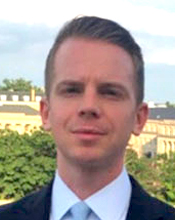
Aaron Bateman (@aaronbateman22) is a PhD student in the history of science and technology at Johns Hopkins University. His research uses recently declassified documents to investigate the U.S. pursuit of anti-satellite weapons and space-based missile defense and its consequences for both arms control and transatlantic security. Prior to graduate school, Mr. Bateman served as a U.S. Air Force intelligence officer with assignments at the National Security Agency and the Pentagon. He led an inter-agency effort to improve the ability of the Department of Defense and the Intelligence Community to evaluate and respond to space threats. In addition to his academic work, Mr. Bateman provides subject matter expertise on national security space issues for the U.S. Government. His policy commentary on space security has appeared in War on the Rocks, The Hill, and Bulletin of the Atomic Scientists.

Dr. Nancy K. Hayden is a Distinguished Member of the Technical Staff at Sandia National Laboratories, where she leads strategic foresight and decision analysis on how policy and technology developments in disruptive fields – such as Artificial Intelligence and Space Systems – will impact human security and global stability. Dr. Hayden is an expert on the science of complex systems and peace engineering in international security and conflict settings. Over the course of her 35-year career at Sandia, she has lead U.S. and international teams for nuclear safety and waste management, nuclear nonproliferation, and countering Weapons of Mass Destruction. Driven by a commitment to advancing the power of women to change the world, Dr. Hayden’s passion is applying systems thinking and fielding innovations to transform conflict-ridden societies from local to global levels.
Moderator
Hannah Haegeland (@HHaegeland) is a Senior Member of the Technical Staff at Sandia National Laboratories with expertise in Indian Ocean Region and South Asian regional security, nuclear issues, interstate crises, and risk reduction. She manages South Asia engagement for Sandia’s CMC, promoting global security in the 21st century through scientific engagement. In this capacity, Ms. Haegeland convenes Track 1.5 and Track 2 engagements, designs and facilitates wargames and tabletop exercises, leads cooperative research studies between the CMC and partner countries, and supports Sandia training workshops, courses, and laboratory visits. Her recent research focuses on cyber and emerging technology-enabled escalation in Southern Asia and prospects for cooperative risk reduction measures. Ms. Haegeland is a co-editor and author of Investigating Crises: South Asia’s Lessons, Evolving Dynamics, and Trajectories (Stimson, 2018) and her analysis has been featured in a variety of policy outlets including Foreign Affairs and the Bulletin of Atomic Scientists. Prior to joining Sandia, Ms. Haegeland held research and teaching positions in Kathmandu, New Delhi, and Washington, D.C.
-
IAEA Nuclear Security Programme
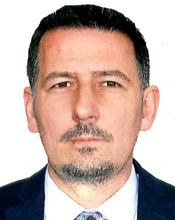
Mar. 4, 2021 |
Kristóf Horváth, head of the International Atomic Energy Agency (IAEA) Nuclear Material Security Unit, previously served as the IAEA Senior Nuclear Security Officer responsible for International Physical Protection Advisory Service (IPPAS) missions, regulation development, threat assessment, design basis threat, and nuclear security culture related issues, and is the former Deputy Chairman of the Hungarian Atomic Energy Authority. Mr. Horváth holds an MSc in Nuclear Engineering and a PhD in Military Engineering.
A recording of this seminar can be viewed here.
-
A Day in the Life of an International Atomic Energy Agency (IAEA) Safeguards Analyst

Feb. 25, 2021 |
Zoe Gastelum is Acting Manager of the International Safeguards & Engagements Department at Sandia National Laboratories, where she leads research and development efforts on advanced data analytics and human-algorithm performance in support of international safeguards verification. Prior to joining Sandia in 2015, Zoe worked as a safeguards research scientist at Pacific Northwest National Laboratory, and as an open source information analyst for the IAEA Department of Safeguards.
A recording of this seminar can be viewed here.
-
Recruiter, International Atomic Energy Agency (IAEA)
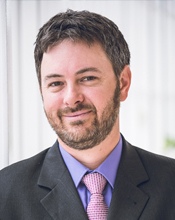
Feb. 17, 2021 |
What is it like to work at the world’s foremost intergovernmental forum for scientific and technical co-operation in the nuclear field? The Cooperative Monitoring Center (CMC) Seminar Series welcomes Steve Amundsen, recruiter for the International Atomic Energy Agency (IAEA), who will discuss careers and job opportunities at the IAEA.
A recording of Mr. Amundsen’s seminar can be viewed here.
-
Leader of Strategic Planning for the International Atomic Energy Agency’s Department of Safeguards
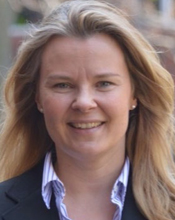
Feb. 9, 2021 |
The CMC welcomes Jenni Rissanen, leader of strategic planning for the IAEA Department of Safeguards, the group responsible for nuclear verification activities for more than 180 Member States. Since 2007, Ms. Rissanen has been closely involved in conceptual work, including the development and implementation of the State-level concept for safeguards; advancing strategic foresight and planning; enhancing communication and engagement with Member States, NPT policymakers, and other stakeholders; and establishing partnerships.
A recording of Ms. Rissanen’s seminar can be viewed here.
-
Disarmament of Nuclear States: Applicability to Future Denuclearization of DPRK
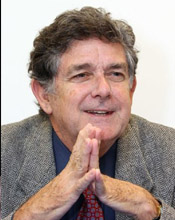
Feb. 2, 2021 |
Mr. Robert Kelley discusses his experience as an international disarmament inspector in South Africa, Iraq, and Libya. With more than 35 years of experience in the U.S. Department of Energy nuclear weapons complex, Robert Kelley started his career in research and engineering before turning to information analysis in the 1980s. He managed the centrifuge and plutonium metallurgy programs at Lawrence Livermore National Laboratory and later was Director of the Department of Energy Remote Sensing Laboratory, the premier U.S. nuclear emergency response organization. Robert directed nuclear inspections in Iraq in 1992 and 2001 for the IAEA, and has worked in more than 20 countries.
-
Discussion of Current and Future Arctic Security Mission Requirements
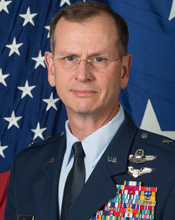
Jan. 21, 2021 |
Major General Randy “Church” Kee, USAF (ret.), currently serves as Executive Director of the Arctic Domain Awareness Center (ADAC) at the University of Alaska and as US Arctic Research Commissioner. In his current position, General Kee leads a distributed team of Arctic-focused science and technology, education and student field programs, and convening activities of knowledgeable Arctic researchers, policy makers, Alaska Native Leaders and maritime operators.
-
Pacific Forum: Finding a Better Way
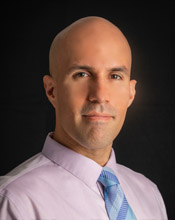
Dec. 3, 2020 |
Dr. David Santoro is Vice President and Director for Nuclear Policy at the Honolulu-based Pacific Forum, a foreign policy think tank. He specializes in strategic and deterrence issues as well as nonproliferation and nuclear security, focusing mostly on Asia. He is involved in many of Pacific Forum’s track-2 and track-1.5 forums, and his current research interests focus on great-power competition and the role of China in an era of nuclear multipolarity. Dr. Santoro’s forthcoming edited volume “U.S.-China Nuclear Relations – The Impact of Strategic Triangles” will be published in the spring of 2021.
A recording of Dr. Santoro’s seminar can be viewed here.
-
Interdependency of the Water-Oil-Nuclear Industries in the Persian/Arabian Gulf: Understanding Risk and Improving Prevention and Preparation of Disasters
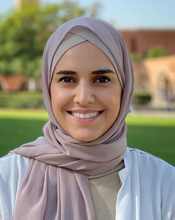
Nov. 4, 2020 |
Dr. Ghena Alhanaee highlights her work to develop a data-driven framework to help the Persian/Arabian Gulf region better mitigate the risks of an oil spill or nuclear accident. Dr. Alhanaee received her PhD from the Sonny Astani Department of Civil and Environmental Engineering at the University of Southern California in Summer 2020. She has presented her research, which focuses on environmental sustainability, energy resources, and water and food security in the Persian/Arabian Gulf, at international venues in North America, Europe, and the Middle East.
A recording of Dr. Alhanaee’s seminar can be viewed here.
-
The Middle East Scientific Institute for Security’s Activities and Approach to Regional Capacity Building in the Mideast
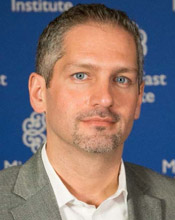
Sep. 30, 2020 |
Managing Director of the Middle East Scientific Institute for Security (MESIS), Al-Sharif Nasser Bin Nasser will speak on building sustainable capacity in the Middle East. This discussion will be a general overview of MESIS activities and their approach to capacity building in the region. Mr. Bin Nasser was the first speaker in the CMC’s Seminar Series, celebrating the past and future of collaborative scientific engagements.
-
Defense Strategy for a Turbulent Era
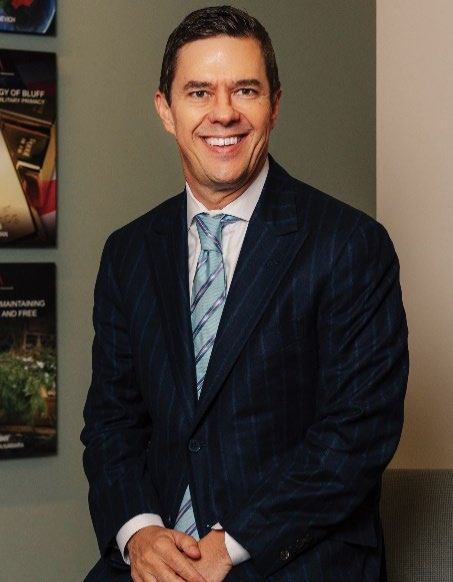
February 3, 2026 | The CMC, in partnership with Sandia National Laboratories’ National Security Speaker Series and its Security Studies Institute (S3i), welcomed Dr. Thomas Mahnken for a discussion on the challenges that the United States faces in the current environment, as well as how the United States and its allies can meet those challenges. He also discussed the role of nuclear weapons in U.S. and allied strategy as part of an integrated posture to meet the challenges of today and tomorrow.
-
China’s Approach to Strategic Deterrence
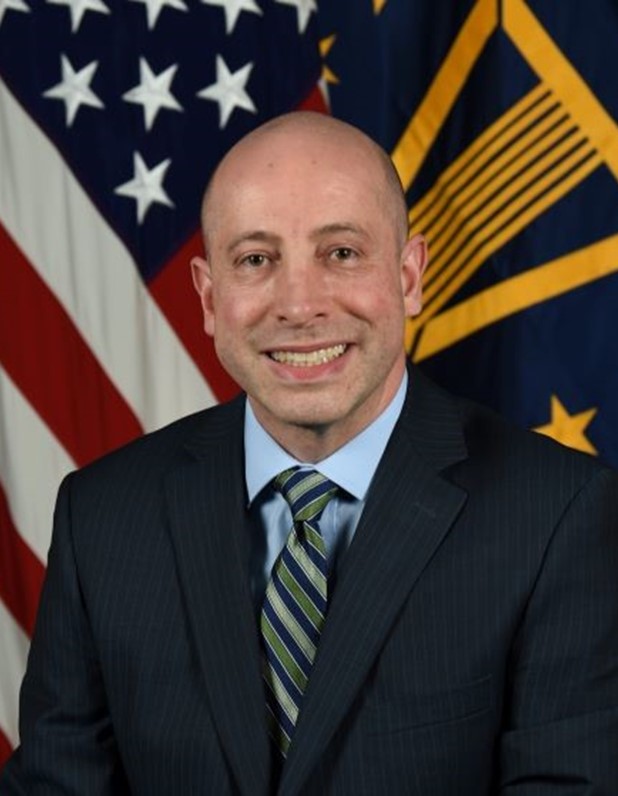
March 9, 2023 |
Dr. Michael S. Chase, U.S. Deputy Assistant Secretary of Defense for China, gave a virtual talk on China’s approach to strategic deterrence. Dr. Chase is the principal advisor to the Secretary of Defense on China issues and is the single hub for policy and strategy development, oversight, authorities review, and national-level interagency integration for Department of Defense efforts on China.
-
U.S.-China Strategic Competition: Beyond the Rhetoric
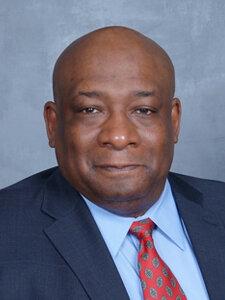
Aug. 29, 2022 |
Lieutenant General (LTG) Charles W. Hooper (Ret.), a Senior Counselor with The Cohen Group and former Director of the U.S. Defense Security Cooperation Agency, discussed the strategic competition between the United States and China for geopolitical primacy in the Indo-Pacific. From his perspective as one of America’s most distinguished soldier statesmen during his
41-year military career, LTG Hooper argued that rational, factual, and dispassionate analysis—not heated political rhetoric—should shape U.S. decision making with regard to China’s rising power and ambition. -
Science in Service of Diplomacy: Fostering Connections

Jan. 25, 2021 |
Laura S. H. Holgate, former U.S. Ambassador to the Vienna Office of the United Nations and the International Atomic Energy Agency and current Vice President for Materials Risk Management at the Nuclear Threat Initiative, discussed the importance of scientific and technical knowledge to the understanding, creation, and implementation of high-quality international security policy.
A recording of Laura Holgate’s talk can be viewed here.
-
NNSA Deputy Administrator for Defense Nuclear Nonproliferation
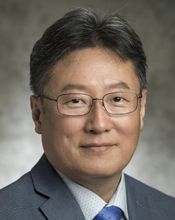
Nov. 19, 2020 |
Dr. Brent K. Park discussed the importance of technical expertise and scientific collaboration to the future of nuclear nonproliferation.
A recording of Dr. Park’s talk can be viewed here.
-
From the Russell-Einstein Manifesto to Beyond New START
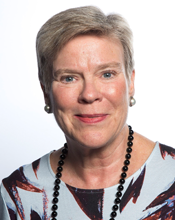
Jul. 28, 2020 |
Rose Gottemoeller discussed the value of international scientific cooperation in the national security field. Her talk considers history from the 1950s to the current day, from the early scientists’ groups such as Pugwash, to the urgent work of fissile material control in Russia in the 1990s, to the role of different expertise in the New START negotiations. She concludes with a glance at the future—looking at the continuing role of interdisciplinary cooperation in tackling problems such as control and monitoring of warheads.
A recording of Rose Gottemoeller’s talk can be viewed here.
-
Arms Control and Disarmament: Adjusting to a New Era
May 20, 2020 |
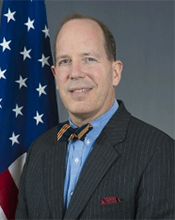
Dr. Christopher Ford previously served as Special Assistant to the President and Senior Director for Weapons of Mass Destruction and Counterproliferation at the National Security Council. In 2006, Dr. Ford served as the U.S. Special Representative for Nuclear Nonproliferation, where he was responsible for U.S. diplomacy with respect to the Treaty on the Non-Proliferation of Nuclear Weapons. A Rhodes scholar and Yale Law School-educated attorney, Dr. Ford is the author of three books on Sino-American relations, Chinese world view, and U.S. Navy operational intelligence.
A recording of Dr. Ford’s talk can be viewed here.
-
Geopolitical Effects of the Hungarian Election
June 25, 2026 | The CMC welcomed Dr. Peter Krekó, a behavioral scientist and disinformation expert whose research examines the psychological drivers of belief in disinformation, its political and institutional consequences, the dynamics of state-sponsored disinformation, and effective counterstrategies.
Dr. Peter Krekó is a Research Affiliate at the CEU Democracy Institute and a Senior Fellow at the CEU Institute for Advanced Study. He has also been an Engaging Central Europe Fellow at the German Marshall Fund of the United States. Krekó is the owner and director of the Political Capital Institute and leads Hungary’s disinformation hub (HDMO-Lakmusz), supported by the European Commission under the European Digital Media Observatory (EDMO) hosted at the European University Institute.
-
Nuclear Insights from the Ukraine War
June 17, 2026 | The CMC welcomed Dr. George Perkovich, a Senior Fellow and Japan Chair at the Carnegie Endowment for International Peace, for a discussion on nuclear insights from the Ukraine War. Dr. Perkovich is the Japan Chair for a World Without Nuclear Weapons and a senior fellow in the Carnegie Endowment for International Peace’s Nuclear Policy Program. He works primarily on nuclear deterrence, nonproliferation, and disarmament issues, and is leading a study on nuclear signaling in the 21st century. He is author of forthcoming publication, Nuclear Weapons in the Ukraine War and co-author of the forthcoming Rethinking A Political Approach to Nuclear Disarmament.
-
Reactors under Siege: The Human Dimension of the Seizure and Occupation of the ZNPP
May 13, 2026 | The CMC welcomed Mariana Budjeryn, a senior researcher with the Center for Nuclear Security Policy at MIT’s Security Studies Program, to present on the story of the Zaporizhzhia nuclear power plant site and thoughts on how to mitigate risks to staff in such circumstances. She is currently funded by the Ukraine Team for Coordination to research the attacks into the Russian takeover of the Zaporizhzhia nuclear power plant site.
She is the author of Inheriting the Bomb: The Collapse of the USSR and the Nuclear Disarmament of Ukraine (Johns Hopkins University Press, 2023) and a winner of the 2024 William E. Colby Military Writers’ Award, the first female in the award’s 25-year history.
-
What Would Regime Collapse in Iran Mean for Pakistan?
April 29, 2026 | The CMC welcomed Muhammad Faisal, a foreign policy analyst and PhD candidate at the University of Technology Sydney, to present his research on the implications of a collapse of the Iranian regime in Pakistan. A full overview on his research can be found here.
Muhammad Faisal researches Pakistan’s foreign policy decision-making amid intensifying great-power competition across South Asia and the Indian Ocean region. He is an alumnus of Sandia National Labs, having been a Visiting Scholar at the Cooperative Monitoring Center in 2015 and a Fellow in 2022, when he led a research project examining Pakistan’s western border security posture and capacities.
Previously, he was a Research Fellow at the Institute of Strategic Studies Islamabad for nearly seven years, and a Visiting Fellow at the Stimson Center in Washington, D.C.
-
Extended Deterrence Amidst US Retrenchment in Asia
April 15, 2026 | The CMC welcomed Zack Cooper for a presentation on how shifting US strategy in Asia might alter our approach to extended deterrence.
Zack Cooper is a senior fellow at the American Enterprise Institute, where he studies US strategy in Asia. He also teaches at Princeton University and serves as chairman of the board of the Open Technology Fund. He previously served on staff at the White House and Pentagon.
Dr. Cooper has also worked at the Center for Strategic and International Studies, the German Marshall Fund of the United States, the Center for Strategic and Budgetary Assessments, and Armitage International. He is the author of Tides of Fortune: The Rise and Decline of Great Militaries (Yale University Press, 2025).
-
Nuclear Facilities as Targets of Military Attack: Assessing Drivers and Implications for Nuclear Safety
April 7, 2026 | The CMC welcomed Darya Dolzikova for a session on counterproliferation, the threat of military strikes on nuclear facilities, and why states may use such military force against nuclear installations.
Darya Dolzikova is a Senior Research Fellow with RUSI’s Proliferation and Nuclear Policy programme. Her works covers issues of nuclear proliferation, nuclear deterrence, nuclear safety and security, and strategic aspects of civil nuclear supply chains. Darya’s current research focuses on the Iranian nuclear programme, the role of nuclear deterrence in Euro-Atlantic security dynamics and military and sub-threshold threats to nuclear facilities.
-
Legality of Military Space Activities: Gaps, Challenges and Avenues for Cooperation
March 31, 2026 | The CMC welcomed Nivedita Raju for a presentation on the legality of space weapons programs, associated activities, and the dialogues taking placing around them.
The discussion provided an overview of the legality of military space activities, focusing on ambiguous terms and gaps in space governance under the Outer Space Treaty and the UN Charter. Key challenges in space security governance and the status of talks at UN forums were presented. Also highlighted were the positions of key actors, particularly China and Russia, in space security forums as well as potential avenues for cooperation in the space domain.
Nivedita Raju is a Senior Researcher in the SIPRI Weapons of Mass Destruction programme. Her recent research explores opportunities for space-focused dialogue, trends in space security, the space-nuclear nexus, and transparency and confidence building measures.
-
A Game of Thrones: An Overview of Iran’s Political Leadership
March 25, 2026 | The CMC’s Middle East and North Africa regional lead, Farnaz Alimehri, presented on Iran’s political leadership. See Farnaz’s biography here.
-
Russia’s Hacker Recruitment Machine: Criminals, Students, and the State’s Cyber Talent and Partnership Pipelines
March 19, 2026 | The CMC welcomed Justin Sherman to speak about the how the Russian state uses of a complex web of actors and events to identify hacker talent and pull it into the state’s cyber apparatus, whether for outright employment, ad hoc support, or something in between.
Justin Sherman is the founder and CEO of Global Cyber Strategies, a DC research and advisory firm, an adjunct professor at Georgetown University, and a nonresident senior fellow at the Atlantic Council. His book, Navigating Technology and National Security, examines the history and future of US national security regulations of technology and data.
-
Examining Venezuela’s Fossil Energy
March 12, 2026 | The CMC welcomed Mr. Tony Gale, Coordinator of the Petroleum Technology Department at San Juan College’s School of Energy, for a presentation on Venezuela’s oil reserves, the economics of production, and technical limitations that could be overcome by research and technology development.
Mr. Gale previously served as the Vice President of Operations for EXXEL Energy and the Senior Vice President of Operations for Gunnison Energy. He has been a consulting engineer for more than 15 years. He holds a Bachelor of Science in Petroleum Engineering from Marietta College and is a registered Professional Engineer in the state of Colorado.
-
Cold War Solutions for the Future: Reflections from an International Security Practitioner
February 27, 2026 | The CMC welcomed Senior Fellow, Jennie Gromoll, to speak about lessons learned over a 40-year career in arms control and nonproliferation that apply to the changing circumstances of today, including the critical role of the CMC.
Previously, Jennie served in the U.S. Department of State’s International Security and Nonproliferation Bureau-equivalent and in the U.S. Arms Control and Disarmament Agency (ACDA) for thirty-eight years.
Jennie is currently a Senior Fellow the Center for nonproliferation Studies (CNS), and Odesa Center for Nonproliferation (OdCNP), and Trustee for the British-American Security Information Council (BASIC).
-
Defense Strategy for a Turbulent Era
February 3, 2026 | The CMC, in partnership with Sandia National Laboratories’ National Security Speaker Series and its Security Studies Institute (S3i), welcomed Dr. Thomas Mahnken for a discussion on the challenges that the United States faces in the current environment, as well as how the United States and its allies can meet those challenges. He also discussed the role of nuclear weapons in U.S. and allied strategy as part of an integrated posture to meet the challenges of today and tomorrow.
-
Assessing NATO: Deterrence by Denial, Deterrence by Punishment, and Escalation Concepts
January 20, 2026 | The CMC welcomed Sten Rynning, Director of the Danish Institute of Advanced Study and Professor of War Studies at the University of Southern Denmark, for a presentation on his assessment of the NATO alliance. The presentation discussed deterrence by denial, deterrence by punishment, and the alliance’s framing of deterrence and escalation given the complexities and sensitivities of such a large group of allied nations.
Sten Rynning founded the University of Southern Denmark’s Center for War Studies in 2011 and headed it until 2019. He served on the official Norwegian Afghanistan Commission (2015−2016) and has in addition advised the commission of inquiry into the Denmark’s war participation in Kosovo, Afghanistan, and Iraq (2017−2019) as well as ambassador Peter Taksøe-Jensen’s official review of Danish Foreign Policy (2015−2016). In 2021 he was made Knight of the Order of Dannebrog.
-
Overview of the Gulf Cooperation Council’s Emergency Management Center
December 2, 2025 | The CMC welcomed Dr. Amnah Ibraheem, Director of Emergency Operations and Senior Advisor to the GCC Emergency Management Center for a presentation on the Gulf Cooperation Council’s Emergency Management Center.
Dr. Ibraheem was previously a researcher at the International Institute for Strategic Studies. She specializes in the nuclear and energy policies of the Gulf states. Her expertise includes Gulf energy policy, nuclear security, and Gulf regional security.
She previously worked at the Global Security Directorate of Oak Ridge National Laboratory in Tennessee and has attended trainings at multiple U.S. national labs including Brookhaven National Laboratory in New York and Sandia National Laboratories in New Mexico. Amnah is a member of Middle East Next Generation of Arms Control Specialists (MENACS), a program of the James Martin Center for Non-proliferation Studies (CNS) at the Middlebury Institute of International Studies at Monterey.
-
Verifying the Outer Space Treaty’s Nuclear Ban: Technical and Political Feasibility of In-Space Satellite Inspection
October 12, 2025 | The CMC welcomed Isobel Porteous, recent graduate of Stanford University, where she earned a bachelor of science in aeronautics and astronautics with honors in international security from the Center for International Security and Cooperation (CISAC). At Stanford, she published a thesis titled, “Verifying the Outer Space Treaty’s Nuclear Ban: Technical and Political Feasibility of In-Space Satellite Inspection,” which was awarded the William J. Perry prize. She now serves as head of business development at EarthTraq, a space startup firm developing satellite technology for GPS-independent positioning. Isobel led the Stanford Student Space Initiative’s Satellites team, successfully launching the Sapling spacecraft, Stanford’s first entirely student-built satellite. She also co-authored the space chapter of the Stanford Emerging Technology Review at the Hoover Institution, analyzing the use of new space technologies for U.S. national security.
-
The Case for Redeploying Non-Strategic Nuclear Weapons to South Korea
October 8, 2025 | The CMC welcomed Robert Peters for a presentation of his recent publication, “The Case for Redeploying Non-Strategic Weapons to South Korea.” Peters outlined regional threats, his thoughts on enhancing the credibility of U.S. deterrence, and arguments against deploying non-strategic weapons to Korea. Robert is a Senior Research Fellow for Strategic Deterrence in the Heritage Foundation’s Allison Center for National Security.
-
Remote Intervention Solutions for Nuclear Power Plants
September 11, 2025 | The CMC welcomed Germán Kuglien, Head of Business Development of Combustibles Nucleares Argentinos (CONUAR S.A.) for a seminar presentation on the organization’s technical solutions for remote intervention in nuclear power plants and opportunities for U.S.-Argentina collaboration in the nuclear sector. Mr. Kuglien shared details of the repair of Atucha II Nuclear Power Plant and the technologies developed to assist with the repair. Watch the video here.
-
Understanding Violent Extremism in West Africa
May 29, 2025 | The CMC hosted Dr. Daniel Eizenga, a Research Fellow at the Africa Center for Strategic Studies, for a discussion on countering violent extremism in the Sahel. He provided policy recommendations for West African governments and explored opportunities to enhance nonproliferation efforts in the region, drawing on his research into civil-military relations and the influence of traditional institutions and civil society on Africa’s political development. Watch the video here.
-
Navigating the Persian Puzzle
February 12, 2025 | Dr. Farzan Sabet provides an overview of 50 years of Iranian nuclear history offering a broader historical perspective focusing on the diplomatic and security aspects. His lecture on “Navigating the Persian Puzzle” examines the evolution of Iran’s nuclear programs and analyzes recent changes in the context of the nuclear issue. Additionally, he discusses factors influencing U.S. nuclear negotiations and sanctions relief, as well as potential deals and the future of US-Iran détente. Watch the video here.
-
Building Bridges to Foster U.S.-Africa Relations and Counter Chinese Influence
February 19, 2025 | Alternative diplomacy in Africa was the topic of Matthew Hauwiller’s seminar, which focused on research he conducted as a 2024 Aspen Strategy Group Rising Leader. Dr. Hauwiller suggests leveraging science diplomacy to address food security and to foster collaborative science and technology research in Africa. Dr. Hauwiller is a senior engineer at Seagate Technology, where he employs AI to innovate data storage technologies. Watch the video here.
-
Myths and Realities of China’s Growing Inroads into Maritime South Asia
December 11, 2024 | Dr. Jingdong Yuan discussed the causality, intentionality, and goal attainment of Beijing’s efforts in developing influences in Bangladesh, Sri Lanka, and the Maldives. Dr. Yuan is a senior researcher and director of the China and Asia Security Programme at the Stockholm International Peace Research Institute. He is co-editor of Trump’s America and International Relations in the Indo-Pacific (2021) and Engaging China: How Australia Can Lead the Way Again (2023). Watch the video here.
-
BESS from China: National Security Risk or Supply Chain Threat?
October 22, 2024 | Battery Energy Storage System (BESS) technology was the subject of Juan Villareal’s talk—in the context of potential cyber-attack scenarios involving Chinese-procured BESS and the broader geopolitical implications of such equipment. Villareal is an accomplished international operations leader specializing in cybersecurity, cyber-physical systems, and strategic business development. He actively contributes to the U.S. DOE’s Cyber Informed Engineering Initiative. Watch the video here.
-
JAEA Policy Research on Nuclear Nonproliferation and Nuclear Security
August 27, 2024 | Hirofumi Tomikawa of the Japan Atomic Energy Agency (JAEA) discussed recent research efforts including a study on the impact of Russia’s invasion of Ukraine on nuclear nonproliferation and nuclear security. Tomikawa is general manager of the Management and Policy Research Office of JAEA’s Integrated Support Center for Nuclear Nonproliferation and Nuclear Security and was previously a Senior Safeguards Training Expert for the IAEA. Watch the video here.
-
Regulating Migration in a New Security World
June 18, 2024 | For the Strategic Insights Series on the Migration/National Security Nexus, Dr. Gallya Lahav discussed changes in the politics of migration post 9/11—from demographic and economic considerations to cultural issues—in the context of national security. The author of Immigration, Security, and the Liberal State: The Politics of Migration Regulation in Europe and the United States (2024), Dr. Lahav is a professor of political science at Stony Brook University.
-
Haitian Migration in the Americas: Highlights
May 29, 2024 | For the Strategic Insights Series on the Migration/National Security Nexus, Dr. Valerie Lacarte discussed the looming immigration crisis as conditions in Haiti continue to deteriorate. Dr. Lacarte detailed the need for a regional proactive approach to Haitian displacements similar to the current Regional Interagency Coordination Platform for Refugees and Migrants of Venezuela. Dr. Lacarte is a senior policy analyst with the U.S. Immigration Policy Program at the Migration Policy Institute. The video of the seminar is available here.
-
“Escalate to De-escalate” and Limiting Nuclear War: From a U.S. Perspective
May 28, 2024 | Commander Daniel Post discussed his research on the concept of using “escalate to de-escalate” strategies to terminate war by threatening, for example, limited nuclear use. CDR Post’s findings strongly indicate that such strategies are theoretically unsound and likely to increase the risk of escalation in a nuclear conflict. A former Navy helicopter pilot, CDR Post is a military professor fellow in the U.S. Naval War College’s Strategy and Policy Dept. The video of the seminar is available here.
-
Competitive and Cooperative Dynamics Around UASs from the Baltic to the Arctic
May 23, 2024 | Dr. James Patton Rogers discussed the use of military drone systems by Russia, the U.S. and NATO allies to secure and protect their interests in the Arctic—due in part to the presence of the Northern Sea Route (NSR). Dr. Rogers also addressed activity in the Baltic Sea (situated at one end of the NSR) and around the Greenland-Iceland-United Kingdom Gap. Dr. Rogers is executive director of the Cornell Brooks School Tech Policy Institute and NATO country director of the Full Spectrum Drone Warfare Project.
-
The Women and the Bomb Project
May 15, 2024 | Dr. Jana Wattenberg gave a talk on her Women and the Bomb project—an assessment of whether and how women working in the nuclear weapons field could effect change. This three-year research project won a Marie Skodowska Curie Postdoctoral Fellowship grant. Dr. Wattenberg is a postdoctoral fellow and lecturer in security at Aberystwyth University.
-
U.S. Immigration Policy: How Did It Become the Issue du Jour?
May 8, 2024 | For the Strategic Insights Series on the Migration/National Security Nexus, Muzaffar Chishti discussed two U.S. immigration crises—the labor market and border crises—and recommendations for radically improving the existing immigration selection system. A senior fellow at the Migration Policy Institute (MPI) and director of the MPI office at NYU School of Law, Mr. Chishti has testified before Congress on immigration policy and is frequently quoted in the media. The video of the seminar is available here.
-
Indigenous Security and Arctic Governance: Navigating the Intersection
February 29, 2024 | For the final seminar in the CMC Strategic Insights Series on the Arctic, Apostolos Tsiouvalas discussed the indigenous people of the Arctic—their demographics, rights under international law, governance participation, and ongoing security challenges. Tsiouvalas is an international lawyer, a research fellow at the Norwegian Centre for the Law of the Sea, and a research associate at the Arctic Institute. The video of the seminar is available here.
-
Cooperation, Competition, and Contestation in Arctic Security
February 22, 2024 | For the CMC Strategic Insights Series on the Arctic, Mathieu Boulegue discussed the Arctic’s eight nations, its indigenous communities, and the fragility of its unique operating environment. Boulegue is a researcher and consultant in international conflict and security affairs and a fellow of the Chatham House, Center for European Policy Analysis, and the Polar Institute at the Wilson Center. The video of the seminar is available here.
-
Emerging and Disruptive Tech and the Future of Arctic Militarization
February 15, 2024 | For the CMC Strategic Insights Series on the Arctic, James Rogers discussed the use of Arctic drones by Russian and Western Arctic States in the context of the region’s increasing geologic and geopolitical importance. Dr. Rogers is Executive Director of the Cornell Brooks School Tech Policy Institute and NATO Country Director of the Full Spectrum Drone Warfare Project. The video of the talk is available here.
-
Opportunities and Challenges in a Changing Arctic
February 8, 2024 | Klaus Dodds gave the first talk in the CMC Strategic Insights Series on the Arctic, detailing the increase in geopolitical tensions. Dr. Dodds is Professor of Geopolitics and Executive Dean for the School of Life Sciences and Environment at Royal Holloway, University of London. The video of the talk is available here.
-
Rethinking Nuclear Deterrence
August 3, 2023 |
Dr. Matthew Bunn discussed rethinking nuclear deterrence in the context of a multipolar nuclear world, the fever pitch of hostility between nuclear-armed states, and new technologies from hypersonic missiles to artificial intelligence. Dr. Bunn is the James R. Schlesinger Professor of the Practice of Energy, National Security, and Foreign Policy at the Harvard Kennedy School.
-
Remote Sensing to Support Nuclear Nonproliferation Challenges and Opportunities
May 3, 2023 |
Dr. Timothy Warner, Emeritus Professor of Geology and Geography at West Virginia University, discussed the challenges and opportunities associated with using remote sensing to support the nuclear nonproliferation work of non-governmental organizations and treaty organizations like the International Atomic Energy Agency. For the past 10 years, Dr. Warner has contributed to remote sensing research and training—through the United States Support Program—for the International Atomic Energy Agency’s Department of Safeguards.
-
Negotiating Uncertainty into the Making of the Global Nuclear Order
May 22, 2023 |
Dr. J. Luis Rodriguez, a Postdoctoral Fellow at Stanford University’s Center for International Security and Cooperation (CISAC), discussed the politics of imprecision in security-related international treaties. Dr. Rodriguez addressed why states choose to obfuscate the definitions of the object they set out to limit through international law, for example the lack of a definition for “nuclear weapon” in the Treaty on the Non-Proliferation of Nuclear Weapons.
-
The Nuclear Security Landscape and the NNSA Mission Space
April 17, 2023 |
Monte Mallin, the Deputy Director of the National Nuclear Security Administration’s (NNSA’s) Office of Policy and Strategic Planning, discussed the NNSA mission space with regard to the nuclear security landscape. In his current role, Mallin helps to oversee the implementation of enterprise-wide strategic planning, governance, and internal NNSA directives.
-
China’s Approach to Strategic Deterrence
March 9, 2023 |
Dr. Michael S. Chase, U.S. Deputy Assistant Secretary of Defense for China, gave a virtual talk on China’s approach to strategic deterrence. Dr. Chase is the principal advisor to the Secretary of Defense on China issues and is the single hub for policy and strategy development, oversight, authorities review, and national-level interagency integration for Department of Defense efforts on China.
-
Advancing Norms of Nuclear Responsibility Amidst a Shifting Nuclear Landscape
Nov. 17, 2022 |
Toby Dalton discussed the shifting landscape of the global nuclear order as it pertains to regional security dynamics and states’ policies concerning the governance of advanced nuclear technologies and nuclear weapons. He is Co-Director and a Senior Fellow of the Nuclear Policy Program at the Carnegie Endowment for International Peace. Prior to joining the Carnegie Endowment, he served as a senior policy advisor at the National Nuclear Security Administration Office of Nonproliferation and International Security and was posted as Energy Attaché at the U.S. Embassy in Islamabad, Pakistan.
-
China’s Global Role, Bureaucracy, and Perspectives on the United States
Oct. 26, 2022 |
Charlie Bergman discussed China’s global role, its bureaucracy, and its perspectives on the United States. Bergman currently works on special projects at St. John’s College, following a
five-year directorship of its Office of Personal and Professional Development. Bergman’s extensive experience with Chinese bureaucracy and culture began during the 1980s when—as an IBM professional—he served on a start-up team tasked with founding a China subsidiary in Beijing. Bergman also directed Meridian Resources Associates’ (now Aperian Global)
Asia-Pacific region to assist clients beginning or expanding operations in China. -
Biosafety and Biosecurity Initiatives in the MENA Region
Sep. 1, 2022 |
Dr. Nisreen AL-Hmoud, Director of the Biosafety and Biosecurity Centre at the Royal Scientific Society of Jordan, discussed the impact of initiatives to build biosafety and biosecurity capacity in the Middle East and North Africa (MENA) region. Dr. AL-Hmoud detailed the impacts, over the last decade, on scientists at local and regional levels and highlighted training gaps that require further development.
-
U.S.-China Strategic Competition: Beyond the Rhetoric
Aug. 29, 2022 |
Lieutenant General (LTG) Charles W. Hooper (Ret.), a Senior Counselor with The Cohen Group and former Director of the U.S. Defense Security Cooperation Agency, discussed the strategic competition between the United States and China for geopolitical primacy in the Indo-Pacific. From his perspective as one of America’s most distinguished soldier statesmen during his
41-year military career, LTG Hooper argued that rational, factual, and dispassionate analysis—not heated political rhetoric—should shape U.S. decision making with regard to China’s rising power and ambition. -
A Discussion on US-China Collaboration and Competition in Science and Technology Policy
February 17, 2022 |
Dr. Peter Cowhey chairs the Working Group on U.S.-China Science and Technology Relations, organized by the UC San Diego 21st Century China Center, and served as a lead author for the “Meeting the China Challenge: A New American Strategy for Technology Competition” report, published in November 2020. He is Dean and Qualcomm Chair Emeritus of the School of Global Policy and Strategy at UC San Diego where he served as dean from 2002 to 2021.
Previously, he served as the chief of the International Bureau of the Federal Communications Commission (FCC) and negotiated US international agreements for telecommunications and satellite services. Dr. Cowhey is an expert on the future of communications and information technology markets and policy, specializing in U.S. trade and foreign policy.
-
A discussion of China’s perspective on arms control verification (12/7)
Dec. 7, 2021 |
CMC Visiting Research Scholar Tong Zhao discusses China’s perspective on arms control verification as part of a CMC Speaker Series event.
-
Cybersecurity Culture at Nuclear Facilities
Nov. 16, 2021 |
CMC Visiting Research Scholar Maheen Shafeeq presents her research on Cybersecurity Culture at Nuclear Facilities and discusses cybersecurity risk at nuclear facilities, the relationship between international, state, facility, and individual cybersecurity culture, and the relationship between humans, physical security, and cyber networks.
-
An Update on India’s Nuclear Security and Governance
Oct. 20, 2021 |
Dr. Sitakanta Mishra, former CMC Visiting Research Scholar and Associate Professor of International Relations in the School of Liberal Studies of Pandit Deendayal Energy University, and Happymon Jacob, Associate Professor at the Jawaharlal Nehru University, both noted regional scholars and authors, will discuss India’s current nuclear security posture.
-
Science in Service of Diplomacy: Fostering Connections
Jan. 25, 2021 |
Laura S. H. Holgate, former U.S. Ambassador to the Vienna Office of the United Nations and the International Atomic Energy Agency and current Vice President for Materials Risk Management at the Nuclear Threat Initiative, discussed the importance of scientific and technical knowledge to the understanding, creation, and implementation of high-quality international security policy.
A recording of Laura Holgate’s talk can be viewed here.
-
NNSA Deputy Administrator for Defense Nuclear Nonproliferation
Nov. 19, 2020 |
Dr. Brent K. Park discussed the importance of technical expertise and scientific collaboration to the future of nuclear nonproliferation.
A recording of Dr. Park’s talk can be viewed here.
-
From the Russell-Einstein Manifesto to Beyond New START
Jul. 28, 2020 |
Rose Gottemoeller discussed the value of international scientific cooperation in the national security field. Her talk considers history from the 1950s to the current day, from the early scientists’ groups such as Pugwash, to the urgent work of fissile material control in Russia in the 1990s, to the role of different expertise in the New START negotiations. She concludes with a glance at the future—looking at the continuing role of interdisciplinary cooperation in tackling problems such as control and monitoring of warheads.
A recording of Rose Gottemoeller’s talk can be viewed here.
-
Arms Control and Disarmament: Adjusting to a New Era
May 20, 2020 |
Dr. Christopher Ford previously served as Special Assistant to the President and Senior Director for Weapons of Mass Destruction and Counterproliferation at the National Security Council. In 2006, Dr. Ford served as the U.S. Special Representative for Nuclear Nonproliferation, where he was responsible for U.S. diplomacy with respect to the Treaty on the Non-Proliferation of Nuclear Weapons. A Rhodes scholar and Yale Law School-educated attorney, Dr. Ford is the author of three books on Sino-American relations, Chinese world view, and U.S. Navy operational intelligence.
A recording of Dr. Ford’s talk can be viewed here.
-
Best Practices for Nuclear Security of Spent Nuclear Fuel and Spent Nuclear Fuel Management
Sep. 30, 2021 |
CMC Visiting Research Scholar Fadime Özge Özkan currently serves as a research assistant in the Nuclear Research Division of the Energy Institute at Istanbul Technical University, where she is also pursuing her Ph.D. Ms. Özkan did her undergraduate work in nuclear engineering at Hacettepe University and received her master’s in nuclear engineering from the Energy Institute at the Istanbul Technical University.
-
Science at the OPCW – There’s Always Room for More
Apr. 28, 2021 |
Peter Hotchkiss, Senior Science Policy Officer at the Organisation for the Prohibition of Chemical Weapons (OPCW), discusses current scientific themes and the role that science plays at the Organisation as part of the CMC Seminar Series’ in-depth look at chemical and biological security issues affecting the U.S. and our global partners in a post-COVID-19 world.
-
Biodefense and the Return to Great Power Competition
Apr. 13, 2021 |
As part of the CMC Seminar Series’ in-depth look at biological and chemical security issues affecting the U.S. and our global partners in a post- COVID-19 world, the CMC hosts Dr. Gerald Epstein, a Distinguished Research Fellow at the National Defense University (NDU) Center for the Study of Weapons of Mass Destruction. Dr. Epstein addresses challenges posed by nuclear, chemical, and biological weapons, particularly including the security implications of advanced life sciences, biotechnologies, and other emerging and converging technologies.
A recording of Dr. Epstein’s seminar can be viewed here.
-
Cooperative Border Security in South Asia
Mar. 31, 2021 |
A densely populous region with porous borders, recurring interstate crises, three growing nuclear weapon programs, and expansive regional connectivity projects, South Asia is critical to global considerations of border security. Panelists will discuss the regional threat landscape: major threat actors; key official stakeholders for interdiction; land/maritime/air pathways for illicit movement; existing cooperation among regional and international stakeholders; prospects for cooperative security; and potential roles for emerging technologies.
Securing borders from illicit movement of conventional munitions, narcotics, human labor, sensitive radiological and nuclear materials, and (dual use) technologies presents a key transnational challenge in the 21st century. State efforts to understand threat actors, pathways for illicit movement, and the efficacy of countermeasures may benefit from information sharing and a cooperative approach to securing borders. A densely populous region with porous borders, recurring interstate crises, three growing nuclear weapon programs, and expansive regional connectivity projects, South Asia is critical to global considerations of border security. Panelists will discuss the regional threat landscape: major threat actors; key official stakeholders for interdiction; land/maritime/air pathways for illicit movement; existing cooperation among regional and international stakeholders; prospects for cooperative security; and potential roles for emerging technologies.
Please register to receive the link to watch the online event. Email CMC@sandia.gov with questions for the speaker before or during the event, or with questions about the event. If you can’t make the live event, a recording will be accessible on this event page for later viewing.
Panelists
Shafqat Munir (@shafqatmunir) is currently Head of Bangladesh Centre for Terrorism Research (BCTR) and Research Fellow at the Bangladesh Institute of Peace and Security Studies (BIPSS). He is also a Senior Fellow (Non-Resident) at the Institute of National Security Studies, Sri Lanka (INSSSL). In addition to research and analysis on CVE, he also focuses extensively on strategic and security issues in the Indo-Pacific region. At BIPSS, Mr. Munir oversees a number of projects and coordinates the track 1.5 and track 2 dialogues organized by the institute. Awarded numerous fellowships, Mr. Munir was most recently an Indo Pacific Security Studies Fellow at the Daniel K Inouye Asia Pacific Center for Security Studies in Hawaii. Mr. Munir has published numerous articles, chapters in edited volumes, and op-eds on strategic and security issues. His latest publication is a book chapter on the implications of the Indo-Pacific strategy for Bangladesh, published in November 2020. Mr. Munir has participated in international conferences, such as the Munich Security Conference, Shangri La Dialogue, Raisina Dialogue, and lectures at the National Defence College in Bangladesh on counter terrorism issues.
Asfandyar Mir (@asfandyarmir) is a Postdoctoral fellow at the Center for International Security and Cooperation at Stanford University. Mr. Mir holds a Ph.D. in Political Science from the University of Chicago. His research interests span international security and comparative politics, with current work focusing on counterinsurgency, counterterrorism, drone warfare, political violence, al-Qaida, and South Asian security issues. Some of his research has appeared in International Security, International Studies Quarterly, and Security Studies.
Ruhee Neog (@ruheeneog) is a security and foreign policy analyst and Director of the Institute of Peace and Conflict Studies (IPCS) in India. Her research considers the role of norms, language, and institutions in determining choices and behavior in international relations. Nuclear policy, emerging technologies, and cyber security are areas of particular interest. She has a wide-ranging portfolio of writing and speaking engagements at the national and international levels. At IPCS, Ms. Neog is responsible for setting and supervising research and programmatic mandates across all its verticals. She is currently visiting fellow at the CMC at Sandia National Laboratories, and visiting faculty at the Indian Ministry of Home Affairs’ Central Detective Training School, where she lectures on the links between intelligence and foreign policy. She has been awarded research fellowships supported by the Stimson Center and Nuclear Threat Initiative. Past appointments include political and policy work with the Houses of Lords and Commons, and Bell Pottinger, a public affairs firm, in the UK. Ruhee has a postgraduate degree in History of International Relations from the London School of Economics and an undergraduate degree in Literature from St. Stephen’s College, Delhi University.
Dr. Pramod Jaiswal (@contactniice) is a Research Director at Nepal Institute for International Cooperation and Engagement and General Secretary of Center for Diplomacy and Development and is a current Visiting Fellow at the CMC at Sandia National Laboratories. He has been a regular and visiting faculty at different universities of Nepal (Tribhuvan University, Kathmandu University and Pokhara University) and China (China Foreign Affairs University, Beijing; Fudan University, Shanghai and Tongji University, Shanghai). He is a Senior Fellow at the Institute of Peace and Conflict Studies, New Delhi. Previously, Dr. Jaiswal worked with Manohar Parikkar Institute for Defence Studies and Analyses, New Delhi and as Delhi Correspondent with the Rising Nepal. He is the Member of the Editorial Board, Journal of International Affairs, Kathmandu; Member of the Academic Committee at the Pangoal Institution, Beijing; Member of International Advisory Committee, Journal of Liberty and International Affairs, Macedonia; and the Member of the Editorial Board, Gandhara Journal of Research in Social Science, Pakistan and member of Subject Committee of International Relations and Diplomacy, Tribhuvan University. Mr. Jaiswal holds Masters, M. Phil, and PhD from School of International Studies, Jawaharlal Nehru University, New Delhi. He has authored, edited, and co-edited around dozens of books on China and South Asia affairs.
Moderator
Hannah Haegeland (@HHaegeland) is a Senior Member of the Technical Staff at Sandia National Laboratories with expertise in Indian Ocean Region and South Asian regional security, nuclear issues, interstate crises, and risk reduction. She manages South Asia engagement for Sandia’s CMC, promoting global security in the 21st century through scientific engagement. In this capacity, Ms. Haegeland convenes Track 1.5 and Track 2 engagements, designs and facilitates wargames and tabletop exercises, leads cooperative research studies between the CMC and partner countries, and supports Sandia training workshops, courses, and laboratory visits. Her recent research focuses on cyber and emerging technology-enabled escalation in Southern Asia and prospects for cooperative risk reduction measures. Ms. Haegeland is a co-editor and author of Investigating Crises: South Asia’s Lessons, Evolving Dynamics, and Trajectories (Stimson, 2018) and her analysis has been featured in a variety of policy outlets including Foreign Affairs and the Bulletin of Atomic Scientists. Prior to joining Sandia, Ms. Haegeland held research and teaching positions in Kathmandu, New Delhi, and Washington, D.C.
-
Emerging Technologies & Strategic Stability in Southern Asia
Mar. 24, 2021 |
This Sandia CMC panel discussion covers the evolving crisis onset and escalation risks enabled by emerging technologies and military capabilities to assess their implications for strategic stability in the region. Technologies and capabilities under consideration include globally new developments, such as capabilities enabled by artificial intelligence, as well as those that may not be new globally but are being deployed by new actors in the region.
A recording of this seminar can be viewed here.
Future interstate crises in Southern Asia and the Indo-Pacific will be defined by multipolarity, asymmetric warfighting capabilities in overlapping and evolving domains, blurry “red lines”, and nuclear competition. Developments in power-projection by key nuclear-armed stakeholders in the region may create new escalation risks alongside opportunities for cooperative security and risk reduction. This Sandia CMC panel discussion will cover the evolving crisis onset and escalation risks enabled by emerging technologies and military capabilities to assess their implications for strategic stability in the region. Technologies and capabilities under consideration include globally new developments, such as capabilities enabled by artificial intelligence, as well as those that may not be new globally but are being deployed by new actors in the region.
Participation in this online event is limited, but it will be recorded for later viewing. Please register by 5:00 pm MST on March 23 to receive a link to the online meeting. Email CMC@sandia.gov with questions for the speaker before or during the event, or with questions about the event.
Panelists
M. Ashfaque Arain, Pakistan Air Force Air Marshal (ret.), (@AshfaqueArain2) is the Director of Strategic Defence and Security at the Centre for Aerospace and Security Studies Islamabad (CASS). He is a graduate of Combat Commanders’ School, PAF Air War College, and National Defence University. He holds a master’s degree in Defense & Strategic Studies from Air War College (AWC) and a master’s degree in War Studies from National Defense University (NDU), Islamabad. In his 41 years as a fighter pilot with Pakistan Air force, the Air Marshal flew various top-of-the-line fighter aircraft with a singular honor of being first PAF pilot to achieve 2000 hours on the F-16 aircraft. During his career, he has served in senior command and staff assignments including command of a fighter squadron, an operational base, Air Adviser Pakistan’s High Commission in New Delhi, Chief Project director Horizon, Assistant Chief of the Air Staff (Operations), Assistant Chief of the Air Staff (Plans), Director General Air Force Strategic Command (AFSC), Director General Projects, and Deputy Chief of the Air Staff Administration). Air Marshall Arain’s research specialties include India-Pakistan relations, strategic defense and security, nuclear deterrence, air power employment, and unconventional warfare. In recognition of his meritorious services, the Air Marshal has been decorated with the distinguished awards of, Tamgha-i-Imtiaz (Military), Sitara-i-Imtiaz (Military), Hilal-i-Imtiaz (Military) and Sitara-i-Basalat.
Feroz Hassan Khan, Pakistan Army Brigadier General (ret.), currently serves as a research professor at the U.S. Naval Postgraduate School. Brigadier Khan has experience in combat action and command on active fronts on the Line of Control in Kashmir, the Siachin Glacier, and the Pakistan-Afghanistan border. He has worked on numerous assignments in the United States, Europe, and Asia. He served as Director Arms Control and Disarmament Affairs, in the Pakistan’s Strategic Plans Division, Joint Services Headquarters. Brigadier Khan had been a key contributor in formulating Pakistan’s security policies on nuclear and conventional arms control and strategic stability in South Asia. He produced recommendations for the Ministry of Foreign Affairs and represented Pakistan in several multilateral and bilateral arms control negotiations on peace and security in South Asia and international treaties related to weapons of mass destruction. Brigadier Khan holds an M.A. International Relations from the School of Advanced International Studies (SAIS), John Hopkins University, Washington DC. He has held a series of visiting fellowships at Stanford University, the Woodrow Wilson International Center for Scholars; the Brookings Institution; Center for Non-Proliferation Studies at the Monterey Institute of International Studies and at the Cooperative Monitoring Center, Sandia National Laboratory. He also taught courses as a visiting faculty at the Department of the Defense and Strategic Studies, Quaid-e-Azam University, Islamabad. He has widely participated in international and national conferences on strategic issues, international security, terrorism, nuclear arms control and non-proliferation issues. Brigadier Khan has published widely, most famously his book Eating Grass: The Making of the Pakistani Bomb.
Tong Zhao (@zhaot2005) is a senior fellow in the Nuclear Policy Program at the Carnegie Endowment for International Peace, based in Beijing at the Carnegie–Tsinghua Center for Global Policy. His research focuses on strategic security issues, such as nuclear weapons policy, deterrence, arms control, nonproliferation, missile defense, hypersonic weapons, and China’s security and foreign policy. Mr. Zhao serves on the board of directors of the Asia-Pacific Leadership Network for Nuclear Non-Proliferation and Disarmament and on the advisory board of the Missile Dialogue Initiative. Mr. Zhao is also an associate editor of Science & Global Security and is a member of the International Panel on Fissile Materials. Previously he was a Stanton Nuclear Security Fellow at Harvard University, a nonresident WSD-Handa Fellow at Pacific Forum, and worked for the Office of Foreign Affairs of the People’s Government of Beijing Municipality. He holds a PhD in science, technology, and international affairs from Georgia Institute of Technology, as well as an MA in international relations and a BS in physics from Tsinghua University. Mr. Zhao is the author of “Tides of Change: China’s Nuclear Ballistic Missile Submarines and Strategic Stability” and “Narrowing the U.S.-China Gap on Missile Defense: How to Help Forestall a Nuclear Arms Race.”
Sylvia Mishra (@MishraSylvia) is a doctoral researcher at King’s College London, where her research focuses on nuclear strategy and nonproliferation, Southern Asian security, and emerging technologies. She co-chairs both the Chemical, Biological, Radiological, and Nuclear Working Group for Women of Color Advancing Peace & Security (WCAPS) and the Indian Women in International Relations Forum at Global Policy Insights. A CSIS Mid-Career Cadre scholar, Ms. Mishra was previously an India-US Fellow at New America, an Accelerator Initiative Fellow at the Stanley Center for Peace and Security, a Scoville Fellow at the Nuclear Threat Initiative, a Visiting Fellow at the Center for Nonproliferation Studies, a Carnegie New Leader. She also worked in New Delhi at the Observer Research Foundation on India-U.S. defense and security ties. Ms. Mishra has been invited to present papers, deliver talks, and participate in crisis simulation and Track 2 dialogues at various national and international forums. Her publications include book chapters, journal articles, and opinion pieces, and she was featured in Women in Foreign Policy. She holds a BA in political science from Hindu College, University of Delhi, an MSc in international relations from London School of Economics, and an MA in nonproliferation and terrorism studies from the Middlebury Institute of International Studies.
Andrew Reddie (@areddie89) is a Senior Member of the Technical Staff at Sandia National Laboratories and a Postdoctoral Fellow at the University of California at Berkeley, where he works on projects related to wargaming, nuclear issues, and cybersecurity. Dr. Reddie is currently a Bridging the Gap New Era Fellow, Hans J. Morgenthau Fellow, and a Krulak Center Non-Resident Fellow at Marine Corps University. His work has appeared in publications such as Science, the Bulletin of Atomic Scientists, and the Journal of Cyber Policy.
Moderator
Hannah Haegeland (@HHaegeland) is a Senior Member of the Technical Staff at Sandia National Laboratories with expertise in Indian Ocean Region and South Asian regional security, nuclear issues, interstate crises, and risk reduction. She manages South Asia engagement for Sandia’s CMC, promoting global security in the 21st century through scientific engagement. In this capacity, Ms. Haegeland convenes Track 1.5 and Track 2 engagements, designs and facilitates wargames and tabletop exercises, leads cooperative research studies between the CMC and partner countries, and supports Sandia training workshops, courses, and laboratory visits. Her recent research focuses on cyber and emerging technology-enabled escalation in Southern Asia and prospects for cooperative risk reduction measures. Ms. Haegeland is a co-editor and author of Investigating Crises: South Asia’s Lessons, Evolving Dynamics, and Trajectories (Stimson, 2018) and her analysis has been featured in a variety of policy outlets including Foreign Affairs and the Bulletin of Atomic Scientists. Prior to joining Sandia, Ms. Haegeland held research and teaching positions in Kathmandu, New Delhi, and Washington, D.C.
-
India in the Evolving Space Security Domain (with panel discussion)
Mar. 11, 2021 |
Dr. Rajeswari Rajagopalan, a leading Indian expert on space security, will discuss India’s evolving approach to space and its strategy to address the domain’s changing security dynamics. Ankit Panda from the Carnegie Endowment for International Peace, Aaron Bateman from Johns Hopkins University, and Dr. Nancy Hayden of Sandia National Laboratories will serve on a panel moderated by the CMC’s South Asia program lead, Hannah Haegeland. This is the first of a three-seminar series focused on strategic stability and cooperative security in South Asia.
A recording of this seminar can be viewed here.
Once an exclusive domain, today an increasingly diverse group of stakeholders utilizes outer space. Current and aspirant space-faring states pursue capabilities that enhance security, economic growth, and quality of life in an environment characterized by heightened competition. The CMC is hosting Dr. Raji Rajagopalan, a leading Indian expert on space security, to discuss India’s evolving approach to outer space and its strategy to address the domain’s changing security dynamics. Ankit Panda from the Carnegie Endowment for International Peace, Aaron Bateman from Johns Hopkins University, and Dr. Nancy Hayden of Sandia National Laboratories will serve on a panel moderated by the CMC’s South Asia program lead, Hannah Haegeland. The panel will respond to Dr. Rajagopalan’s remarks and discuss Indian and U.S. perspectives on the future of space security, space competition amongst Indo-Pacific countries, implications for interstate crisis signaling and escalation, and the prospects for advancing international space norms that promote strategic stability and cooperative security.
Participation in this online event is limited, but it will be recorded for later viewing. Please register by 5:00 pm MST on March 10 to receive a link to the online meeting. Email CMC@sandia.gov with questions for the speaker before or during the event, or with questions about the event.
Speaker
Dr. Rajeswari Pillai Rajagopalan (@raji143) is a Distinguished Fellow & Head of the Nuclear and Space Policy Initiative, at Observer Research Foundation. She is also the senior Asia defence writer for The Diplomat. Dr. Rajagopalan joined ORF after a five-year stint at the National Security Council Secretariat (2003-2007), where she was an Assistant Director. Prior to joining the NSCS, she was Research Officer at the Institute of Defence Studies and Analyses, New Delhi. She was also a Visiting Professor at the Graduate Institute of International Politics, National Chung Hsing University, Taichung, Taiwan in 2012. Her analysis has appeared in a variety of academic and policy outlets and she is the author of four books: Nuclear Security in India (2015), Clashing Titans: Military Strategy and Insecurity among Asian Great Powers (2012), The Dragon’s Fire: Chinese Military Strategy and Its Implications for Asia (2009), and Uncertain Eagle: US Military Strategy in Asia (2009). She has also co-authored and edited five other books, including Space Policy 2.0: Commerce, Policy, Security and Governance Perspectives (2017); Nuclear Security in India (Second Edition) (2016); Iran Nuclear Deal: Implications of the Framework Agreement (2015). Dr. Rajagopalan has lectured at Indian military and policy institutions such as the Defence Service and Staff College (Wellington), National Defence College (New Delhi), Army War College (Mhow), and the Foreign Service Institute (New Delhi). She has also been invited to speak at international fora including the UN COPUOS (Vienna), Conference on Disarmament (Geneva), UNIDIR (Geneva), ASEAN Regional Forum (ARF) and the European Union.
Panelists
Ankit Panda (@nktpnd) is the Stanton Senior Fellow in the Nuclear Policy Program at the Carnegie Endowment for International Peace. An expert on the Asia-Pacific region, his research interests range from nuclear strategy, arms control, missile defense, nonproliferation, emerging technologies, and U.S. extended deterrence. A widely published writer in global periodicals and scholarly journals, Mr. Panda is the author of Kim Jong Un and the Bomb: Survival and Deterrence in North Korea (Hurst Publishers/Oxford University Press, 2020). Mr. Panda was previously an adjunct senior fellow in the Defense Posture Project at the Federation of American Scientists (FAS) and a member of the 2019 FAS International Study Group on North Korea Policy. He has consulted for the United Nations in New York and Geneva on nonproliferation and disarmament matters, and has testified on security topics related to South Korea and Japan before the congressionally chartered U.S.-China Economic and Security Review Commission. Mr. Panda was a Korea Society Kim Koo Fellow, a German Marshall Fund Young Strategist, an International Institute for Strategic Studies (IISS) Shangri-La Dialogue Young Leader, and a Carnegie Council on Ethics in International Affairs New Leader. He has worked at the Council on Foreign Relations and the Liechtenstein Institute on Self-Determination at the Princeton School of Public and International Affairs.
Aaron Bateman (@aaronbateman22) is a PhD student in the history of science and technology at Johns Hopkins University. His research uses recently declassified documents to investigate the U.S. pursuit of anti-satellite weapons and space-based missile defense and its consequences for both arms control and transatlantic security. Prior to graduate school, Mr. Bateman served as a U.S. Air Force intelligence officer with assignments at the National Security Agency and the Pentagon. He led an inter-agency effort to improve the ability of the Department of Defense and the Intelligence Community to evaluate and respond to space threats. In addition to his academic work, Mr. Bateman provides subject matter expertise on national security space issues for the U.S. Government. His policy commentary on space security has appeared in War on the Rocks, The Hill, and Bulletin of the Atomic Scientists.
Dr. Nancy K. Hayden is a Distinguished Member of the Technical Staff at Sandia National Laboratories, where she leads strategic foresight and decision analysis on how policy and technology developments in disruptive fields – such as Artificial Intelligence and Space Systems – will impact human security and global stability. Dr. Hayden is an expert on the science of complex systems and peace engineering in international security and conflict settings. Over the course of her 35-year career at Sandia, she has lead U.S. and international teams for nuclear safety and waste management, nuclear nonproliferation, and countering Weapons of Mass Destruction. Driven by a commitment to advancing the power of women to change the world, Dr. Hayden’s passion is applying systems thinking and fielding innovations to transform conflict-ridden societies from local to global levels.
Moderator
Hannah Haegeland (@HHaegeland) is a Senior Member of the Technical Staff at Sandia National Laboratories with expertise in Indian Ocean Region and South Asian regional security, nuclear issues, interstate crises, and risk reduction. She manages South Asia engagement for Sandia’s CMC, promoting global security in the 21st century through scientific engagement. In this capacity, Ms. Haegeland convenes Track 1.5 and Track 2 engagements, designs and facilitates wargames and tabletop exercises, leads cooperative research studies between the CMC and partner countries, and supports Sandia training workshops, courses, and laboratory visits. Her recent research focuses on cyber and emerging technology-enabled escalation in Southern Asia and prospects for cooperative risk reduction measures. Ms. Haegeland is a co-editor and author of Investigating Crises: South Asia’s Lessons, Evolving Dynamics, and Trajectories (Stimson, 2018) and her analysis has been featured in a variety of policy outlets including Foreign Affairs and the Bulletin of Atomic Scientists. Prior to joining Sandia, Ms. Haegeland held research and teaching positions in Kathmandu, New Delhi, and Washington, D.C.
-
IAEA Nuclear Security Programme
Mar. 4, 2021 |
Kristóf Horváth, head of the International Atomic Energy Agency (IAEA) Nuclear Material Security Unit, previously served as the IAEA Senior Nuclear Security Officer responsible for International Physical Protection Advisory Service (IPPAS) missions, regulation development, threat assessment, design basis threat, and nuclear security culture related issues, and is the former Deputy Chairman of the Hungarian Atomic Energy Authority. Mr. Horváth holds an MSc in Nuclear Engineering and a PhD in Military Engineering.
A recording of this seminar can be viewed here.
-
A Day in the Life of an International Atomic Energy Agency (IAEA) Safeguards Analyst
Feb. 25, 2021 |
Zoe Gastelum is Acting Manager of the International Safeguards & Engagements Department at Sandia National Laboratories, where she leads research and development efforts on advanced data analytics and human-algorithm performance in support of international safeguards verification. Prior to joining Sandia in 2015, Zoe worked as a safeguards research scientist at Pacific Northwest National Laboratory, and as an open source information analyst for the IAEA Department of Safeguards.
A recording of this seminar can be viewed here.
-
Recruiter, International Atomic Energy Agency (IAEA)
Feb. 17, 2021 |
What is it like to work at the world’s foremost intergovernmental forum for scientific and technical co-operation in the nuclear field? The Cooperative Monitoring Center (CMC) Seminar Series welcomes Steve Amundsen, recruiter for the International Atomic Energy Agency (IAEA), who will discuss careers and job opportunities at the IAEA.
A recording of Mr. Amundsen’s seminar can be viewed here.
-
Leader of Strategic Planning for the International Atomic Energy Agency’s Department of Safeguards
Feb. 9, 2021 |
The CMC welcomes Jenni Rissanen, leader of strategic planning for the IAEA Department of Safeguards, the group responsible for nuclear verification activities for more than 180 Member States. Since 2007, Ms. Rissanen has been closely involved in conceptual work, including the development and implementation of the State-level concept for safeguards; advancing strategic foresight and planning; enhancing communication and engagement with Member States, NPT policymakers, and other stakeholders; and establishing partnerships.
A recording of Ms. Rissanen’s seminar can be viewed here.
-
Disarmament of Nuclear States: Applicability to Future Denuclearization of DPRK
Feb. 2, 2021 |
Mr. Robert Kelley discusses his experience as an international disarmament inspector in South Africa, Iraq, and Libya. With more than 35 years of experience in the U.S. Department of Energy nuclear weapons complex, Robert Kelley started his career in research and engineering before turning to information analysis in the 1980s. He managed the centrifuge and plutonium metallurgy programs at Lawrence Livermore National Laboratory and later was Director of the Department of Energy Remote Sensing Laboratory, the premier U.S. nuclear emergency response organization. Robert directed nuclear inspections in Iraq in 1992 and 2001 for the IAEA, and has worked in more than 20 countries.
-
Discussion of Current and Future Arctic Security Mission Requirements
Jan. 21, 2021 |
Major General Randy “Church” Kee, USAF (ret.), currently serves as Executive Director of the Arctic Domain Awareness Center (ADAC) at the University of Alaska and as US Arctic Research Commissioner. In his current position, General Kee leads a distributed team of Arctic-focused science and technology, education and student field programs, and convening activities of knowledgeable Arctic researchers, policy makers, Alaska Native Leaders and maritime operators.
-
Pacific Forum: Finding a Better Way
Dec. 3, 2020 |
Dr. David Santoro is Vice President and Director for Nuclear Policy at the Honolulu-based Pacific Forum, a foreign policy think tank. He specializes in strategic and deterrence issues as well as nonproliferation and nuclear security, focusing mostly on Asia. He is involved in many of Pacific Forum’s track-2 and track-1.5 forums, and his current research interests focus on great-power competition and the role of China in an era of nuclear multipolarity. Dr. Santoro’s forthcoming edited volume “U.S.-China Nuclear Relations – The Impact of Strategic Triangles” will be published in the spring of 2021.
A recording of Dr. Santoro’s seminar can be viewed here.
-
Interdependency of the Water-Oil-Nuclear Industries in the Persian/Arabian Gulf: Understanding Risk and Improving Prevention and Preparation of Disasters
Nov. 4, 2020 |
Dr. Ghena Alhanaee highlights her work to develop a data-driven framework to help the Persian/Arabian Gulf region better mitigate the risks of an oil spill or nuclear accident. Dr. Alhanaee received her PhD from the Sonny Astani Department of Civil and Environmental Engineering at the University of Southern California in Summer 2020. She has presented her research, which focuses on environmental sustainability, energy resources, and water and food security in the Persian/Arabian Gulf, at international venues in North America, Europe, and the Middle East.
A recording of Dr. Alhanaee’s seminar can be viewed here.
-
The Middle East Scientific Institute for Security’s Activities and Approach to Regional Capacity Building in the Mideast
Sep. 30, 2020 |
Managing Director of the Middle East Scientific Institute for Security (MESIS), Al-Sharif Nasser Bin Nasser will speak on building sustainable capacity in the Middle East. This discussion will be a general overview of MESIS activities and their approach to capacity building in the region. Mr. Bin Nasser was the first speaker in the CMC’s Seminar Series, celebrating the past and future of collaborative scientific engagements.