
Stefan Seritan
Quantum Information Science
Quantum Information Science
Biography
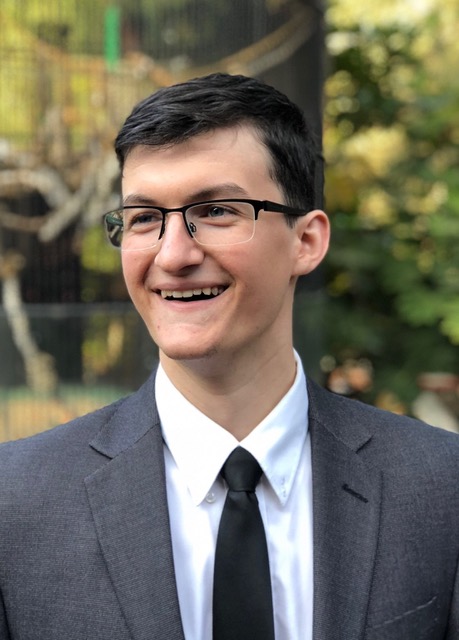
I have a background in making quantum chemistry run fast on classical computers; since joining Sandia National Laboratories in 2020, I’ve pivoted to trying to solve this problem with quantum computers instead. Previously, I split my time between working on characterization and benchmarking protocols with the Quantum Performance Laboratory (QPL) as one of the developers of PyGSTi, as well as on developing quantum simulation algorithms for chemistry and physics with the Quantum Applications and Algorithms Collaboratory (QuAAC). Currently, my main research interest is developing LoQS, a flexible logical qubit simulator that allows us to test how logical qubits respond to arbitrary physical noise.
Education
| Ph.D. | Physical Chemistry | Stanford University | 2020 |
| B.S. | Chemistry & Biochemistry | UC Santa Barbara | 2015 |
Research Interests
- Quantum Characterization, Validation, and Verification
- Fault-Tolerant Quantum Simulation Algorithms
Organization & Leadership Roles
| Lead Developer of LoQS | (2024-present) |
| Lead Developer of PyGSTi | (2022-2025) |
| CSRI CA Intern Coordinator | (2022-2023) |
| QuAAC Seminar Coordinator | (2022-2024) |
Publications
- Two-Qubit Gate Set Tomography with Fewer Circuits. K.M. Rudinger, C.I. Ostrove, S.K. Seritan, M.D. Grace, E. Nielsen, R.J. Blume-Kohout, K.C. Young. arXiv (2023). DOI: 10.48550/arXiv.2307.15767
- Quantifying T-gate-count improvements for ground-state-energy estimation with near-optimal state preparation. S. Pathak, A. Russo, S. Seritan, A. Baczewski. Phys. Rev. A 107, L040601 (2023). DOI: 10.1103/PhysRevA.107.L040601
- Scalable Randomized Benchmarking of Quantum Computers Using Mirror Circuits. T. Proctor, S. Seritan, K. Rudinger, E. Nielsen, R. Blume-Kohout, K. Young. Phys. Rev. Lett. 129, 150502 (2022). DOI: 10.1103/PhysRevLett.129.150502