
Sandia National Laboratories has developed the Microgrid Hardening Design Toolkit, a decision support software for microgrid stakeholders that is publicly available for download. This tool, delivered in a self-contained executable (.exe) is meant to help stakeholders make geographically informed decisions for microgrid hardening that can be tailored to specific circumstances during normal microgrid design process.
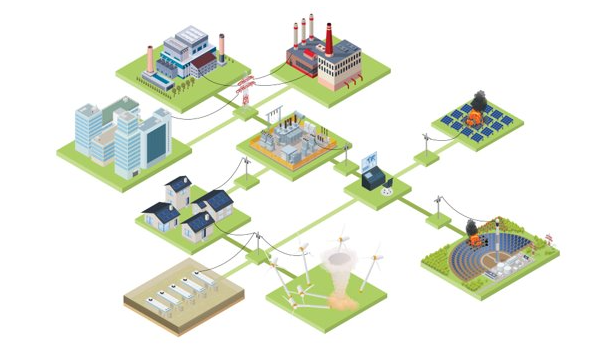
Intended for use in the early stages of the design process, the tool and its associated report:
- Describes a generalizable framework for strategic planning, design, and implementation of hardened cyber-physical microgrids.
- Identifies geographical hazards applicable to communities
- Quantifies the severity of those hazards
- Recommends appropriate hardening technologies responsive to the type and severity of hazards
Who can get value from this tool?
Microgrid planning, design, deployment, and operations has many key roles and many key stakeholders. These roles can be fluid, and stakeholder segments often overlap within them. But generally each stakeholder segment has its own objectives, knowledge, and goals. The table below summarizes the key roles that different stakeholders play in relation to microgrid planning, design, deployment, and operations, and some use cases for which this tool can provide decision-support.
| Role | Stakeholder Segments | Potential Use Cases |
| Financing |
| Guide initial decision-making about funding allocation. Help prioritize communities-at-risk or certain mitigation technologies |
| Technical Advising |
| Local project planning support for hazards awareness to support siting of new assets Identification of vulnerable communities subject to specific hazards |
| Utility Interconnection and Provision |
| Utility microgrid justification to quantify costs outages, capital and operating costs of potential resilience solutions or hardening measures, and the benefits of resilience to support justification of rate increases to regulators |
| Microgrid Hosting or End Use |
| Local project planning support for hazards awareness to support siting of new assets The tool can support awareness for stakeholders who don’t currently use hazard data or have familiarity with the full range of hazards that may affect their facilities or surrounding communities. |
| Community |
| For communities considering microgrids, the “risk twin” functionality could provide a valuable tool for information-sharing among communities. The tool can help validate community knowledge and experiences with hazards |
| Project Champion |
| Project champions within microgrid hosts often need to communicate with non-technical internal stakeholders. This tool may assist in communicating high-level information to executives or decision makers who don’t have time to read details or who need a simple explanation of concepts and reasoning. |
This work was funded by the U.S. Department of Energy, Office of Electricity Delivery and Energy Reliability, Microgrid R&D, under Award No. TE1201000