Example files on this page
Wet Modes input file — Salinas_rtest/training/exampleproblem/eigen/rigidbodymode/wetmode/floatingCylinder.inp
Wet Modes mesh file — Salinas_rtest/training/exampleproblem/eigen/rigidbodymode/wetmode/floatingCylinder.exo
7.1.2. Wet Modes#
Wet modes is a solution procedure that computes the normal modes for a structure partially submerged in a fluid. In appropriate approximations, this may be analyzed as a real Eigen problem of the structure with added mass on the wetted surface.
7.1.2.1. Mesh#
Figure 7.4 shows a sample mesh for a wet modes problem. The structural mesh is a cylinder composed of four node NQUAD shell elements, and the fluid mesh is composed of four node tetrahedral elements. The wet mode solution case can be run either with a conforming mesh, or using tied-data with a nonconforming mesh.
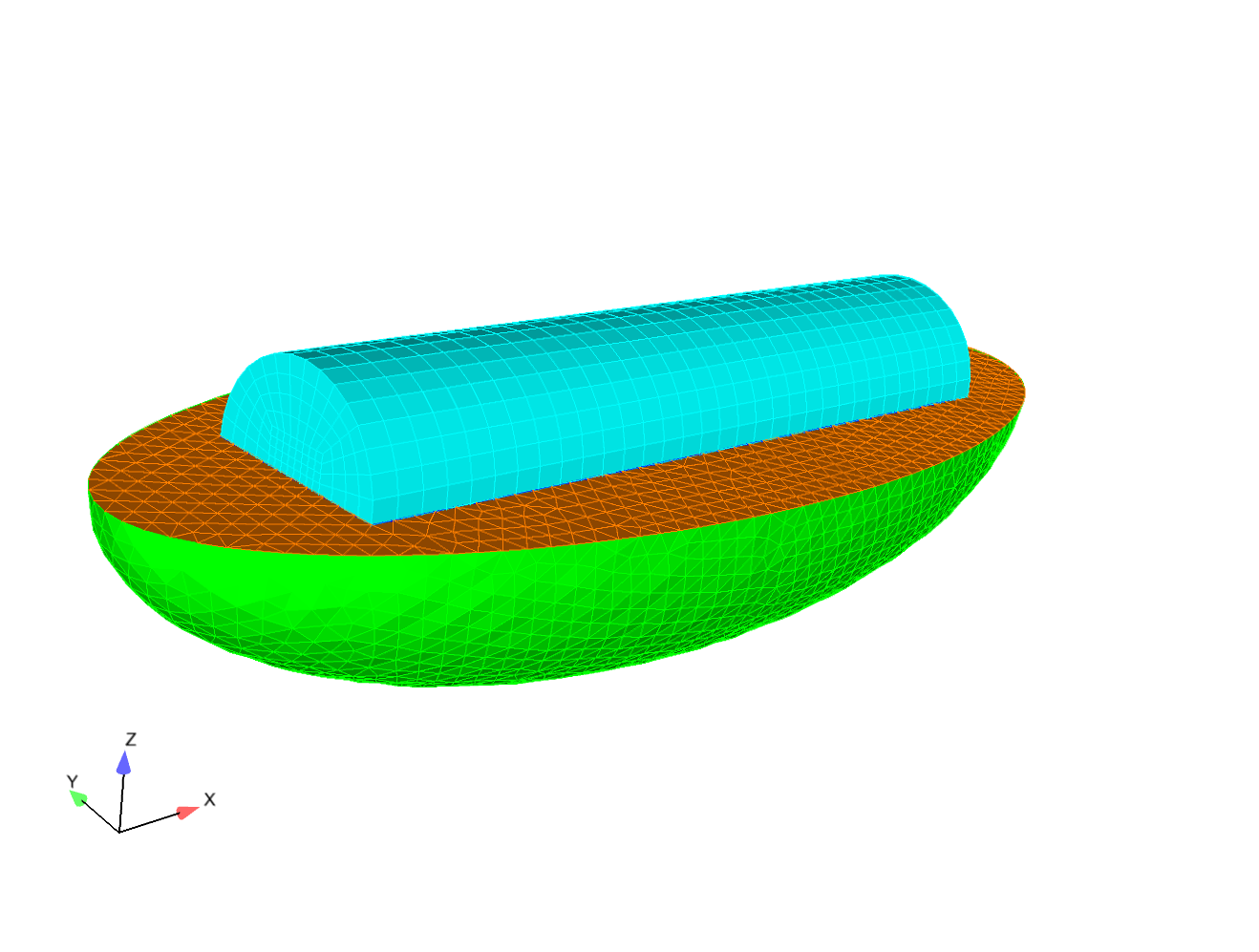
Figure 7.4 Wet Modes mesh file. The structural mesh is shown in blue, and the acoustic/fluid mesh is shown in orange and green.#
7.1.2.2. Input File#
The input below shows the relevant portions of a Wet Modes input file.
The keyword fluidloading=yes enables the wet-modes solution case. The
parameter num_rigid_mode 6 removes the null space for the structural
problem. A boundary section is required to set the pressure on the
outside of the acoustic mesh to zero. Both structural and acoustic
elements are required for a wet mode analysis.
SOLUTION
    eigen
        nmodes 20
        fluidloading=yes
END

PARAMETERS
     num_rigid_mode 6
END

MATERIAL fluid
    acoustic
    density 3.46822e-003 // artificially high to demonstrate wet mode capability
    c0 22878
END

MATERIAL steel
    e = 3.0e7
    density = 7.324e-4
    nu = 0.3
END

BOUNDARY
    sideset 1
      p=0
END
7.1.2.3. Results#
Table 7.2 shows the results for the floating cylinder. Note that the density of the acoustic material is artificially high to increase difference between the wet and dry solutions. Adding the fluid mass to the structure reduces the natural frequency of the cylinder.
Mode |
Dry |
Wet |
|---|---|---|
1 |
79.82 |
18.07 |
5 |
177.994 |
46.72 |
10 |
207.878 |
70.11 |
15 |
307.325 |
91.70 |
20 |
367.93 |
117.266 |
Figure 7.5 shows the results from the wet mode solution case. Note that much of the symmetry that would normally be found in the dry case is missing. The location of the waterline (located at the midpoint of Figure 7.5) can often discerned from the mode shapes.
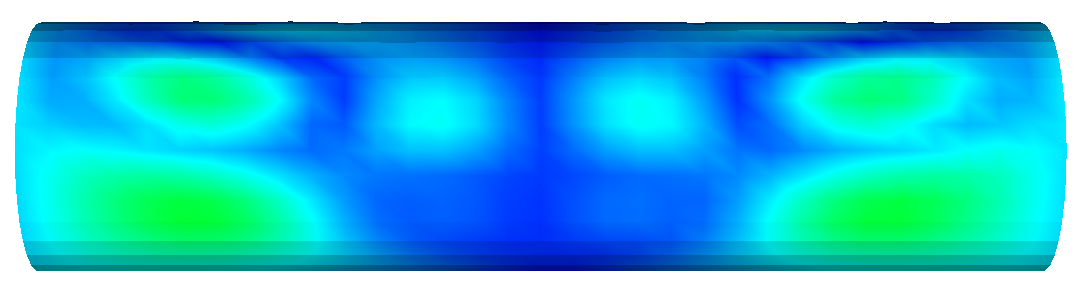
Figure 7.5 Wet Modes ResultsWet Modes Results. The mode shapes from wet modes can be visualized like any other Eigen solution case.#