
Critical skills of critical importance
Hone your skills in areas of key significance
Many technical and business interns work on challenging projects within one of Sandia’s departments. Others may be selected to work within one of Sandia’s technical institutes.
Housed at both our New Mexico and California sites, these technical institutes provide interns challenging work experience in multiple disciplines critical to Sandia’s mission, including cybersecurity, computer and computational science, predictive simulation, remote-sensing technologies, electrical and mechanical engineering, the physical sciences, and software engineering.
View the Intern Institute Comparison Chart
Institutes
| Program | Location | Duration | Eligibility |
|---|---|---|---|
| Computer Science Research Institute (CSRI) | New Mexico California | Year round Summer Co-op | Undergraduate (Sophomore & higher) Graduate |
| Environmental Test and Engineering Sciences Training (ETEST) | New Mexico | Year round Summer | Undergraduate Graduate |
| Future of Research for Secure Energy and Earth Systems (FORSEES) | New Mexico | Year round Summer | Undergrad Graduate |
| Interns for Security, Arms Control, and Force Protection Engineering (iSAFE) | New Mexico Virtual | Year round Summer Co-op | Undergraduate (Sophomore & higher) Graduate |
| Mission Services Talent Acquisition Team (MSTAT) | New Mexico | Year round Summer | Undergraduate Graduate |
| MissionTech | New Mexico California Virtual | Summer | Undergraduate Graduate |
| Monitoring Systems and Technology Intern Center (MSTIC) | New Mexico | Year round Summer Co-op | Undergraduate Graduate |
| Nonlinear Mechanics and Dynamics (NOMAD) | New Mexico | 7 weeks, Summer | Undergraduate Graduate |
| Research and Applications of Mechanics of Structures (RAMS) | New Mexico | Summer | Undergraduate (Junior or higher) Graduate |
| Resilient Energy Systems Intern Institute | New Mexico California Virtual | Year round Summer | Undergraduate Graduate |
| Science of Extreme Environments Research Institute (SEERI) | New Mexico | Year round Summer | Undergraduate Graduate |
| Securing Top Academic Research Talent (START) Institute | New Mexico California | Summer | Undergraduate & Graduate |
| Student Intern Group for Microelectronics Advancement (SIGMA) | New Mexico California Virtual | Year round Summer | Undergraduate Graduate |
| TITANS: Software | New Mexico | Year round Summer | Undergraduate (Sophomore & higher) Graduate |
| TITANS: Cyber | New Mexico California Virtual | Year round Summer | Undergraduate Graduate |
| TITANS: Math & Analytics | New Mexico | Year round Summer | Undergraduate Graduate |
| TITANS: Autonomy | New Mexico Virtual | Year Round Summer | Undergraduate (Rising Sophomore & higher) |
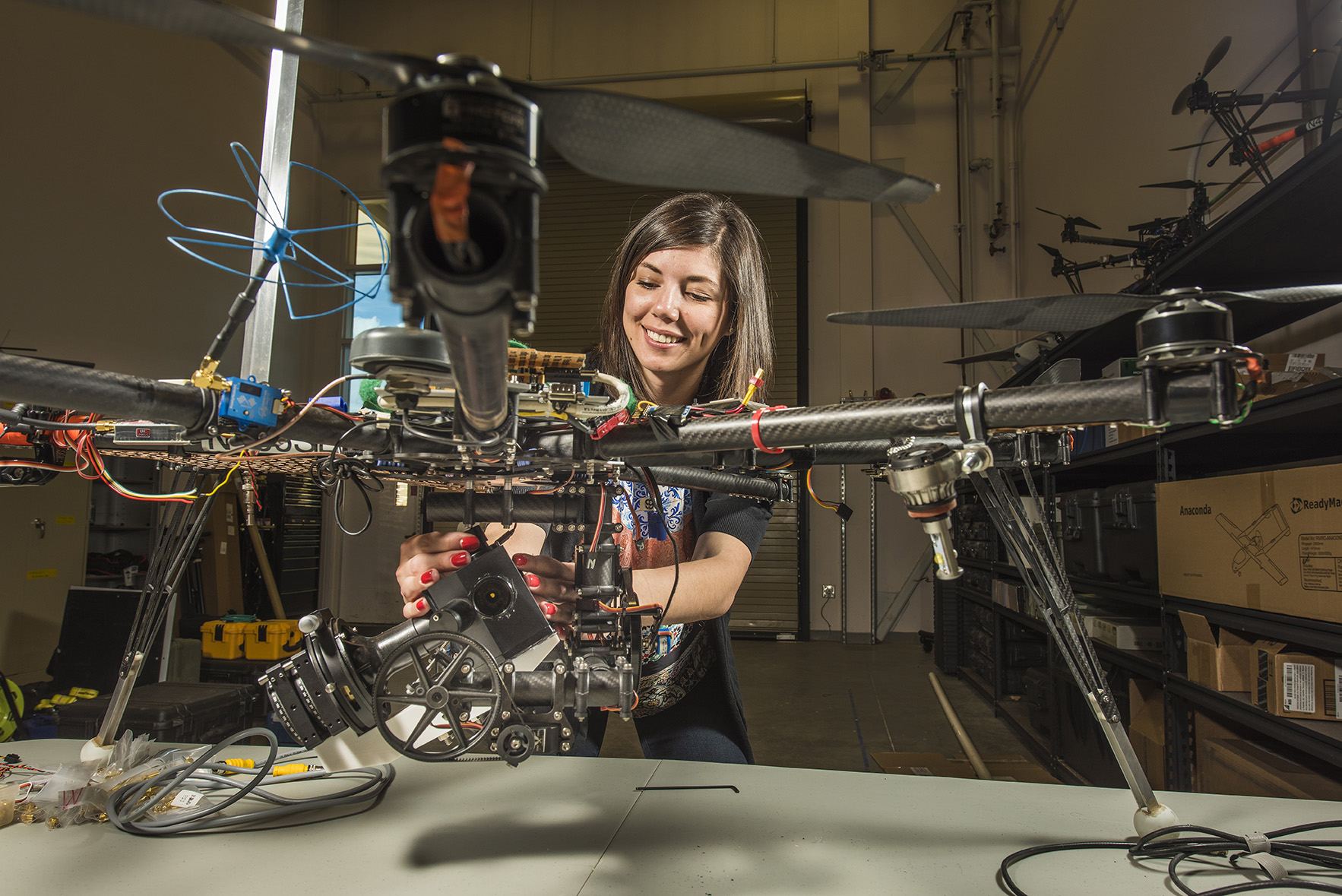
Within the institutes, interns perform leading-edge research under the guidance of a Sandia mentor and use world-class state-of-the-art equipment and facilities. Depending on need, interns could, for example, help design the programmable logic for a prototype system, contribute to a predictive-simulation model, or conduct pulsed-power experiments.
Technical seminars, tours, and workshops, and social activities round out the experience, giving interns an excellent overview of Sandia’s mission, research, and culture.