

Aires Tide, a new AI-designed, 3D-printed concept for fast-tracked test flights, is the first National Nuclear Security Administration breakthrough of the Genesis Mission, the White House initiative led by the U.S. Department of Energy to transform how DOE delivers on its mission through a network of AI-enabled supercomputers. Aires Tide also points to a future where designers and engineers could create new weapons systems in far less time and at lower cost than traditional methods. In the photo, Sandia National Laboratories researchers prepare a 1:2 scale Aires Tide flight vehicle for release from a balloon at Dugway Proving Ground, Utah. Learn more at bit.ly/4voqHAU Photo by Craig Fritz

Aires Tide, a new AI-designed, 3D-printed concept for fast-tracked test flights, is the first National Nuclear Security Administration breakthrough of the Genesis Mission, the White House initiative led by the U.S. Department of Energy to transform how DOE delivers on its mission through a network of AI-enabled supercomputers. Aires Tide also points to a future where designers and engineers could create new weapons systems in far less time and at lower cost than traditional methods. In the photo, Sandia National Laboratories researchers launch a balloon carrying a scaled down version of Aires Tide. After its ascent, the balloon dropped the payload to allow researchers to collect flight data at high speeds. Learn more at bit.ly/4voqHAU Photo by Craig Fritz

Aires Tide, a new AI-designed, 3D-printed concept for fast-tracked test flights, is the first National Nuclear Security Administration breakthrough of the Genesis Mission, the White House initiative led by the U.S. Department of Energy to transform how DOE delivers on its mission through a network of AI-enabled supercomputers. Aires Tide also points to a future where designers and engineers could create new weapons systems in far less time and at lower cost than traditional methods. In five months, from October 2025 to March 2026, national laboratory researchers designed, built and tested multiple vehicles from scratch. Sandia National Laboratories successfully completed a drop test of a 1:2 scale version May 19 at the U.S. Army Dugway Proving Ground in Utah. Following the test, the Sandia National Laboratories team retrieved and transported Aires Tide for further analysis. Learn more at bit.ly/4voqHAU Photo by Craig Fritz

Aires Tide, a new AI-designed, 3D-printed concept for fast-tracked test flights, is the first National Nuclear Security Administration breakthrough of the Genesis Mission, the White House initiative led by the U.S. Department of Energy to transform how DOE delivers on its mission through a network of AI-enabled supercomputers. Aires Tide also points to a future where designers and engineers could create new weapons systems in far less time and at lower cost than traditional methods. Sandia National Laboratories successfully completed a drop test of a 1:2 scale version May 19 at the U.S. Army Dugway Proving Ground in Utah. In the photo, National Nuclear Security Administration Genesis Mission lead Charles Ball observes the drop test through binoculars. Learn more at bit.ly/4voqHAU Photo by Craig Fritz

As Labs Director Laura McGill wraps up her first year leading Sandia, she also received the highest distinction conferred by the American Institute of Aeronautics and Astronautics. On May 18, 2026, Laura was inducted as an AIAA Honorary Fellow during a ceremony in Washington, D.C. She is recognized for her outstanding leadership in aerospace and defense, and for advancing national security. “It’s quite humbling when I reflect on the aerospace and defense leaders that have come before me and how I’ve been inspired by them,” Laura said. “This is not something that I could have foreseen.” Learn more at bit.ly/3RCFLvI Photo by Craig Fritz

Grace Driskill crosses the finish line first in the women’s race at the Sandia New Mexico DOE Mile event on May 13, 2026. The DOE Mile began 11 years ago at Sandia California and has evolved into an event that spans all 17 national labs.

Runners participate in the annual DOE Mile event at Sandia New Mexico on May 13, 2026. The DOE Mile began 11 years ago at Sandia California, which held their run on May 27, and has evolved into an event that spans all 17 national labs.

People from Sandia, Kirtland Air Force Base, Lawrence Livermore National Lab and other community members gathered to worship and pray on May 7, 2026 at the National Day of Prayer event. Learn more at bit.ly/4nU3vHO Photo by Craig Fritz

From left, Deputy Labs Director David Gibson, Executive Director and Chief Human Resources Officer Brian Carter, Deputy Labs Director Rita Gonzales and Labs Director Laura McGill answer questions from staff following a presentation about progress on Sandia’s goals. The Art of the Future event offered updates on the Labs’ pursuit of Future Ready Engineering, Future Ready Operations and a Future Ready Workforce. Learn more about the Labs’ goals at bit.ly/3ZCUpDZ Photo by Craig Fritz

Sandia is installing new AI tools to enable earlier, speedier inspections of ceramic components used in nuclear deterrence applications. The approach will replace a challenging, time-consuming process that is challenging on the eyes while keeping people firmly in the loop. “Right now, an operator looks through a manual microscope for defects,” Sandia engineer Jesse Adamczyk said. “They’re subtle, so they can be hard to find. We’re setting up software — an AI augmentation interface — where operators can do anomaly detection from their desktops and have AI highlight defects for them.” Learn more at bit.ly/42laaRy Photo by Craig Fritz

Technicians at Sandia use a small wand of light and a microscope to manually inspect ceramic components for tiny defects. The process is time-consuming, challenging on the eyes and requires extensive training. With the introduction of artificial intelligence and new equipment, inspections will take place earlier in the production process. Learn more at bit.ly/42laaRy Photo by Craig Fritz

Curiosity and discovery reign at Sandia Kids Day. Families toured the Corporate Computing Facility, where a cooling system for super computers runs through the floor, in Albuquerque, NM on April 29, 2026. Kids Day drew 2,409 students for a full day of science demonstrations and behind-the-scenes tours. See more photos at bit.ly/4ngsbKp Photo by Craig Fritz

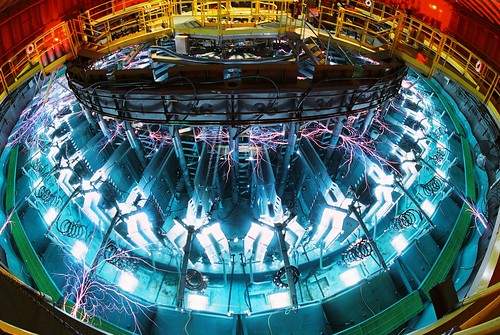
After nearly 40 years of service and 4,726 firings, known as “shots,” Sandia’s powerful X-ray generator has been updated for reliability and performance. The Saturn accelerator, roughly the size of two basketball courts, produces hard X-rays that test and qualify national security electronics, subsystems and materials against X-ray radiation. In the photo, Sandia technologists transport the Saturn accelerator’s magnetically insulated transmission lines, from the center section for cleaning after a shot. Learn more at bit.ly/3QJFve9 Photo by Craig Fritz

After nearly 40 years of service and 4,726 firings, known as “shots,” Sandia’s powerful X-ray generator has been updated for reliability and performance. Saturn began operating in 1987. Roughly the size of two basketball courts and containing approximately 500,000 gallons of water, it produces hard X-rays that test and qualify national security electronics, subsystems and materials against X-ray radiation. Learn more at bit.ly/3QJFve9 Photo by Craig Fritz

Sandia volunteers donated 295 hours during National Volunteer Month in April 2026. Off the clock, employees shared their talents and time to support education and nonprofit organizations, building stronger communities and investing in a brighter future. At Jefferson Middle School, Sandia’s team connected with students to inspire interest in STEM through hands-on activities, like programming tiny Ozobots to follow lines of instructions. Learn more at bit.ly/42m1k69 Photo by Craig Fritz

All steel beams are now in place for Sandia’s new Power Sources Capability building. Sandia engineers research, design and produce power sources that are critical to the nuclear deterrence mission in spaces that require unique controls, such as dehumidified rooms. The new building, on track for completion in 2028, will allow all power source work to happen under one roof instead of the four separate buildings currently needed. Learn more at bit.ly/4tiueQl Photo by Craig Fritz

Workers marked a major milestone on the new Power Sources Capability building, one of Sandia’s largest construction projects of the past decade, with the installation of the final beam and completion of the building’s steel structure. The new building, on track for completion in 2028, will allow all power source work to happen under one roof instead of the four separate buildings currently needed. Learn more at bit.ly/4tiueQl Photo by Craig Fritz

Sandia’s Power Sources Capabilities team is responsible for power research and development, design, production and surveillance for power sources, which are critical to the nuclear deterrence mission. The team is getting a new facility that will allow all power source work to happen under one rood instead of four separate buildings currently needed. In the photo, a Sandia technologist works on a thin film thermal battery as his colleague performs quality assurance checks. Learn more at bit.ly/4tiueQl Photo by Craig Fritz

Deputy Labs directors, from left, David Gibson, Deborah Frincke and Rita Gonzales along with Labs Director Laura McGill heard employees’ perspectives on working at Sandia and answered questions during the Employee Experience Town Hall on April 15, 2026, in Steve Schiff Auditorium. Photo by Craig Fritz

The 2026 Federal Laboratory Consortium awards for Excellence in Technology Transfer recognized Sandia and its partners for helping grow New Mexico’s quantum future. “New Mexico has a strong history of being a crucial player in world-changing technology development,” Sandia quantum business development lead Jake Douglass said. “The field of quantum science is at an inflection point and New Mexico is the place to be to realize the impact of these emerging technologies.” In the photo, students learn the basics of quantum physics and its impact on computing at Sandia’s QCamp. Learn more at bit.ly/495lDrW Photo by Craig Fritz
-

Aires Tide -

A Day in the Life of Sandia -

People of Sandia -
#WomenInScience -

Aerospace -

Basic science -
Biosciences -
Cognitive science -
Computing -
Energy, Environment, Water -
Solar Energy -
Wind Energy -

Large-scale Testing -
Materials Science -

Medical -
Microelectronics -

Nanotechnology -
Nuclear Science -
Photonics -
Pulsed Power -

Robotics -
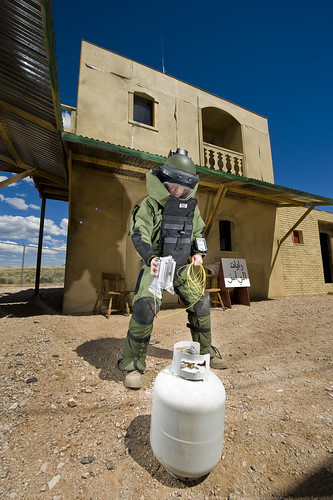
Security and Defense -
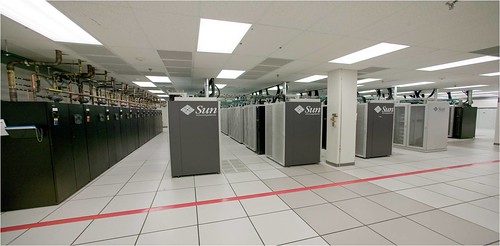
Supercomputing -

Sandia's Security Force -

Wildlife of Sandia Labs -

History -
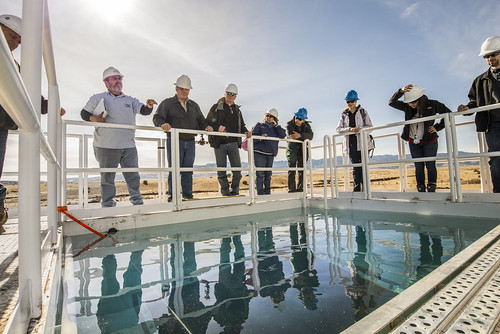
Davis Gun -
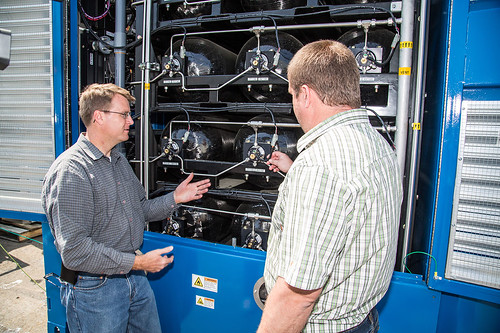
Maritime Hydrogen Fuel Cell Project -

Chelyabinsk Asteroid Airburst -

Sandia Guided Bullet -

Willis Whitfield -

Facilities -

Combustion Research Facility -

Joint BioEnergy Institute -

Pete V. Domenici National Security Innovation Center Dedication -
Community, Education -

CSI: Dognapping -

My Brother's Keeper Day -

STEM Mentoring Cafe -

Minority Serving Institute Partnership Program -

Events -

2016 Kirtland Air Force Base Air Show -

Annular Solar Eclipse -
Supermoon 2016 -

2011 Robot Rodeo -
2013 Robot Rodeo -
2015 Robot Rodeo -

Sec. Chu Visit, 2012 -

Sec. Moniz Visit, 2013 -
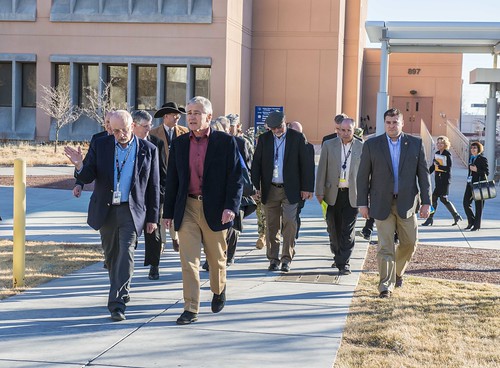
Sec. of Defense Visit, 2014 -

Sec. Jewell Visit, 2015 -
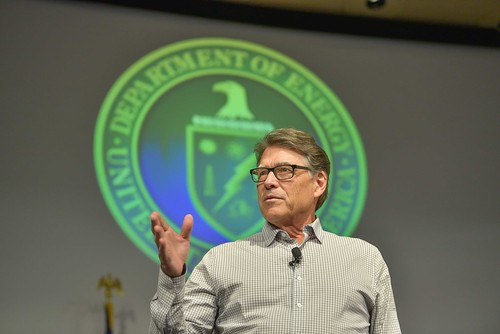
Sec. Perry Visit, 2018 -

Sec. Granholm Visit, 2022 -

Frank Klotz Visit
Members of the media are welcome to download and use these images and photos. Please credit either the photographer or Sandia National Laboratories.