
Reducing approval times for short-duration, low-impact field work starts with tethered balloons
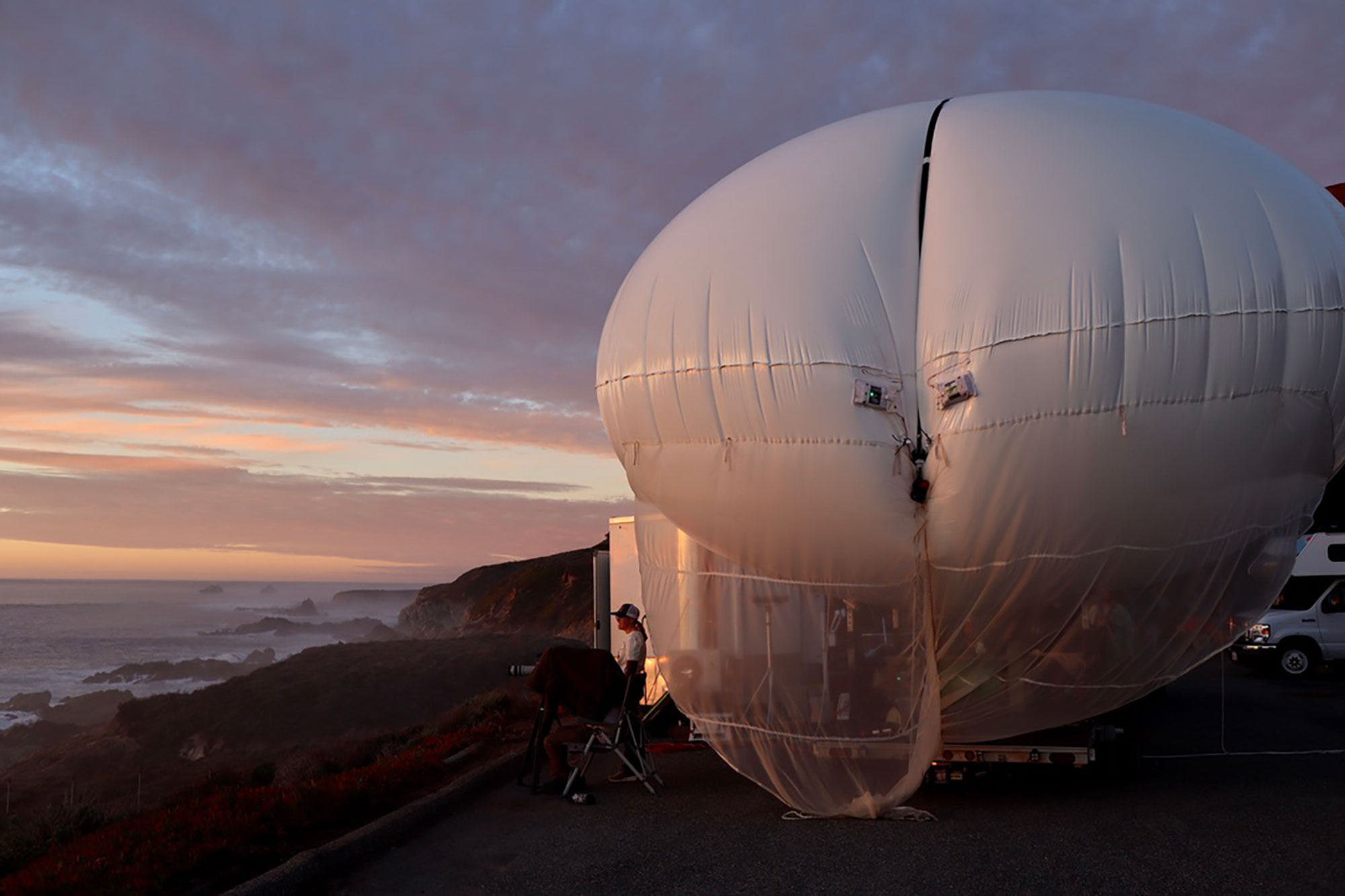
When Sandia’s tethered balloon team gets the call to deploy, the question is not whether they are up to the task, but if they can get the necessary approvals in time.
The team, which uses balloons tethered to the ground to collect atmospheric data from the surface up to an altitude of 5,000 feet, is often expected to deploy within nine months after the DOE or other sponsors approve the project. Moreover, the target location changes almost every year to meet sponsor needs and is not usually known until the proposal call announcement. Sandia, NNSA and other federal agencies require permitting and approvals related to real estate, environmental impact, aviation, procurement and safety that further delay the project and make it nearly impossible to meet timelines.
“The long approval process, or delays in approvals, puts the projects and Sandia at risk with both the sponsor and the user community we collaborate with,” said Andy Glen, manager of Sandia’s atmospheric sciences group. He knew these issues also affected other teams engaged in short-duration, low-impact field work not located on Sandia property.
Identifying this as an opportunity to cut red tape and improve efficiency, Sandia’s former Energy and Earth Systems Center set a 2025 strategic milestone to streamline the approval process, starting with tethered balloon systems as a case study. Their effort resulted in a new umbrella Preliminary Real Estate Plan, or PREP, that will cover any tethered balloon system work occurring in any location over the next few years.
“Our goal with the umbrella PREP is to reduce the approval time between identifying a location to deploying on it from over a year to just six to nine months. It still needs to be tested, but we’re planning on using it for an upcoming deployment,” said Andy, who led the multidisciplinary milestone team.
Defining the issue
The team’s first step was to assess the existing approval process, including roadblocks and policies that did not necessarily fit the scope of most remote field work.
Andy explained that in terms of real estate requirements, short-duration field work was being treated the same as if Sandia were building or leasing a permanent physical structure. “This work is more like a camping expedition than it is building a hotel. We go in with temporary hangars, trailers and a couple of trucks that the team operates out of for two or three weeks, and then we leave. We have very minimal impact to the existing landscape,” Andy said.
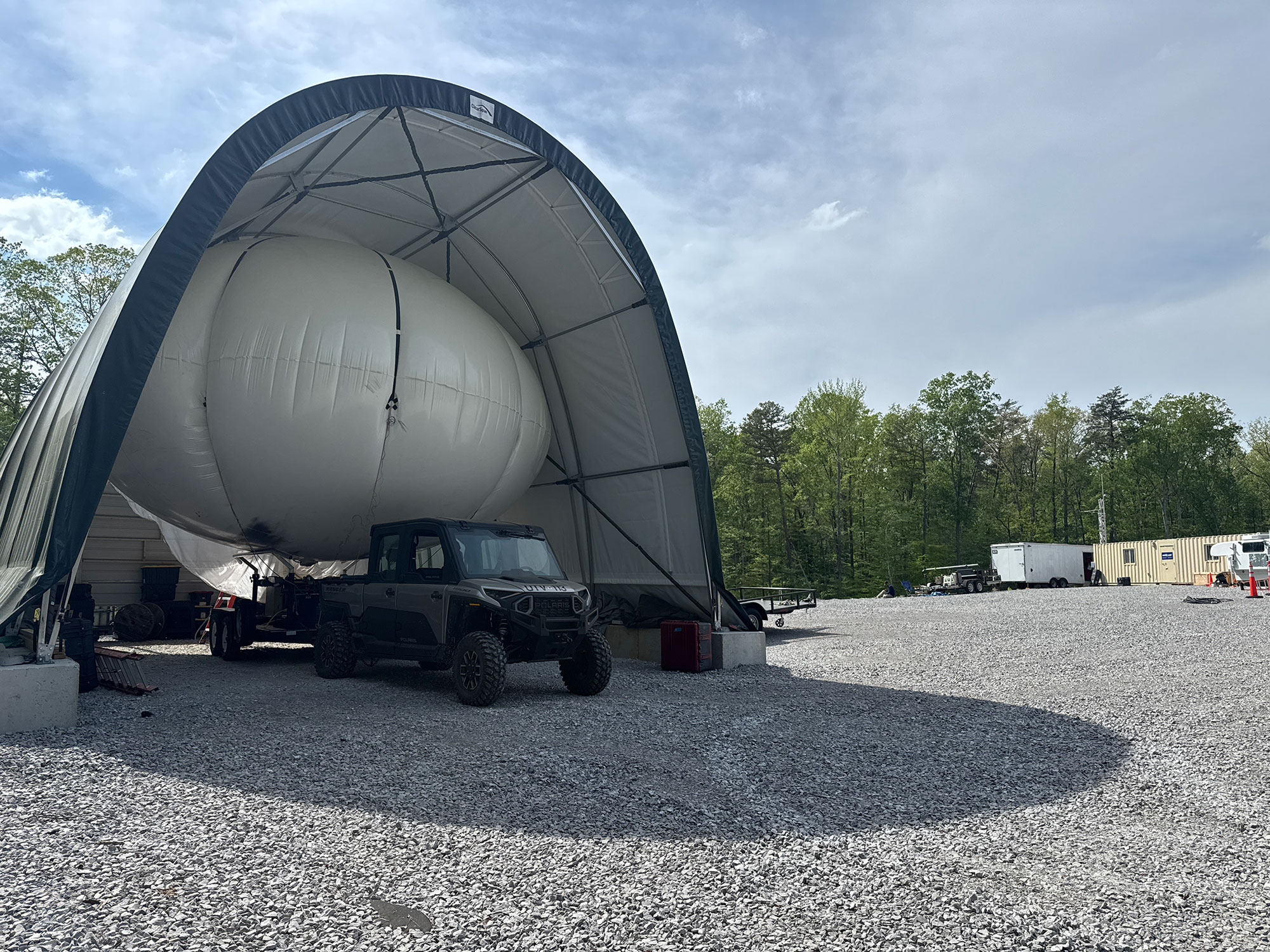
According to Joyce Purley, the team’s real estate strategic planner, a traditional real estate plan is fairly involved, often exceeding 100 pages and requiring services, like appraisals, provided by outside organizations. “It takes a lot of time to put all of that together, especially when you think about all the third-party products involved. And that’s just one step of the process,” Joyce said. Even proposals to launch balloons from non-Sandia federal sites require NNSA and other government agency input and approval, which can cause significant delays.
Another time-consuming step is making sure the work complies with the National Environmental Policy Act, or NEPA, which requires federal agencies to assess the environmental effects of any proposed actions. While most activities performed on Sandia property are covered under the Site-wide Environmental Impact Statement, any off-site work must be evaluated separately.
Most off-site work is covered under a categorical exclusion, meaning a type of action that does not have a significant impact on the environment. However, the determination that the work falls into a categorical exclusion must be made by the NNSA, and that approval can sometimes take weeks or even months.
Sandia Senior Counsel Konstantin Parkhomenko saw firsthand how little of an environmental impact the tethered balloon teams have when he visited one of their field campaigns. “I can read reports all day, but being there to see what the operation looks like was really an eye-opener,” he said.
Finding a solution
The team identified pain points where changes could be made within these processes. They drew both on their experiences and two white papers prepared by Sandia’s legal department on real estate and NEPA efficiency improvements.
“If you can find efficiencies where processes can be streamlined, then everybody is happier. The government is happier because the mission is getting implemented, and of course, the people who depend on getting the approvals in a timely manner are also happier,” Konstantin said.
The team used these insights to create a new umbrella PREP intended to cover tethered balloon field work, no matter the location. They also developed an optimized workflow for approvals that can be adopted by staff doing any kind of short-duration, low-impact field work.
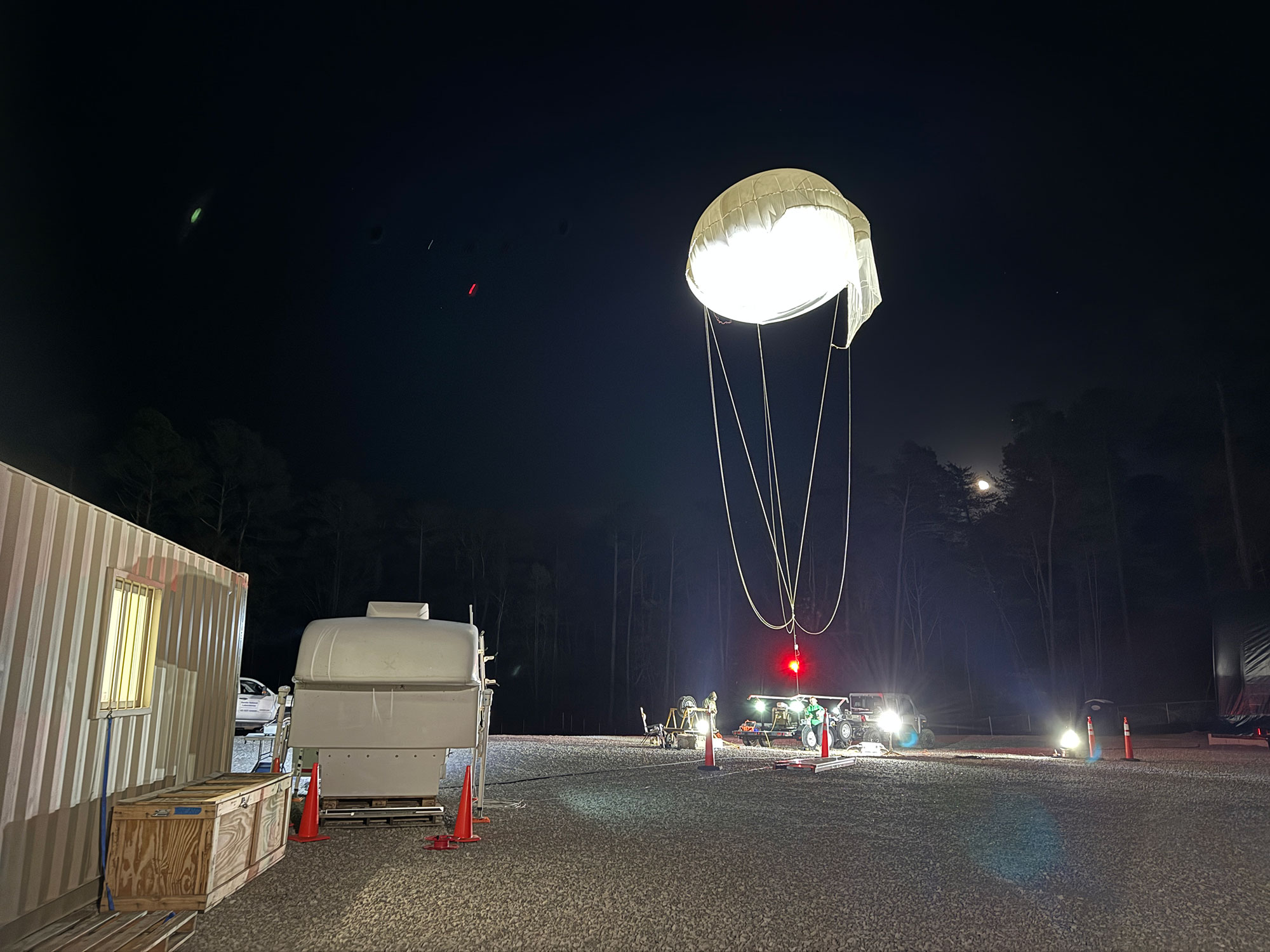
“The workflow presents a more graded approach to looking at real property risk,” Joyce said. “It’s a major shift in mindset for all of us, not just for Sandia, but also for the Sandia Field Office and NNSA to think about how we are accessing real property and the level of rigor that is appropriate so that we can meet our mission.”
In addition to shifting people’s mindsets, Konstantin said one of the team’s biggest challenges lay in communicating across the many different technical areas involved. “Anytime there’s a large group, people will have different perspectives and reaching consensus on how to implement something can require multiple discussions.”
Andy agreed that just getting up to speed with all of the requirements and various terminology was a seemingly small, but ultimately critical, aspect of the milestone project. “Everybody’s got a little piece of the pie here. Bringing all the functional areas together, making sure we were consistent in meeting the intent of the processes, and getting that buy-in from NNSA were big hurdles — and probably the biggest result.
“I really appreciate everybody coming on board to address this issue because it does make a difference to the project team, the sponsor and meeting mission goals.”