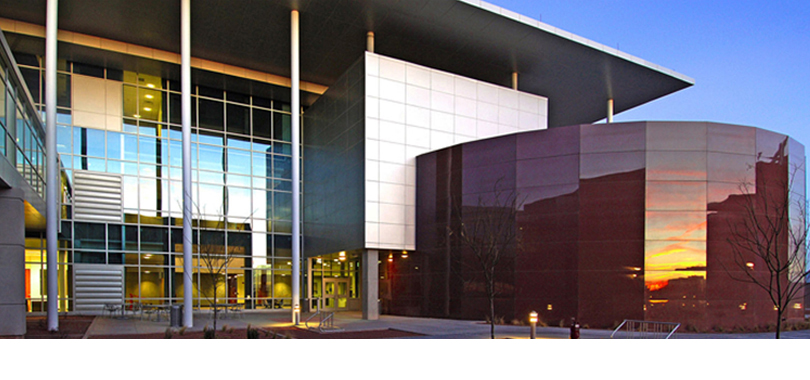
Home of the MESA Complex
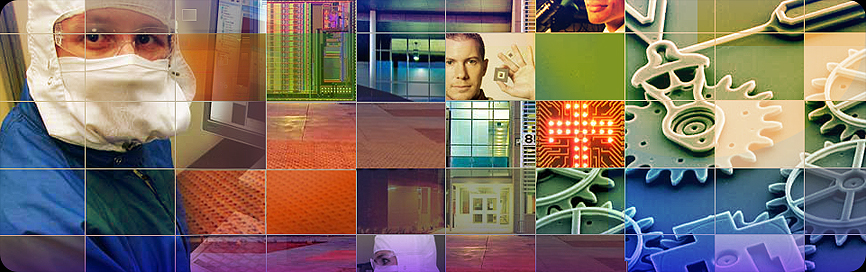
The MESA Complex integrates the numerous scientific disciplines necessary to produce functional, robust, integrated microsystems and represents the center of Sandia’s investment in microsystems research, development, and prototyping activities.
From the first use in the Minuteman II missile to the proliferation of consumer products today, microelectronic circuits have dramatically improved performance, functionality, and reliability, while reducing cost and decreasing volume.
Today researchers pursue advanced concepts that integrate not only electronics at the micro scale, but embody sensors, photonics and MEMS components.
At Sandia National Laboratories, as part of the Microsystems Engineering, Science and Applications (MESA) Complex, the Microsystems organization has the mission to develop beyond leading edge trusted microsystems technologies to enable new and increasingly powerful macro-system capability and functionality for critical national security platforms.
Extensive scientific and engineering expertise in areas such as material growth and process development for silicon and compounds, device and product design, advanced packaging technologies for 3-D integration, reliability, and failure analysis makes possible the custom trusted solutions we deliver to the nation today.
Areas of Expertise
"Trusted Microsystems" encompasses the entire product development cycle. Sandia’s Microsystems Center affords access to trusted people and facilities for research and development, design, layout, fabrication, characterization, packaging, and test. For more information about Research and Development in this area please visit Nanodevices and Microsystems
The MESAFab complex develops and maintains core semiconductor processing capabilities and capacity that enable our customers to build differentiating Microsystems products.
Our activities range from ground-breaking research through product delivery and qualification with a focus on high performance pathfinder solutions. We leverage the broad capabilities within Sandia’s MESA facility, including our co-located silicon and compound semiconductor fabs, deep R&D expertise, and low-volume manufacturing infrastructure to solve truly difficult problems.
At Sandia National Laboratories, numerous teams and disciplines are engaged in attempting to move significantly closer to the actualization of quantum information processing. For more information about Research and Development in this area please visit Nanodevices and Microsystems.
Sandia’s Microsensor and Sensor Microsystem effort develops sensors and sensor arrays for chemical, physical and biological detection. For more information about Research and Development in this area please visit Nanodevices and Microsystems.
The MEMS Technology Department conducts research and development for advanced micro- electromechanical systems that push the technology envelope for national security applications and develops and maintains a core set of MEMS fabrication processes and technologies. For more information about Research and Development in this area please visit Nanodevices and Microsystems.
Power electronics is the application of solid-state electronics for routing, control, and conversion of electrical power. For more information about Research and Development in this area please visit Nanodevices and Microsystems.